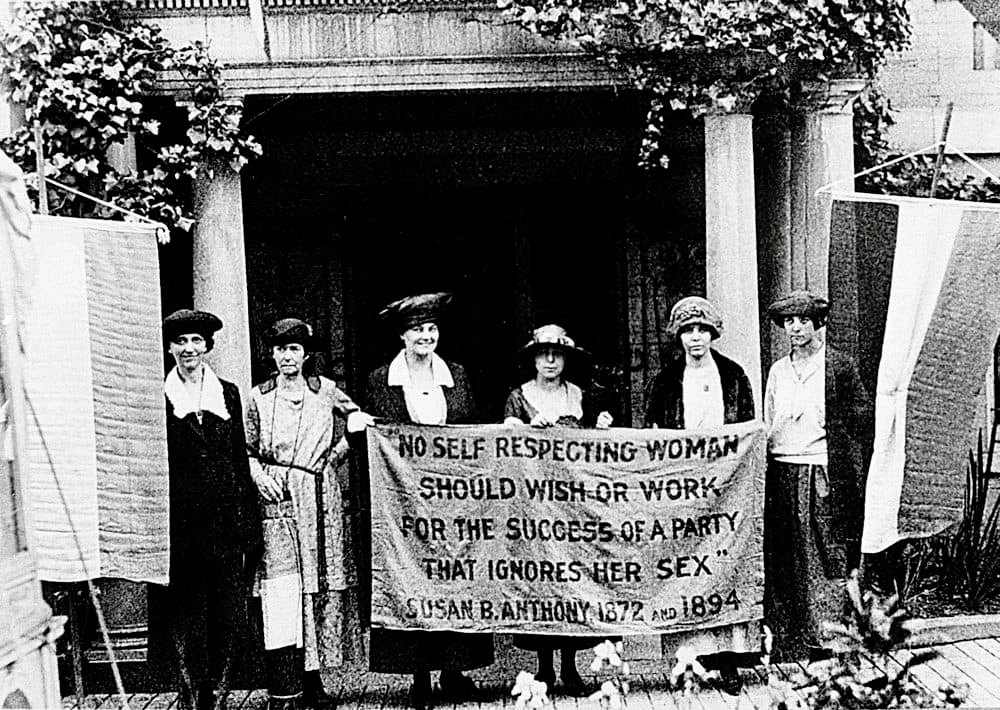
“No self-respecting woman should wish or work for the success of a party who ignores her sex.”
– Susan B. Anthony, suffragette, 1920
MPs from five parties have signed a motion to kill the EHRC’s Code of Practice on single-sex services before it can come into force. Labour supplies the largest bloc. They call it inclusion. It is ideological capture. And the working-class women they claim to represent will remember who stood where.
THE MOTION THAT REVEALS EVERYTHING
On 1 June 2026, a formal parliamentary motion was tabled by Nadia Whittome MP to disapprove the Equality and Human Rights Commission’s statutory Code of Practice for services, public functions and associations. The Code was laid before Parliament on 21 May. Under the procedure that governs statutory instruments of this kind, Parliament has 40 days in which to raise objections. If no objection is passed within that window, the government sets a date for the Code to come into force.
That is the mechanism. Those are the facts. What lies beneath them is something more troubling: a cross-party faction of MPs, organised within days of the Code’s laying, channelling the energies of a professional activist lobby rather than the interests of the constituents who sent them to Westminster. Two MPs who initially signed have since withdrawn their names. The parliamentary equivalent of checking whether anyone noticed.
The fact is, the Code does not change the law. Let that be stated plainly. It is a code of practice. It provides statutory guidance to service providers, public bodies, businesses and associations on how to apply the Equality Act 2010 in light of the Supreme Court’s unanimous ruling in For Women Scotland v The Scottish Ministers, handed down in April 2025, which confirmed that the words ‘woman’, ‘man’ and ‘sex’ in the Equality Act refer to biological sex. The Code follows the law. The motion would bury the Code.
The Code does not change the law. It follows the law. What the motion would do is bury the guidance that explains what the law means.
WHO SIGNED IT
EDM 240 attracted 53 signatures before two withdrawals, leaving 51 active supporters from five parties and one independent. This is not a Labour rebellion. It is a cross-party coalition of the ideologically captured.
| Party | Signatories (active) |
| Labour | 24 |
| Liberal Democrats | 20 |
| Green Party | 2 |
| Scottish National Party | 2 |
| Your Party | 1 |
| Independent | 1 |
| TOTAL (after 2 withdrawals) | 51 |
Labour supplies the largest single bloc at 24 MPs, including figures from the left who might once have been expected to ground their politics in the material interests of the working class. John McDonnell. Rebecca Long Bailey. Ian Lavery. Richard Burgon. The names represent what remains of the Labour left, now deploying its residual energy not against poverty, NHS collapse or war, but against a code of practice that clarifies the meaning of a word.
The Liberal Democrats, with 20 signatories, have chosen their ground with characteristic opportunism: the party that once supported Nick Clegg’s austerity programme now presents itself as the vanguard of trans rights. The SNP contribute two, including Kirsty Blackman; their party is currently rebuilding after the Murrell embezzlement conviction, yet finds bandwidth for this. Zarah Sultana signs on behalf of Your Party. Diane Abbott signs as an independent. The motion is, in short, a snapshot of where the parliamentary left has arrived, or should I say departed…
And note what is absent from that list: any serious engagement with what the Code actually says, they just want it gone…
WHAT THE CODE ACTUALLY SAYS
Read Whittome’s statement and you will find it saturated with the language of catastrophe. The Code will, she argues, exclude trans people from services they have long used without issue, usher in enforced segregation, and outsource the policing of gender to businesses, charities and public bodies. It will put trans people at increased risk of harassment and violence and effectively push them out of public life.
This is the language of ideological capture. It is not the language of law.
The Code does not erase trans people from the Equality Act. Gender reassignment remains a protected characteristic. Trans people remain protected from discrimination and harassment, as they were before the Supreme Court ruling and as they will be after this Code comes into force. The motion’s sponsors know this. They are not confused about the legal position. They have made a political choice to obscure it.
What the Code does is clarify that women’s single-sex spaces actually mean single sex: that a service or facility designated for women may lawfully exclude males, including those who hold a Gender Recognition Certificate. That clarity is precisely what the activists who organised this motion cannot accept. Not because it removes any protection from trans people, but because it restores a boundary that years of institutional drift had quietly erased.

And this is not simply about toilets. The Code covers services, public functions and associations: domestic violence refuges, hospital wards, changing rooms, competitive sport, clubs, support groups, women-only associations, and the fundamental right of women to organise as women. The refusal to see that scope is not honest confusion. It is strategic narrowing, designed to make the case seem trivial.
SEGREGATION: A WORD STRIPPED OF MEANING
Whittome uses the word ‘segregation’. It deserves a response.
Segregation, in its historical sense and its moral weight, describes the forcible separation of a minority group from the mainstream of civic life, designed to humiliate, exclude, and subordinate. The American civil rights movement fought it. South Africa bled over it. The use of that word to describe a women’s refuge restricted to biological females is not an argument. It is an attempt to associate women’s sex-based protections with racial apartheid, and it is obscene.

Women’s spaces exist because sex matters. They exist because male violence is a material fact, documented in every serious criminological dataset this country has produced. They exist because privacy matters, because dignity matters, because women fought for those protections long before today’s activist class discovered the word inclusion.
The Code’s requirement that suitable alternative provision should be considered for trans people is not a denial of their humanity. It is a proportionate response to competing needs. Nobody is arguing that trans people should be left without facilities. The argument is simpler: when an institution has failed to provide adequate provision for everyone, the solution is better provision, not the dismantling of women’s protections. If a hospital, employer, or public body has not built the facilities its users need, that failure belongs to the institution. It is not an argument for stripping women of their rights.
Calling the protection of women’s single-sex spaces ‘segregation’ is not progressive language. It is the inversion of meaning that Orwell warned us about.
IDEOLOGICAL CAPTURE: HOW A PARTY LOSES ITS COMPASS
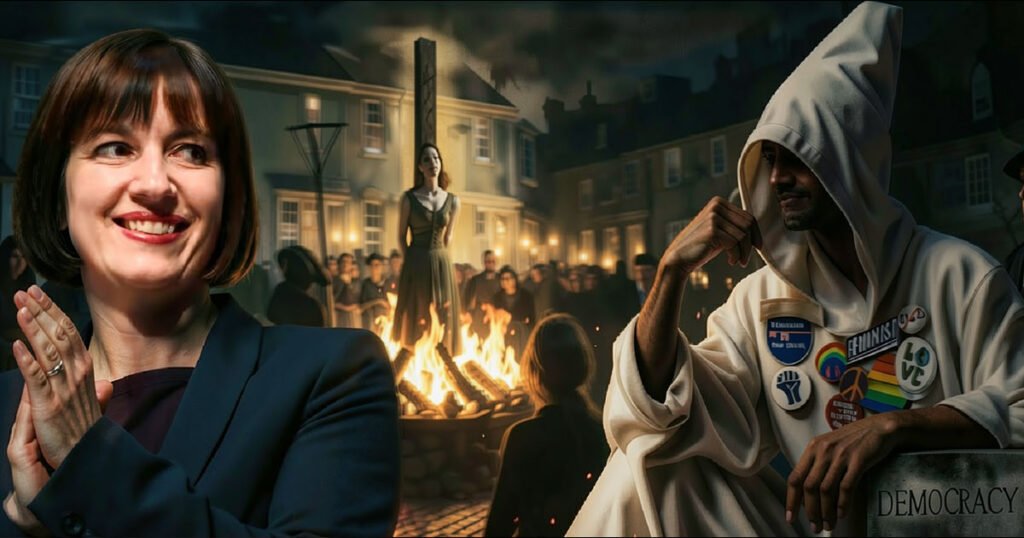
As we have reported previously on these pages, Bridget Phillipson received the EHRC’s updated Code in early September 2025 and sat on it for months. She asked for additional information. She asked for an equality impact assessment. She raised concerns about cost to business. She said she needed to proceed thoroughly and carefully. She changed nothing.
When the Code was finally laid before Parliament on 21 May 2026, the 40-day clock began. Within eleven days, a formal disapproval motion had been tabled and grown to 53 signatures. The same organisational energy was not visible when the NHS was running wards at collapse, or when hunger was rising in the constituencies many of those signatories represent, or when the winter fuel payment was stripped from pensioners across the working-class heartlands.
That disproportion is not accidental. It reflects a political culture that has elevated the priorities of a vocal, organised, and institutionally connected activist lobby above the material interests of the working class. The result is a parliamentary left that moves faster against a women’s rights code of practice than against child poverty.
This is not a principled stand on behalf of a vulnerable minority. Trans people are a small and genuinely vulnerable population and they retain full protection under the law under this Code. What EDM 240 represents is a factional operation, using trans people as its justification while serving the institutional and ideological interests of a professional-class activist network that has little in common with the working-class communities Labour was created to represent.
A Labour MP who fights harder against women’s single-sex protections than against poverty, NHS collapse or war has told us, without ambiguity, where their politics now sits.
LABOUR AND ELECTABILITY: THE UNSPOKEN COST
The parliamentary arithmetic is not favourable to EDM 240. There is no guarantee that the motion will be secured a debate or a vote within the 40-day window. The Code will in all probability come into force. But the political damage this motion inflicts on Labour is not measured in votes on the order paper.
It is measured in every working-class woman who watches Labour MPs sign a motion against the legal clarity she has waited years for, and draws the obvious conclusion. It is measured in every constituency where the word ‘Labour’ no longer carries the meaning it was intended to carry. The party that was built to represent the interests of those with the least power in society has, on this question, positioned itself against the sex-based protections of half the population.
That is an electoral problem as much as a moral one. The Conservatives are gone as a serious political force. Reform is waiting. The Liberal Democrats are harvesting seats in places Labour once considered safe. And Labour’s response, on the evidence of this motion, is to fight a culture war on the wrong side of the working class.
Keir Starmer’s government did eventually lay the Code. Credit where it is due. But within days, a significant section of his own parliamentary party was publicly campaigning to kill it. That is not a party in command of its political direction. It is a party that has not resolved the central question of whose interests it exists to serve.
WHAT THIS MOTION IS
EDM 240 is an attempt to undermine a Supreme Court ruling by blocking the statutory guidance that explains what it means. It is an attempt to put women’s sex-based rights back into the institutional fog where they languished for years: where hospital trusts could house male patients in female wards without sanction, where rape crisis centres could employ male counsellors to work with female survivors without challenge, where the meaning of ‘woman’ in public life was determined not by law but by declaration.
The 40-day window closes at the end of June 2026. The signatories should be required to explain their position to their constituents directly. Not in the language of inclusion and dignity, which the Code does not remove, but in plain language: do you believe a Code that follows the law as ruled by the Supreme Court should be blocked? Do you believe women’s single-sex services should include biological males? Do you believe the working-class women who use refuges, hospital wards, and changing rooms should have their established legal protections subordinated to the demands of those who find those protections inconvenient?
Those are not hostile questions. They are Tony Benn’s questions. In whose interests do you exercise the power the voters gave you? To whom are you accountable? How can we get rid of you if you get it wrong?
The Code does not remove rights. The motion would remove clarity. That is the choice before Parliament, and it is the choice the liberal left must now answer for.
Women are not a special interest. They are half the population. A party that must be reminded of that has already lost its way, and may soon lose a great deal more.
Enjoyed this read? I’m committed to keeping this space 100% ad-free so you can enjoy a clean, focused reading experience. Crafting these articles takes a significant amount of research and heart. If you found this helpful, please consider a “small donation” to help keep the lights on and the content flowing. Every bit of support makes a huge difference.

For background on the institutional resistance to the Supreme Court ruling, see: ‘One Year Since The Supreme Court Ruled Women Are Female: Why Is Britain Still Not Complying?‘ (Labour Heartlands, April 2026) and ‘EHRC Takes Charge: Enforcing Women’s Rights After Landmark Court Decision‘ (Labour Heartlands, April 2025).
REFERENCES
EDM 240 (Parliament): https://edm.parliament.uk/early-day-motion/65938
EHRC Code of Practice: https://www.equalityhumanrights.com/equality/equality-act-2010/codes-practice/code-practice-services-public-functions-and-0
Nadia Whittome MP statement: https://x.com/NadiaWhittomeMP/status/2061762711189414024