EHRC Code: Why the Toilet Debate Is a Distraction
The campaign to reduce the Supreme Court ruling and the EHRC Code to a debate about lavatories is not confusion. It is strategy. Behind the toilet door lies the systematic dismantling of women’s rights, funded, organised and prosecuted against women who should have been defended years ago.
A conjuring trick requires misdirection. The audience must watch one hand while the other does the work. Keep that principle in mind as you scroll through the endless, repetitive, deliberately narrowed argument about public lavatories, and the entire campaign snaps suddenly into focus.
The toilet is not the argument. The toilet is the frame.
It has been chosen with great care, because it achieves three things at once. It makes women’s objections appear mean, petty, almost obsessive. It reduces a broad legal settlement about women’s fundamental rights to a single, intimate, emotionally charged doorway. And it places women permanently on the defensive, forever justifying the existence of the boundary rather than those demanding its removal. The question is always “why are you so obsessed with where people go to the toilet?”, never “why is your campaign not about building new facilities for transgender use, but specifically about access to women’s existing ones?”
That last question answers itself.
Purpose-built, universally accessible facilities would solve the practical problem of provision. But the practical problem has never, in truth, been the point. The point is recognition. The point is access to women’s spaces, because access to women’s spaces signals that the word “woman” includes men who identify as women. That signal is everything. Every time it is successfully extracted from an institution, a policy, a law, or a public debate, the legal and material foundation of sex-based rights weakens by another degree.
Which is why the demand is never for new toilets. It is always for the toilets that match the sex they declare themselves to be. Anything less shatters the illusion.
THE NUMBERS NOBODY MENTIONS
Before anything else, let us establish the demographic reality of what is actually being argued about, because it has been almost entirely absent from the public debate.
The Office for National Statistics Census estimate for England and Wales found that 0.54 per cent of people aged sixteen and over reported a gender identity different from the sex registered at birth. Not one in ten. Not one in twenty. Roughly one in two hundred people.
Within that already small figure, fewer than half have any outward transgender appearance. No medical intervention. No social transition visible to the world. Self-identification alone. A feeling, sincerely held, recorded on a form.
These people’s rights matter. Let that be stated plainly and without any qualification. The right not to be harassed, not to be discriminated against in employment, not to be subjected to violence or cruelty: these rights are absolute and non-negotiable. Protecting them costs women nothing, and any decent society provides them without hesitation.
But rights are not the same thing as demands. And the demand that half the population, fifty-one per cent of the people in this country, surrender sex-based protections won through generations of organised political struggle, is not a rights claim. It is a power claim. It is the assertion that the rights of one in two hundred must take legal and moral precedence over the rights of one in two, and that any woman who objects is not exercising her own right but committing a prejudice.
Anyone who will not submit to that ideology, man or woman, is branded a bigot, a transphobe, a hater. The accusation is the weapon. And like all weapons discharged without discrimination, it has destroyed its own utility: words that once carried genuine moral weight, attached to genuine hatred of genuine people, have been debased into instruments of political enforcement and fired at nurses, mothers, lesbians, gay men, scientists and any person, of either sex, who are attacked with malice for the sole offence of stating material reality.
A movement that commands this volume of institutional deference, generates this degree of political pressure, and extracts this level of ideological compliance from political parties, trade unions and public bodies, does not look like a vulnerable minority fighting for its survival. It looks like a well-funded political operation that has mastered the language of vulnerability while wielding considerable institutional power.
THE RULING THE CAMPAIGN CANNOT ACCEPT
On 16 April 2025, the Supreme Court handed down its unanimous judgment in For Women Scotland Ltd v The Scottish Ministers. Note that word. Unanimous. Not a narrow majority. Not a contested finding. Every justice on the bench reached the same conclusion.
The ruling was not a revolution in law. It was a clarification of what the Equality Act 2010 had always meant. The terms “sex”, “woman” and “man” in the Act refer to biological sex. Pregnancy protections. Maternity provisions. Single-sex services. Communal accommodation. Competitive sport. The Act is a coherent whole. It cannot function coherently if its central terms shift meaning depending on context. The Court saw this clearly and said so plainly.
The judgment also confirmed, and this is the part the campaign has worked hardest to obscure, that trans people retain full legal protection from discrimination and harassment under the protected characteristic of gender reassignment. The ruling did not strip anyone of rights. It confirmed that women’s rights and trans rights are both protected in law, and that the former cannot be rendered meaningless by the latter.
That is an intolerable outcome for a campaign that requires the category “woman” to remain infinitely expandable. So the campaign does what any campaign does when it loses in court. It shifts the battlefield to public opinion. It narrows the argument to its most emotionally charged symbol. It manufactures a narrative in which a unanimous Supreme Court ruling is an act of persecution, and the women who fought for it are its perpetrators.
The toilet became the front line. The conjuring trick began.
WHAT THE CODE ACTUALLY DOES

On 21 May 2026, the Equality and Human Rights Commission’s updated draft Code of Practice for services, public functions and associations was laid before Parliament. The Code does not create new law. It provides clarity about existing law, and clarity is precisely what a decade of institutional cowardice had denied women.
It applies to women-only domestic violence refuges. It applies to single-sex hospital wards. It applies to communal changing rooms. It applies to intimate personal care. It applies to competitive sport. It applies to women’s right to meet, organise and associate as women.
It states plainly that if a service provider admits trans people to a service intended for the opposite sex, it can no longer rely on the Equality Act’s single-sex exceptions. A service for women and trans women is not a single-sex service. A refuge that admits male-bodied people is not, by definition, a refuge from male violence. A sporting category that includes male physiology is not a female category. A women-only association that must admit men is not a women-only association.
These statements should require no courage to make. They are logical. They are consistent with the ordinary meaning of language. They are what women have been saying, at enormous personal cost, for years.
The cost has been real and it has fallen on working class women in particular. Nurses hauled before employment tribunals. Healthcare workers reported, disciplined, and in some cases stripped of careers, because they asked, reasonably, to provide intimate care to female patients without male-bodied colleagues present in those settings. They were not philosophers or polemicists advancing a theoretical position. They were women with mortgages and families doing physical, demanding, working class work, and they were punished for understanding that “female ward” meant what it said.
The institutions that punished them were not protecting vulnerable trans people. They were performing ideological loyalty to a doctrine that cost the institutions nothing, and cost the women in question everything.
Trans Liberation or Socialism: You Can’t Have Both

Here the argument must be made directly, because it has been avoided for too long in left-wing circles.
This is a liberal campaign. It is not, at its root, a left-wing one.
The left is supposed to begin with material reality. Bodies. Labour. Class. Wages. Violence. The analysis of women’s oppression that produced the Equality Act, that built the refuges, that fought for the single-sex provisions now being contested, was a materialist analysis. Women are oppressed because they are female. Not because of how they feel about being female. Because of reproduction, sexual vulnerability, male violence, unpaid domestic care, wage inequality and systematic exclusion from public life. The material conditions of being a woman in this world are not a cultural mood. They are a structural fact.
Liberalism, in its contemporary iteration, has made a different set of commitments. It has committed to the proposition that identity is self-determined, that the sincere assertion of an identity creates an obligation on others to affirm it, and that any structure which resists this obligation is oppressive by definition. That is not materialism. It is idealism. It mistakes the declaration for the thing declared. It confuses the map for the territory, the word for the body the word describes.
There is nothing inherently left-wing in that position. It is, in fact, a philosophy that systematically privileges the subjective over the material, the assertion over the evidence, and the feelings of one group over the physical safety of another. On those terms, it is not the left that has adopted a new progressive position. It is the left that has been captured by liberalism and dressed the result in the language of solidarity.
The trade unions that flew flags. The politicians who recited catechisms about inclusion. The public bodies that rewrote their policies to place gender identity above sex. None of them bore the cost of those decisions. The nurses did. The women in refuges did. The girls displaced in sport did. The women who said something out loud and found themselves investigated did.
That is not solidarity. It is outsourcing the consequence to the people who can least afford it, while the institutions collect the applause.
“YOU CANNOT PROTECT WHAT YOU CANNOT DEFINE”
Reem Alsalem, the United Nations Special Rapporteur on violence against women and girls, took this question before the UN Human Rights Council in 2025. Her report on sex-based violence called for the proper recognition of sex in understanding violence against women, preventing further harm and delivering effective support to survivors. It warned that disregarding the material reality of sex produced flawed data, weakened protections for mothers, girls and lesbians, obscured the patterns of violence against women and undermined the ability to deliver targeted services to those who needed them most.
She told the Council, with a weariness entirely appropriate to the moment, that she had never imagined it would become necessary to prepare a report affirming that the words “women” and “girls” refer to distinct biological categories, or that female sex is central to understanding the discrimination and violence women experience as a subordinated class.
Then she delivered the line that should end every debate in which it is deployed.
“You cannot protect what you cannot define.”
Nine words. The whole case made.
If “woman” carries no material meaning, violence against women cannot be measured with any accuracy. If “female” describes a feeling rather than a sex, health data loses its coherence. If women’s spaces admit men on the basis of declaration, the one provision built around survivors’ specific need, the need to be away from male bodies, is destroyed by the policy designed to appear inclusive. If a political party cannot say what a woman is, it cannot represent women. It can only manage them.
THE VERDICT

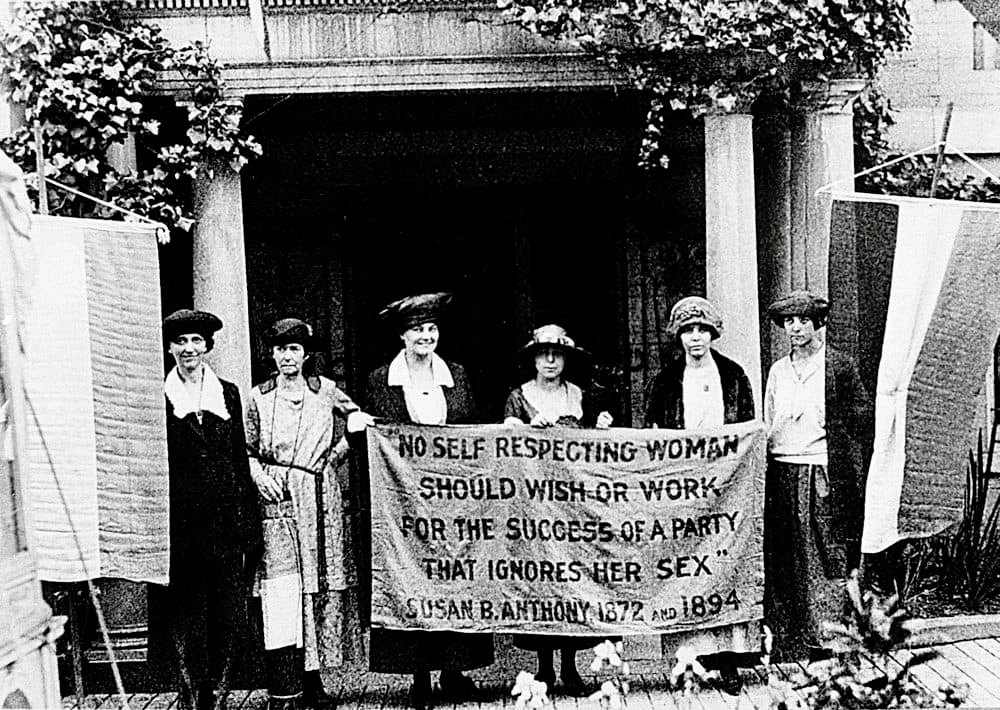
“NO SELF RESPECTING WOMAN SHOULD WISH OR WORK FOR THE SUCCESS OF A PARTY THAT IGNORES HER SEX — SUSAN B. ANTHONY, 1872 and 1894,”
The Supreme Court ruling and the EHRC draft Code do not persecute anyone. They restore legal coherence to a framework that was always intended to protect both trans people and women, and that was hollowed out, institution by institution, policy by policy, tribunal by tribunal, during a decade in which ideological performance counted for more than working class women’s actual safety.
The campaign to reduce all of this to a toilet argument is intelligent. It is not honest.
The honest version of the argument would require its advocates to say plainly: we want the legal category “woman” to be defined by identity rather than sex, and we want that definition to take precedence over the sex-based protections women currently hold in law. Made plainly, that argument would lose. It would lose because most people, without requiring a Supreme Court judgment to guide them, understand that bodies are not merely opinions about bodies, that the reality of male violence against women is not dissolved by a change of identity, and that half the population did not spend a century fighting for legal protections only to be told those protections were a form of prejudice.
Women did not invent sex. They did not construct it as a weapon against anyone. They were born female in a world that has treated that fact, for most of recorded history, as a liability. They won protections through movement politics, strikes, legal battles and decades of organised collective defiance. They should not be required to win them again, against people who have learned to speak the language of liberation while working to dismantle the laws it produced.
The left must make a choice. Not between trans people and women; that is the false frame the campaign has constructed. Between material politics and liberal abstraction. Between representing the class that does the work, bears the children, staffs the wards, absorbs the violence and fills the refuges, or performing solidarity for those who fund the campaign and attend the conferences and receive the institutional applause.
Women are not a subset of their own sex. And a politics too frightened to say what a woman is, has already told you, clearly enough, whose side it is on.
You cannot protect what you cannot define.
And a left that refuses to define women has no business claiming to defend them.
Enjoyed this read? I’m committed to keeping this space 100% ad-free so you can enjoy a clean, focused reading experience. Crafting these articles takes a significant amount of research and heart. If you found this helpful, please consider a “small donation” to help keep the lights on and the content flowing. Every bit of support makes a huge difference.

SOURCES
Equality Act 2010: Draft Code of Practice for services, public functions and associations, 2026 | GOV.UK LINK
Draft services Code of Practice laid in Parliament | Equality and Human Rights Commission LINK
For Women Scotland v Scottish Ministers, UK Supreme Court [2025]
BBC News broadcast report on the EHRC Code of Practice, 21 May 2026
Support Independent Journalism Today
Our unwavering dedication is to provide you with unbiased news, diverse perspectives, and insightful opinions. We're on a mission to ensure that those in positions of power are held accountable for their actions, but we can't do it alone. Labour Heartlands is primarily funded by me, Paul Knaggs, and by the generous contributions of readers like you. Your donations keep us going and help us uphold the principles of independent journalism. Join us in our quest for truth, transparency, and accountability – donate today and be a part of our mission!
Like everyone else, we're facing challenges, and we need your help to stay online and continue providing crucial journalism. Every contribution, no matter how small, goes a long way in helping us thrive. By becoming one of our donors, you become a vital part of our mission to uncover the truth and uphold the values of democracy.
While we maintain our independence from political affiliations, we stand united against corruption, injustice, and the erosion of free speech, truth, and democracy. We believe in the power of accurate information in a democracy, and we consider facts non-negotiable.
Your support, no matter the amount, can make a significant impact. Together, we can make a difference and continue our journey toward a more informed and just society.
Thank you for supporting Labour Heartlands