The EHRC Code Ends Eight Months of Confusion: But Will Labour Act?
After eight months of delay, the Equality and Human Rights Commission’s statutory Code of Practice has been formally laid before Parliament. For every NHS trust, council, charity and quango that has spent years hiding behind confusion, the hiding is over.
The code of practice is not a pamphlet. It is not a recommendation. It is not a consultation exercise or a diversity working group’s output. Laid before Parliament on 21 May 2026, it is statutory guidance, approved by the Secretary of State, carrying the weight of the Equality Act 2010, and grounded in the Supreme Court’s unanimous ruling in For Women Scotland v Scottish Ministers. Courts and tribunals must take it into account. Lawyers must advise their clients by it. Service providers ignore it at their legal peril.
This publication should not require celebration. It should have been obvious from the moment of the Supreme Court judgment more than a year ago. But in a country where obvious things are routinely made obscure when they inconvenience the right people, it is worth stating plainly: “The law has been confirmed, the Code has been laid, and the age of institutional excuse has ended.”
Every organisation that spent the last year hiding behind “confusion” now has nothing left to hide behind. That is not a culture war. That is the law.
WHAT THE CODE ACTUALLY SAYS
The Code runs to more than three hundred pages. Its core meaning fits in a paragraph. Sex, in the Equality Act 2010, means biological sex. Not certificated sex. Not self-declared identity. Biological sex: the material, observable, unchosen fact of what a human being is. The Code states plainly that a person’s sex remains their biological sex whether or not they hold a Gender Recognition Certificate. A trans man is, in Equality Act terms, female. A trans woman is, in Equality Act terms, male.
Service providers can lawfully provide single-sex services where doing so is a proportionate means of achieving a legitimate aim. The Code gives examples: a women-only hospital ward, a women-only changing room, a domestic abuse refuge. It sets out the factors a provider must weigh: whether users may be undressed, whether they can leave or access an alternative, whether the service is connected to male violence against women, whether physical differences between the sexes are relevant to the delivery of that service.
On sport, the Code is equally clear. Sex-based rules in gender-affected activities should be applied on the basis of biological sex. Trans people should not be included in single-sex competitions for the sex with which they identify.
And on the question many providers have been quietly banking on, the Code is blunt. If a provider admits trans people to a service intended for the opposite sex, that service can no longer rely on the Equality Act’s single-sex exceptions. A women-only service that admits males is not a women-only service. The legal fiction collapses. The exception evaporates.
A women-only service that admits males is not a women-only service. The Code does not say this diplomatically. It says it legally.
THE COST OF EIGHT MONTHS
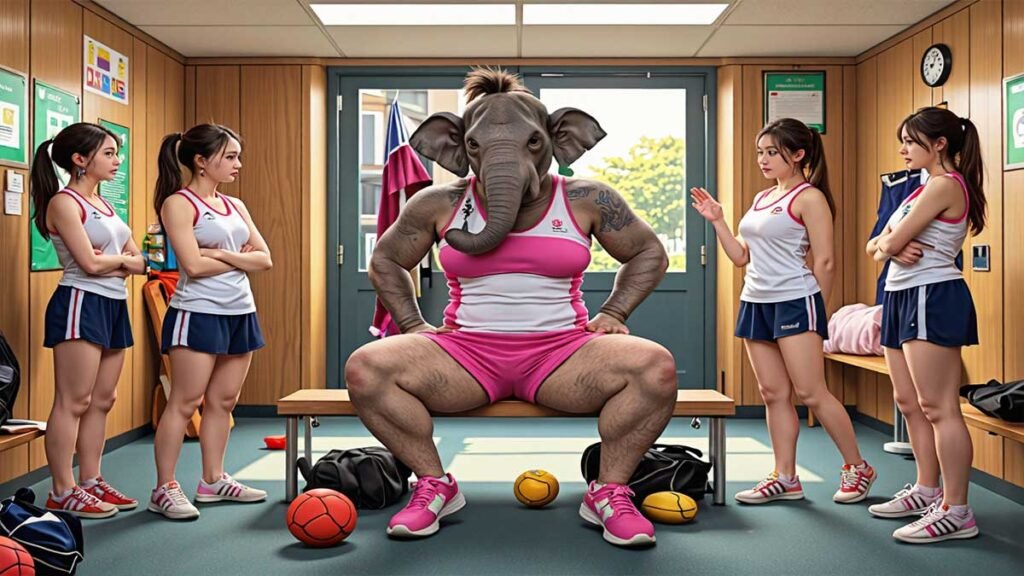
The Code was not published in September 2025, when the Supreme Court’s judgment was already settled law. It was not published in October, or November, or through the winter months that followed. For eight months, public bodies were left in a state of manufactured uncertainty, and a good many of them used that uncertainty as cover to maintain policies that had no legal foundation.
The Watershed Arts Cinema in Bristol told the BBC it had already installed gender-neutral facilities with full floor-to-ceiling cubicles. Its chief executive described the long wait for guidance as “confusing and toxic,” adding that changes would be costly for organisations like theirs. That is a candid admission, and it deserves a candid response: the cost of confusion is always borne by someone. In this case, as in most cases, it has been borne by women.
The organisations that used the delay as cover are not all arts centres trying to be inclusive. Some are NHS trusts that placed biological males in female wards. Some are local councils that gutted the single-sex character of their services in compliance with Stonewall’s now-discredited Workplace Equality Index. Some are universities. Some are charities, including domestic abuse charities, funded by the public to serve women who have survived male violence, which opened their services to men on the basis of self-declaration alone.
Those organisations were not confused. They made choices. They will now have to answer for them.
THE CLASS DIMENSION THAT NEVER GETS NAMED
There is something that the gender ideology debate almost never confronts, something that Labour Heartlands has consistently placed at the centre of its analysis: this is a class question.
The women most affected by the erosion of single-sex spaces are not the women with platforms, not the women who can afford private healthcare, not the women who work in organisations progressive enough to offer multiple facility options and enough staff to enforce them. They are the women who use public changing rooms because they cannot afford a gym with private cubicles. They are the women who depend on NHS wards because they have no private health insurance. They are the women in prisons. They are the women in refuges. They are the women at the bottom of the income distribution, who cannot opt out of shared spaces because they have no alternative.
For those women, the principle is not abstract. The changing room, the hospital ward, the refuge room: these are not theoretical rights. They are the material conditions of ordinary life. And when institutions strip those spaces of their single-sex character in the name of inclusion, the cost is not distributed equally. It falls on the women who can least afford to bear it.
The women who can least afford to bear the cost are the ones who have been made to bear it. That is not progress. That is a betrayal dressed in progressive language.
LABOUR’S RECKONING WITH ITSELF
This publication has made no secret of its view that the Labour Party under Keir Starmer failed women on this question. The failure was not accidental. It was ideological, in the precise sense that word deserves: a preference for the comfort of certain political networks over the material interests of the working-class women Labour claims to represent.
Starmer’s equivocation over whether trans women are women was not a clumsy answer in a difficult interview. It was a studied response calibrated for a particular political audience. His government’s delay in publishing EHRC guidance was not administrative slowness. Baroness Falkner, Chair of the EHRC, made public what she observed: that the government was dragging its feet, that there was reluctance at ministerial level, that the pressure of trans rights organisations was being weighed against the Supreme Court’s unanimous judgment.
This is what ideological capture looks like in practice. Not jackboots. Not a single dramatic betrayal. A series of reasonable-sounding delays, all pointing in the same direction, all serving the same interest, and none of them serving working-class women.
The Code is now before Parliament. Labour MPs will have 40 days to pray against it if they choose. Any attempt to dilute, delay, or discard the Code through the parliamentary process will be a public act, on the record, attributable to named individuals. Women will be watching.
TRANS RIGHTS AND MATERIAL REALITY: THEY ARE NOT THE SAME ARGUMENT

Labour Heartlands has said this before and will say it again, because it bears repetition in a debate that generates more heat than light. Nobody serious argues that trans people should be harassed, abused, or left without facilities. Trans people have rights in law. Those rights are real and they should be protected.
What the gender lobby has demanded, however, is not equal provision. It has demanded access to women’s provision. The Code now makes the distinction explicit. Where trans people cannot access a service as currently constituted, providers are expected to consider whether a third or gender-neutral option can be offered. The BBC’s own broadcast coverage of the Code’s publication stated this plainly: providers should ensure trans people are not left without services, while single-sex services must operate on the basis of biological sex.
That is the balance. It is not complicated. It requires only that institutions stop pretending the law says something it does not say, and start applying the law as it actually stands.
PARLIAMENT’S CHOICE
The Code now sits before the House of Commons and the House of Lords for a statutory period of 40 days. If neither House rejects it, the Secretary of State can bring it into force. This is the parliamentary process working as it should: transparency, scrutiny, accountability.
What it requires of Parliament is something in increasingly short supply: the courage to let a plain legal reality stand without hedging, qualifying, or manoeuvring around it for the benefit of lobby groups with more social media presence than democratic legitimacy.
Women’s rights campaigners, who won the Supreme Court case and have waited patiently while institutions dithered and ministers equivocated, have said it themselves: organisations that have been holding on to their old policies have been breaching the law. There is no reason to delay further. That includes employers and service providers alike.
The Code confirms that providing only mixed-sex services, without any separate or single-sex option, could amount to direct or indirect sex discrimination against women, and unlawful harassment in contexts involving undress, vulnerability, privacy, dignity, or male violence. That is not a political opinion. It is a legal finding, set out in statutory guidance, laid before Parliament.
Parliament now faces a simple choice: let the law stand, or explain to the women of this country why it should not.
THE FAILURE OF THE UNIONS

The arrival of the Code is not the end of the story. It is the beginning of a new phase: enforcement, litigation, and institutional accountability. The organisations that spent years running policies incompatible with the law will now face legal exposure. Women who were excluded from services they were entitled to will have clearer grounds for complaint and legal action. Employers who maintained self-identification policies as if the Supreme Court had never spoken will need to reckon with what they have been doing.
Nowhere has the betrayal been more complete, or more instructive, than in the trade union movement. Unions exist to protect workers. That is their single, irreducible purpose. Yet when women workers needed them most, many chose ideology over membership. The Royal College of Nursing did not defend Sandie Peggie, the Scottish nurse suspended by NHS Fife after she objected to changing alongside a biological male colleague: her own lawyer argued the RCN had contributed to her mistreatment across an eighteen-month disciplinary ordeal that cost Peggie her health and her livelihood, and which NHS Fife ultimately resolved by conceding there was insufficient evidence of any misconduct.
Peggie is now suing the RCN for that failure. The same RCN had, tellingly, written to County Durham and Darlington NHS Foundation Trust to inform the trust it was breaking the law by failing to provide single-sex changing facilities for its female staff, after eight nurses at Darlington Memorial Hospital were left sharing a changing room with a biological male who allegedly watched them undress. The union found its voice in England while staying silent in Scotland.
The incoming General Secretary of Unison, the largest healthcare union in the country with half a million NHS members, then announced she would not feel comfortable representing a member with gender-critical beliefs; a legal expert noted that such a refusal would itself constitute unlawful discrimination under the Equality Act.
And in Leeds, a Muslim woman and senior programme manager at NHS England, who holds gender-critical beliefs and suffers from PTSD resulting from male sexual violence, has just won an employment tribunal against her employer after NHS England’s 2017 Trans Equality Policy required her to share single-sex toilet and changing facilities with biological males.
The tribunal found the policy amounted to indirect sex discrimination; NHS England had itself acknowledged that Muslim women, women with PTSD, and women in general suffered a disadvantage as a result. The Code now lays down what unions should always have defended. The question is whether they will defend it going forward, or continue to privilege the demands of trans activist networks over the elementary rights of their female members.
The answer to those questions has never changed. The Code simply makes it harder to pretend otherwise.
The law does not require courage from those it protects. It requires courage from those who are supposed to enforce it. Parliament now has forty days to demonstrate whether it possesses any.
Enjoyed this read? I’m committed to keeping this space 100% ad-free so you can enjoy a clean, focused reading experience. Crafting these articles takes a significant amount of research and heart. If you found this helpful, please consider a “small donation” to help keep the lights on and the content flowing. Every bit of support makes a huge difference.

SOURCES
Equality Act 2010: Draft Code of Practice for services, public functions and associations, 2026 | GOV.UK LINK
Draft services Code of Practice laid in Parliament | Equality and Human Rights Commission LINK
For Women Scotland v Scottish Ministers, UK Supreme Court [2025]
BBC News broadcast report on the EHRC Code of Practice, 21 May 2026
Support Independent Journalism Today
Our unwavering dedication is to provide you with unbiased news, diverse perspectives, and insightful opinions. We're on a mission to ensure that those in positions of power are held accountable for their actions, but we can't do it alone. The Heartlands Tribune is primarily funded by me, Paul Knaggs, and by the generous contributions of readers like you. Your donations keep us going and help us uphold the principles of independent journalism. Join us in our quest for truth, transparency, and accountability – donate today and be a part of our mission!
Like everyone else, we're facing challenges, and we need your help to stay online and continue providing crucial journalism. Every contribution, no matter how small, goes a long way in helping us thrive. By becoming one of our donors, you become a vital part of our mission to uncover the truth and uphold the values of democracy.
While we maintain our independence from political affiliations, we stand united against corruption, injustice, and the erosion of free speech, truth, and democracy. We believe in the power of accurate information in a democracy, and we consider facts non-negotiable.
Your support, no matter the amount, can make a significant impact. Together, we can make a difference and continue our journey toward a more informed and just society.
Thank you for supporting Labour Heartlands