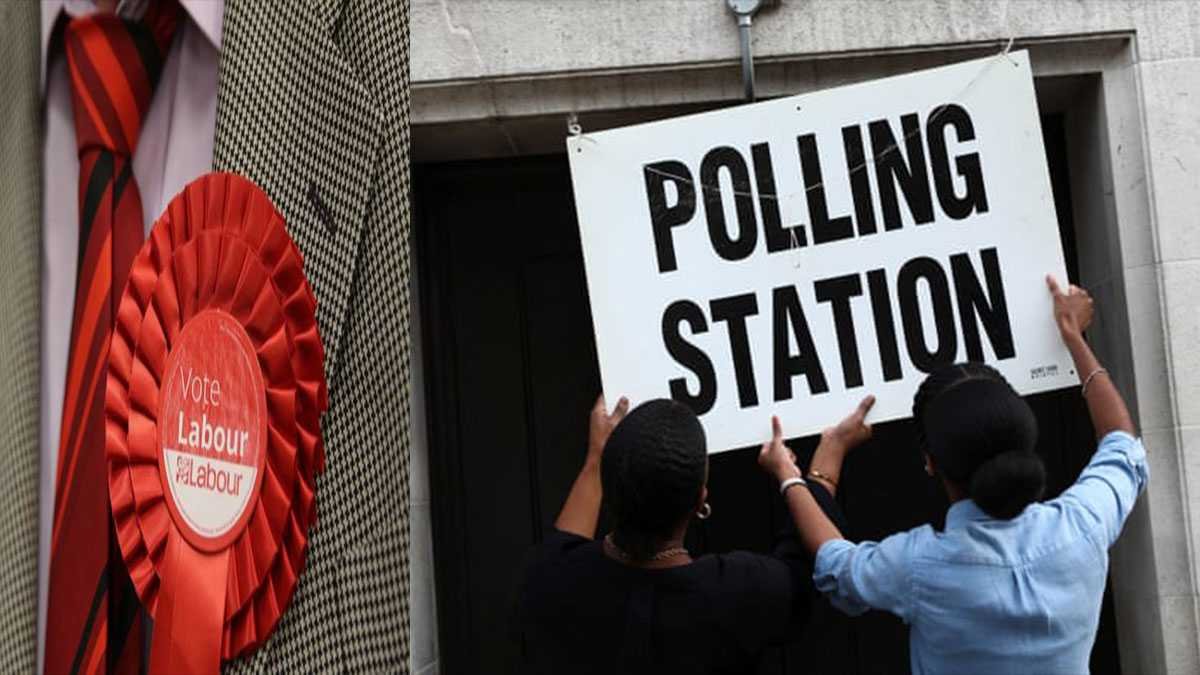
Five people arrested, one candidate who claims she did not know she was standing, and a ward Labour cannot afford to lose. In Tameside, democracy is not merely under question. It is under investigation.
There is a version of local democracy in which people put their names forward, make their case honestly, and let the voters decide. It is an imperfect system. It has always been open to manipulation, to tribal loyalty, to the quiet corruptions of patronage. But it rests, at its foundation, on one irreducible principle: the people on the ballot paper actually want to be there.
That principle is now under formal investigation in Tameside.
Greater Manchester Police confirmed on Thursday that four men and one woman, aged between 23 and 47, had been arrested at addresses across Tameside on suspicion of conspiracy to defraud. The arrests follow concerns raised over the St Peter’s ward contest in May’s local elections, where Labour’s Atta Ul-Rasool held his seat by just 177 votes over independent candidate Ahmed Mehmood. The police investigation, conducted alongside the Electoral Commission, is examining whether the process by which candidates were put forward and represented in the ward complied with electoral law.
No charges have been brought. Those arrested are entitled to the full presumption of innocence. This must be stated plainly, and then the full weight of what is alleged must be confronted without flinching.
ONE WIN. ONE WARD. ONE QUESTION.

St Peter’s was not merely another ward in an ordinary cycle of local elections. On a night when Labour suffered heavy losses across Tameside, it was the party’s only hold. A single seat clinging to the wreckage of what was once considered safe Labour territory.
The official result placed Ul-Rasool on 1,352 votes, with Ahmed Mehmood on 1,175. Reform UK’s Gaynor Francis polled 864. Two further independent candidates, Marie Fairhurst and Muhammad Ali, collected a combined 291 votes between them. The arithmetic requires no great expertise to read: 291 votes, redistributed, would have been more than sufficient to overturn Labour’s majority of 177. The margin of victory was narrower than the votes cast for candidates who, it is alleged, may not have been what they appeared.
The investigation was first driven forward by The Mill, which reported claims that independent candidates had been encouraged to stand for the specific purpose of splitting opposition votes and thereby benefiting Labour. The Guardian has since confirmed that police launched their investigation after concerns were raised about several of those independent candidates.
One detail in particular must not be allowed to pass without examination. The Tameside Correspondent reported that Marie Fairhurst, listed on the official statement of persons nominated as an independent candidate in St Peter’s, had stated she was not aware she was standing as a candidate at all.
If that claim is substantiated, what occurred is not a tactical miscalculation or an overzealous campaign staffer. It is the conscription of an unwitting civilian into an act of electoral deception. Someone whose name appeared on a ballot paper, in a democratic election, who allegedly did not know it was there.
GAMESMANSHIP OR SOMETHING DARKER?

Every political party in Britain has, at one time or another, exploited the quirks of the electoral system. Tactical voting is encouraged. Split votes are analysed. Constituency boundaries are contested. These are the familiar tools of democratic competition, morally ambiguous in places, but distinct in kind from what is alleged here.
The use of manufactured paper candidates to dilute an opponent’s vote is not gamesmanship. It is fraud against the electorate. The voter who cast a ballot for Marie Fairhurst, believing they were exercising a genuine democratic choice, was potentially deceived. Their vote, far from registering a preference, may have served as a stage prop in someone else’s calculation.
British electoral history is not without precedent for this kind of manoeuvre. The ‘paper candidate’ has existed in various forms for more than a century, usually deployed not to win but to wound. What distinguishes the current allegations, if they are proven, is the specificity of the alleged deception and the targeting of a seat Labour could not afford to lose.
The question that must follow is a structural one, not merely a personal one. Are there individuals in Labour’s local networks who have concluded that democracy is a process to be managed rather than respected? If so, that failure is not an aberration of character. It is what happens when a party mistakes administrative survival for political purpose.
THE PARTY’S DANGER

Labour’s national leadership will no doubt maintain distance from events in Tameside. This is the familiar political choreography: local difficulties are localised, implicated individuals are distanced, and the party machine declares itself horrified by the actions of the very culture it fostered.
That choreography will not hold if the investigation deepens. St Peter’s was not a marginal curiosity. It was the one ward Labour held on a night of significant losses. The symbolism is uncomfortable enough. The forensic reality, if charges follow, will be worse.
Councillor Kaleel Khan, who managed Ahmed Mehmood’s campaign, has told The Mill he intends to challenge the election result formally at Tameside council. A legal challenge to the St Peter’s result now appears probable. Labour’s single hold in Tameside may yet be unwound entirely.
Greater Manchester Police have said they are working with the Electoral Commission and local partners throughout the enquiry. Both institutions must be given the room and the resource to pursue this without interference or obstruction. The investigation is not yet concluded. No one has been charged. But the public interest in its outcome is absolute.
There is a temptation, in moments like this, to retreat into procedural language. ‘Lessons will be learned.’ ‘Proper processes will be followed.’ ‘This falls below the standards we expect.’ These phrases exist precisely to fill the silence where accountability should be.
The voters of Tameside are owed something more substantial. They are owed, at minimum, a clean answer to a clean question: was the St Peter’s result the product of a genuine democratic contest, or was it manufactured? They are owed a political culture in which the ballot paper means what it says. And they are owed a Labour Party that pursues power through persuasion, not through the manipulation of the very process it claims to defend.
If this investigation reveals that individuals connected to Labour’s local operation conspired to place phantom candidates on a ballot to protect a marginal seat, then the damage will not be confined to Tameside. It will confirm what many working-class communities already suspect: that the party machine has ceased to treat them as participants in democracy and begun to treat them as variables to be controlled.
That is not a technical breach of electoral law. It is a moral desertion of the people Labour was built to represent.
The police must now be allowed to do their work. Those arrested are entitled to due process, and that must be respected absolutely. But when the work is done, and the answers are known, there must be a reckoning, and it cannot be managed into silence by the same structures that may have produced the problem.
When a party forgets that the ballot belongs to the voter, it has already lost something more important than a ward seat.
Enjoyed this read? I’m committed to keeping this space 100% ad-free so you can enjoy a clean, focused reading experience. Crafting these articles takes a significant amount of research and heart. If you found this helpful, please consider a “small donation” to help keep the lights on and the content flowing. Every bit of support makes a huge difference.

Support Independent Journalism Today
Our unwavering dedication is to provide you with unbiased news, diverse perspectives, and insightful opinions. We're on a mission to ensure that those in positions of power are held accountable for their actions, but we can't do it alone. The Heartlands Tribune is primarily funded by me, Paul Knaggs, and by the generous contributions of readers like you. Your donations keep us going and help us uphold the principles of independent journalism. Join us in our quest for truth, transparency, and accountability – donate today and be a part of our mission!
Like everyone else, we're facing challenges, and we need your help to stay online and continue providing crucial journalism. Every contribution, no matter how small, goes a long way in helping us thrive. By becoming one of our donors, you become a vital part of our mission to uncover the truth and uphold the values of democracy.
While we maintain our independence from political affiliations, we stand united against corruption, injustice, and the erosion of free speech, truth, and democracy. We believe in the power of accurate information in a democracy, and we consider facts non-negotiable.
Your support, no matter the amount, can make a significant impact. Together, we can make a difference and continue our journey toward a more informed and just society.
Thank you for supporting Labour Heartlands