Healey and Carns Resign: Starmer’s Defence Meltdown
Seven ministers gone in a month, the Ministry of Defence in open revolt, and a question nobody in Westminster dares ask: more billions, yes, but billions for whom?
When the loyalist’s loyalist walks out, the game is up.
John Healey was not a plotter. He was not a Streeting, circling the wounded leader with a press operation and a glint in his eye. He was the man who sat through every humiliation of this government, every U-turn, every scandal, and said nothing. For two years, he carried the defence brief like a soldier carries a stretcher: head down, no complaints. He was considered one of Keir Starmer’s closest allies in the Cabinet, which is precisely what makes his departure so devastating.
And then, on Thursday morning, he resigned. In his letter, he told the Prime Minister directly: you have been unable, and the Treasury unwilling, to commit the resources the nation needs at a time of rising threats. The long-delayed Defence Investment Plan, the document that is supposed to tell us how Britain will defend itself, “falls well short of what is required”, in his judgement, for this dangerous moment.

Hours later, Al Carns followed him out the door. Carns is not a career politician. He is a former Royal Marines colonel, Special Boat Service, Military Cross, Distinguished Service Order, a man who left the military in 2024 having spent most of his adult life in uniform. In his letter he wrote that the plan is neither transformative enough nor sufficiently funded, and that we are asking our Armed Forces to operate in a more dangerous world on “a budget written for a calmer one”. Pamela Nash resigned as a parliamentary aide the same day, citing the delays and difficulties in funding the plan. Three resignations from one department in a single day.
By evening, Downing Street had handed the brief to Dan Jarvis. Jarvis is a serious man with a genuine soldier’s record, a former Parachute Regiment major who served in Kosovo, Iraq and Afghanistan. He is also living proof that this government regards jobs the way a local handyman regards odd jobs: the more on the go at once, the better.

He spent four years as Mayor of South Yorkshire while still sitting as an MP. Since 2024 he has held a ministerial post at the Home Office and, since last September, a second one at the Cabinet Office simultaneously. Now, by close of business on a single chaotic Thursday, he has been handed the defence of the realm as well. No reflection on the man; every reflection on a Prime Minister who treats the great offices of state like a rota nobody else will fill.
That makes seven ministers gone in a month. Wes Streeting resigned as Health Secretary on 14 May, citing a lack of confidence in Starmer’s leadership. Jess Phillips, Alex Davies-Jones and Miatta Fahnbulleh went days before him. By mid-May more than 95 Labour MPs had called on Starmer to resign or name his departure date. This is no longer a wobble. It is a government coming apart at the seams, and the seams were never well stitched to begin with.
A government source offered the usual anaesthetic: the country is safer because of the decisions Keir Starmer has made. One wonders who still believes this. Not his Defence Secretary. Not his Armed Forces Minister. Not, apparently, the seven ministers who have concluded that the only honourable exit from this administration is the door.
Treasury War: The Fight Behind The Curtain

Strip away the personalities and what you find underneath is a Treasury fight of grubby familiarity. The Defence Investment Plan has been delayed again and again, with Downing Street pushing for an £18 billion uplift while the Treasury argued for nearer £12 billion, and officials told to find the difference by raiding capital budgets across Whitehall, with Net Zero spending first against the wall. There are warnings the promised £18 billion could erode to £15 billion in practice. All of this comes days before a NATO summit, with the funding announcement expected before leaders gather.
So Britain will turn up to the summit having promised the moon. Starmer has already pledged 5 per cent of GDP on national security and defence by 2035, a figure demanded by Donald Trump, split between 3.5 per cent on hard defence and 1.5 per cent on cyber, intelligence and infrastructure. The cheque has been written for Washington’s benefit. The Treasury simply refuses to fund it, and the man who had to stand at the dispatch box and pretend otherwise has decided he would rather keep his honour than his red box.
On its own terms, Healey’s complaint is unanswerable. You cannot tell the public that Russia may be ready to test NATO by 2030, as the Prime Minister did only last week, and then produce a spending plan your own Defence Secretary considers inadequate. Either the threat is real and you fund it, or it is theatre and you stop frightening people. Starmer has managed the worst of both worlds: the rhetoric of Churchill and the chequebook of Mr Micawber.
£22bn for Ukraine, Cuts for Britain’s Defence
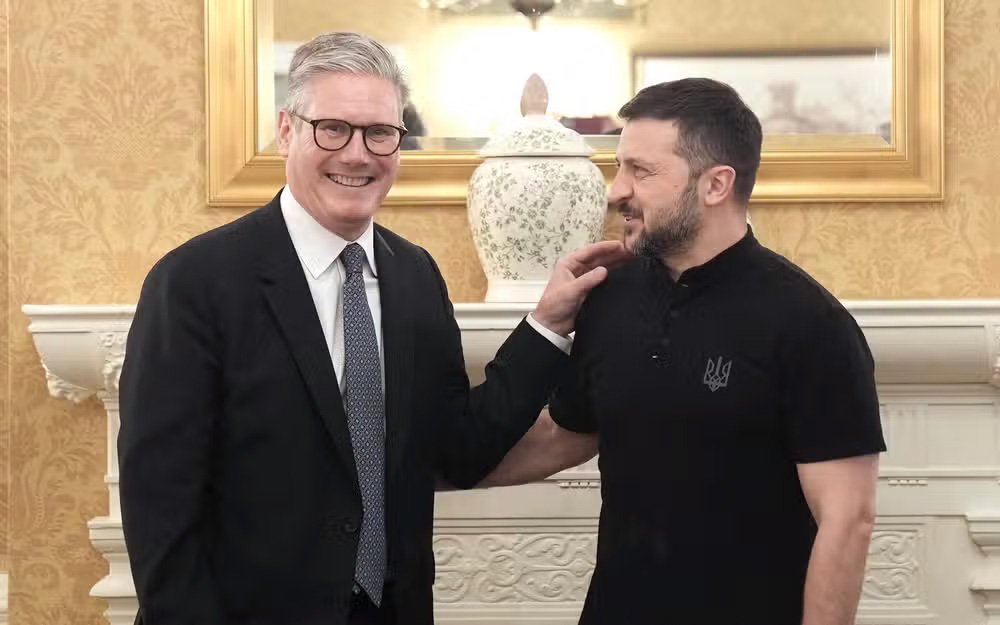
And while the Treasury pleads poverty over our own defences, remember what it has found for someone else’s. Britain has committed £21.8 billion in support to Ukraine since February 2022, some £13 billion of it military, the rest economic, humanitarian and fiscal guarantees, with a further £3.5 billion of export finance cover sitting behind it. Call it £25 billion of public money, give or take, for another country’s war, while our own Defence Secretary resigns because the plan to defend this one is underfunded. Whatever your view of that war, the working class taxpayer is entitled to notice the arithmetic.
They are entitled to notice something else, too. We are told, in the same breath, two stories that cannot both be entirely true. Story one: plucky Ukraine, with barely a navy and a fraction of an air force, has heroically held back the Russian bear for four years and counting. Story two: that same bear, bled white on the Donbas steppe, will be ready to roll over NATO’s frontier by 2030, so hand over the billions and don’t ask questions.
If Russia cannot take Kharkiv, thirty miles from its own border, after four years of trying, the spectre of Russian armour at Dover is doing a job, and the job is not military. It is fiscal.
Threat inflation is the oldest sales technique in the arms business, and the invoice is always addressed to people who will never sit on the board. None of this means the world is safe. It means we should be precise about what actually threatens us, because precision is exactly what the procurement lobby cannot afford.
Ajax, Watchkeeper, F-111: The Billions Wasted
Here is where Labour Heartlands parts company with the Westminster chorus, because every party in the Commons responded to Thursday’s resignations by demanding the same thing: more money, faster, through the same pipe. Badenoch called Healey honourable. Jenrick cheered him on. Nobody asked the only question that matters to the people who will pay for it: where do the billions actually go?
We know where they have gone. £5.5 billion contracted for Ajax, an armoured vehicle ordered in 2010 that was supposed to enter service in 2017, a programme whose noise and vibration injured the very soldiers testing it. The company pocketing those billions is the UK subsidiary of an American giant, General Dynamics, whose project manager was a former British Army general previously in charge of the MoD’s land equipment department, while a former head of the Army took a seat on the board. The revolving door does not just spin. It hums.
The National Audit Office found a £16.9 billion black hole in the defence equipment plan, the largest since records began, and declared the whole programme unaffordable. The Watchkeeper drone programme swallowed over £1.3 billion for 54 drones that will leave service having barely flown. The Public Accounts Committee described the procurement system as “broken and wasting taxpayers money”. This is the machine into which Westminster now proposes to pour tens of billions more, and call it patriotism.
There is bitter history here. The last Healey to run defence was Denis, no relation, who in 1965 cancelled the TSR-2, the most advanced British aircraft of its generation, and ordered American F-111s instead. The F-111 order was cancelled too, but the lesson stuck: British defence money would increasingly buy American kit, American licences, American dependence. Then Thatcher finished the job, privatising the Royal Ordnance Factories in 1987 and handing the arsenal of the nation to shareholders. Sixty years on, we send billions across the Atlantic and call the invoice security.
Carns’ Resignation Letter: The Line Westminster Will Bury

The hawks will say the world is dangerous, and they are right. Carns himself is no peacenik. He wrote that the “character of conflict is changing faster than our procurement can keep up with”. He has seen, through those who fought in Ukraine, that platforms costing billions can be defeated by systems costing thousands. Read that sentence twice, because it demolishes the entire procurement model. If a £3 million drone swarm can sink a £1 billion warship, then shovelling more billions at billion-pound platforms is not defence. It is a wealth transfer from the working class to the arms lobby, with a Union Jack draped over the invoice.
And no amount of conventional procurement alters the grimmest arithmetic of all. Against a nuclear exchange there is no defence budget, only diplomacy. Anyone who tells you otherwise is selling something, usually with a NATO summit lanyard round their neck.
But it is the next passage of Carns’s letter that Westminster will bury, and that we will not.
“A strong country is not simply one with capable armed forces.”
It is one, he wrote, where working people feel economically secure, where public services function, where energy is resilient, where communities are stable, and where young people can see a future worth working towards.
That is the Armed Forces Minister, a decorated Royal Marine, resigning from a Labour government and telling it that national security begins at the kitchen table. Attlee’s generation understood this in their bones. They built the NHS and the welfare state out of the rubble of a war economy precisely because they had learned that a nation defends itself with healthy, housed, employed citizens or it does not defend itself at all.
Make Every Defence Pound a Pound of National Renewal
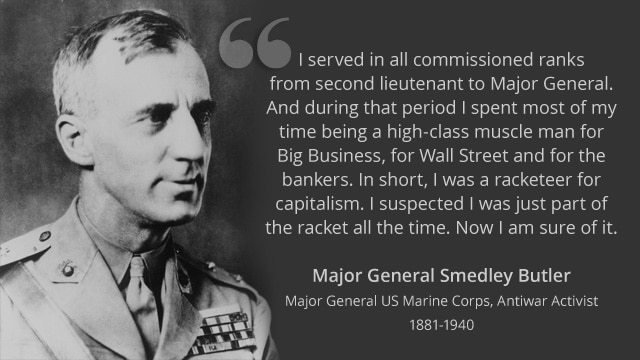
Real defence, real renewal…
So yes, spend on defence. But learn the right lessons first, because Ukraine has been teaching them for four years to anyone willing to listen.
Lesson one: a strong conventional army still matters. Mass, artillery, trained infantry, deep stocks of munitions. Wars are still won and lost by people holding ground, and Britain’s Army is now the smallest it has been since Napoleon was the threat. Lesson two: the indispensable shield of modern war is the one Britain conspicuously lacks. Every city in Ukraine still standing owes its survival to layered air defence, the unglamorous business of knocking down drones and missiles before they land on power stations and apartment blocks. That is the capability that saves civilian lives, and it is the capability this country has allowed to wither to a handful of batteries.
So let Britain build its own Iron Dome: a genuine, layered air and drone defence of the homeland, of our ports, our power stations and our cities, designed in British laboratories and built in British factories. The technology is cheap, fast and distributed. It does not require gold-plated thirty-year contracts with American primes. It requires exactly the industrial capacity we threw away: machine shops, electronics plants, steelworks, shipyards, apprenticeships.
Make every pound of the defence uplift a pound of national renewal. Defence procurement is the one form of state industrial strategy even the free-market fundamentalists accept, so use it. Public money into British companies, with conditions: union recognition, UK supply chains, profits taxed here, and an end to the revolving door that lets generals retire on Friday and invoice their old department on Monday. Tony Benn’s old questions apply to the arms lobby as much as to any minister. What power have you got, and in whose interests do you exercise it?
That is a defence policy the working class could believe in, because it would defend them twice over: against missiles, and against the managed decline that has hollowed out every town these contracts ought to be rebuilding.
Starmer will survive this week or he will not. It scarcely matters. The verdict is already in, delivered not by his enemies but by the most loyal men he had. A Prime Minister who talks of war footing while his own Defence Secretary resigns over the funding, and whose Armed Forces Minister departs reminding him that security begins with working people, has been judged by the only witnesses who count.
There is no defence for Starmer. The question now is whether there will be any defence for Britain, and whether, for once, it will belong to the people who pay for it.
The strongest fortress this country ever built was not made of steel. It was made of secure work, warm homes and a health service free at the point of use. Rebuild that, and the nation defends itself.
Enjoyed this read? I’m committed to keeping this space 100% ad-free so you can enjoy a clean, focused reading experience. Crafting these articles takes a significant amount of research and heart. If you found this helpful, please consider a “small donation” to help keep the lights on and the content flowing. Every bit of support makes a huge difference.