Burnham Promises Hope. Labour’s Record Demands Doubt
Andy Burnham entered Downing Street promising a new political model, a new economic model and an end to rough sleeping. The words were better, the manner warmer and the first action welcome. But before Britain accepts the change of actor as a change of direction, Labour must answer for the last two years of failure.
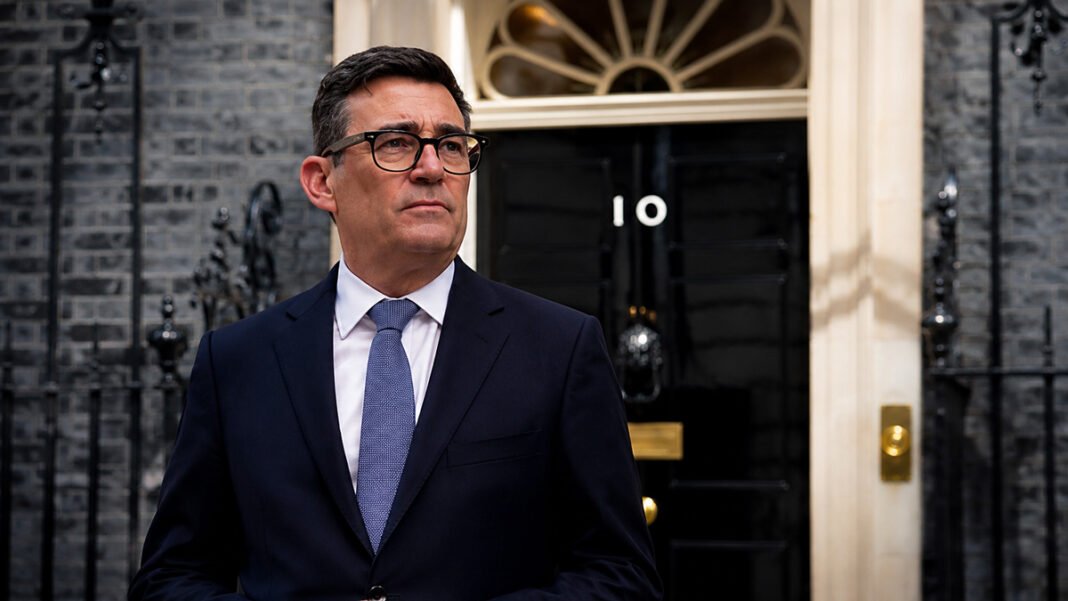
Andy Burnham became Prime Minister on Monday, 20 July 2026, the seventh person to hold the office since the Brexit referendum and the sixth to enter Downing Street in the past decade. He did so before announcing his Cabinet, standing outside Number 10 as the sole public face of a government that had not yet been formed.
There was no lectern. No row of flags. No attempt to turn Downing Street into the presidential stage set favoured by Keir Starmer.
Burnham stood in the street and spoke directly to the country. It was an obvious attempt to appear accessible, human and unencumbered by the borrowed grandeur that became such a feature of Starmer’s premiership. Where Starmer often looked as though he had been lowered into place by the permanent bureaucracy, Burnham looked like a politician asking to be heard.
Style matters in politics because it tells the public how a leader wishes to be understood. But it is not substance. A government cannot feed a family with better body language.
The speech: better than Starmer, but that is not enough
Much of Burnham’s Downing Street address was a compressed version of the leadership speech he delivered three days earlier.
Once again, he spoke of political failure, centralised power, deindustrialisation and the wrong turns Britain took in the 1980s. He promised a “circuit breaker for Britain”, the biggest changes in 40 years, a ten-year national plan, stronger public control of essential services, greater devolution, council housebuilding and the use of public procurement to support British industry.
These are significant words from a Labour Prime Minister.
For more than four decades, Westminster governments have treated the economic settlement created under Margaret Thatcher as though it were part of the British climate: regrettable on cold days, perhaps, but beyond the reach of politics. Burnham at least named the decisions that produced the damage. Political power was centralised. Economic power was privatised. Industry was abandoned. Whole towns were left to manage decline while London collected the rent.
That diagnosis is closer to the truth than anything heard from Downing Street under Starmer.
Burnham also promised to put “life’s essentials” under stronger public control. That phrase will require scrutiny. Public control is not necessarily public ownership. A regulated monopoly can remain a monopoly. A privately owned utility can obey more rules while continuing to extract dividends. A cheaper bus that turns up on time is an improvement, but public control is not public ownership.
The test will be whether Burnham intends to alter who owns Britain, or merely negotiate better terms with those who already do.
Burnham’s mea culpa doesn’t let Labour or its MPs off the hook
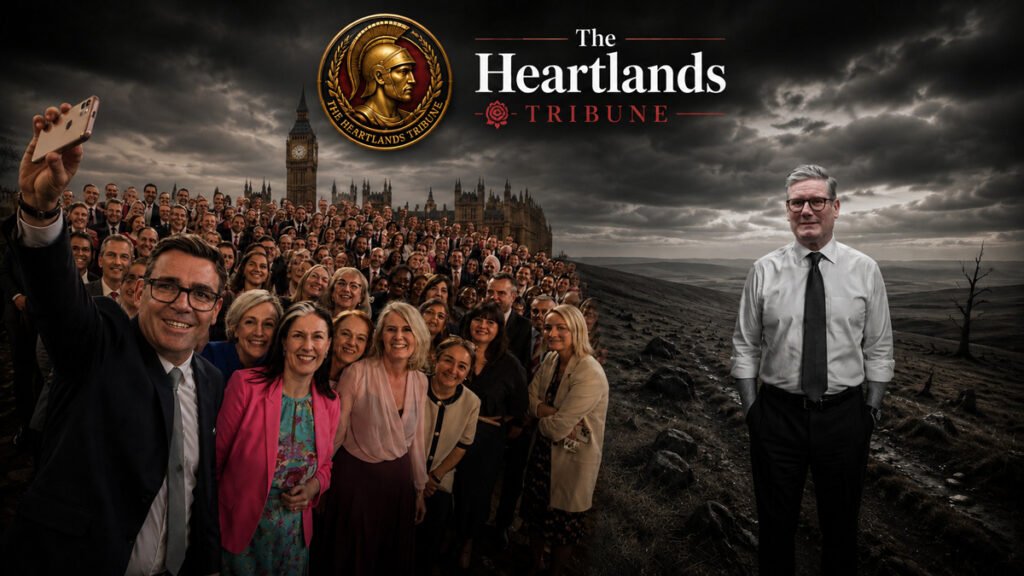
Burnham told the country: “We have not been good enough, and we need to be better.”
Fair enough. But who is “we”?
The confession cannot be restricted to Keir Starmer and Rachel Reeves. It belongs to the Parliamentary Labour Party that sustained them.
Labour returned 411 MPs at the 2024 general election and retained an enormous Commons majority even after subsequent departures and suspensions. Yet not one sitting Labour MP converted the widespread anger against Starmer into a successful leadership challenge. Under Labour’s rules, a challenger required nominations from 20 per cent of Labour MPs. That threshold stood at 81 during the contest that eventually installed Burnham.
The parliamentary party contained former Cabinet ministers, serving ministers, supposed representatives of Labour’s left, self-declared soft-left reformers and ambitious careerists by the carriage-load. None could or would do it.
Instead, Josh Simons resigned as MP for Makerfield, creating a by-election that allowed Burnham to return to Westminster on 18 June. He was then handed 349 nominations from Labour MPs, making it mathematically impossible for any rival to reach the threshold required to stand. The leadership election became a procession before Labour members or the wider country were offered a meaningful choice.
The Guardian described the by-election plainly as having been “staged by his allies with the explicit purpose of replacing Starmer”.
That should trouble anyone interested in democratic accountability.
From a parliamentary party of more than 400 MPs, Labour could not produce one person with sufficient confidence, support or courage to remove a failing Prime Minister through the party’s existing machinery. It had to vacate a safe seat, import a mayor, elect him to Parliament and then close the leadership contest around him.
That is not evidence of a party overflowing with talent. It is evidence of an institution that no longer trusts its own parliamentary ranks.
The same MPs who now acclaim Burnham spent two years cheering Starmer. They backed his Budgets, defended his reversals, repeated his slogans and marched through the division lobbies behind a government offering managed decline with a red rosette.
They did not discover the poverty, insecurity or democratic decay of Britain last month. They discovered that Starmer had become an electoral liability.
A cheque for the homeless
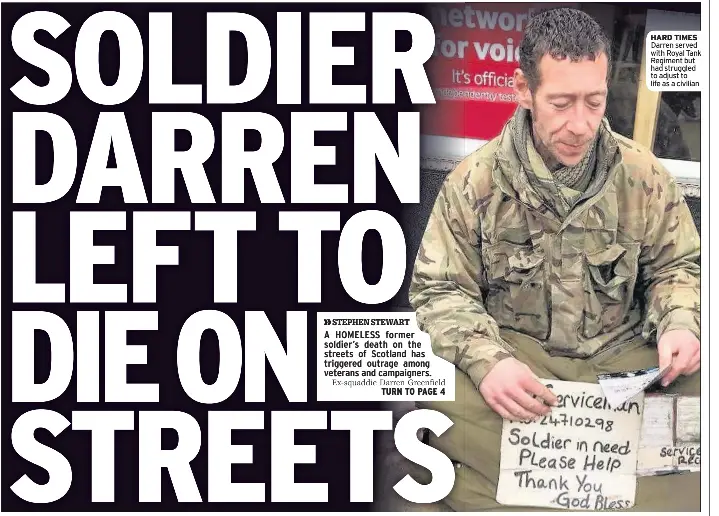
Burnham’s strongest moment came at the end.
His first instruction as Prime Minister, he said, would be to end rough sleeping. He then entered Number 10 and announced an additional £340 million for an urgent national programme, intended to provide 1,200 homes and intensive support for at least 3,000 people. The Government says this is the opening phase of a five-year programme.
This deserves a welcome.
British politics has become rich in promises and strangely impoverished in cheques written for poor people. Burnham attached money to his words on his first day. That is already a meaningful contrast with a political culture that announces ambitions, commissions reviews and waits for those affected to disappear from the statistics.
The contrast with Starmer’s final week was equally striking. On 16 July, during a farewell visit to Kyiv, Starmer committed €300 million of British funding towards a squadron of 16 Swedish Gripen fighter jets for Ukraine. The package included training, simulators, spare parts and supporting equipment.
The two expenditures are not directly comparable. One does not automatically exclude the other, and the Ukraine package was presented as supporting British defence employment as well as Ukrainian air power. But political choices are revealed by their order and urgency.
Starmer left office signing another military commitment abroad. Burnham entered it funding roofs at home.
The country will notice.
Burnham has made this promise before
It must also remember…
When Burnham became Mayor of Greater Manchester in 2017, he made ending rough sleeping by 2020 one of his defining commitments. He donated 15 per cent of his mayoral salary to a homelessness fund and introduced the A Bed Every Night programme, which supplied emergency accommodation across the city region.
There was real progress. The official single-night estimate for Greater Manchester fell from 268 people in 2017 to 125 in 2020 and then to 90 in 2021. Burnham did not meet his promise to end rough sleeping, but the reduction was substantial.
It did not hold. By autumn 2025, the estimate had risen again to 197.
Nationally, the official 2025 snapshot recorded 4,793 people sleeping rough on a single night in England, the highest figure in the series. The Government warns that the snapshot does not capture everyone without a home, including people in hostels, temporary accommodation, squats or locations inaccessible to outreach teams.
Burnham’s Manchester record therefore supports two conclusions at once.
First, determined intervention can reduce rough sleeping. Emergency accommodation, local coordination and sustained support worked.
Second, a reduction is not an ending. Unless government tackles the supply of council housing, insecure tenancies, unaffordable rents, poverty, mental health provision, addiction services and the financial collapse of local authorities, the numbers climb again.
Homelessness is not produced by a shortage of charitable intent. It is produced by an economy that treats housing as an investment vehicle before it treats it as shelter.
Burnham’s £340 million is a welcome beginning. It cannot become another emergency programme laid across the top of the machinery that keeps manufacturing homelessness underneath.
Hope is not yet a programme

Burnham’s speech was better than Starmer’s grey language of fiscal restraint, tough choices and national renewal forever postponed. He identified Thatcherism as a wrong turn. He spoke of council homes, deindustrialisation, public control and moving power out of Westminster. He gave homelessness both priority and money.
Those things matter.
But he also promised to retain the Government’s fiscal rules and honour its defence commitments. He offered help with the cost of living while postponing the full plan until later in the year. His “new economic model” remains a phrase waiting for a balance sheet.
The case for giving him room is easily stated. He has inherited a damaged government, a hostile economy, decaying public services and a country exhausted by political theatre. No Prime Minister can reverse 40 years of privatisation and deindustrialisation on the walk from Buckingham Palace.
Grant all of it.
Burnham nevertheless inherits more than Starmer’s office. He inherits Starmer’s parliamentary party, including the ministers and MPs who defended the old course until it threatened their seats. Before a single Cabinet appointment was announced, they had already proclaimed themselves converted.
Britain may welcome the change of tone. It should welcome money directed towards ending rough sleeping. It should judge Burnham by what he does rather than punish him in advance for what Starmer did.
But hope is not a substitute for ownership, wages, homes, industry or democratic consent.
Burnham has promised a circuit breaker. The question is whether he will break the system that failed Britain, or merely reset the same machine with a friendlier voice.
A new man has walked through the door of Number 10. The country is waiting to discover whether anything else has changed…
Enjoyed this read? I’m committed to keeping this space 100% ad-free so you can enjoy a clean, focused reading experience. Crafting these articles takes a significant amount of research and heart. If you found this helpful, please consider a “small donation” to help keep the lights on and the content flowing. Every bit of support makes a huge difference.