IT TOOK GENEVA TO REMIND WESTMINSTER THAT WOMEN HAVE RIGHTS
Women’s rights in Britain are not owned. They are held on licence, revocable whenever a man claims the female identity. July 2026 was the month the licence nearly got called in.
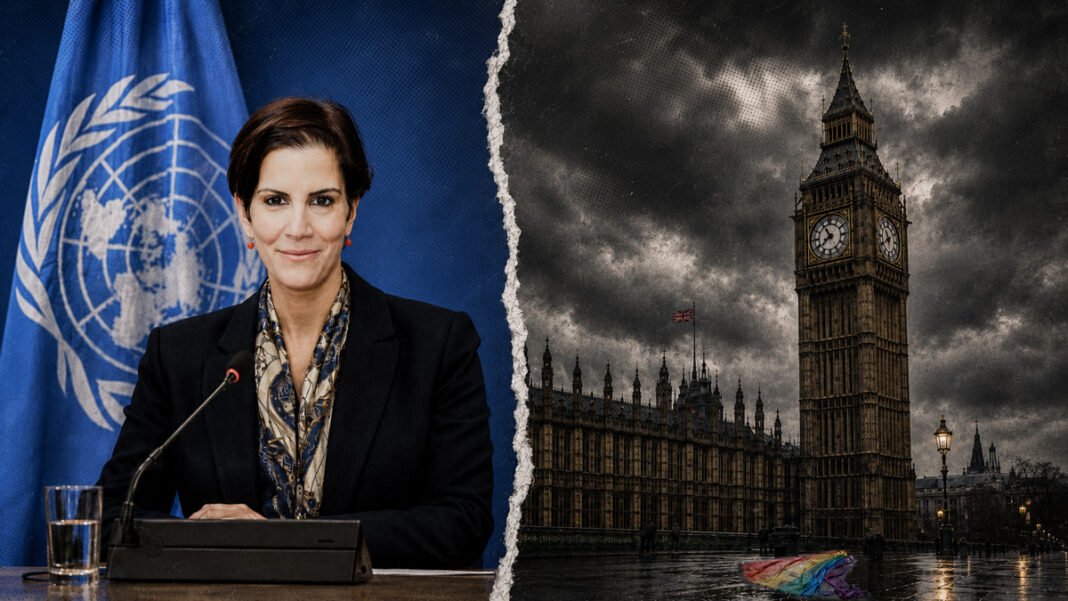
On 14 July, in an office in Geneva, the United Nations Special Rapporteur on violence against women and girls sat down and drafted a press release about the United Kingdom.
Not about Afghanistan, where girls are barred from school. Not about Iran, where women are beaten for their hair. About Britain, the country that gave the world the suffragettes, the Equal Pay Act and the Sex Discrimination Act.
Reem Alsalem’s statement urged British politicians to uphold a ruling of their own Supreme Court, and observed that the backlash against it showed “how fragile the protection of women’s rights remains”. She closed by calling on the Government and the devolved administrations to state clearly that the law is clear and must be complied with.
The law is clear and must be complied with. A UN official had to say that sentence to the British Parliament. Every word of this article exists to explain why she had to, and to name the people responsible.
THE STATE OF THE LAW
First, the facts, precisely, because precision is what our opponents cannot afford.
The Supreme Court ruled unanimously in April 2025 that sex in the Equality Act 2010 means biological sex. We have documented the fifteen months of obstruction that followed, from Bridget Phillipson sitting on the EHRC’s finished Code through the High Court throwing out the Good Law Project’s challenge, in these pages already, and readers who want the full charge sheet should start with One Year Since The Supreme Court Ruled Women Are Female. The short version: it took the British state longer to publish guidance restating the ruling than it took the court to hear, deliberate and deliver the ruling itself.
On 21 May 2026 the Code of Practice was finally laid before Parliament under the negative procedure of the Equality Act 2006. Parliament had 40 days to disapprove it. The clock ran out on 9 July with no disapproval vote in either House. The EHRC has now issued the 342-page Code in the form laid, and Phillipson must complete the last formality: revoking the 2011 code and setting the commencement date. Once commenced, it is statutory. Courts and tribunals must take it into account. NHS trusts, councils, charities and service providers who ignore it do so at their legal peril.
So the women won. The Code survived. Hold that thought, because the interesting question is never whether the women won. The interesting question is who tried to stop them, and what that tells us about who our institutions now serve.
THE 168

During those forty days, Labour MP Nadia Whittome tabled Early Day Motion 65938. Parliament’s own record shows its full text: a single sentence demanding the Code “be disapproved”. Her co-sponsors were Stella Creasy, Kate Osborne, Marie Goldman, Lorraine Beavers and Sian Berry. By the close, 168 MPs had signed, the most supported early day motion since the Covid crisis, drawn overwhelmingly from Labour, the Liberal Democrats, the SNP and the Greens.
Read that motion text again. No amendment. No identified defect. No alternative wording. Not one of the 168 proposed fixing a paragraph they considered badly drafted, which is what parliamentarians do when their objection is genuine and technical. They demanded the whole thing scrapped: the entire statutory apparatus giving practical effect to a unanimous judgment of the highest court in the land, binned by procedural motion, with nothing to replace it but the legal fog that had already produced men in women’s prisons and male officers strip-searching female detainees.
Here is my interpretation, and I will not apologise for it. Those 168 signatures were not an act of representation. They were an act of clientelism. The women in refuges were not consulted. The female prisoners were not consulted. The schoolgirls, the elderly women on mixed wards, the rape survivors for whom a female counsellor is the precondition of speaking at all: none of them were asked. The constituency being served was a lobby, and the lobbying machinery is not a conspiracy theory, it is on the public record. Whittome sits on the executive of the Trade Union Group of Labour MPs, the body through which the big unions carry policy into the Parliamentary Labour Party, and FiLiA’s trade union researchers have traced how the same unions now demanding the Equality Act be rewritten coordinated the push against the Code. The motion’s signatories included office-bearers of that very group.
And note who is missing from the 168: every single Conservative and Reform MP. Our liberal commentariat will tell you this proves the Code is right-wing. It proves the opposite. It proves the supposed party of labour handed the defence of working class women, gift-wrapped, to Nigel Farage. We warned in Pride And Fall what happens when the left vacates that ground. The 168 vacated it at a sprint.
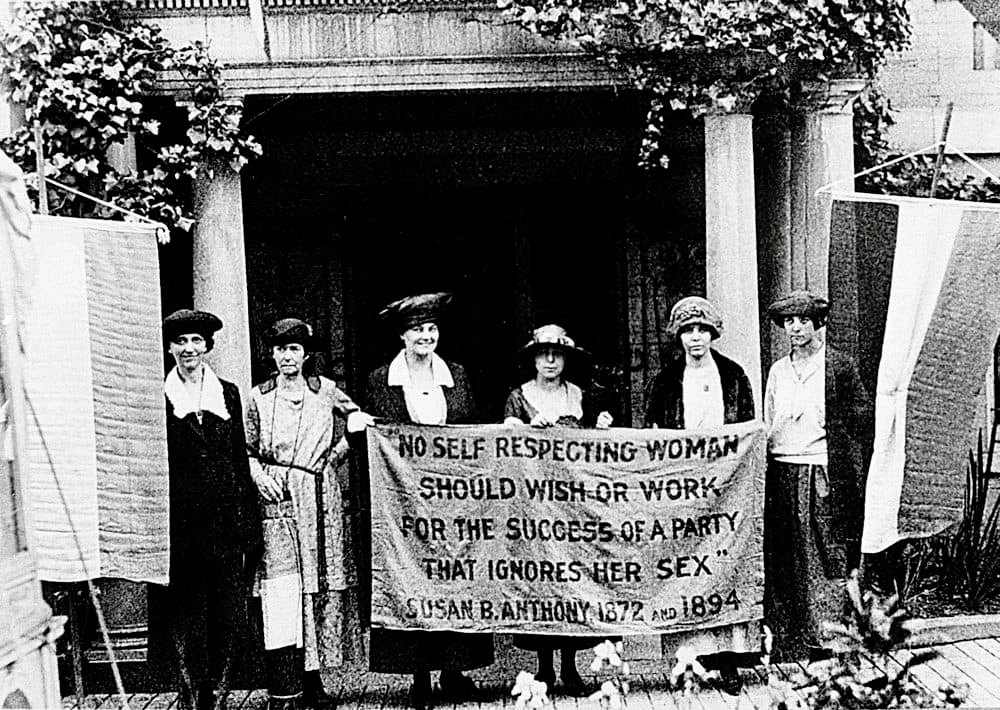
“No self-respecting woman should wish or work for the success of a party that ignores her sex.” Susan B. Anthony, 1872 and 1894
THE BEST CASE THEY HAVE, AND WHY IT FAILS
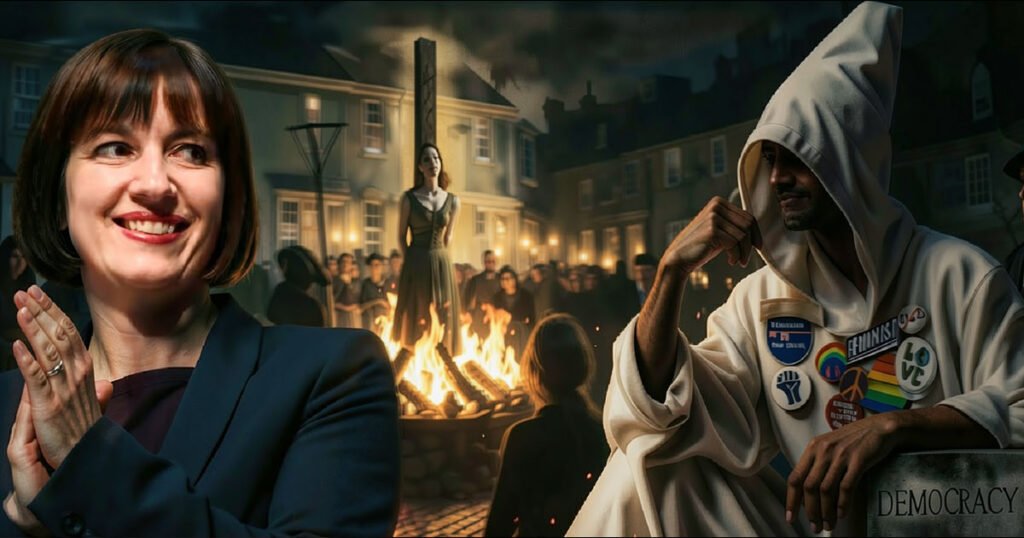
Let me make the opponents’ argument better than they made it, because beating a strawman is a coward’s sport.
Their honest case runs: the Government’s own impact assessment accepted the Code would bear negatively on trans people; trans people are a small minority with genuine reason to fear public hostility; guidance that formalises their exclusion from opposite-sex spaces will make ordinary life harder for some of them; a decent Parliament should refuse to wave that through.
The premises are real and I do not mock them. The conclusion still collapses, three times over.
It collapses first on the law. The Supreme Court did not strip trans people of protection; the judgment explicitly reaffirms that gender reassignment remains a protected characteristic, alongside protection from sex discrimination. It collapses second on history. The Code invents nothing. The single-sex exceptions it restates have stood for half a century, written deliberately by Parliament because Parliament understood that women’s safety and privacy sometimes require male exclusion, however the male in question identifies. The court itself said the contrary reading would render those provisions “impractical, anomalous and illogical”. And it collapses third, fatally, on democracy. If you believe a law is wrong, you campaign to change it: openly, in a manifesto, before the voters. What you do not get to do is leave the law standing while strangling the guidance that makes it enforceable, so that the statute survives on paper and dies in every changing room in the country. That was the actual mechanism of EDM 65938. Whatever compassion motivated individual signatures, the mechanism was lawlessness dressed as kindness.
The unions understood the mechanism perfectly. Some of them were candid enough to say so out loud.
FOUR-FIFTHS WOMEN, ZERO MENTION OF WOMEN

UNISON is Britain’s largest union. Nearly four in five of its members are women: the care workers, cleaners, nurses and teaching assistants who staff the very wards, changing rooms and refuges this entire argument is about. At its June conference, general secretary Andrea Egan stood before them and declared that “The Supreme Court ruling was wrong”, launching a campaign to rewrite the Equality Act around self-declared identity. Her union proposes, in plain terms, to relitigate through lobbying what its side lost at law, and to spend its women members’ subscriptions doing it.
She was not alone. FiLiA’s survey of the union statements issued after 21 May, covering Unite, GMB, the FBU, PCS, the TUC and STUC, found a pattern so uniform it reads like a shared script: women unmentioned, trans and non-binary members centred exclusively, the Code declared confusing and unworkable, and in several statements the basic error of claiming it governs workplaces, which it does not. Fifty years of settled law, recast as a novel imposition. The TUC that now lectures Reform about trustworthiness on women’s rights spent the scrutiny window trying to sink the one document that makes those rights enforceable.
The pattern is now heading to court. Stephanie Pratt, a specialist biomedical scientist with twenty years in the Scottish NHS, joined Unite in 2011 and served as a workplace and equality representative. She is now crowdfunding an employment tribunal claim against her own union for discrimination, harassment and victimisation over her gender critical beliefs. Her account, set out in her legal appeal, reads as a catalogue of the culture: told to “watch my language” for using the terms biological male and biological female on a union training course, brushed off by a branch convenor who she says told her nobody cared about women’s single-sex spaces, ignored for eighteen months when she asked for legal guidance, and left watching Unite Scotland’s LGBT+ committee promote a statement branding the gender critical movement, which is to say her, a “genocidal” ideology. In October she resigned as a representative for the sake of her health. Her claims are hers to prove, but this much is already settled law: Forstater, Phoenix and Meade established that beliefs like hers are protected under the Equality Act. A union that spent years treating a protected belief as a disciplinary matter may be about to receive the same legal education as the employers it exists to fight.
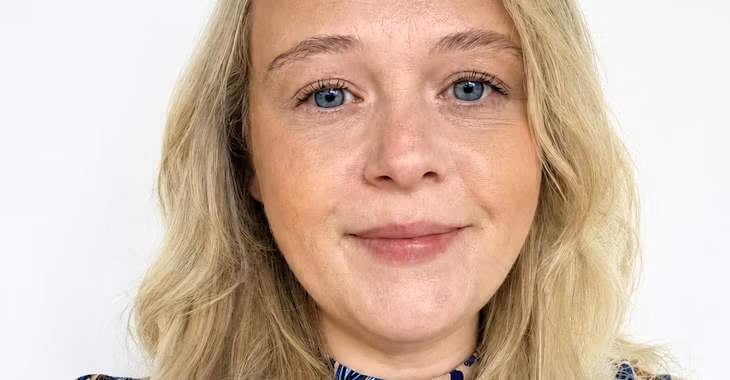
And the road Pratt is walking has already been walked to its end, in Darlington. When nurses at Darlington Memorial Hospital objected to sharing their changing room with a male colleague who identifies as a woman, the big unions did not merely fail them. One nurse emailed her union rep and got silence; a month later she discovered her union was representing the man she had complained about. The women fought their tribunal alone, won a ruling in January that the Trust had violated their dignity, and secured £187,000 in damages, a formal apology and separate facilities. Along the way they had to found a union of their own, the Darlington Nursing Union, because the existing ones would not do the single job a union exists to do. We told their full story in The Darlington Nurses Won: The Unions Should Hang Their Heads. Remember them the next time a general secretary calls the Code unworkable. It worked in Darlington. A judge made it work.
And above the unions, the charities. Amnesty International UK spent early July publishing a report that branded more than a hundred organisations an anti-rights movement, and placed on its list Beira’s Place, a women-only centre for victims of sexual violence. Under threat of defamation proceedings it withdrew the report, apologised, and has referred itself to the Charity Commission. A human rights charity, reporting itself to its regulator, for smearing a rape crisis centre. That story deserves its own examination and will get one in these pages. For today it serves as the pattern’s purest specimen: the institutions that talk loudest about rights could not recognise a woman’s right when it stood in front of them asking for nothing but a locked door and a counsellor of her own sex.
Set against all of that institutional weight, now look at the numbers the panic was built on.
THE ARITHMETIC OF A MANUFACTURED EMERGENCY

The 2021 Census recorded around 262,000 people in England and Wales, half of one per cent of those over sixteen, identifying with a gender different from their registered sex, and the ONS itself warns the figure is likely inflated by respondents misreading the question. The number holding a gender recognition certificate, the legal instrument the For Women Scotland case actually turned on, is smaller still: 8,464 full certificates granted across the entire United Kingdom in the scheme’s first two decades, on the Ministry of Justice’s own figures.
Now the other side of the ledger: some thirty-four million women and girls, every one of whom will at some point rely on a single-sex space, whether a refuge, a ward, a changing room or a counselling room.
So here is what our political class hopes you never compute. The most supported parliamentary motion since the pandemic, backed by the country’s biggest unions, its most famous human rights charity and 168 legislators, was mobilised to suppress statutory guidance whose contested cases concern a certificated population that would not fill a League Two football ground, while the thirty-four million on the other side of the door were never surveyed, never balloted, never so much as named in the union statements issued on their subscriptions. Every one of those 8,464 people retains, in full, the anti-discrimination protections the Supreme Court explicitly reaffirmed. What they were never entitled to, and what the law has never granted, is entry to the spaces the other thirty-four million rely on. The emergency was manufactured. The constituency was invisible. That imbalance is the scandal, and it is a scandal of political priorities, nothing else.
Which brings us to the biggest lie in this entire affair.
“You cannot protect what you cannot define.” Reem Alsalem, UN Special Rapporteur on violence against women and girls
THE MATERIALIST LEFT KNEW ALL ALONG

On the materialist left, we do not have to struggle for endorsements. We can simply count them.
But first, understand what is actually being rejected, because the argument matters more than the roll call. Gender ideology asks one question of the socialist movement: do you validate my internal sense of self? Everything else follows from the answer. It replaces class solidarity with identity performance. It turns comrades into enemies over pronouns. It fractures the working class along lines of cultural purity rather than uniting it around shared economic interest. And the ruling class loves every minute of it. They can keep looting the country while a left infiltrated by ultra-liberals argues about who can use which toilet.
The damage to socialism is profound. A movement built to unite workers around wages, housing, energy bills, public ownership and workplace power gets dragged instead into endless purity spirals, its focus pulled from the exploitation that actually shapes people’s lives and redirected toward metaphysical questions about gender souls invented in university seminar rooms. Working class people need housing, security, dignity and power. They do not need lectures on why biological sex does not exist. We made the full case in Trans Liberation or Socialism: You Can’t Have Both, and everything since has confirmed it.
Now the roll call, because the liberal framing of this fight as left against right dissolves on contact with the actual left.
Britain’s Communist Party and the Young Communist League welcomed the Supreme Court’s ruling in a joint statement, and at its 2025 Congress the CPB went further, resolving that communists will fight for recognition of women’s sex-based rights across the trade unions. The party’s reasoning was old-fashioned materialism of the kind this publication exists to defend: you cannot analyse the oppression of a class you refuse to define.
The Workers Party of Britain holds the same ground. During the Rochdale by-election, George Galloway’s letter to constituents put it in eight words: “I believe in men and women”. His party, styling itself for the workers rather than the wokers, treats self-identification as incompatible with women’s rights and child safeguarding, and says so without embarrassment. Agree or disagree with Galloway on anything else, and this publication has done both, here is a socialist party that can tell the difference between fighting capitalism and performing identity theatre.
The Communist Party of Great Britain (Marxist-Leninist) held the line longer than almost anyone, rejecting gender ideology from at least its 2018 congress as an idealist imposition the bourgeoisie was pressing on the movement, an analysis developed at length in Joti Brar’s work on identity politics and class. Whatever one makes of that party’s fortunes since, the analysis was there in the record years before it became sayable in polite company: sex is an objective reality, and the fragmenting of the labour movement into competing identity claims is a project that serves capital, funded and franchised by it.
Add the women of FiLiA’s trade union network, fighting inside the movement at real personal cost. Add Alsalem herself, who told the Human Rights Council last summer that she had never imagined her mandate would need a report affirming that women and girls are distinct biological and legal categories, ground we covered in The Conjuring Trick At The Toilet Door, and who compressed the entire argument into seven words: “You cannot protect what you cannot define.”
So the division was never left against right. The division runs between people who deal in material reality, which is where working class women live, and a professional class, in politics, in union head offices, in charity boardrooms, that deals in doctrine and treats women’s protections as an acceptable price for its own moral fashion. The communists can see it. The Workers Party can see it. A UN rapporteur in Geneva can see it. The only people who cannot see it are the ones whose careers depend on not seeing it. The suffragettes fought the establishment of their day. Their great-granddaughters fight an establishment that marches under a progress flag. Same fight. Same enemy, better dressed.
THE ENFORCERS
There is one more instrument in this campaign, and it does not sit in Parliament or a union office. It waits outside, in a balaclava.
A militant group calling itself Bash Back has spent the past year putting muscle behind the ideology. It claimed the vandalism of Wes Streeting’s constituency office. It attacked the Brighton Centre during FiLiA’s conference, the same FiLiA whose researchers mapped the union capture documented above; the women doing the analysis are the women getting their windows smashed. It defaced the EHRC’s London headquarters and hacked the Free Speech Union’s donor records. Then, in April,
The Times unveiled the group’s direct action pamphlet, which instructs activists to arm themselves, form independent local cells, select targets including MPs, organisations and party conferences, and ensure each one, in the pamphlet’s own words, can be “hit repeatedly until they desist”. The document concedes its methods would be rarely legal and helpfully explains how to avoid getting caught.

The consequences are not hypothetical. In June, the EHRC’s chair told the women and equalities select committee that the regulator has been forced to relocate its headquarters because its staff are no longer safe. Sit with that for a moment. The statutory body that issued the Code of Practice at the centre of this article was driven from its own offices for issuing it.
And here the whole picture assembles. Alsalem’s July statement said protecting women from male violence requires that sex-based safeguards remain meaningful in practice. The movement opposing those safeguards now runs a parliamentary wing demanding the guidance be scrapped, an institutional wing declaring the law optional, and a street wing offering instruction in how to make dissent physically expensive. Each wing disowns the others. All three push in the same direction. No Conservative signed the EDM, no union funds the balaclavas, and none of that matters to the woman deciding whether speaking up is worth the brick.
That is the climate in which the licence gets renewed, or does not.
HELD ON LICENCE

Tally the cost of this single round. A unanimous Supreme Court. A High Court judgment. Three separate court victories by a volunteer women’s campaign. Twenty-eight women’s organisations writing to the Prime Minister. An EHRC chair hounded and her successor’s staff driven from their own headquarters. Eight months of ministerial stalling, forty days of attempted parliamentary sabotage, a masked campaign of intimidation, and finally two interventions from a United Nations rapporteur, all of it to make Britain restate what its own statutes have said since 1975.
Tony Benn understood this rhythm better than anyone. Every generation, he warned, must fight the same battles again and again, because “there is no final victory and there is no final defeat”. He meant it about democracy, and women’s rights are democracy’s oldest test case.
The rights are never abolished outright. They are held on licence, issued by institutions that reserve the right to revoke it whenever a man claims the female identity. Each generation of women is made to renew the licence from scratch: the suffragettes at the ballot box, their granddaughters in the workplace, their great-granddaughters, absurdly, at the changing room door, and now with a brick through the window for good measure.
The Code will commence. The licence, this time, was renewed. There was no final victory this July, and Benn would tell us not to expect one. But there was no final defeat either, and a country where it took Geneva to remind Westminster that women have rights should understand exactly what was revealed: the rights were never the fragile thing. The institutions were.
The fight continues…
Enjoyed this read? I’m committed to keeping this space 100% ad-free so you can enjoy a clean, focused reading experience. Crafting these articles takes a significant amount of research and heart. If you found this helpful, please consider a “small donation” to help keep the lights on and the content flowing. Every bit of support makes a huge difference.

SOURCES AND FURTHER READING
UN OHCHR press release, 14 July 2026: UK expert urges politicians to uphold Supreme Court ruling LINK
Early Day Motion 65938, UK Parliament (full text and signatories) LINK
EHRC: Code of Practice for services, public functions and associations (issued 14 July 2026) LINK
Personnel Today: EHRC publishes updated code after disapproval motion fails LINK
FiLiA: Trade Unions and the EHRC Code of Practice, 29 June 2026 LINK
UNISON: Opposing EHRC guidance campaign LINK
Morning Star: Communist Party and YCL welcome Supreme Court ruling LINK
Morning Star: Communists will fight for recognition of women’s sex-based rights across trade unions LINK
ONS: Gender identity, England and Wales, Census 2021 LINK
Ministry of Justice GRC statistics as reported: 8,464 full certificates to March 2024 LINK
GB News: Trans activist group Bash Back hands out guide to plotting illegal attacks (reporting The Times pamphlet story) LINK
GB News: Equalities watchdog forced to move office after threats from trans activists LINK
The Heartlands Tribune: One Year Since The Supreme Court Ruled Women Are Female LINK
The Heartlands Tribune: The Darlington Nurses Won: The Unions Should Hang Their Heads LINK
The Heartlands Tribune: Pride And Fall LINK
The Heartlands Tribune: Trans Rights: The Conjuring Trick At The Toilet Door LINK
The Heartlands Tribune: Trans Liberation or Socialism: You Can’t Have Both LINK