The King is Dead; Long Live the Consensus
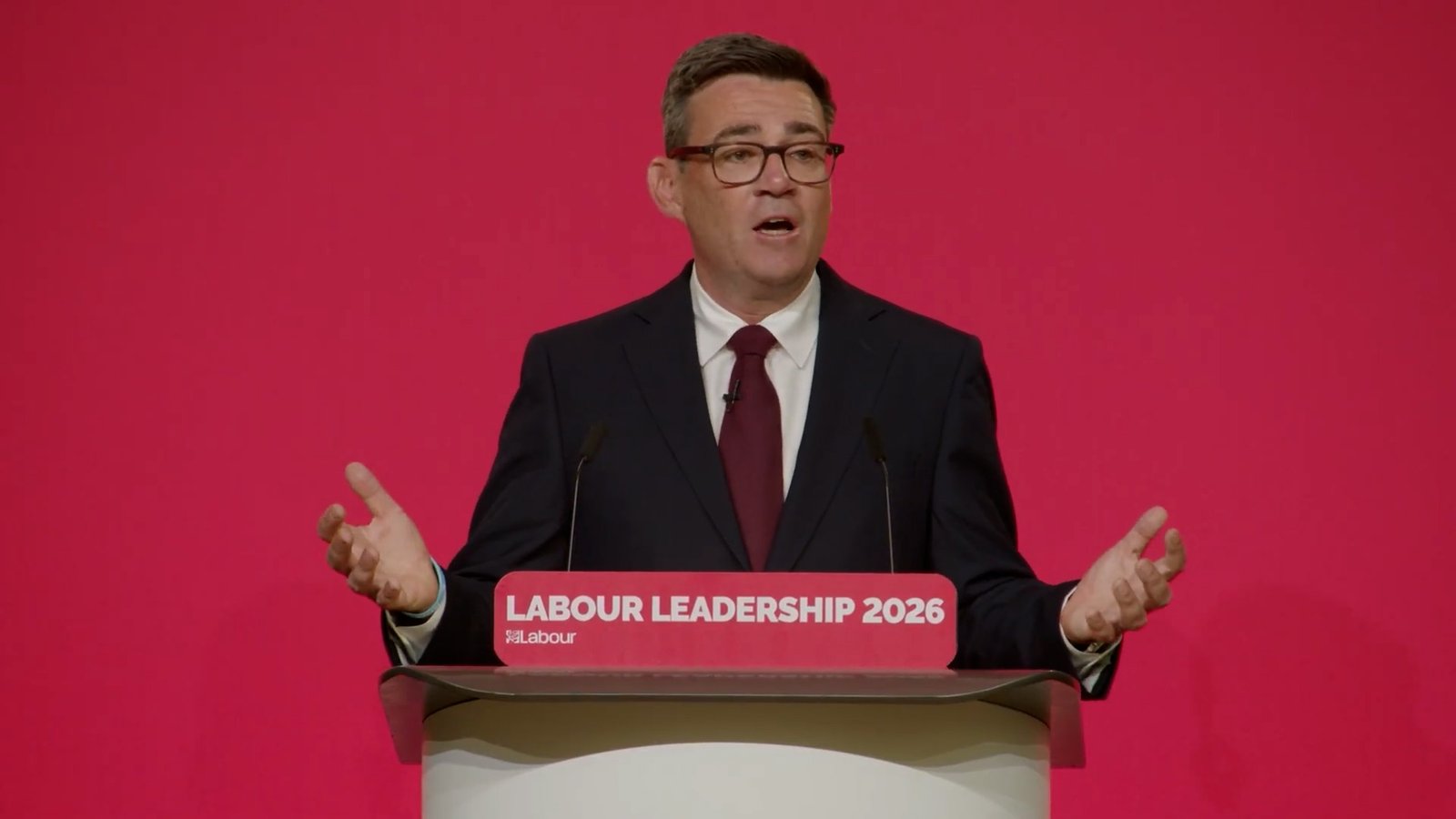
Andy Burnham’s first speech as Labour leader contained language the Labour left has waited years to hear: neoliberalism named, privatisation condemned. It also contained a warning from recent history. Keir Starmer began with promises of unity, pluralism and socialist continuity too.
The Good: Burnham Named the System
Andy Burnham arrived as Labour leader promising hope, unity and a decisive break with the economic model of the past forty years. There was much in his speech worth welcoming.
He named neoliberalism. He identified the centralisation of political power and the privatisation of economic power as twin causes of Britain’s decline. He spoke of council housing, public transport, social care, reindustrialisation, technical education and returning control of essential services to the public.
After years in which Labour politicians treated Thatcher’s settlement as an act of nature, requiring only kinder management, even saying these things matters.
But Britain has heard inaugural promises before. The question is not whether Burnham can deliver a better speech than Keir Starmer. A parking ticket could manage that. The question is whether he intends to break with the interests that made Starmerism possible, or refurbish the same machinery with a warmer voice and a Manchester accent.
The most significant passage came when Burnham said Britain had taken “a series of wrong turns in the 1980s”. “Political power was centralised, and economic power was privatised,” he told the hall. Britain had surrendered control of housing, water, energy and transport, he said, leaving people exposed to higher costs and concentrating wealth and power “in the hands of fewer people and fewer places”. That is closer to a serious diagnosis than anything Starmer’s government offered in five years.
Burnham also said four decades of neoliberalism had failed the industrial, rural and coastal communities that built Labour. Starmer’s Labour preferred euphemism: instability, difficult choices, global headwinds. Burnham at least named an economic model and attached it to a decade.
His record in Greater Manchester offers some evidence this is more than speechwriting. The Bee Network brought the city’s buses under public control, overcoming legal resistance from private operators. His administration introduced capped fares and built an integrated transport system that other regions are now trying to copy. His political strength during the pandemic came from publicly confronting Westminster when Greater Manchester was asked to accept restrictions without the money to survive them.
There is a lesson worth keeping: public ownership does not need to arrive waving a manifesto. Sometimes it looks like a cheaper bus that turns up on time. But public control is not public ownership, and regulation is no substitute for taking the keys back…
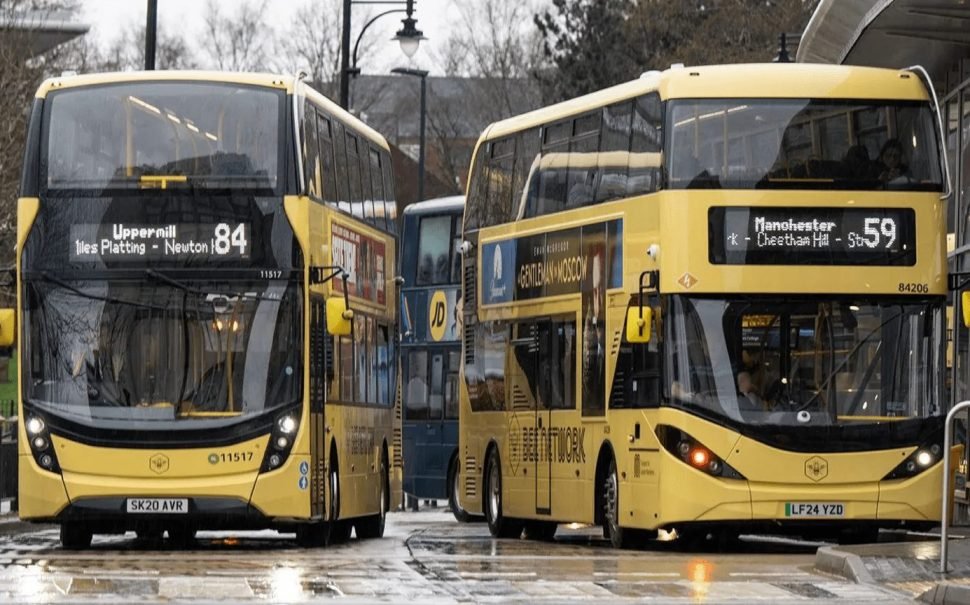
Look under the yellow paintwork and the distinction holds. Transport for Greater Manchester sets the routes, the fares and the timetable. It does not drive the buses. That work is contracted out, tranche by tranche, to Go North West, Stagecoach Manchester, Diamond Bus North West, First Manchester and Metroline, private operators bidding for public franchises rather than a public operator running its own fleet. The public has taken back the map. It has not yet taken back the wheel.
Burnham also promised not to suspend or discipline Labour members for holding views different from his own, and said his senior team would reflect every part of the party. After five years of Starmer’s discipline machine, that commitment deserves to be recorded. It also deserves to be tested. A promise is not a constitutional safeguard.
The Warning: Starmer Promised Unity Too
In January 2020, Starmer launched his own leadership campaign in Manchester with almost the same incantation. “We cannot fight the Tories if we are fighting each other,” he said. “Factionalism has to go.” He also promised not to trash the achievements of Jeremy Corbyn’s leadership.
What followed was not an end to factionalism. It was factionalism handed control of the disciplinary system, the candidate selections and the party machine. Organisations associated with Labour’s left were proscribed. Candidates were blocked through tightly controlled selection procedures. Corbyn himself was barred from standing as a Labour candidate and won his seat as an independent instead. Seven MPs, including John McDonnell and Zarah Sultana, had the whip removed in July 2024 for voting to scrap the two-child benefit cap. Starmer did not abolish factionalism. He achieved a monopoly over it.
Burnham cannot expect the phrase “one Labour team”, which he used in his own speech on Friday, to carry its own proof. If he means it, he should reverse unjust exclusions, restore transparent selections, end ideological discipline and let Labour MPs and members disagree without being treated as enemy agents. Unity imposed from above is not unity. It is silence with a press release.
Burnham’s choice of mentors adds a reason for caution. On Friday he paid warm tribute to David Blunkett, Margaret Beckett and Neil Kinnock from the platform, three figures who belong to the long institutional history that made New Labour possible, not to any socialist break from it.
That does not invalidate Burnham’s present argument. Politicians can learn. They can change. But Burnham has been a Labour insider for decades: an MP since 2001, a minister under Blair and Brown, health secretary in the last Labour government. He voted for the Iraq war twice in 2003, then voted against every attempt at a public inquiry into it for over a decade. He cannot present himself as a visitor who has just discovered what Westminster does to a country. He has lived inside the building since it was still furnished by Blair.
A Coronation Prepared in Advance
Burnham was asked after his speech whether he had played any part in Starmer’s downfall. He denied it. That answer sits uneasily beside the record.
Louise Haigh, the ally who campaigned for Burnham in Makerfield and is now organising his transition into government, told the BBC’s Political Thinking with Nick Robinson that Burnham “has been thinking about this and certainly planning for this, for this moment, for at least the last year.” The route only opened, she said, once Labour’s local election results in May made clear the party “couldn’t continue the way it was continuing.”
The mechanics were themselves the message. Josh Simons, elected Labour MP for Makerfield only in 2024, resigned his seat in May specifically to let Burnham “return to his home, fight to re-enter Parliament, and if elected, drive the change our country is crying out for.” Labour’s National Executive Committee, the same body that had previously blocked Burnham’s path back to Parliament, cleared him to stand this time. He won the seat resoundingly in June. Starmer, already weakened by the sacking of Peter Mandelson as Washington ambassador over his ties to Jeffrey Epstein, resigned days later.
Robert Michels called this the iron law of oligarchy: the party built to represent the many ends up organised for the few who run its machine. Makerfield did not invent that law. It only demonstrated it, in five weeks, in front of the cameras.
Burnham may distinguish between preparing for a vacancy and creating one. Westminster thrives on distinctions thin enough to read through. But the public is entitled to something clearer than a lawyerly denial. Was Burnham aware of the year-long operation conducted in his interest? Which MPs and union officials took part? If a hundred-day plan exists, when was it commissioned? What was promised to the cabinet ministers, donors and unions who backed him?
These are not questions about personal treachery. They are questions about how a prime minister has effectively been selected.
Burnham secured 379 nominations from Labour’s 403 MPs. He faced no opponent and no vote of the wider membership. He entered Parliament through a seat vacated for that purpose and was elevated without a national election, leadership hustings or sustained examination of his programme.
Constitutionally, a prime minister needs no separate presidential mandate. A government rests on its ability to command the confidence of the Commons. Politically, Burnham cannot claim the public endorsed his programme, because in 2024 it did not exist, and he cannot claim Labour members chose him over a rival vision, because no rival vision reached the ballot. He inherits Labour’s parliamentary majority. He does not inherit a blank cheque.
The Missing Substance
Burnham said repeatedly that he has a plan. He did not present enough of it to permit serious judgement.
He promised public control over essentials, but “public control” is an elastic phrase. It can mean full public ownership. It can mean regulation. It can mean a public-private partnership in which the public carries the risk and private companies keep the revenue. Labour ministers used the same trap under Starmer. Burnham must answer plainly: will energy, water, rail and buses be publicly owned, or merely supervised more closely? Will shareholders keep extracting dividends from monopolies people cannot choose to avoid?
He promised council and social housing, but gave no national construction target, funding model or timetable. He promised to fix social care, but did not say whether it will become a universal public service or whether private equity will be driven out of provision.
He condemned wealth concentrating in fewer hands, but has committed to Labour’s existing fiscal rules and to manifesto pledges not to raise income tax, VAT or employee national insurance. On a wealth tax or capital gains reform he has so far declined to rule anything in or out, saying only that the government “might be having to ask for a little more” once he has seen the state of the books. That leaves his promises inside the same Treasury cage that confined Starmer.
Burnham also declared himself “a pro-business leader of the Labour Party, as I was a pro-business mayor of Greater Manchester.” There is nothing wrong with backing a productive business, a local manufacturer, an independent shop, a firm that trains its workers. But Westminster rarely means the family engineering company or the pub struggling with its energy bill when it says business. It usually means the financial institutions, the corporate lobbyists, the outsourcing giants with a minister’s number saved in their phone. Burnham must tell us which business he means.
The Plotters Found Time

Starmer had to go. Few will mourn his departure. But while working-class families counted every item at the supermarket till, dreaded the next energy bill and scraped their way towards payday, Labour’s factions found time to rehearse the succession.
Energy companies, supermarkets, banks and defence contractors continued making fortunes from the crises crushing everyone else. Westminster’s great urgency was reserved for deciding who would inherit Downing Street.
The plotters found a year to organise a transfer of office. They still cannot find the urgency to halt the transfer of wealth from working people to the oligarchy.
Who is he Prepared to Fight for us

That is the test Burnham now faces.
Not whether he sounds more human than Starmer. Not whether he travels north more often, wears cheaper spectacles or remembers the name of the person serving him in Greggs, the I’m just normal Andy will only go so far.
Will he confront concentrated wealth? Will he return essential services to genuine public ownership? Will he restore civil liberties, democratic selection and freedom of argument inside his own party? Will he admit that he reached Downing Street through a managed succession rather than a public mandate, and submit his programme to Parliament, his party and the country?
Burnham’s speech contained the outline of a break with Starmerism. It also contained enough ambiguity for Starmerism to survive beneath it. Britain does not need another politician promising to return power to the people while keeping every lever safely in Westminster.
The king is dead. Long live the consensus, dressed this time in a Manchester accent and a bus timetable that actually works.
Andy Burnham says he is for us. The country must now ask the older, harder question.
Who is he prepared to fight for us?
Enjoyed this read? I’m committed to keeping this space 100% ad-free so you can enjoy a clean, focused reading experience. Crafting these articles takes a significant amount of research and heart. If you found this helpful, please consider a “small donation” to help keep the lights on and the content flowing. Every bit of support makes a huge difference.

Support Independent Journalism Today
Our unwavering dedication is to provide you with unbiased news, diverse perspectives, and insightful opinions. We're on a mission to ensure that those in positions of power are held accountable for their actions, but we can't do it alone. The Heartlands Tribune is primarily funded by me, Paul Knaggs, and by the generous contributions of readers like you. Your donations keep us going and help us uphold the principles of independent journalism. Join us in our quest for truth, transparency, and accountability – donate today and be a part of our mission!
Like everyone else, we're facing challenges, and we need your help to stay online and continue providing crucial journalism. Every contribution, no matter how small, goes a long way in helping us thrive. By becoming one of our donors, you become a vital part of our mission to uncover the truth and uphold the values of democracy.
While we maintain our independence from political affiliations, we stand united against corruption, injustice, and the erosion of free speech, truth, and democracy. We believe in the power of accurate information in a democracy, and we consider facts non-negotiable.
Your support, no matter the amount, can make a significant impact. Together, we can make a difference and continue our journey toward a more informed and just society.
Thank you for supporting Labour Heartlands