Pride and Fall
Pride, the old proverb warns, comes before a fall. And so it has proved. A movement born so that a man could love a man and a woman could love a woman has been captured twice over: by capital, which rented its flag, and by an ideology that now brands same-sex attraction itself a heresy. It is a story of pride and prejudice both, and what is falling is not gay people. It is a product, and a betrayal.
Pride’s Corporate Collapse: Who Killed the Rainbow?
Something is falling, and you can measure it precisely. Among Britain’s ten largest corporations, the FTSE 100’s usual suspects of banking, brewing and retail, social media posts mentioning Pride collapsed by ninety-two per cent in two years, from fifty-two in 2023 to just four in 2025. Three quarters of Pride organisers report their corporate money drying up; a quarter of them have lost more than half.
Manchester Pride, forty years old, went into liquidation last October owing creditors more than three million pounds, leaving performers unpaid and chasing wages through a union. Across the Atlantic, donations to smaller Pride events have dropped between seventy and ninety per cent in a single year. Whole events are folding: Tampa Pride cancelled its 2026 festival outright, and Tucson Pride dissolved itself in January. The names walking away from the sponsorship tables read like a stock index.
And now the public bodies are following the private money out of the door. This very month, the newly elected Reform council in Gateshead announced it will stop flying the Pride flag outside its civic centre and end funding for future Pride events. In Havering, the Reform council cancelled the flag ceremony of 5 June. In Essex, library staff across the county’s seventy-four branches have been told not to promote Pride events. You may think those councils right or wrong. The point is that five years ago no council in Britain would have dared.
Today, St Helens Council leader announced his council would cut all funding for LGBT Pride events in town
Around 75% of UK Pride organisers reported reduced corporate sponsorship, and around 25% reported sponsorship losses of more than 50%.
So ask the question the people running these events will not ask. Is this only bad weather, or has Pride won the war for gay rights and then surrendered the peace to a toxic ideology?
The answer is in the polling. Only about seven per cent of Britons hold a negative view of gay and lesbian people. The right to love your own sex, to marry them, to live openly with them, has never been more widely accepted in this country. The public has not turned against gay people.
What it has turned against, in growing numbers across every age group and political allegiance, is something else entirely: the ideology that Pride wrapped itself in while nobody was watching.
In 2022, British women supported legal gender change by forty-four per cent to thirty-two. By 2025, they opposed it by forty-two per cent to thirty-seven, a swing of seventeen points. That is not a reaction to gay rights. It is a reaction to something Pride chose to become.
The Rented Rainbow

Pride began as a riot. Not a parade, not a festival, not a month of corporate virtue: a riot, in the early hours of June 28, 1969, when police raided the Stonewall Inn in New York’s Greenwich Village. The patrons, drag queens, butch lesbians, homeless gay youths, transgender people of colour, fought back. They threw coins, then bottles, then a parking metre. For days, protests spread across the city. It stayed a protest for years because it had to. There was nothing to sell when the demand was simply the right to love your own sex without losing your job, your home, or your liberty.
Then capital noticed. A flag in June turned out to be the cheapest virtue on the market, and the banks, the brewers and the supermarkets queued up to wear it. The first corporate float appeared at New York Pride in the 1990s; by 2019, Barclays, Lloyds, BP and the Ministry of Defence all marched under the rainbow. Pride in London’s 2019 parade featured over 300 corporate contingents.
But be honest about why they flew the flag. It was never conviction. Half of it was marketing, and the other half was fear: the knowledge that to be the one bank, the one council, the one library that did not fly it was to invite the accusation of bigotry, an accusation duly delivered, this very week in Essex, against a Reform council in exactly those terms. A symbol enforced by fear is not a symbol of acceptance. It is a loyalty oath. And loyalty oaths last only as long as the fear does.
And at the very moment Pride grew most commercial, it also grew most crowded. A movement founded on one clear demand, the right of a man to love a man and a woman to love a woman, swelled into an ever-lengthening coalition of identities and acronyms: L, G, B, T, Q, I, A, plus, and beyond. You can see the change stitched into the cloth itself: the simple six-stripe rainbow of the freedom marches has been supplanted by the chevroned Progress flag, the standard of what one writer this week called the omnicause. Somewhere in the expansion the founding demand was quietly shuffled towards the back. A sharp political claim is hard to sell. A parade of a hundred floats, with a headline sponsor and an acronym broad enough to offend no buyer, sells itself.
The backlash when it came was imported wholesale from Trump’s America, where one beer can sent to a transgender influencer, Dylan Mulvaney, April 2023, wiped billions off Bud Light’s market value and taught every marketing department on earth that a rainbow can cost you. Anheuser-Busch walked away from a St Louis Pride it had backed for thirty years. What one report politely called reputational shielding swept through corporate boardrooms on both sides of the Atlantic.
Rainbow capitalism was always a lease agreement. The lease has lapsed.
The Heresy of Same-Sex Attraction

But the commercial collapse is only half the story, and the easier half. The other is what Pride did to the people it was built for.
Here is the truth that Pride organisers will not say aloud. In today’s movement, being a lesbian or a gay man is no longer enough. It is almost suspect. It is why, as even conservative commentators now observe, many gay people have come to see the modern incarnation of the rainbow flag as a hostile symbol: hostile to them.
In April 2025 the Supreme Court of the United Kingdom handed down its judgment in For Women Scotland v The Scottish Ministers, confirming what used to be common sense: that the terms ‘sex’ and ‘sexual orientation’ in the Equality Act 2010 rest on biological sex. Same-sex attraction, therefore, means attraction to the same biological sex.
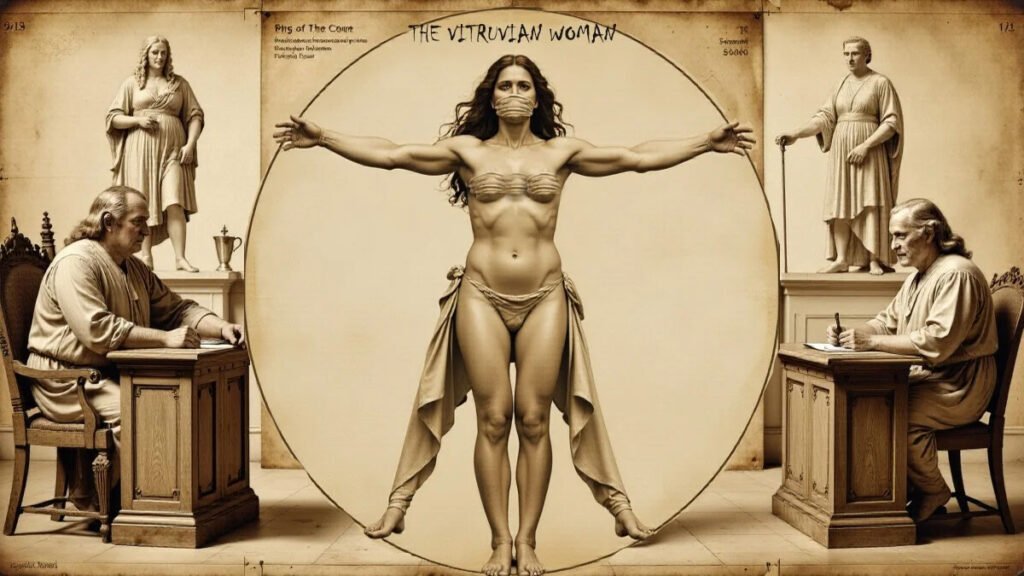
That ruling sent a shock through the activist world, because the activist world had spent a decade insisting otherwise. For holding to it, lesbians and gay men are now branded bigots. The slogan No LGB without the T has hardened into a loyalty test, and dissent is not tolerated. Question the doctrine that an inner gender identity overrides biological sex, and you are cast out of a community that gay people found.
This is not rhetoric, and it is not new.
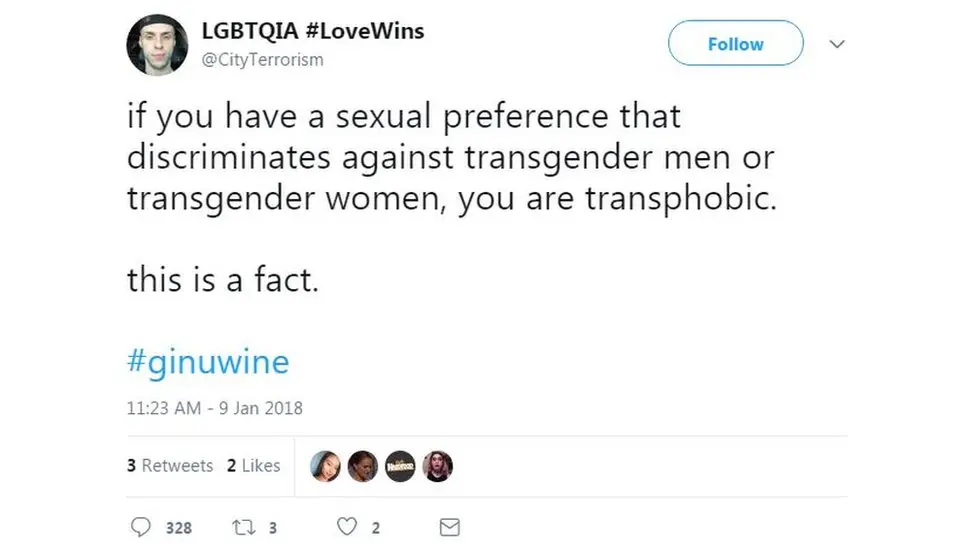
The LGB vs T: How Pride Turned on Gay People
In 2018 a group of lesbians calling themselves Get The L Out forced their way to the front of the London Pride march, carrying banners that read Transactivism erases lesbians and A male can never be a lesbian. Pride in London apologised for their presence and condemned them as hate. Four years later, at Pride Cymru in Cardiff, police physically removed lesbians from the march. An officer was filmed telling them it was for their own safety.
Read that again.
The police removed lesbians from a gay rights parade, and called it protection.

The ferocity of the response tells you everything you need to know. The establishment cannot tolerate dissent because dissent reveals the emptiness at the core of the project.
The movement built by and for same-sex attracted people now treats those people as the threat. There is a word for that. The word is betrayal.
Pride in London apologised for their presence and condemned them as hate. Their crime was to say that a woman who loves women is not a bigot for declining a male body. Four years later, at Pride Cymru in Cardiff, police physically removed lesbians from the march. An officer was filmed telling them it was for their own safety. Read that again. The police removed lesbians from a gay rights parade, and called it protection. The movement built by and for same-sex attracted people now treats those people as the threat.
The police removed lesbians from a gay rights parade, and called it protection.
In fairness, the other side has a case and it should be heard. Pride organisers say these protesters are a hostile fringe who do not speak for most gay people, that many lesbians and gay men welcome trans inclusion as a matter of plain solidarity, and that trans people are a small and frightened minority who face real violence and deserve a place under the flag.
All of that is true, and a serious left does not wave it away. But solidarity cannot be built on a lie, and the lie at the heart of the new orthodoxy is that there is no material difference between same-sex attraction and a claimed identity. There is. One is about bodies. The other is about belief. Conflating them does not liberate the lesbian; it erases her.
The Vulgar Bargain
There is also the matter of what Pride has actually become, and who it is for. Too many parades now carry open fetish displays and stalls selling sex merchandise: leather harnesses, dog masks, explicit paraphernalia in plain view of children. None of this has the slightest thing to do with whether two men may marry, and none of it belongs anywhere near a child.
The honest thing to admit is that this is no longer, in any meaningful sense, a political event. It is a commercial carnival that has outlived the cause that justified it.
The first battle, the right to love and marry and live openly with the partner of your choice, was long ago won. In twenty-first-century Britain almost nobody disputes it. A march no longer needed to demand a right will always be colonised by something else. What has colonised this one is commerce on one flank and ideology on the other.
A publicly funded body pleading poverty has no business underwriting a parade of corporate floats. A movement confident of its acceptance needs neither the council budget nor the bank float to prove its point. That neither condition applies at most Pride events tells you everything about the distance the march has travelled from the Stonewall Inn.
Predators in Rainbow Clothing: Safeguarding Failures

Give a dog a bad name and everyone kicks it…
There is a darker charge that must be faced rather than dodged. It is the most devastating blow to Pride’s credibility has been self-inflicted. A series of criminal prosecutions has revealed that predatory paedophiles operated with impunity inside some of the movement’s most prominent organisations.
In 2023, when Welshpool planned its first Pride, the man who had appointed himself organiser, a drag performer known as Miss Gin, turned out to be a convicted sex offender already under a lifelong sexual harm prevention order. Andrew Way pleaded guilty to attempting sexual communication with a child and to breaching that order, and was jailed for thirty-four months.
Stephen Ireland, who co-founded Pride in Surrey in 2018, was jailed for twenty-four years after being convicted of raping a twelve-year-old boy he met on Grindr, alongside a string of further offences against children. The judge at Guildford Crown Court noted that Ireland had prided himself on being highly alert to the vulnerabilities of young people connected to the organisation he ran. That awareness, she said, was what made his crimes so grave.
David Sutton, his co-defendant, pleaded guilty to distributing indecent images of children and was also imprisoned.
These are not isolated incidents. They are symptoms of a systemic failure. Whistleblowers who raised concerns were ignored or punished. Ideology was prioritised over child protection. And the result is that Pride organisations have lost any moral claim to speak on behalf of vulnerable young people.
Legal and Governance Cases Involving Pride-Linked Figures
Editorial note: This table summarises reported legal and governance cases involving individuals linked, formerly linked, or alleged to have been linked to Pride or LGBT organisations. It includes convictions, guilty pleas, contempt proceedings, allegations, and cases where charges were dropped. The inclusion of a case does not mean all individuals listed were convicted of a criminal offence. Readers should consult the linked source material for full legal context.
| Individual & Role | Organisation / Event Link | Reported Charges, Allegations or Proceedings | Reported Outcome / Status | Source |
|---|---|---|---|---|
|
Stephen Ireland Co-founder and former director |
Pride in Surrey | Surrey Police reported that Ireland was convicted of multiple child sexual abuse offences, including rape of a child under 13, sexual assault, making indecent images of children, and possession of prohibited images and extreme pornography. | Convicted and jailed for 24 years, with a further 6 years on extended licence. | Surrey Police |
|
David Sutton Volunteer / associate |
Pride in Surrey | Surrey Police reported that Sutton pleaded guilty to distributing Category A and Category B indecent photographs of children and possessing 64 prohibited images of children. | Pleaded guilty and was sentenced to a custodial term alongside Ireland. | Surrey Police |
|
Andrew Way Also reported as Andrew Bryant / “Miss Gin” |
Reported organiser connected to Welshpool Pride coverage | BBC News reported that Andrew Way admitted trying to engage in sexual communication with a child of 14 and repeatedly breaching a sexual harm prevention order. | Jailed for 34 months at Caernarfon Crown Court. | BBC News |
|
Andrew Easton Contributor to an earlier coming-out guide |
LGBT Youth Scotland guide contribution. LGBT Youth Scotland says he was not an employee or volunteer. | LGBT Youth Scotland acknowledged recent criminal charges against Easton and stated that his involvement related to an earlier edition of one of its coming-out guides, not employment or volunteering. | The organisation said it was “deeply troubled” by his criminal actions and confirmed the guide was no longer a current resource. | LGBT Youth Scotland statement |
|
James Rennie Former LGBT Youth Scotland coordinator / youth worker |
LGBT Youth Scotland | The Guardian reported that Rennie was convicted of 14 offences linked to a child abuse network, including offences against a very young child. | Jailed for life in 2009, with a minimum term of 13 years. | The Guardian |
|
Christopher Joell-Deshields Former chief executive |
Pride in London | Pride in London said his employment was terminated after an independent investigation. ITV reported that he admitted contempt of court after failing to hand back login details and other organisational property. The Guardian separately reported allegations concerning misuse of sponsor-provided vouchers. | No longer employed by or affiliated with Pride in London. Admitted contempt of court and was due to be sentenced in June or July 2026. |
Pride in London ITV News The Guardian |
|
Gergely Karácsony Budapest mayor |
Budapest Pride / municipal Pride event | Reuters reported that Hungarian prosecutors charged Karácsony over organising a banned 2025 LGBTQ+ Pride march. | Charges dropped on 4 June 2026 after a Court of Justice of the European Union ruling concerning Hungary’s “child protection” law. | Reuters |
|
Géza Buzás-Hábel Teacher, activist and Pécs Pride organiser |
Pécs Pride | Amnesty International reported that Buzás-Hábel faced criminal charges for planning the 2025 Pécs Pride march despite a ban under Hungary’s anti-Pride law. | Human Rights Watch reported that Hungarian prosecutors dropped Pride-related charges on 4 June 2026 against a mayor and civic activist involved in 2025 Pride events. |
Amnesty International Human Rights Watch |
The conclusion must be drawn precisely. It is not that gay men, or drag performers, or Pride, are a danger to children. That is a libel, and the institutions that have sheltered abusers by the hundred are churches, football clubs and the BBC, not Pride committees. The point is accountability. When an event becomes a brand or a one-man vanity project, with nobody doing the dull, unglamorous work of safeguarding, it is precisely the kind of event where a predator can crown himself master of ceremonies. The spectacle comes first. The scrutiny comes too late.
Reform UK Cuts Pride Grants: Durham’s Culture War

The economic fall is the easy part to see. The backlash came wholesale from Trump’s America, where one beer can sent to a transgender influencer wiped billions off Bud Light and taught every marketing department on earth that a rainbow can cost you. Firms with American parents began what one report politely called reputational shielding. Rainbow capitalism was a lease, and the lease has lapsed.
Then came the councils, and a politics that had smelled the same change in the wind. Where Reform UK has taken control, the Pride grant has been among the first things cut. Durham, Gateshead and Staffordshire have all pulled or refused it. In Gateshead the newly elected administration took the Pride flag down from the civic centre and ended the twelve and a half thousand pounds it used to give, its leader saying it was simply not a matter for the council. In Staffordshire the Reform leader told Pride to go to the private sector and put its hand in its own pocket. And in Durham the deputy leader Darren Grimes, himself a gay man, announced that Pride would not get a single penny, that the council was no ATM for contested causes, and that residents deserved their bins emptied and roads fixed rather than, in his words, council-sponsored politics in fancy dress and political street theatre. He went further, and the line deserves quoting precisely because of who said it. Pride, he wrote, had stopped being a celebration of gay rights a long time ago and morphed into a travelling billboard for gender ideology that many in the gay community, himself included, wanted no part of.
It would be lazy to pretend there is nothing in that. The feeling Grimes describes is real, and it is felt most sharply by the people who marched when marching was dangerous.
In 1984, when the pit villages of South Wales, Yorkshire, Nottinghamshire and Kent were being starved back to work by Margaret Thatcher’s government, along with generous working class people of London it was Lesbians and Gays Support the Miners who stood on street corners with collecting buckets for the coalfields. They raised thousands of pounds at a time when the National Union of Mineworkers itself was bankrupted by fines. The miners repaid that debt by marching at the front of Pride, notably the 1985 London Pride, where the Kent miners’ banner led the parade, and carrying gay rights into the heart of the labour movement. It was solidarity of the old kind: people standing with people whose cause was not their own, whose need cost them something, whose difficulty came with no sponsorship deal attached.
When Reform UK cut Durham Pride’s council grant this year, the unions stepped in. The Durham Miners’ Association, whose own banner had been carried by LGSM in 1985, together with the TUC and Equity, raised twenty-five thousand pounds, comfortably more than the council had ever given. Durham Pride went ahead in May 2026, the largest in its history.
Darren Grimes filmed his defence of the cut inside Redhills, the Durham Miners’ Hall itself, built in 1915 as the Parliament of the Coalfield, while the Association was among those keeping the flag flying. If there is a richer irony in British public life this year, it has not been reported.
But solidarity means something, or it means nothing.
A few miles down the road in Darlington, eight nurses raised a concern that most people would understand immediately. They did not want to share a changing room with a biological male colleague. They were told to broaden their mindset, to get re-educated, to be more inclusive. They launched an employment tribunal and won in January 2026, the panel ruling that County Durham and Darlington NHS Foundation Trust had unlawfully harassed them. They went through the entire ordeal without a union at their backs. They had to form their own.
Because the UNISON president, presiding over a membership that is seventy-six per cent female, had a different response. When Wes Streeting, the Health Secretary, met those nurses, offering them a fair hearing, the union president publicly declared his concern that Streeting was pandering to anti-trans bigotry. He posted the trans flag, the clenched fist, his solidarity. Not for the nurses. Against them.
UNISON was not alone. The Fire Brigades Union published its response to the Equality and Human Rights Commission’s code of practice and declared that it stands firmly in solidarity with trans, non-binary and gender-diverse members. It mentioned nothing about the female firefighters it represents. UNISON announced its intention to oppose the EHRC guidance built on the Supreme Court ruling, the most significant legal protection for women’s rights in a generation. At TUC Congress 2025, delegates voted unanimously against that same guidance.
These are not fringe positions. They are official union policy, passed by vote, issued as press releases, placed on the parliamentary record.
The unions that found twenty-five thousand pounds for a Pride float and called women bigots for wanting to change in private have not lost the thread of 1984. They have chosen a different thread. That is not solidarity. That is capture.
Where was the solidarity for the women in Darlington? The same county. A different budget line.
There Is Nothing Socialist About Gender Identity Ideology

That question has an answer, and the answer is the second half of this story.
All along, as the movement rushed to grow the alphabet, its own pride and prejudice were doing quiet work. Each new letter was announced as an act of inclusion. But the ideology that rode in with the later letters did not merely crowd the founders towards the back of their own parade. It made a claim on women. It demanded their identity, redefining the word woman until it meant whoever claimed it. It demanded their spaces: the refuge, the ward, the prison wing, the changing room, the sports field, every room women had fought a century to call their own. And it demanded their name, until the people who object to losing it are the ones called hateful. The lesbians of Get The L Out and the nurses of Darlington are casualties of the same advance.
Pride did not simply forget women. It marched over them, flag aloft, and called the marching progress.
There is nothing socialist about any of this. We made the full argument in these pages in December, in Trans Liberation or Socialism: You Can’t Have Both, and the months since have only confirmed it. A politics rooted in material reality, in bodies, in labour, in the conditions of actual life, cannot also hold that sex is a feeling and a woman is whoever says so. That is not materialism. It is ultra-liberal individualism in a rainbow sash: the self elevated above the collective, the declaration elevated above the fact. And it lands its costs precisely where the left should be standing guard.
The defenders of the doctrine answer that trans people are vulnerable and that compassion demands their inclusion. The Supreme Court itself was careful to preserve their full protection from discrimination, under the protected characteristic of gender reassignment, and rightly so. But a movement that can only protect one group by dissolving the rights of another is not practising solidarity. It is practising power. A left that cannot tell the difference has forgotten what it is for.
THE VICTORY
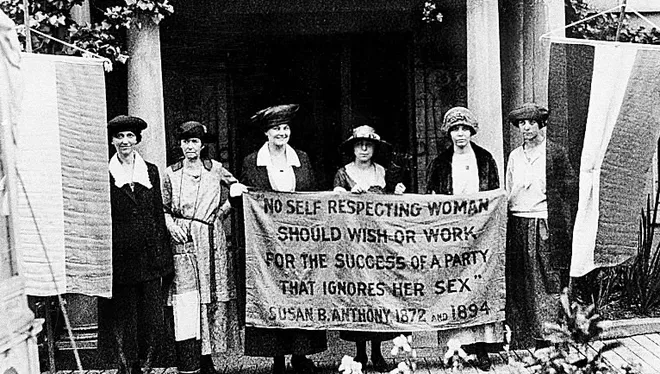
Pride is not falling because the battle was lost. It is falling because the battle was won.
The right to love your own sex, to marry them, to build a life with them, to live openly and without apology: that is settled. Seven per cent of Britons hold a negative view of gay and lesbian people. The war is over.
But a movement that wins its war must either stand down with honour or go searching for new enemies and new paymasters. Pride found two, and they have consumed it. Capital rented the flag and has handed back the keys. An ideology that treats same-sex attraction as heresy moved in behind it. What remains is a commercial carnival without a cause, a parade without a destination, an institution hollowed out by the very forces that claimed to defend it.
The gay men and lesbians who built this movement did not march through danger so a bank could drape a rainbow over its trading floor in June. They did not do it to be told their attractions are bigotry and their boundaries are hate. They did not do it to watch a union president post a clenched fist against nurses defending a changing room. And the women who marched beside them did not do it to surrender their name.
They did it so that people could love who they love. In peace. With dignity. Without apology.
That victory belongs to them. Not to the brand. Not to the ideology. Not to the union that forgot its own women.
So let us be clear about what is dying and what is not. Rainbow capitalism is dying, good riddance. The ideology that recast same-sex attraction as a heresy and women’s rights as an obstacle deserves to die with it. What cannot die, because it was never for sale, is the thing underneath: people standing with people, the right to your own body and your own desire, and the solidarity that makes the demand stick.
They built a movement so a man could love a man and a woman could love a woman. Then they called that love a heresy and rented the flag to any corporate taker. Pride comes before a fall. But the cause beneath it, love without shame, truth without fear, solidarity without sale, remains.
Enjoyed this read? I’m committed to keeping this space 100% ad-free so you can enjoy a clean, focused reading experience. Crafting these articles takes a significant amount of research and heart. If you found this helpful, please consider a “small donation” to help keep the lights on and the content flowing. Every bit of support makes a huge difference.