British Justice
Rajiv Menon KC Read Twelve Words From An Old Bailey Plaque: The State Spent Seven Months Deciding That Was A Crime...
A jury’s right to follow its own conscience is the reason twelve strangers, not the state, get the final word on a person’s guilt. That right is on trial in England this week, and it is a barrister facing prison over it, not the man he was defending.
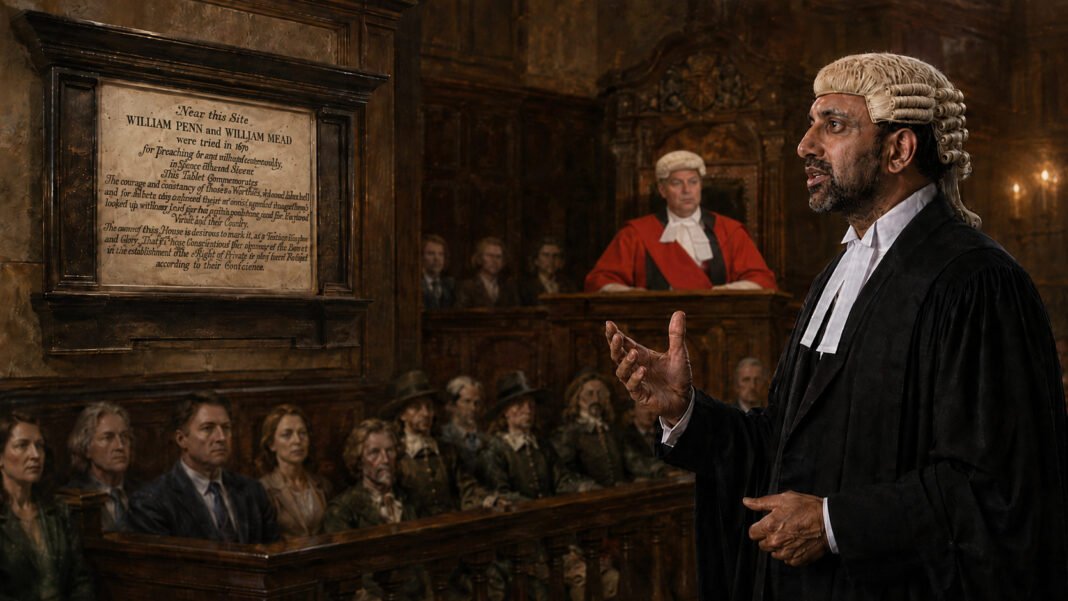
Rajiv Menon KC stood before a jury at Woolwich Crown Court on 8 January 2026 and gave a closing speech that ran the better part of three hours. Somewhere inside it, he told the jury about a plaque at the Old Bailey. He now faces up to two years in prison for it. Not for what his client did. For what he told the jury they were free to think about it.
To understand why that distinction matters, you have to go back to a man the Commonwealth tried to silence in 1649, and the jury that finished what he started.
The Freeborn Englishman
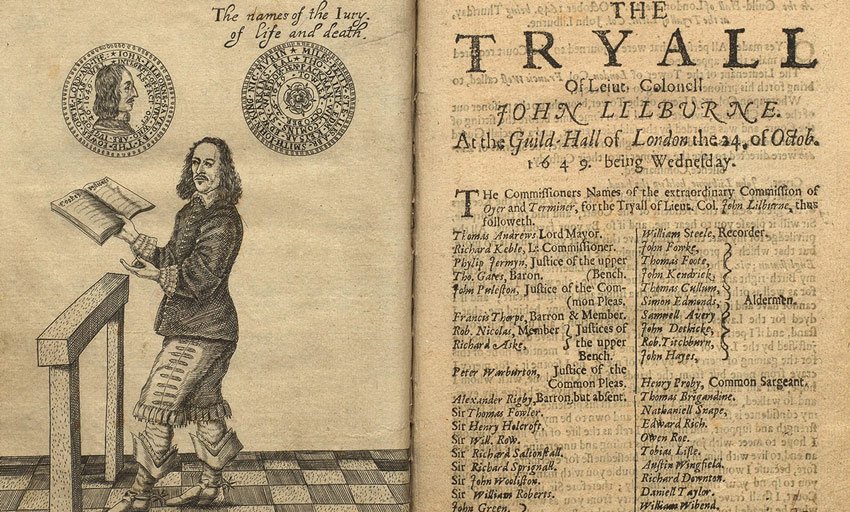
John Lilburne, known to the people who followed him as Freeborn John, stood trial for high treason at the Guildhall that October. The court denied him counsel. Facing execution, he turned from the five judges on the bench and spoke directly to the twelve men who would decide whether he lived. He told them the judges were “no more than ciphers.” Judge Jermyn called it “damnable blasphemous heresy.” Lilburne did not take it back.
The jury retired for an hour and acquitted him outright. London cheered in the streets for half an hour. When the state tried him again in 1653, a second jury acquitted him again.
Lilburne proved something governments have spent the centuries since trying to unlearn: that twelve ordinary jurors, once they understand their own power, do not simply do as they are told.
Two Nights Without Food

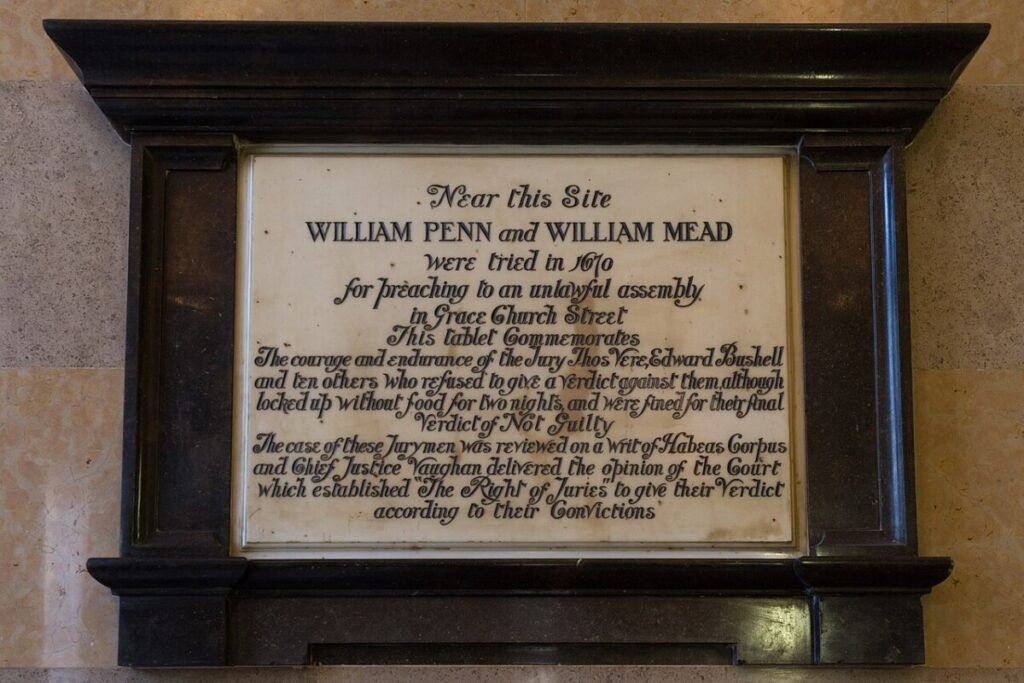
Lilburne converted to Quakerism before his death in 1657. Thirteen years later, two of his fellow Quakers, William Penn and William Mead, stood trial at the Old Bailey for preaching in Gracechurch Street. When the Recorder of London ordered the jury to convict, they refused. So the court locked the jury up without food for two nights, trying to starve twelve men into a guilty verdict. They still refused.
One of them, Edward Bushell, took the case to the Court of Common Pleas. Chief Justice Vaughan ruled that no judge could ever punish a jury for its verdict. The plaque that now hangs at the Old Bailey commemorates that ruling in a single line: “The Right of Juries to give their Verdict according to their Convictions.”
Penn walked out of that courtroom and went on to found the Province of Pennsylvania, where he wrote the jury right into the colony’s own charter of liberties. When the American colonies broke from Britain a century later, that right was carried into the Sixth and Seventh Amendments of the United States Constitution, permanent, entrenched, beyond the reach of a minister’s spreadsheet. This paper made a version of this argument in March, through Lilburne’s descendant Thomas Jefferson.
The lesson from Penn is the harder one. The country founded by the man in this story now protects that right by constitutional guarantee. The country that produced it is, this week, deciding whether invoking it should end a barrister’s career.
Those twelve words on the Old Bailey plaque are the ones Rajiv Menon pointed his jury towards on 8 January. They are also, apparently, the ones now capable of ending his career.
“The Right of Juries to give their Verdict according to their Convictions”
What The Jury Was Allowed To Hear
Before Menon’s trial began, Mr Justice Johnson had already ruled that the six Palestine Action defendants, including Menon’s client Charlotte Head, could not argue their raid on an Elbit Systems factory near Bristol was justified by events in Gaza. He blocked evidence of Elbit’s own arms exports from being put before the jury at all. The same judge whose order kept the jury from hearing about Elbit’s weapons is the judge whose order Menon is accused of breaching by mentioning conscience. The jury was told what it could not consider before it was ever told what it could.
Menon’s closing speech, drafted after lengthy discussion with other barristers, pointed the jury instead to the Old Bailey plaque and to Bushell’s Case by name. Johnson later ruled this had invited the jury to set this direction aside.
Whether jurors who are never told they can follow their own conscience are still free to do so is, in this paper’s view, not a difficult question. It is exactly the question the state has spent seven months trying to avoid answering directly, by pursuing Menon instead of the argument.
A State That Tried Every Door Until One Opened

Woolwich Crown Court first referred Menon to the Administrative Court of its own motion. In May, the Court of Appeal threw that out, ruling the court had no jurisdiction to pursue contempt this way without the Attorney General involved, a route the state had simply skipped. Rather than let the matter drop there, it went back to Johnson, who found there was a case to answer after all and passed the decision to a second judge, Mr Justice Nicklin. Nicklin agreed proceedings should go ahead. Menon is now due before Mrs Justice Cheema-Grubb on 28 July, this coming Tuesday, for a hearing that could send him to prison.
Three courts and four judges spent seven months finding a route to a prosecution that the correct authority, the Attorney General, had never been asked to bring. Call that scrupulous, if you like. It reads more like a state trying every door until one finally opened. Even Johnson, whose own order started the process, wrote that he would be “exceptionally slow” to find a barrister guilty of contempt. He sent the case onward regardless.
Judges Are Not Always Wrong To Draw A Line

Some barristers have argued that counsel who disagree with a judge’s ruling should appeal it, not work around it in front of a jury, and that Menon knew precisely what he was doing when he chose the plaque over silence. That principle is not nothing. Orders made mid trial exist to protect the fairness of that trial, and advocates do not get to override a judge simply because they think the judge is wrong.
But that principle cannot carry the weight being put on it here. No barrister in English legal history has ever before faced contempt proceedings over the content of a closing speech. Garden Court Chambers, where Menon has practised for three decades, called the procedure “wholly novel and without historical precedent.” And Johnson’s own ruling came five months after the speech was given, long after the trial that supposedly needed protecting had already finished. An urgent correction does not wait five months. What arrived instead was a prosecution built after the fact, for a case the Attorney General was never asked to bring.
The Bar Is Already Editing Itself

Riel Karmy-Jones KC, chair of the Criminal Bar Association, has told a meeting of senior lawyers that barristers are already “changing their speeches” out of fear of what happened to Menon. She named no one, and neither will we. But work out who has more room to take that risk: a King’s Counsel three decades into a career at a leading chambers, with colleagues willing to stand behind him publicly, or a junior barrister a few years into practice, paid at legal aid rates, defending a client who cannot afford to hire anyone better.
Menon can survive seven months of legal jeopardy and still turn up to fight it on 28 July. Most of the Bar cannot. The real casualty is quieter: every closing speech a junior barrister now declines to give, in unremarkable trials nobody will ever write about.
Burnham’s First Week
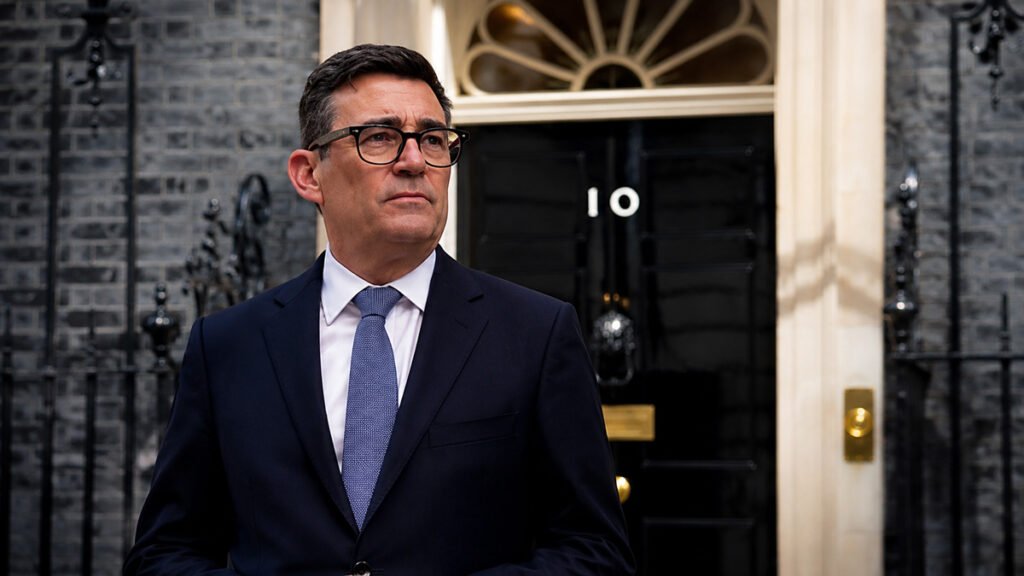
Andy Burnham has been Prime Minister for five days. He entered Downing Street promising a circuit breaker for Britain, a clean break from the government that came before him. That government is the one that spent seven months and three courts trying to find a lawful way to prosecute a barrister for reading a plaque.
Nobody is on record asking Burnham about this case, and nothing here claims he has refused to act. But he does not need to interfere in Tuesday’s hearing to say something. The Court of Appeal itself found in May that this prosecution only got as far as it did because the Attorney General was never brought in, exactly as the law requires. A Prime Minister who wants to be believed when he talks about breaking with Starmer’s Britain could start by saying whether his own Attorney General thinks that omission should have ended this case in May. Silence on that question, this week of all weeks, is also an answer.
They locked Bushell’s jury up for two nights without food rather than let twelve ordinary people think for themselves. Three hundred and fifty years later, a barrister is facing prison for reminding another twelve that the right our ancestors starved for still exists. Rajiv Menon’s fate this week is a smaller question than the one sitting underneath it: whether England still believes what it carved into its own walls.
Enjoyed this read? I’m committed to keeping this space 100% ad-free so you can enjoy a clean, focused reading experience. Crafting these articles takes a significant amount of research and heart. If you found this helpful, please consider a “small donation” to help keep the lights on and the content flowing. Every bit of support makes a huge difference.

You can help by signing this petition. To: Secretary of State for Justice Alex Norris & Attorney General Ellie Reeves
Save Britain’s Juries. You can also follow on X here @DefendourLawyer