
Andy Burnham Drops Rent Freeze Within Week in Downing Street
Andy Burnham built his reputation as the voice of the heartlands by promising to break the Westminster consensus and shield ordinary people from predatory markets. Five days after taking office, his administration used Housing Secretary Angela Rayner to disown the very rent freeze he spent three years demanding.
The change you were promised lasted exactly one week.
On BBC Breakfast, Housing Secretary Angela Rayner ruled out rent controls under Andy Burnham’s new government.
“We won’t be looking at rent controls,” she said flatly.
That sentence matters because three years ago, Andy Burnham signed an open letter alongside regional mayors demanding a freeze on private sector rents until the cost-of-living crisis was over. The crisis is not over. Private rents are still swallowing working-class wages, young people remain trapped in their childhood bedrooms, and families continue to be priced out of the towns they built. Landlords keep collecting an ever-larger share of earned income for the basic human requirement of shelter.
Yet the moment Burnham sat comfortably in Number 10, the promise evaporated…
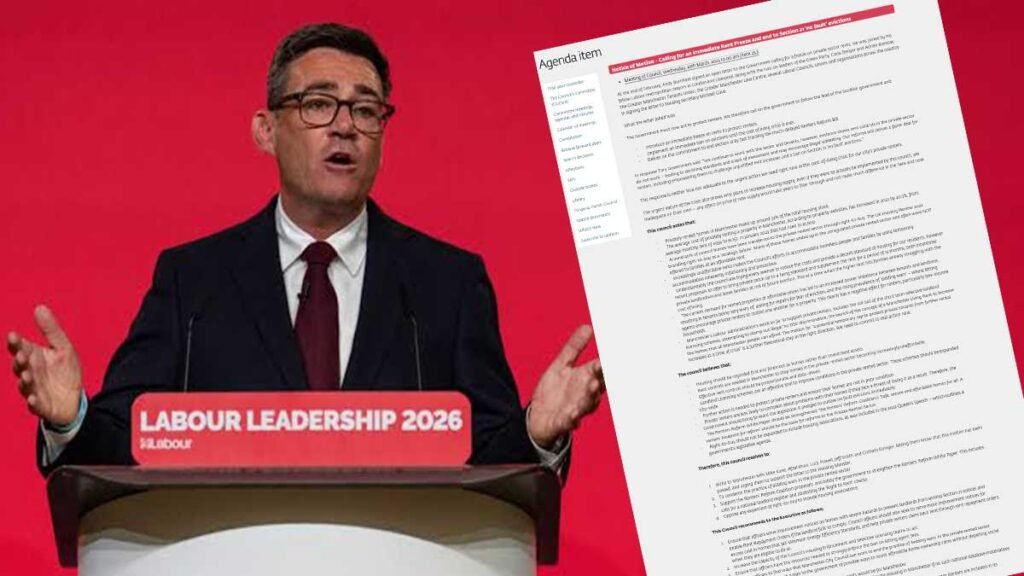
This is the classic architecture of political retreat. Before power, bold promises and solidarity with the squeezed. After power, technical explanations about why nothing fundamental can be done.
The speed of the capitulation is the story. Burnham entered Downing Street through a manufactured by-election in Greater Manchester, taking power on fewer than 25,000 local votes. He was presented to the nation as the authentic challenger to a discredited Westminster machine, a regional mayor who understood the brutal realities of the northern housing crisis.
Yet before the moving vans have even emptied, the machine has swallowed the challenger whole.
Protection on paper
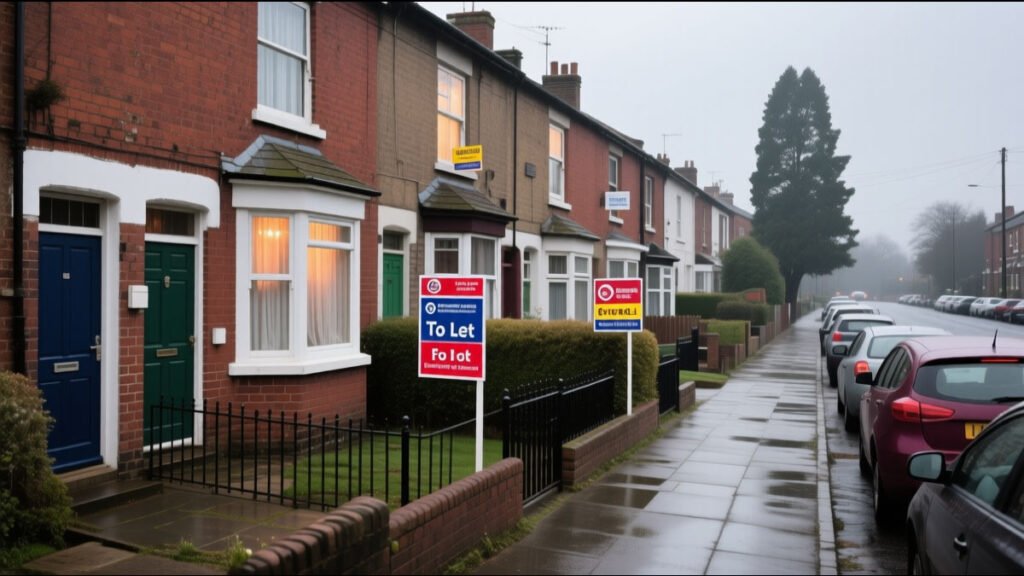
Rayner’s defence relies on procedural tinkering. She points to the Renters’ Rights Act, telling tenants they can challenge excessive rent hikes at tribunals and boasting about statutory bans on landlord bidding wars. She adds that the real answer is building more council houses. It is an ironic prescription: expanding council housing is the exact remedy this publication put forward two years ago when Labour took the keys to Downing Street. Yet after two wasted years and a fresh prime minister, the leadership has restarted the same old game of snakes and ladders, offering tomorrow’s brickwork as an excuse for today’s landlord windfall.
But while both measures sound progressive in a press release, neither answers the emergency in the street. You cannot challenge your way out of a structural housing shortage while your landlord holds the keys and twenty desperate people are waiting on the pavement outside. Pointing a struggling tenant toward a legal tribunal in the middle of a national shelter crisis is not protection; it is administrative cruelty. And promising council homes in a decade does not pay the three-hundred-pound rent hike due next Monday.
The reality is the Government publishes no national average showing how long a rent-increase challenge takes from application to final decision. Its own guidance promises only that, once the tribunal has considered the papers or held the hearing, the written decision will usually follow within six weeks.
That is not protection at the moment the rent demand lands. It is a legal process placed between a tenant and a landlord who still owns the keys.
The case for the crown

I like to put forward the steelman argument and here it is…The case for the crown, fairly stated, is that rent controls can carry market risks.
The government argues, as Rayner did on television, that crude caps may discourage investment, restrict supply or push landlords to demand more when a property is offered to a new tenant.
Scotland provides a warning, but not the simple verdict ministers pretend.
Its emergency cap restrained rent increases for sitting tenants while leaving new tenancies largely uncontrolled. Advertised rents on new lets rose sharply. That does not prove the protection failed. It proves that half-regulating a speculative market leaves landlords another door through which to recover their profits.
The Scottish Government itself concluded that, without the protection, some existing tenants would probably have faced the same large increases seen in the uncontrolled new-let market.
The evidence does not show that the cap failed to protect tenants. It shows the limits of protecting one part of the housing market while leaving the rest to speculation.
Intervention in a capitalist property market creates friction. The question is not whether regulation is frictionless. The question is who the government chooses to protect when the friction begins.
Under Burnham and Rayner, the state has decided that the landlord’s profit margin must remain unmolested, while the working-class tenant absorbs the entire financial shock.
Plenty of European countries regulate private rents in one form or another without the sky falling in. Britain alone acts as though protecting a family from housing profiteering violates the laws of physics.
How the machine wins

This is how regional politics is neutralised in modern Britain.
The Westminster machine does not defeat regional challengers by out-arguing them. It absorbs them.
It invites them into the room, hands them the keys and explains the rigid orthodoxy of the Treasury, the property market and the landlord lobby. Within a week, the radical mayor sounds like every manager who preceded him.
Burnham’s defenders will say he has inherited difficult conditions. They will say housing supply cannot be repaired overnight. They will say a rent freeze is too blunt, too risky, too easy to evade.
But Burnham knew all of this when he signed the letter demanding one.
He knew landlords would object. He knew Treasury officials would warn of market distortion. He knew the press would predict falling investment and shrinking supply. The economic structure has not changed in three years.
Only Burnham’s position within it has changed.
That is why this matters beyond rent controls.
The central promise of Burnhamism was that regional power had produced a politician who understood the country beyond Westminster. He would arrive carrying the experience of Greater Manchester, the anger of northern towns and the practical knowledge of what broken markets do to ordinary lives.
Instead, Westminster appears to have produced the usual transformation. The outsider enters Downing Street and discovers that the rules he once condemned are now described as constraints.
The policies disappear. The rhetoric remains. The machine calls this maturity.
Andy Burnham promised a total break with a failed economic model. His Housing Secretary has just confirmed that the property class has nothing to fear.
The face in Downing Street has changed. The rent still rises…
Enjoyed this read? I’m committed to keeping this space 100% ad-free so you can enjoy a clean, focused reading experience. Crafting these articles takes a significant amount of research and heart. If you found this helpful, please consider a “small donation” to help keep the lights on and the content flowing. Every bit of support makes a huge difference.