Westminster is telling itself a story of long knives and palace intrigue. The truth is simpler and more damning: Keir Starmer destroyed his own premiership in plain sight, and the Labour machine has merely performed its oldest ritual, paying the disloyal and purging the loyal, exactly as it did to Jeremy Corbyn.
Why the Plotters Always Win in Labour’s Westminster
The Westminster village loves a conspiracy. Turn on the radio this week and you will hear the story being assembled in real time: the people who were most disloyal to Keir Starmer are the ones who have been most richly rewarded. Cry’s of plots and rewards…
Andy Burnham has begun his premiership in that traditional manner.
John Healey’s resignation as Defence Secretary is cast as the coup de grace, the fatal blow from which Starmer could not recover. And now, the broadcasters note with raised eyebrows, Healey sits in Number 11 as Chancellor of the Exchequer.
The arithmetic of reward is not difficult to follow. Wes Streeting, who led the calls for Starmer to resign after the local elections when he quit as health secretary, has been appointed Defence Secretary. Louise Haigh, who managed Burnham’s Makerfield campaign, is now First Secretary of State, Chancellor of the Duchy of Lancaster and Minister for the Cabinet Office, deputy prime minister in all but name. Rachel Reeves and David Lammy are among several senior ministers leaving government, cleared from the board with the old regime.
They purged in the name of unity, plotted in the name of stability, and now complain that others learned the rules.
And then there is Anas Sarwar, a case so perfect it belongs in a museum of Westminster patronage. In February, Sarwar became the most senior Labour figure to call for the prime minister to stand down. The gambit failed to save him. He led Scottish Labour to their worst defeat since devolution, returning just 17 MSPs. In May, asked directly whether he would accept a seat in the Lords, he answered: “No. I’m focused on being first minister of this great country.” This week he is to be elevated to the upper chamber to take up a ministerial post. One Labour source described it to LBC as “falling upwards as an extreme sport”.
So yes, the disloyal have been paid. The pattern is real. But before Westminster disappears entirely into its Shakespearean fantasy of daggers and Brutus, let us state the plain truth the political class prefers to avoid.
Keir Starmer was not assassinated. He was rejected…
Starmer Needed No Assassins. His Own Record Destroyed Him

No shadowy conspirators were required to destroy this premiership. Starmer did it himself, methodically and in plain sight, and the British people watched him do it.
He won the Labour leadership on ten pledges: public ownership of rail, mail, energy and water, the abolition of tuition fees, opposition to illegal wars, stronger trade unions, higher taxes on the wealthy. One by one the promises were diluted, abandoned or reinterpreted until almost nothing remained except the man who had made them. A promise is political credit. Starmer spent the lot before polling day.
Once in office, he turned an office of state into a concierge service. Parliament’s register recorded £16,200 in work clothing from Lord Waheed Alli, spectacles worth £2,485, football hospitality, concert tickets. By September 2024, the gifts and hospitality accepted since 2019 had passed £100,000. No wardrobe brings down a prime minister on its own. But millions were being told that public services required restraint and pensioners must tighten their belts, while their prime minister appeared unable to dress himself or attend a concert without somebody wealthy reaching for the bill. Symbols matter. The country read this one fluently.
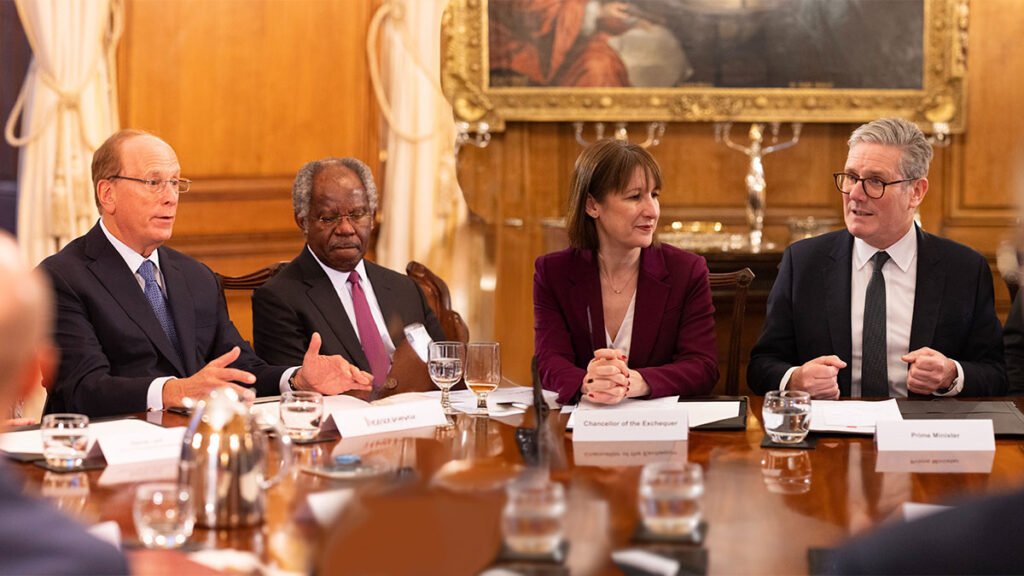
His government’s gaze travelled relentlessly upwards. Starmer and Reeves hosted BlackRock’s Larry Fink in Downing Street, with correspondence showing senior Labour figures speaking of a close partnership with the world’s largest asset manager. Starmer toured Palantir’s Washington headquarters alongside Peter Mandelson, whose former lobbying firm had worked for the company; months later the Ministry of Defence awarded Palantir a £241 million contract for military artificial intelligence. These facts do not by themselves prove an improper bargain. They show the company Starmer kept and the doors his government opened, while protest, dissent and internal party democracy were treated as problems to be managed.
The authoritarian without authority
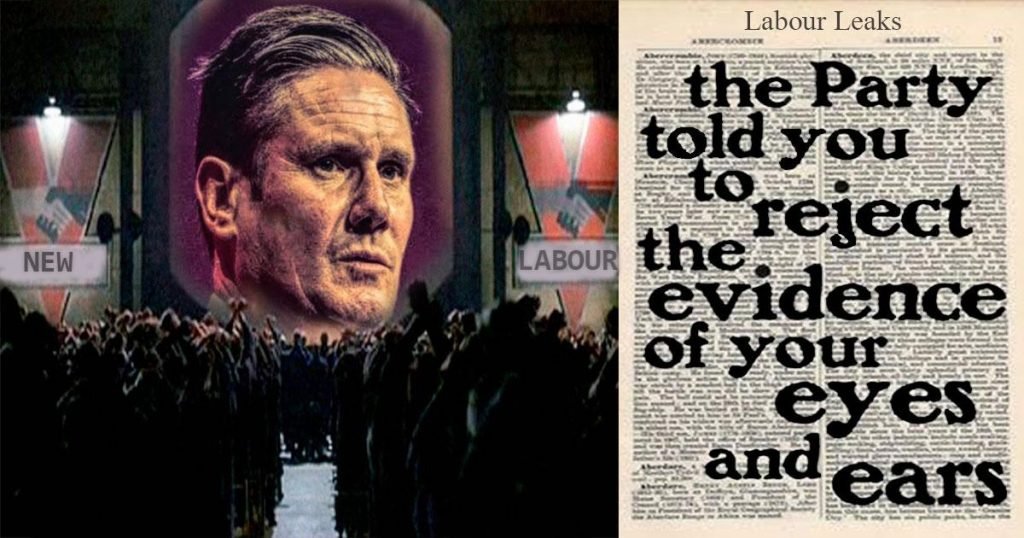
Inside Labour, Starmer confused control with strength.
Candidates were blocked. MPs were disciplined. Jeremy Corbyn was prevented from standing as a Labour candidate. Party members learned that unity meant obedience to the leadership, while factionalism meant disagreement with it.
Outside the party, protest and dissent were increasingly spoken of as problems to be managed rather than democratic rights to be defended.
Starmer did not merely abandon his earlier programme. He attempted to eliminate the political constituency that remembered he had ever offered it.
He endlessly invoked his father, the toolmaker. It was biography used as body armour. The toolmaker was summoned whenever the son needed working-class credentials, then sent back to the workshop while BlackRock came through the front door.
And when he restored Mandelson to the centre of government and sent him to Washington despite his long-documented association with Jeffrey Epstein, Starmer told the country whose world he inhabited. He treated proximity to the Epstein class as less disqualifying than proximity to the Labour left. That choice, more than any plot, sealed the public’s verdict.
When the local elections arrived like a wrecking ball, the Parliamentary Labour Party did not execute a Machiavellian masterstroke. They panicked. Driven by pure self-preservation, MPs went looking for a new figurehead to save their seats, and Starmer’s closest lieutenants were left to sink with the wreckage of his ship. On Monday he stood outside Downing Street and declared “My work is done”. On that, at least, the country agreed with him.
THE CORBYN PRECEDENT: TREACHERY PAYS
Labour’s revolving court
British politics likes to dress patronage in administrative language. Allies are “brought into government”. Rivals “return to the back benches”. Failed politicians are “elevated” to the Lords, where democratic rejection is treated as an inconvenient clerical error.
The reality is older and uglier. Loyalty is rewarded. Dissent is punished. Those who help remove a leader expect payment from the successor.
Labour has rehearsed this ceremony before.

For Starmer’s surviving allies now to cry retribution requires a memory span of roughly six years, and we have written the record they would prefer forgotten. This party is institutionally treacherous, and the wheel they are strapped to is one they built.
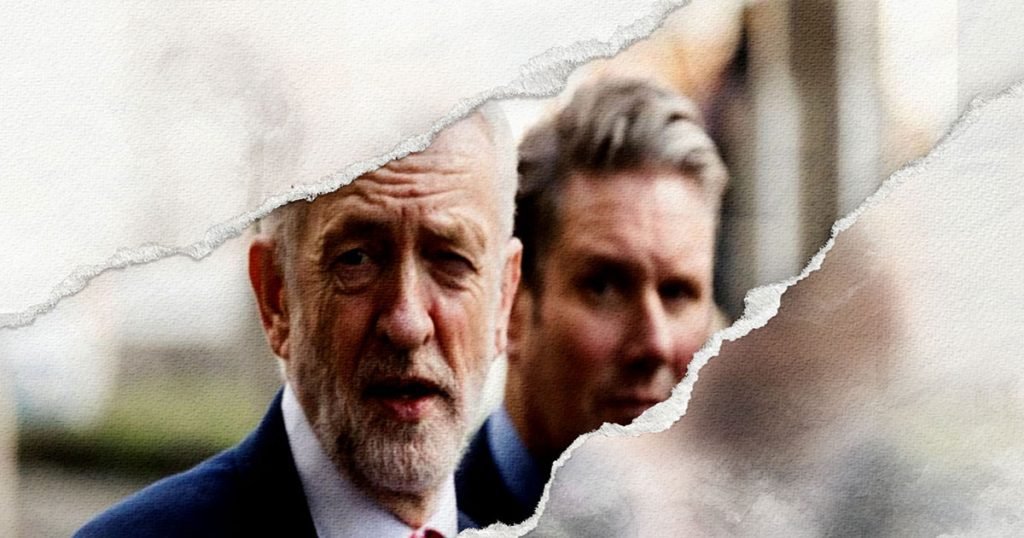
When Jeremy Corbyn led Labour, his parliamentary opponents did not merely disagree with him. Angela Eagle launched a leadership challenge against him. The PLP resigned in choreographed formation, briefed against him and delivered a vote of no confidence by 172 votes to 40. The membership answered by re-electing him with 62 per cent of the vote. The PLP had asked the members a question, received the wrong answer, and carried on as though nothing had happened. One of the choreographed resignations, dated 27 June 2016, came from a shadow Brexit secretary named Keir Starmer, who wrote that with so many colleagues gone his position was simply untenable. Ten years later his own Cabinet performed the identical arithmetic on him, note for note.
And the saboteurs were paid. Consult the leaked report into the party’s Governance and Legal Unit, the document at the heart of LabourLeaks, and then consult the roll of the House of Lords. Iain McNicol, the general secretary who presided over the machine that document describes, became Lord McNicol of West Kilbride. Tom Watson, mentioned in that report thirty one times, the deputy leader who spent Corbyn’s tenure preparing the ground for his removal, was nominated for his peerage by Keir Starmer himself after the Lords Appointments Commission had already rejected him once. When Watson took his seat in scarlet robes, standing beside him was Lord Mandelson. John Mann, John Woodcock and Ian Austin, three of Corbyn’s most dedicated parliamentary enemies, the latter two having urged the country to vote against their own party, were all handed ermine by a Conservative government. Angela Eagle, for her trouble, is now a Dame.
Read that list again. The general secretary named in the sabotage report, a lord. The deputy leader named in it thirty one times, a lord, on Starmer’s personal nomination. The men who campaigned against a Labour government, lords, by Tory appointment, proving that when the establishment needs a threat from the working class crushed, party lines evaporate. A movement founded to carry working people into Parliament became remarkably efficient at carrying its own wreckers into the Lords.
Sarwar’s peerage is simply the newest carriage on a very old train.
THE CASE FOR THE CROWN, FAIRLY STATED

Burnham’s defenders have a reasonable answer, and it deserves a fair hearing.
A new prime minister must appoint ministers he trusts. Starmer’s government had failed, and keeping the same people in the same offices would have made Burnham look captive from his first morning. There is an irony worth crediting too: in 2016 Burnham sat in that same shadow cabinet and refused to join the coup against Corbyn, keeping his knife sheathed when it was fashionable to draw one. He has begun with recognisable measures: on his first day he announced plans to scrap VAT on domestic electricity bills from October and pledged to end rough sleeping, and in his opening address he admitted “We have not been good enough, and we need to be better.” Honesty of that kind has been absent from that podium for some time.
Grant all of it. Grant the warmer tone, the regional sensibility, the genuine record of fighting Whitehall centralisation from Manchester.
None of it answers the harder questions. Burnham arrives in Number 10 having been handed the premiership on 24,937 votes in Makerfield, a seat vacated for him by a sitting MP in the first by-election manufactured specifically to parachute in an outsider since Leyton in 1965. A governing party with a huge majority could not produce a single credible leader from its own benches. And none of it changes the machine he now operates: fiscal rules welded shut, private monopolies gripping energy and water, a state that has spent years extracting wealth from working communities to feed corporate balance sheets. Tone does not pay an energy bill. Without a complete break from the market orthodoxy Starmer championed, this premiership will be managed decline with a softer voice.
THE UNITY HYMN
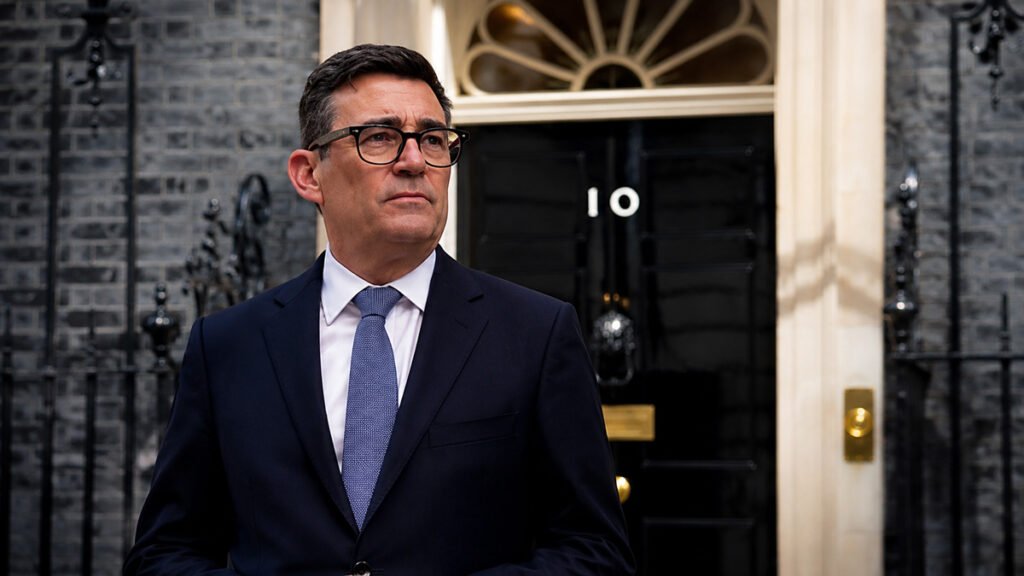
Burnham’s first plea, inevitably, was for unity. Corbyn called for unity while the party apparatus sabotaged his campaigns. Starmer called for unity while purging the left. Burnham calls for unity while clearing Starmer’s people from government. In Labour, unity is the hymn sung by whichever faction has just seized the organ.
The displaced will not sing along for long. Darren Jones has already tested the acoustics, tweeting that the new government’s plans are unfunded, a hand grenade lobbed for the simple reason that he can. The dining clubs will form. The helpful briefings will flow. Every poll will be studied for the moment loyalty can again be safely withdrawn, because Burnham has inherited a parliamentary party trained to remove leaders the moment its own seats look endangered. The MPs who tolerated Starmer’s broken pledges did not recover their consciences. They recovered their survival instinct.
That is the real enemy here. The Labour machine itself: a machine that converts principle into patronage, dissent into disloyalty, and public rejection into another private rearrangement at the top.
And the machine has form, because Labour’s oldest tradition is fighting itself. Ramsay MacDonald abandoned his own government in 1931 and took the establishment’s side against the people who built the party. The Gang of Four walked out in 1981 rather than accept the members’ verdict. The chicken coup of 2016 tried to overturn the largest leadership mandate in the party’s history. Every generation, when the interests of the working class and the interests of the Westminster machine pull in opposite directions, the parliamentary party chooses the machine. The centre never holds, because the centre was never holding anything except its own position.
Six centuries ago, when the peasants of England first rose against their masters, the authorities cut the rebel priest John Ball into four pieces and sent them to the corners of the kingdom as a warning. All they achieved was to make sure his question, why should some be lords and some be serfs, reached every one of them. Westminster can shuffle its Cabinet, distribute its peerages and whisper about revenge as much as it likes. Until a government arrives prepared to dismantle the rigged markets and serve the people who actually build this country, every new king will inherit the same shaking throne.
The face in Downing Street has changed. The court has changed. The people who own the castle have not.
Enjoyed this read? I’m committed to keeping this space 100% ad-free so you can enjoy a clean, focused reading experience. Crafting these articles takes a significant amount of research and heart. If you found this helpful, please consider a “small donation” to help keep the lights on and the content flowing. Every bit of support makes a huge difference.