
From the NHS to the MoD: Palantir’s Own Minister Takes Defence
Wes Streeting stood down from a leadership challenge, endorsed Andy Burnham, and within weeks holds the department that pays Palantir a quarter of a billion pounds. The company did not need to lobby its new Secretary of State. It already knows him.
The first thing to understand about Wes Streeting’s appointment as Defence Secretary is that Palantir did not need to be told.
The American surveillance firm has spent three years building its position inside the British state: a £330 million data platform running through the NHS, a £240.6 million enterprise agreement signed with the Ministry of Defence three weeks before Christmas, four former MoD officials on its payroll, and a lobbying operation that ran through the most connected fixer in Labour history. What it lacked, until Monday evening, was a Secretary of State it had already worked with. Andy Burnham has now supplied one.
Burnham entered Downing Street on Monday promising a “circuit breaker for Britain” and the biggest changes in forty years. His first act was to hand the defence budget to the one minister in British politics whose entire record with Palantir consists of failing to remove it.
The coronation and its price
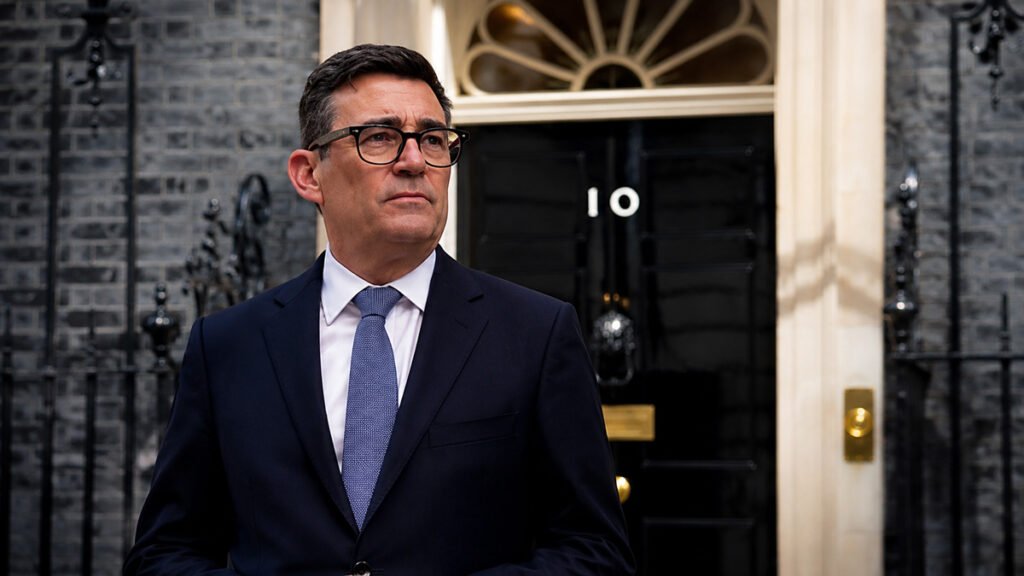
Burnham became Prime Minister without a membership vote, a parliamentary contest or a general election. His path ran through the Makerfield by-election, staged by his allies to get him into the Commons, and a leadership race that closed around him before anyone was offered a choice. This paper set out that democratic deficit on Monday. What matters now is who cleared the road.
Wes Streeting was, for the best part of two years, the most talked-about challenger for the Labour leadership. Cabinet colleagues briefed that his entire career pointed at Number 10. He resigned from Health in May, publicly withdrawing his confidence in Starmer, the act that helped bring the government down. And then, when the contest finally arrived, the great pretender stood aside. Westminster reporting on the reshuffle was blunt about the arithmetic: Streeting appeared to have curbed his leadership ambitions in exchange for a top Cabinet position.
So ask the question directly, because nobody in government will. Was the Ministry of Defence the price of Burnham’s uncontested coronation? Did the man who spent two years positioning for the top job trade his challenge for one of the four great offices of state? No minister has denied it. No account of the reshuffle has explained it any other way. A leadership contest that never happened has produced a Defence Secretary with no defence experience, and the only public explanation on offer is the one nobody will say out loud.
If the job was a reward, the next question is what Britain has been given in return.
Why Streeting refused to cancel Palantir’s NHS contract

Streeting’s defenders will say he never chose Palantir, and on the paperwork they are right. The NHS Federated Data Platform contract, £330 million over seven years, was awarded in November 2023 under the Conservatives. But inheritance is an excuse with an expiry date, and Streeting’s expired the day his own department sought advice on triggering the contract’s break clause.
He had the exit. He knew the case for taking it. His own officials briefed him privately that public perception of the company was hindering the rollout, with fewer than half of health authorities on board. The British Medical Association told doctors to limit engagement with the platform. The contract was so secretive that more than 400 of its 586 pages arrived redacted, and it took legal action to prise open the rest. Campaigners, doctors, MPs across parties and the public asked one thing of the Health Secretary: use the break clause and get this company out of the health service.
He declined. The contract stands, the break clause sits unpulled with its February 2027 deadline approaching, and the minister who protected it has just been promoted out of reach of the question.
That is the record Burnham examined and rewarded with the defence budget. And the department Streeting now runs did not wait for his arrival to open its doors.
How Palantir won £240m from the MoD without competition
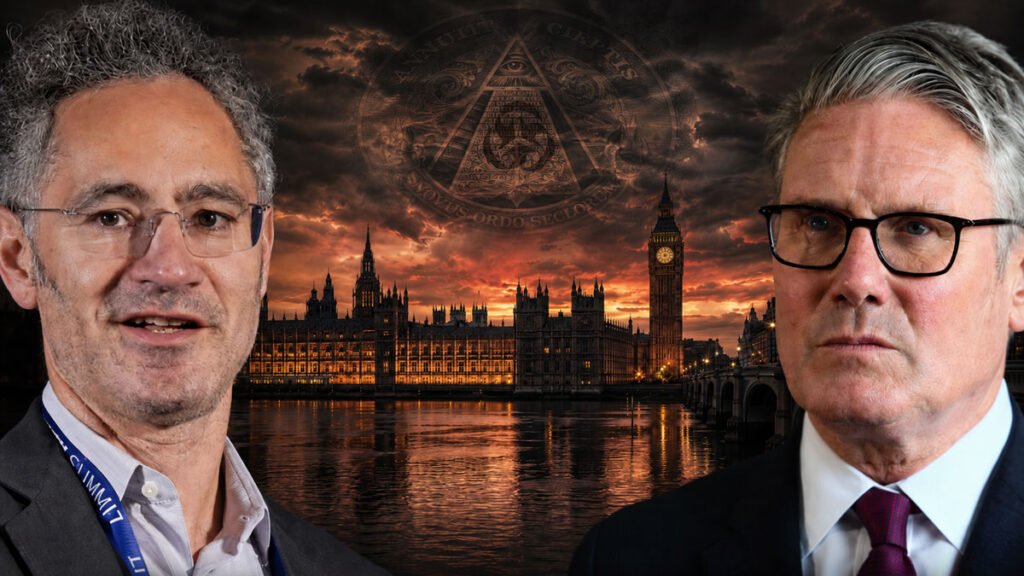
On 17 December last year, the Ministry of Defence awarded Palantir a follow-on enterprise agreement worth £240.6 million, running from this April to 2029, covering data systems for strategic, tactical and live operational decision-making across British defence. There was no competition. The department used a defence and security exemption to hand the contract to the American firm by direct award, at the very moment British defence companies were pleading for orders from their own government.
The road to that contract is worth walking slowly. In August, Barnaby Kistruck left his post as the MoD’s Director of Industrial Strategy, having spent his final months helping to write the government’s blueprint for military artificial intelligence. Nine days later he was on Palantir’s payroll, the fourth former MoD official the company hired last year. Three months after that, his new employer received the largest contract of its kind the department has ever given it. When MPs demanded answers in the Commons this February, they received none.
The minister who could not say no to Palantir in Whitehall’s most trusted institution now signs its cheques in Whitehall’s most secretive one.
This is the machinery Streeting inherits: a contract already signed, a revolving door already spinning, and a set of parliamentary questions already gathering dust. He does not have to do anything corrupt to serve Palantir’s interests at Defence. He merely has to do what he did at Health, which is nothing.
And there is one more room in this story, one with no minutes at all.
Bilderberg, Karp and Thiel

In June 2025, Streeting attended the Bilderberg meeting in Stockholm. The official participant list also included Palantir chief executive Alex Karp and the company’s co-founder, Peter Thiel. The published agenda covered defence innovation, resilience, artificial intelligence, deterrence and national security.
Bilderberg operates under the Chatham House Rule. No detailed minutes are published. The public is told who attended and supplied with a list of subjects, but not who said what, which policies were discussed or what private understandings were formed.
Attendance at the same conference does not demonstrate that Streeting struck a deal with Karp or Thiel. It does, however, place the British Health Secretary in a closed gathering with the leaders of a company holding one of the NHS’s most controversial data contracts, while defence technology and artificial intelligence were among the subjects under discussion. Thirteen months later, that same minister controls British defence procurement, and that same company holds the department’s flagship data contract.
Streeting should disclose whether he met Karp or Thiel at Bilderberg, whether Palantir’s NHS contract was discussed and whether any conversations concerned future British defence procurement. The answer may be entirely innocent. Secrecy turns innocence into suspicion.
The Mandelson web

Every strand of this story, followed far enough, reaches the same man.
Peter Mandelson co-founded Global Counsel, the lobbying firm that Palantir retained to navigate its way into the British state. The years of that retainer overlap with the years of the harvest: the £330 million NHS Federated Data Platform, the £240.6 million Ministry of Defence enterprise agreement, and a portfolio of UK government contracts now worth more than £670 million in total. In February 2025, while serving as Britain’s ambassador in Washington and still holding a controlling stake in Global Counsel, Mandelson arranged for the Prime Minister of the United Kingdom to visit the headquarters of his firm’s client and meet its chief executive, Alex Karp. No minutes were taken. When MPs asked in the Commons what privileged access Mandelson’s client had enjoyed, and whether Starmer even knew Palantir was paying his ambassador’s firm, they received no meaningful answer.
Mandelson is now under criminal investigation by the Metropolitan Police for misconduct in public office, over allegations that he leaked market-sensitive government information to Jeffrey Epstein during the financial crash. He has been arrested and bailed. Officers have searched two of his properties. He has resigned from the Lords and been cast out of the Labour Party. The investigation concerns the Epstein leaks rather than the Palantir contracts, but it establishes the essential fact about the man who held the door open for this company: he treated the confidences of the British state as currency.
And the web does not stop at Mandelson. Byline Times has reported that Ehud Barak, the former Israeli Prime Minister, described Epstein as an owner of a Silicon Valley venture fund controlled by Peter Thiel, Palantir’s co-founder. Thiel’s spokesman denied co-ownership but confirmed that Epstein was a limited partner in the fund. Sit with that for a moment. The financier whose corruption destroyed Mandelson was, on Thiel’s own camp’s account, an investor alongside the man whose company Mandelson spent years installing in the British state. This is one web, and every strand of it is sticky.
Wes Streeting was raised inside it. His partner served as Mandelson’s special adviser. His WhatsApp exchanges with the peer show a mentor’s hand on his career: briefings arranged before calls with American officials, meetings brokered, counsel supplied. When the Epstein files detonated, Streeting alone escaped upright, and he did it with the oldest trick in the book his mentor wrote. He published the messages himself, on his own terms, declaring he had “nothing to hide”, and converted a week of exposure into a week of applause for his candour. This paper called it at the time: a controlled release, choreographed to bury the relationship beneath the performance of disclosing it. He dodged the bullet. He never explained the gun.
Streeting’s connections to Palantir and to Mandelson are matters of record, and the closed rooms are matters of record too. If ministers do not want the public to speculate, the remedy has been in their hands the entire time. A minister who represents the people should not be meeting the people’s contractors in secret. Politicians are accountable to the people. That is the whole of the constitution in one sentence, and it is the sentence this government keeps forgetting.
The same keys, a new doorman

Grant the counterargument its full weight, because it exists. Streeting showed real nerve in resigning when the whips wanted silence. The MoD contract predates him. Ripping out an embedded data platform mid-programme carries genuine operational risk, and continuity in defence systems matters in a dangerous world. All true. None of it explains why the one minister with an unbroken record of accommodating this company, undisclosed exposure to its owners, and a leadership withdrawal that remains unexplained, was the man chosen to oversee it. Labour has over 400 other MPs. Burnham picked this one.
Burnham told the country on Monday that politics had not been good enough and would now be better. Judge that promise by his first evening’s work. The Chancellor is a man who has spent thirty years inside the Westminster machine. The Defence Secretary is the minister who protected Palantir’s NHS contract, sat in undocumented rooms with its founders, learned his trade from its lobbyist, and stood aside so that Burnham could take power without a single vote being cast.
The network that governed under Starmer has not been broken. It has been reshuffled, and it has been paid.
A new face at the door of Number 10 changes little when the same private interests already have keys to the building.
Enjoyed this read? I’m committed to keeping this space 100% ad-free so you can enjoy a clean, focused reading experience. Crafting these articles takes a significant amount of research and heart. If you found this helpful, please consider a “small donation” to help keep the lights on and the content flowing. Every bit of support makes a huge difference.