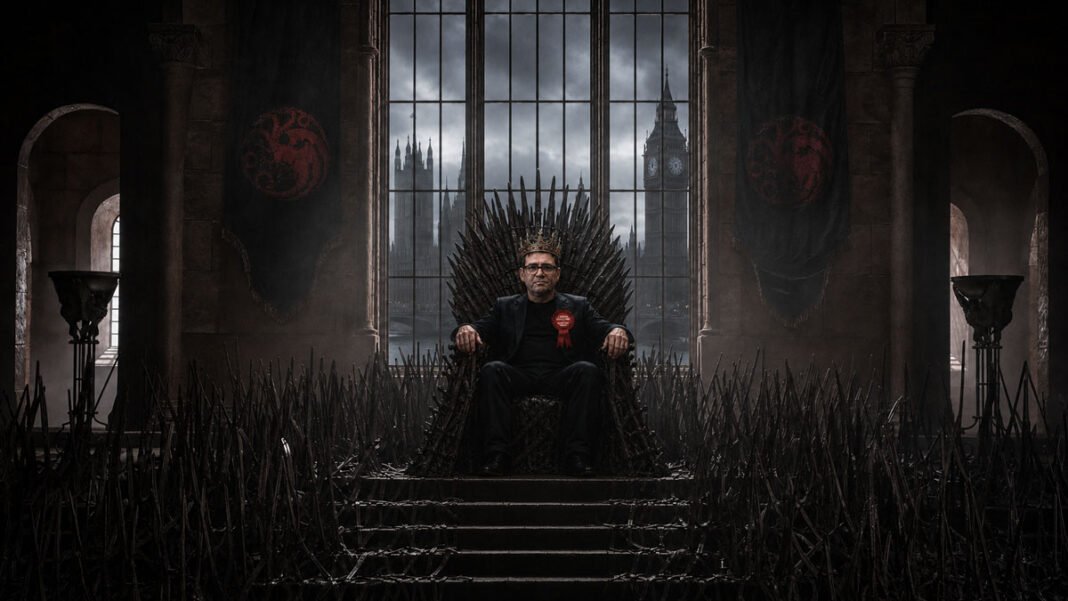
Strip the accent from Andy Burnham’s first big speech and you are left with Keir Starmer’s script, performed by a more popular actor, for an audience the machine has already decided will applaud.
The speech: old wine in a northern bottle…
Andy Burnham stood in a Manchester museum on Monday and told the country that Westminster is broken. He is right. He told us he will take power out of the centre, build a “No 10 North” to act as “the nerve centre of a rewired Britain,” and deliver the biggest council house building programme since the post war years. He promised a “circuit breaker.” He promised the end of trickle down economics. He promised, in his words, the “biggest rebalancing of power our country has seen.”
We have heard this speech before. We heard it from the same podium tradition two years ago, when a different leader, in a different accent, announced his own ten year mission to transform Britain. Starmer too promised devolution. Starmer too promised an end to trickle down economics. Starmer too spoke of grassroots accountability and a new politics built from the ground up. The words have travelled north for the weekend. The substance has stayed exactly where it was.
Listen carefully to what changed in the language, because that is where the trick is hidden. Public ownership has become “public control.” Burnham used that phrase deliberately, for water, transport and energy alike, and it is worth sitting with the distance between the two ideas. Ownership means the public holds the asset. Control can mean almost anything a minister wants it to mean on a given Tuesday, a franchise agreement, a regulator with slightly sharper teeth, a seat on a board that the private operator still runs.
It is the vocabulary of the left, doing the work of managed continuity. Small government, the oldest promise in the Westminster phrasebook, has become a second Number 10 transplanted to Manchester, which is not less government. It is the same government, with better signage.
George Orwell named this pattern before most of us were born. “The Party told you to reject the evidence of your eyes and ears. It was their final, most essential command.” We are not living in 1984, and nobody is asking us to disbelieve a fact. We are being asked to disbelieve a definition, to hear “public control” and not notice it is not “public ownership,” to hear “circuit breaker” and not ask what, precisely, has been broken for two years and is now suddenly fixable by a man who was part of the same governing class throughout.
THE MANDATE NOBODY IMPORTANT WANTS TESTED
We have written before about the thinness of Burnham’s mandate, a leadership effectively decided on fewer than twenty five thousand votes in one Greater Manchester seat, a party with over four hundred MPs unable to produce a leader from its own benches. That argument stands, and we are not going to repeat it in full here. Read it in full.
What is new this week, and what deserves more attention than it has received, is what happens when you test that mandate against the one mechanism that could actually settle it: a general election. Burnham could probably win one. YouGov has him beating every other party leader head to head as preferred prime minister, ahead of Kemi Badenoch and miles ahead of Nigel Farage. By his own office’s logic, a victory now would hand him five years in Downing Street rather than the three he would have if he waits. Every incentive a confident leader might have points toward going to the country.
He will not. His office has already dismissed the idea. And the reason is not modesty. It is arithmetic. An ally close to him has admitted privately that a snap election could see dozens of Labour MPs lose their seats, with one internal model suggesting Reform could secure a Commons majority of over three hundred, built substantially on Labour’s record on the family farm inheritance tax and on Gaza. Labour backbencher Luke Charters put it plainly: “It’s not on the cards.” A senior Tory source says his party has readopted every one of its own MPs on the assumption Burnham goes to the country sometime between September and next May regardless, the only live debate being timing, not principle.
So here is the position. The man who could win is being kept from asking, by the people who would lose if he did. This is not a leader denied a mandate by a hostile establishment. This is a leader’s own parliamentary party hiding from a mandate their man would probably deliver, because the mandate was never the point. The seats were. Saving the Labour Party is…

Remember, too, who is making the case for restraint. Mike Tapp, a minister in this same government, has called for a change in the law so that any forced leadership change automatically triggers an election. Burnham himself, in 2022, posted “Hashtag General Election Now” when Rishi Sunak succeeded Liz Truss without a public vote. He saw the principle clearly enough then, when applying it cost him nothing. He has gone quiet on it now that applying it might cost him the keys to Downing Street three years early on a manifesto he is already telling people he intends to abandon parts of.
The man who could win an election is being kept from calling one by his own MPs, because the mandate was never the point. The seats were.
Labour’s deputy leader, Lucy Powell, was at least honest about the mood inside the party. Asked about the prospect of an uncontested coronation, she did not raise a single concern about legitimacy. She welcomed it. “How refreshing that would be,” she told the BBC, “that the whole Labour Party is agreed on the new leader and we don’t have to go through a contest that could be damaging.” Refreshing for whom, is the question nobody at Westminster seems willing to put to her. Not, evidently, for the country, who get no say in any of this either way. Housing Secretary Steve Reed used the word that mattered without apparently noticing it: he said Labour MPs were backing a “coronation,” not a contest. He meant it as reassurance.
Kemi Badenoch, for entirely self interested reasons of her own, asked the only question worth putting to a man about to inherit the country on a museum speech rather than a despatch box appearance: will he keep the manifesto, will he borrow more, will he fund the defence plan that broke his predecessor’s government. “A speech full of warm words to a friendly crowd,” she said, “is not a substitute for speaking at the despatch box where MPs can question the substance of what he has said.” It pains us to say a Conservative leader landed the sharpest blow on accountability this week, but credit goes where it is earned.
THE DEMOCRATIC DEFICIT BENEATH THE DEMOCRATIC DEFICIT
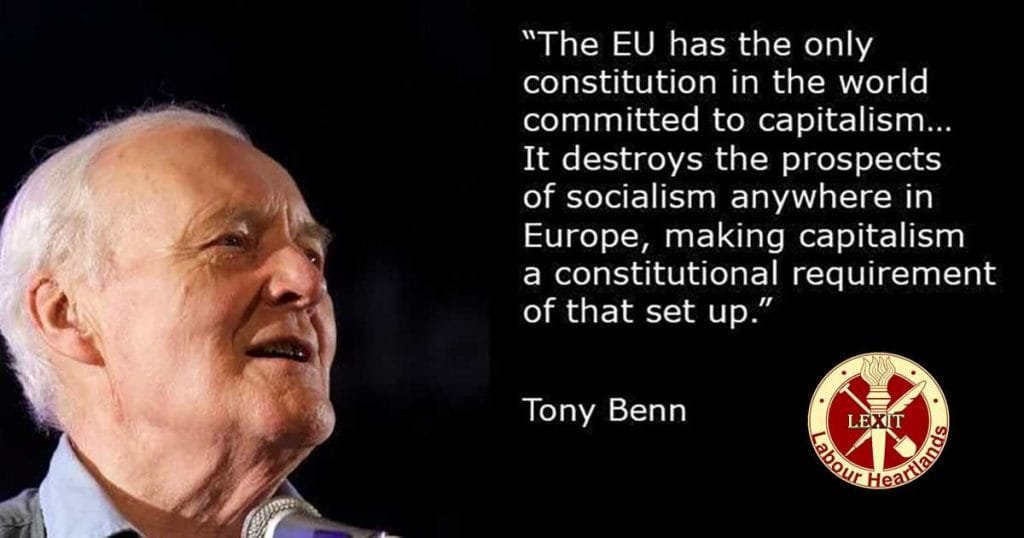
Tony Benn asked five questions of anyone who held power over him, but it is the sixth thing he said, the year before Burnham was even a councillor, that belongs here. Watching a Westminster preparing to hand sovereignty upward and call it modernisation, Benn told the Commons exactly what was being asked of the country. “They believe that a good king is better than a bad parliament.” We are not being asked to surrender sovereignty to Brussels this time. We are being asked to accept that a good king, untested at the ballot box, chosen by acclamation rather than contest, is preferable to the bad parliament that elected him by not bothering to find a leader inside its own four hundred seats. Benn’s answer to that proposition, in 1991, was that the rights lent to him by the people of Chesterfield were not his to hand away, however much he agreed with where they were headed. Nobody in the parliamentary Labour Party this week has shown the slightest interest in asking themselves the same question about the rights lent to them.
And the silence runs wider than the leadership question. This government, under Starmer, pushed legislation to strip jury trials from a wide band of criminal cases and narrowed the right to protest, restrictions that have drawn open revolt from more than three thousand lawyers and the Bar Council itself. That legislation has not gone away because the man who steered it has. It is still moving through Parliament, defended this year from the same front bench Burnham is about to inherit, by David Lammy, his own deputy and one of his earliest backers. Burnham has built an entire campaign on the language of giving power back to people and places. He has had nothing whatsoever to say about a government taking power away from defendants and protesters while he campaigns. Either he intends to use his “biggest rebalancing of power” to reverse it, in which case say so now, or he does not, in which case the rebalancing has a very specific shape: power moves from Whitehall to Manchester, and from the citizen to the state, in the same parliamentary term.
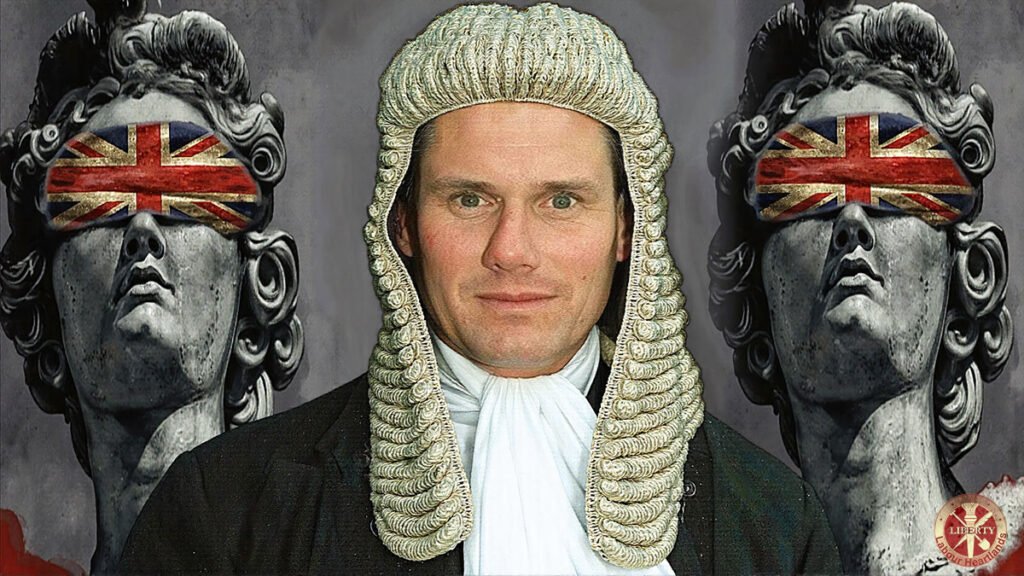
None of which is to say nothing in the speech was real. The council housing commitment, if delivered at anything like the scale promised, would matter to people who have waited years on a list. The devolution of post sixteen education and welfare administration to mayors is a genuine structural change, not a rhetorical one, and deserves to be judged on delivery rather than dismissed by association. We say this clearly because the job of this publication is not reflexive opposition. It is honesty about what is and is not new.
But Ukraine policy will not move an inch under Burnham, and on that we find no complaint to make. He has been a consistent supporter of Kyiv since 2022, before it was a fashionable position inside his own party, and an outgoing chief of the defence staff has already called him an incoming “wartime prime minister.” On Israel, the picture is messier than either his critics or his allies prefer to admit, a parliamentary supporter of Labour Friends of Israel since 2015 who has nonetheless refused, when asked directly, to call events in Gaza a genocide. Continuity in foreign policy, in other words, dressed in exactly the same costume as continuity in fiscal policy: a new face delivering an old settlement, and asking to be congratulated for the delivery.
That is the whole of the trick, in the end. Not one lie, which would be easy to catch. A thousand small substitutions of one word for another, each defensible alone, each in service of the same outcome: a country that believes something has changed, governed by people who have made very sure that nothing structural has.
The voters of Makerfield thought they were electing an MP as a starting pistol to a leadership challenge. They were actually electing a prime minister. They just didn’t know it, and neither, it turns out, did the public, or the four hundred MPs now too frightened to ask the country whether it wanted him.
Enjoyed this read? I’m committed to keeping this space 100% ad-free so you can enjoy a clean, focused reading experience. Crafting these articles takes a significant amount of research and heart. If you found this helpful, please consider a “small donation” to help keep the lights on and the content flowing. Every bit of support makes a huge difference.