Oil Prices Down: Energy Prices Still Up
Oil has surrendered almost its entire war premium. Tankers are moving through the Strait of Hormuz again. Yet on the first of July your energy bill jumps 13 per cent, and the pumps refuse to fall. This is not gravity failing. It is extraction working exactly as designed.
They tell us what goes up must come down. That is the law of gravity.
But in Britain we live under a different law: the law of the rigged market.
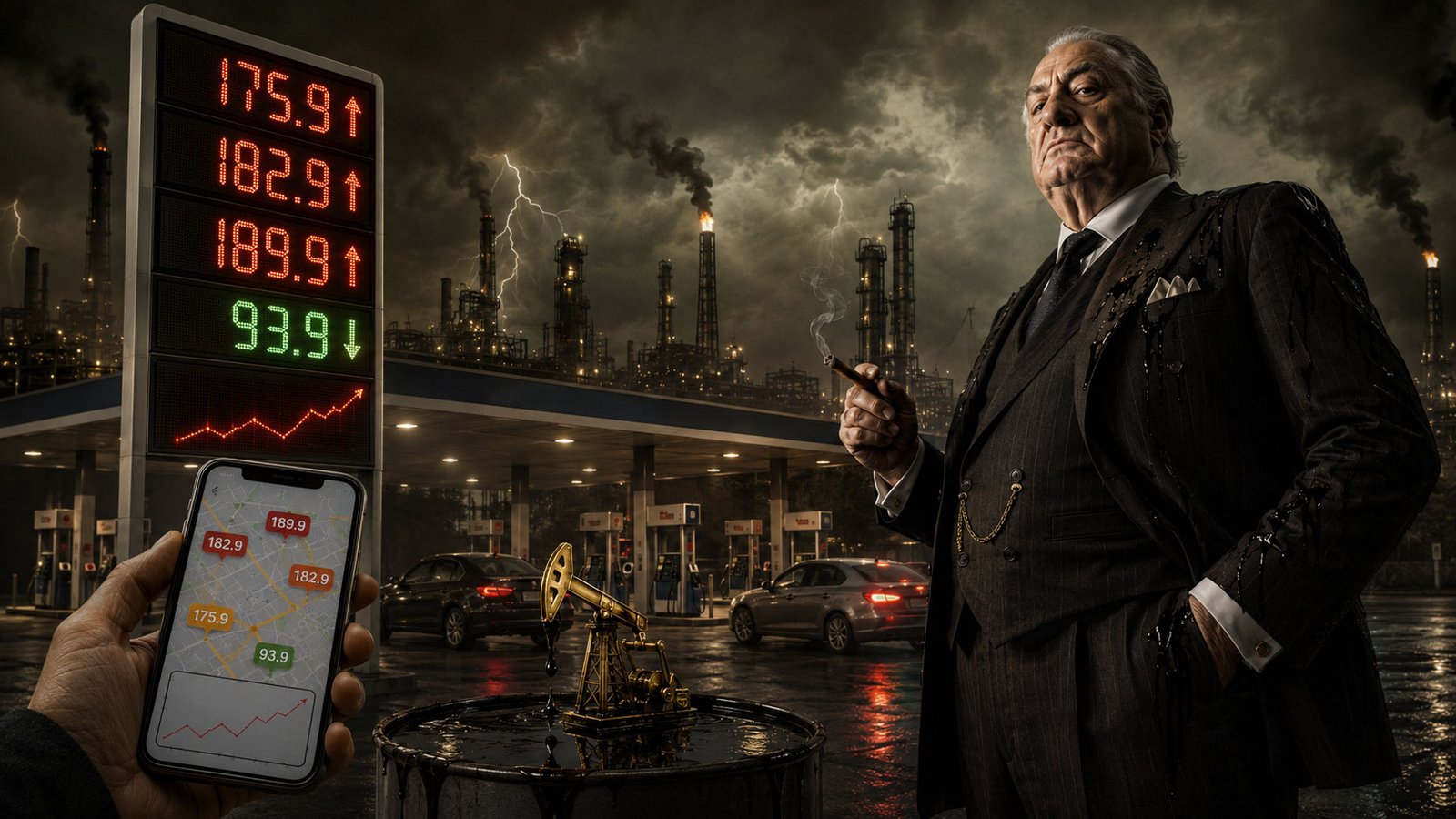
Under this law, prices rocket like a missile during a crisis and drift down like a feather when the storm passes. Every geopolitical tremor, every war scare, every corporate rumour becomes an immediate excuse to squeeze the British public. The motoring organisations even have a polite name for it: rocket and feather pricing. Up like a rocket, down like a feather. The politeness ends there.
The rocket and the feather

Look at the numbers. Before the first bomb fell on Iran at the end of February, Brent crude traded at around 70 dollars a barrel. At the height of the panic it spiked above 120 dollars. Now, with a framework deal signed and tankers moving through the Strait of Hormuz again, Brent has surrendered almost its entire war premium, trading in the low seventies, within a couple of dollars of where it stood before the war began. The ceasefire remains fragile, and the weekend brought fresh strikes, but the wholesale market has already priced the peace.
The forecourt has not. At the end of February the average litre of petrol cost 132.83p and diesel 142.38p. In the latest official weekly figures, petrol still stands at 153.26p and diesel at 172.47p. The crisis has passed on the trading screens. At the pump, motorists, hauliers and ordinary families are still paying 20p and 30p a litre more than they were before it started.
This is not an accusation from the fringes. The AA’s own fuel price spokesman put it plainly this spring: the wholesale cost of diesel had plummeted more than 10p a litre since early April, while pump prices were down by just 2p. The RAC’s own analysis of wholesale data reached the same verdict: prices were not falling as fast as they should. The rocket went up on schedule. The feather is taking its time.
It bleeds into everything

This is not just about petrol. Fuel prices bleed into everything. They dictate the cost of the bread on your table, the heating in your radiators, the deliveries to your shop and the school run. When haulage diesel costs more, everything on the supermarket shelf costs more, and economists blamed fuel for pushing inflation back up this spring. High fuel costs are turning a national cost of living crisis into a permanent corporate business model. It makes families poorer, leaves children hungry, and destroys the small businesses already hanging on by their fingernails.
The first of July
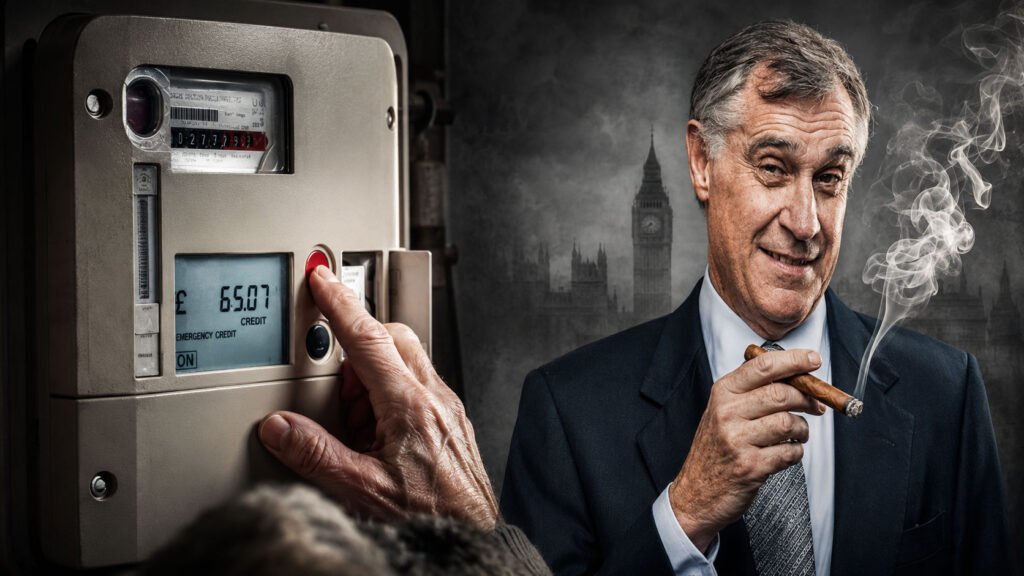
And as if to compound the misery, today the new energy tariffs kick in. Ofgem’s price cap rises 13 per cent, another £18 a month, taking the typical annual bill to the equivalent of £1,862 under the regulator’s old sums, dressed down to £1,663 under its convenient new assumption that we all use less energy now. We use less because we cannot afford more. The regulator has redefined poverty as efficiency.
The consequences are not abstract. Fuel poverty campaigners calculate that the number of households forced to spend more than a tenth of their income on energy will jump from 11 million to 13.5 million from today, with almost 5.5 million homes facing bills that swallow around a fifth of their income. Debt owed to energy suppliers has hit a record £4.79 billion. And the analysts at Cornwall Insight warn bills will stay high all winter, when the cold makes them bite hardest. The Iran ceasefire, as their principal consultant put it, is a pause, not a resolution.
While wholesale costs fall back globally, the British consumer is hit with a double whammy: extortion at the pump and extortion in the home.
The house always wins
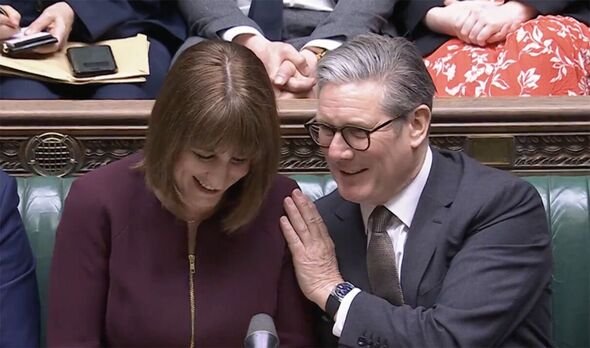
And here is the part they prefer not to dwell on: the government is not a bystander to high prices. It is a beneficiary. Every litre of petrol carries 52.95p of fuel duty, and then VAT at 20 per cent is charged on top of the duty-inclusive price: a tax on a tax. Roughly half of what you hand over at the pump goes straight to the Treasury, and because VAT is a percentage, the Treasury’s take rises automatically every time the price does. The same is true at home, where VAT at 5 per cent sits on every domestic gas and electricity bill. When your bill jumps £221, the Chancellor quietly pockets her share of the increase.
So when ministers wring their hands about prices, remember the state’s own incentive. Every crisis that inflates the cost of energy inflates the government’s revenue with it. The house always wins, and the house has shown no urgency about changing the rules of the game.
The watchdog that watched
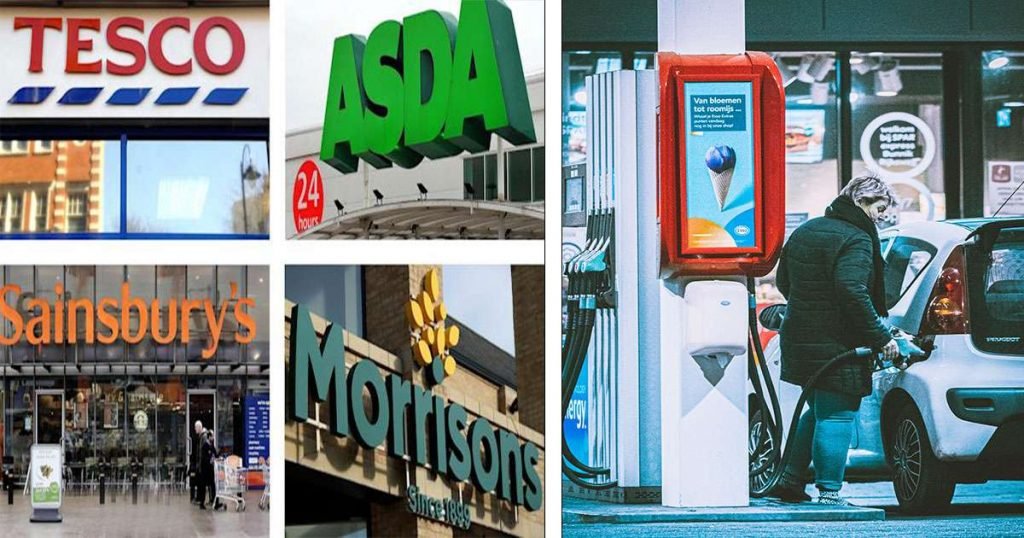
Even the competition watchdog has admitted the fuel market is broken. The Competition and Markets Authority’s road fuel study found competition had weakened and that inflated margins cost drivers around £2.5 billion between 2019 and 2023. Its December verdict was blunter still: fuel margins remain at “persistently high levels” and operating costs do not explain it. Retail spreads are running at more than double their pre-2020 averages. In the regulator’s own words, competition in the sector is weak.
And the remedy for this systemic failure? An app. A price comparison scheme called Fuel Finder, so that families can shop around for the least worst rate of extraction. The market is rigged, the watchdog concedes, so here is a tool to help you compare the rigging.
Performing concern
And what does the government do? It watches. It mutters. It commissions reports. It pretends that performing concern is the same thing as taking control. The energy minister promises to “monitor the situation” before winter and plan for contingencies. Monitoring is not governing. A thermometer is not a cure.
This is how modern Britain works. Crisis arrives. Prices shoot up. Companies pocket the panic. Ministers perform outrage. Regulators shuffle paper. The public pays. Then, when the crisis eases and the bills remain sky high, we are told to be patient. It is a funny thing about corporate patience: prices never require patience on the way up, only on the way down. We have seen this film before, when Shell posted a profiteering bonanza off the back of the last crisis, and when greedflation drove food prices beyond the reach of ordinary wages.
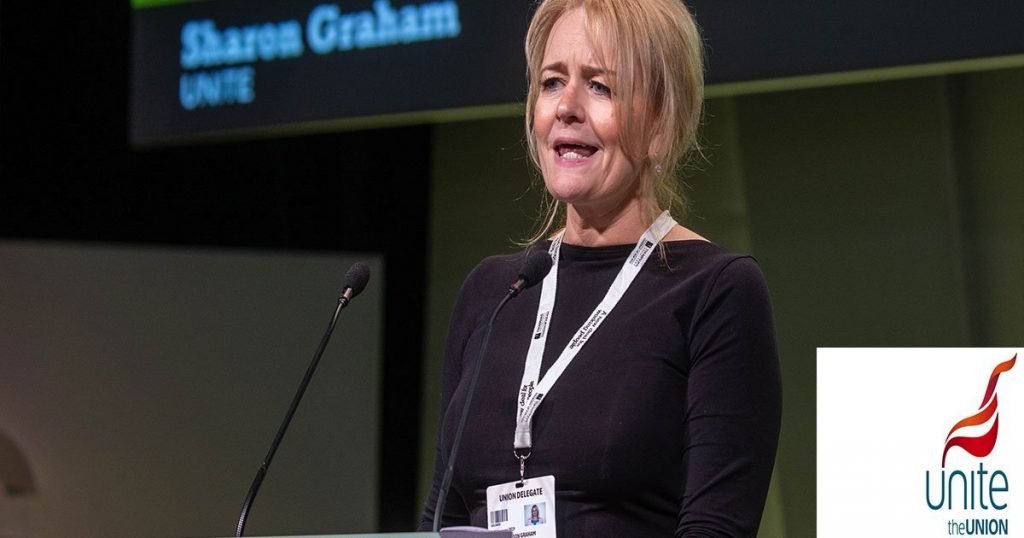
Others are at least naming the problem. Unite’s Sharon Graham calls the cap rise “another kick in the teeth” for workers and is planning protests demanding deep cuts and the renationalisation of energy companies. The TUC wants a social tariff. The End Fuel Poverty Coalition warns that if Andy Burnham is to be the next prime minister, his talk of public control of energy will count for nothing without a permanent social tariff, an end to energy debt, and a credible plan to break the link between gas and electricity prices. On that point they are right, and readers of this publication will know our view of how Burnham arrived at the threshold of Number 10. A rewired Britain that leaves the meter running on a rigged market is not rewired at all. It is the same political cowardice under new management.
Protection by law, not war
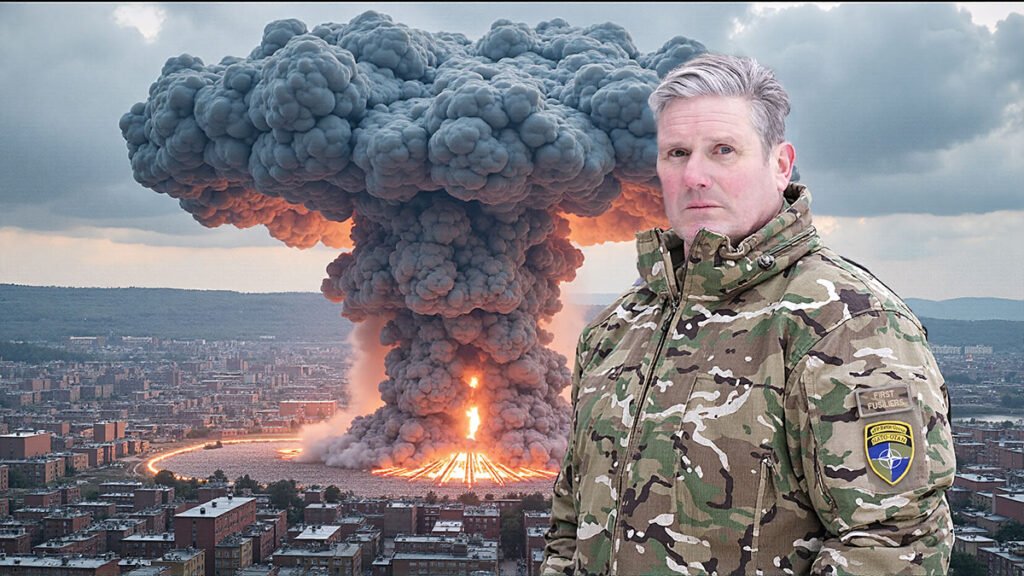
Here is a fact worth sitting with. Rumours of war make money. Volatility is not a misfortune for everyone: for the oil traders, the arms manufacturers and the asset managers holding their shares, it is the business model. Every war scare that terrifies a pensioner into turning off the heating shows up somewhere else as a trading profit and a rising share price. The public pays twice: once at the pump and once through the public money poured into the war economy.
This is not a functioning free market. It is managed extraction. It is a system where the working class are treated as walking cash machines, and where boardroom greed is allowed to dress itself up as natural economic forces.
The government’s first job is to protect its people. Sometimes that protection comes not through war but by law. The powers exist. A permanent social tariff. A statutory duty to pass wholesale falls through to the pump, enforced with penalties rather than press releases. An end to the absurd link that lets gas set the price of electricity. Public ownership of the essentials, so that energy serves the people who use it rather than the shareholders who trade it. Stop the rigged system. Stop the profiteering. Use the powers to protect the people.
Gravity says what goes up must come down. The British establishment says: not while there is still a penny left to be wrung from your pockets. It is time the law of the land overruled the law of the rigged market.
Enjoyed this read? I’m committed to keeping this space 100% ad-free so you can enjoy a clean, focused reading experience. Crafting these articles takes a significant amount of research and heart. If you found this helpful, please consider a “small donation” to help keep the lights on and the content flowing. Every bit of support makes a huge difference.

Support Independent Journalism Today
Our unwavering dedication is to provide you with unbiased news, diverse perspectives, and insightful opinions. We're on a mission to ensure that those in positions of power are held accountable for their actions, but we can't do it alone. The Heartlands Tribune is primarily funded by me, Paul Knaggs, and by the generous contributions of readers like you. Your donations keep us going and help us uphold the principles of independent journalism. Join us in our quest for truth, transparency, and accountability – donate today and be a part of our mission!
Like everyone else, we're facing challenges, and we need your help to stay online and continue providing crucial journalism. Every contribution, no matter how small, goes a long way in helping us thrive. By becoming one of our donors, you become a vital part of our mission to uncover the truth and uphold the values of democracy.
While we maintain our independence from political affiliations, we stand united against corruption, injustice, and the erosion of free speech, truth, and democracy. We believe in the power of accurate information in a democracy, and we consider facts non-negotiable.
Your support, no matter the amount, can make a significant impact. Together, we can make a difference and continue our journey toward a more informed and just society.
Thank you for supporting Labour Heartlands