“Let the Oil Flow”
Trump set fire to the Strait of Hormuz, then demanded applause for opening it. Four months, thousands of dead and one record quarter for the arms trade bankers and energy companies later, the taps are back on. Here is who paid, and who was never going to.
Political language … is designed to make lies sound truthful and murder respectable, and to give an appearance of solidity to pure wind.
– George Orwell, Politics and the English Language, 1946

Read the confession again, because they do not usually leave it lying around in the open. “Ships of the World, start your engines. Let the oil flow!”
That is the whole war in six words. Not democracy. Not human rights. Not the protection of civilians, not international law, not the long and complex history of the world. Oil. The President of the United States typed the quiet part into a social media box and pressed send, and we are now expected to call it peace.
Here is what we are told. Pakistan’s prime minister, Shehbaz Sharif, announced on Sunday that a peace deal between the United States and Iran had been reached, with both sides declaring the immediate and permanent termination of military operations on all fronts, including in Lebanon. Trump confirmed it minutes later, calling the deal complete, authorising the toll free opening of the Strait of Hormuz and the removal of the United States naval blockade. Qatar, Turkey and Saudi Arabia are thanked for the mediation. Israel, which spent four months bombing, was not in the room.
Now read it the way a grown adult reads a press release. What has actually been agreed is a memorandum of understanding, a document meant to begin sixty days of negotiation, with a signing ceremony promised for Friday in Switzerland. Iran, hours after Trump declared the thing finished, signalled that no final decision had been made. The deal nearly collapsed on the same Sunday it was announced, when Israeli strikes in Beirut drew threats from Trump aimed at Iran and Hezbollah. And the “toll free” strait is not toll free at all, because Iran is still demanding service fees for the ships passing through it. The ceremony is for Friday. The peace is for the cameras.
So before anyone reaches for the word historic, let us be precise about what was bought and what was sold.
A CHOKEPOINT, AND THE PEOPLE WHO LIVE AT THE BOTTOM OF IT
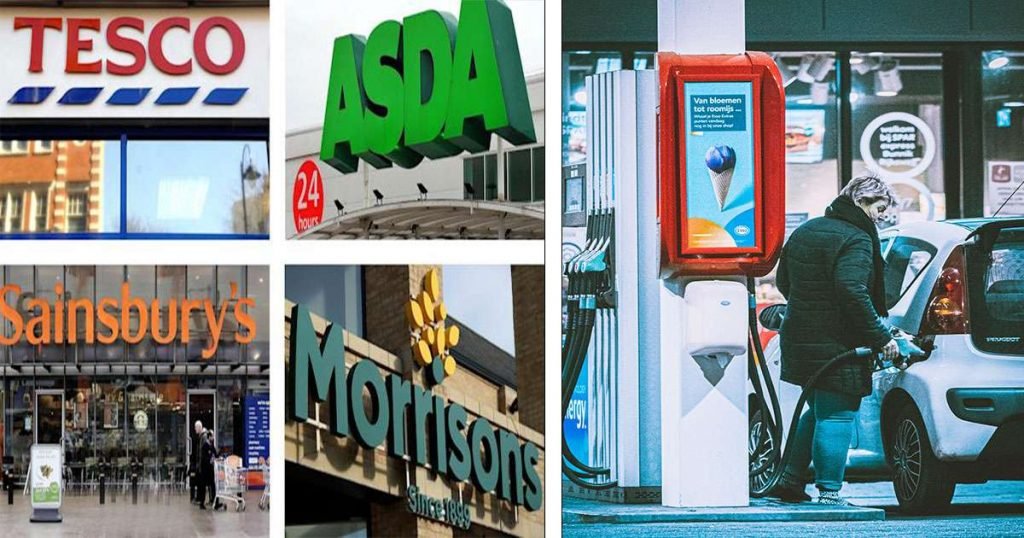
The Strait of Hormuz is not a minor shipping lane. It carries roughly a fifth of the world’s petroleum, the single most important energy chokepoint on the planet. Threaten it and markets tremble. Close it and prices climb, governments perform their panic, and ordinary people pay. They always pay, and they pay in that exact order: at the pump, then on the energy bill, then at the supermarket till, then in the public services cut to ribbons in the name of fiscal discipline once the same governments have found endless billions for escalation.
The numbers are not in dispute. Brent crude ran from around seventy two dollars a barrel in late February to nearly a hundred and twenty at its peak, a rise of more than fifty five per cent. Dated Brent at one point passed a $140, the highest since 2008. March alone delivered one of the largest single month oil price jumps on record. Every penny of that landed on someone who had no say in any of it: the pensioner choosing between the heating and the kettle, the family watching the weekly shop quietly inflate, the worker told there is no money for wages while the state summons fleets and missiles overnight.
And in the Middle East, as ever, the bill came due in something more final than money.
By Iran’s health ministry, more than three thousand four hundred people had been killed in Iran since the war began on the twenty eighth of February. Nearly three thousand seven hundred more were reported dead in Lebanon. On the very first day of the war, a primary school in Iran was bombed, killing a hundred and sixty eight children. At least thirteen American service members were killed, and the overall toll, civilians included, has been estimated in the many thousands. Those are not side effects. They are the product. The market had a word for it the whole time, and the word was volatility, and volatility is a profit centre.
As Naomi Klein warned, “Extreme violence has a way of preventing us from seeing the interests it serves.” War is not just tragedy to the market. It is movement, contracts, oil spikes, weapons orders and public money flowing into private hands. Stability pays wages. Chaos pays dividends.
The Part Where We Are Supposed to Be Grateful
Let me put the honest counter-case, because it exists and it deserves better than a sneer.
Mediation is not nothing. Qatar, Turkey and Saudi Arabia did help bring two sides to a table, and a table is better than a bombsight. A pause that stops children being pulled from rubble is worth having, even a fragile one, even an unsigned one. People genuinely worked to end this, and lower prices at the pump will, in the most immediate and literal sense, help the very people I have just described. If the killing stops, that is a good thing, full stop, and no amount of righteous fury changes it.
I have spent enough of my own life in uniform, close enough to the machinery of deterrence and the economics that surround it, to know that the men who end wars are not always the men who wanted them. Some of the mediators meant it.
But hold the relief up to the light and ask the only question that matters. If peace was available, and it was, then why was it the last thing to arrive rather than the first? The warring sides were reportedly first in contact early on, and that contact paved the way for a ceasefire only weeks later. The settlement was always sitting there. It waited four months. It waited until the returns had been banked.
“The oil crisis has created the conditions in which it is possible to sell a previously unsellable, but highly profitable, policy.” -Naomi Klein, “Disaster Capitalism: State of Extortion”
Who Got Richer While You Got Poorer
This is where the language of solemnity collapses into arithmetic.
While the broader stock market fell, the defence sector rose, and it rose the moment the bombs did. Lockheed Martin and RTX, the parent of Raytheon, hit all time highs the first trading day after the strikes. Lockheed climbed close to forty per cent across the year on a record backlog near two hundred billion dollars. In Europe, BAE Systems gained as much as eight per cent, Rheinmetall five, Leonardo reported an eighteen per cent rise in core profits. Palantir, whose tools feed the intelligence machine, rose with them.
The banks did even better out of the chaos than the bomb makers. JP Morgan’s trading arm posted a record eleven point six billion dollars in revenue in the first quarter, and across the six largest American banks profits reached forty seven point seven billion dollars in the first three months of the year. Europe’s oil majors profited most of all, precisely because their trading desks feed on volatility. The chaos was not a malfunction. For these people the chaos was the asset class.
Then there is the public purse, which is to say the American public’s purse. The State Department approved sixteen and a half billion dollars in weapons sales to Gulf states once the war began, the Pentagon moved to triple production of missile components, and the administration was preparing a defence request of one and a half trillion dollars, with two hundred billion earmarked for the Iran war specifically. The Defence Secretary summarised the entire philosophy in four words: “It takes money to kill bad guys.” There is the grammar of the age, stated without embarrassment. There is always money to kill. There is never money to house, to heal, to teach or to keep warm.
And lest you imagine the people writing the rules sit at any distance from the people booking the profit, members of Congress, some of them on the very committees that oversee defence, hold shares in Lockheed, RTX and Palantir. They legislate the war and they own the upside. We are invited to call this a coincidence.
One detail deserves to be nailed to the wall, because it tells you these people knew exactly what they were doing. Even as the war raged, BlackRock’s president warned that oil could spike to a hundred and fifty dollars a barrel even if a ceasefire were announced tomorrow, while American officials privately studied what a two hundred dollar barrel would do to the economy. The crisis was not something that befell the powerful. It was something they war gamed, priced and positioned for. The rest of us were the position.
The market does not mourn chaos. It prices it, trades it, feeds on it and sends the bill to the rest of us.
Set Fire, Then Sell us the Bucket

So here is the manoeuvre, performed in front of us, and we are meant to applaud the performance rather than examine the trick.
A man issues an ultimatum tied to the Strait. He threatens, in his own words, that a whole civilisation will die. He sends a fleet, imposes a blockade, watches the prices and the body count climb for four months, and then, having created the emergency, presents himself as the one who solved it. This is the oldest move in imperial politics. Set fire to the room, then demand applause for turning up with a bucket.
The official language will now turn to poetry. There will be talk of stability, restraint, regional cooperation and historic breakthroughs. The same mouths that yesterday spoke fluent escalation will today discover the vocabulary of peace. Do not be moved by the grammar. Watch the cash. The war machine does not run on morality. It runs on contracts, commodities, debt, fear and spectacle, and on the steady assumption that the public can be frightened, squeezed, distracted, and then told to move on.
And move on we will be told to do. Forget the dead. Forget the children of that school. Forget the bills and the empty meters and the families who had no vote in any of it. Forget, above all, the simple fact that peace was always possible, and that profit went first.
Tony Benn left us five questions to ask of anyone who holds power over our lives. What power have you got? Where did you get it from? In whose interest do you exercise it? To whom are you accountable? And how do we get rid of you? Put those five questions to the men who lit this fire and then sold us the water, and watch how few of the answers survive contact with daylight. They have the power to move fleets and freeze a fifth of the world’s oil. They got it from us, and from our silence. They exercise it in the interest of the backlog, the trading desk and the share price. They are accountable to no one who suffered for it. And the last question, the one that frightens them, is the only one left worth asking out loud.
Because nothing in this was inevitable. The blockade was a choice. The escalation was a choice. The four month wait for a settlement that existed in February was a choice. Unchecked power made every one of those choices, and unchecked power will make them again, because there has never yet been a price it was made to pay. That is the work: democratic oversight that bites, accountability that names, and a public that refuses, just once, to move on when told.
They have already told us to. There may be a pause, there may even be a signature on Friday, the tankers may sail and the markets may exhale. But no one should mistake this for justice. It is the moment the powerful decided the returns had been banked, the pressure had done its job, and the taps could be turned back on. Until the next manufactured emergency. Until the next war, the next blockade, the next corruption dressed up as strategy. And if you say so too loudly, there will no doubt be a ten per cent tariff on football shirts by morning.
Let the oil flow, says the President. And let the people pay, says the system…
Enjoyed this read? I’m committed to keeping this space 100% ad-free so you can enjoy a clean, focused reading experience. Crafting these articles takes a significant amount of research and heart. If you found this helpful, please consider a “small donation” to help keep the lights on and the content flowing. Every bit of support makes a huge difference.