The Ordeal of Nigel Farage: Not A Hot Iron In Sight
Nigel Farage wants you to believe he is walking on hot coals. He is filling in a form, and he still might not manage that correctly.
For the better part of five centuries, English justice rested on judicium Dei, the judgment of God, delivered through fire and water. An accused man might carry a red hot iron the length of a church, his hand bandaged and sealed for three days, the verdict written in whether the wound healed or festered. Or he was bound and lowered into a cistern: sink and you were innocent, float and you were guilty, the water itself said to reject the guilty. It ended, more or less, in 1215, when Pope Innocent III forbade priests from blessing the water and heating the iron, and a practice that depended entirely on clerical participation could not survive its own withdrawal.
The English plea rolls record no further cases after 1219, when Henry III formally recognised the abolition. What replaced it was novel, and by the standards of its age, humane: twelve men, listening to evidence, reaching a verdict.
I mention this not for colour but because Nigel Farage stood in front of a camera this week and described a rather different process, a Parliamentary Commissioner reviewing whether a £5 million gift was correctly logged in a register within twenty eight days, as an “establishment hit job” and told the country he had “never been angrier in my life”. He is not being dunked in a cistern. He is not carrying a hot iron the length of a churchyard. He is being asked, by an independent lawyer named Daniel Greenberg, to explain a piece of paperwork. If this is an ordeal, it is the mildest one England has devised in a thousand years of trying.
And yet, in the theatre of British politics, this has become a trial by ordeal. Not the ordeal of fire or water, but the ordeal of public sympathy. The ordeal of the aggrieved outsider. The ordeal of the man who insists that the very process designed to hold him accountable is proof of his victimhood.
The medieval peasant plunging his arm into boiling water at least had no say in the rules of his own trial. Nigel Farage used the rules of democracy to write his.
What the Ordeal Actually Involves
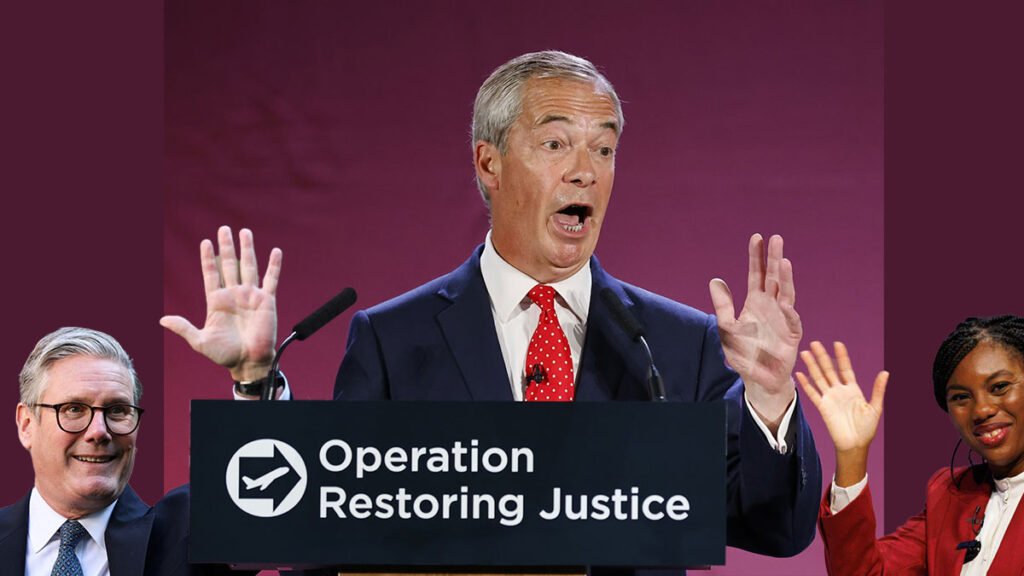
The £5m Gift, the 28-Day Rule and the Commissioner’s Inquiry…
Here is the full account of the persecution Nigel Farage is currently enduring.
In June 2024, weeks before he changed his mind and decided to stand for Parliament after months of insisting he would not, Farage received £5 million from Christopher Harborne, a crypto billionaire and joint owner of the Tether stablecoin. MPs are required to register gifts of this size within twenty-eight days if they are connected to their political role. Farage says the money arrived before he was an MP and was a personal gift, so no declaration was required.
The Commissioner disagrees enough to have opened a formal inquiry in May. Separately, reports have surfaced of financial support from George Cottrell, a longtime aide who pleaded guilty to wire fraud in the United States in 2017, raising the prospect of a second inquiry.
This is not, it should be said, Farage’s first encounter with the twenty-eight-day rule. Earlier this year the same Commissioner found he had failed to register seventeen separate payments worth around £384,000, and let it pass as an honest error. A man can only be forgiven so many honest errors before the pattern becomes the finding.
A man can only be forgiven so many honest errors before the pattern becomes the finding.
None of this involves fire. None of it involves water. It involves a form, a deadline, and a man who appears to find both concepts strangely difficult to honour.
A Daughter’s Address, and Where the Sympathy Ends
The Press Went Too Far – But That Doesn’t Clear Farage…
There is one part of todays statement that deserves to be taken at face value rather than filed under theatre. Farage says the Times published a photograph identifying where his daughter lives, and that broadcasters have since been harassing her. If that is accurate, it is wrong, and it would be wrong regardless of whose father was involved. A free press does not need to locate a politician’s adult child to do its job, and nobody on the left should flinch from saying so plainly.
Nigel Farage released CCTV of his daughter being ‘hounded’ by media. LINK
But a legitimate grievance about one story does not purchase immunity from every other story, and Farage’s statement was constructed to do exactly that, folding a genuine complaint about press conduct into the same breath as a complaint about a standards inquiry that has nothing to do with his daughter at all. The two matters are not related. Treating them as though they are is not victimhood. It is technique.
The Escape Hatch: How a Resignation Becomes a Reset Button
Here is the part of the story that has had far too little scrutiny this week, because it was buried under the theatre of the “people versus the establishment” line. Resigning and immediately recontesting the seat is not simply an act of defiance. It is, whether by design or happy accident, a way of putting a live inquiry through a car wash.
The New Statesman reported this week that a fresh mandate could reset the window of declarations Farage would be required to make, softening scrutiny of the very financial relationships now under investigation. Should he win, and there is very little reason to think he will not, he returns to Westminster with a story to tell: the people have spoken, the matter is settled, move along. It is a neat trick. It converts a question about donors and money into a referendum on his personality, and Farage has never once lost a referendum on his personality.
Recall of MPs Act 2015: What Happens If Farage Is Suspended?
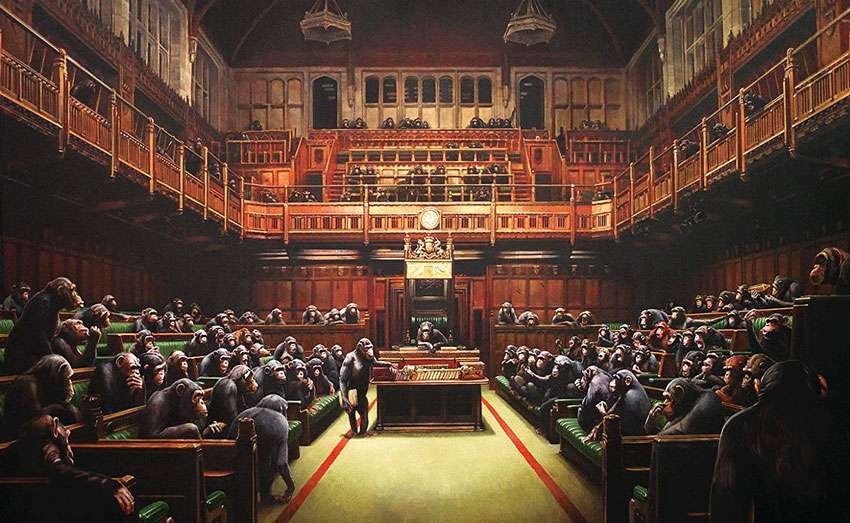
There is a genuinely useful piece of law buried in all this, and it is worth explaining properly, because it cuts against the assumption doing the rounds this week that a second by-election is now off the table regardless of what the inquiry finds.
Under the Recall of MPs Act 2015, if the Commons eventually orders a suspension of ten sitting days or more, or fourteen calendar days if not expressed in sitting days, that automatically opens a recall petition in the constituency. If one in ten registered electors sign it within six weeks, the MP loses the seat outright and a second by-election is triggered, though nothing stops him standing in that one either. A shorter suspension triggers nothing at all.
So the honest position is this: whether Clacton gets to have this fight twice depends entirely on a number that does not exist yet. And Farage’s own gamble is almost certainly that a fresh electoral mandate will make any future committee think twice before recommending a sanction heavy enough to matter. That is not innocence. That is a bet, placed with the public purse covering the stake.
A by-election loss he could blame on the establishment. A recall petition triggered by a formal finding of misconduct? That is a verdict that follows him for life. Farage is not running to win. He is running to avoid the reckoning.
The Fair Defence: Was Harborne’s Gift a Personal Donation?
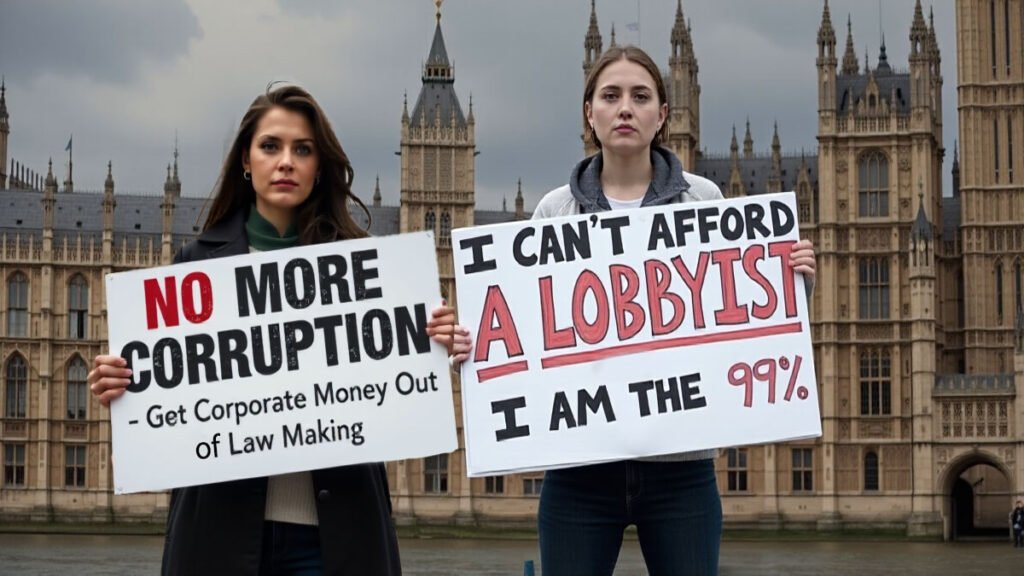
The fairest version of Farage’s defence deserves to be stated properly rather than knocked down as a straw man.
The rules on declaring benefits generally apply to a member’s conduct as an MP, and Harborne’s money arrived before Farage held that office. There is a reasonable question buried in there about where the line should sit between a private gift to a private citizen and a donation to a man who was, by the account of nearly everyone in Westminster, already planning his return to frontline politics.
It is a fair question. It has a fair answer.
The purpose of the declaration rules is not to punish citizens for the money they receive before entering Parliament. It is to let the public see, once someone becomes their representative, who has already bought a stake in that relationship before the voters got a look in. Harborne had, by that point, given Farage’s parties more than £17 million. Treating the £5 million that followed weeks later as some unconnected act of personal generosity requires a faith in coincidence that Westminster does not extend to anyone else.
Who Pays the Piper? The Farage Scandal Is a Symptom, Not the Disease

We made the wider argument about political donations properly back in May, when this same inquiry first opened, and it is worth pointing readers back to it rather than repeating it here: Who Pays The Piper: The Farage Scandal Is A Symptom, Not The Disease.
The short version, for anyone who missed it, is that a crypto billionaire’s five million and a Cayman Islands hedge fund’s four million are not different species of problem. They are the same problem, wearing different rosettes. Nothing that has happened this week changes that argument. It only adds a fresh, particularly brazen chapter to it: what a politician does when the piper’s tune is about to be played back to him in public.
An Ordeal You Are Certain to Survive Is Not an Ordeal
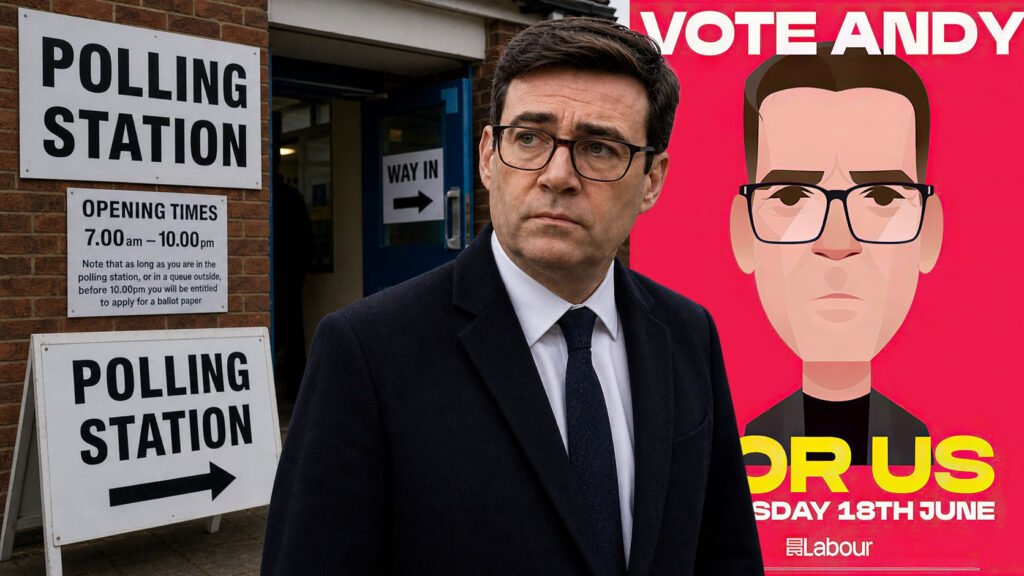
Burnham Engineered a By-Election – Now Farage Does the Same…
An ordeal, properly understood, was never really about guilt or innocence. It was about submitting to a process you did not control and could not rig, and letting the outcome stand regardless of what it cost you.
That is precisely what Farage is refusing to do. He is not walking into the fire. He is choosing his own jury, in a constituency where he won 46.2% of the vote last time on the back of the largest single swing recorded at any seat in modern British electoral history, and calling the result a verdict on his innocence.
Real accountability would mean letting the Commissioner finish the inquiry on its own timetable, answering the Cottrell questions directly rather than through a press conference stunt, and accepting whatever sanction follows without engineering an election designed to make the question unaskable. Nothing in this week’s theatre suggests he intends to do any of that, and nothing in the Recall Act obliges him to.
Andy Burnham engineered his own by-election six weeks ago for rather different reasons, and this paper has had a great deal to say about the hollowness of that coronation already. What is worth noticing is how quickly the trick has spread. When both wings of British politics have discovered that a single seat can be made to stand in for the country’s judgement, the country has stopped being consulted about very much at all.
An ordeal you are certain to survive is not an ordeal. It is a triumph of popularity over accountability, a declaration of support that tells you nothing about guilt. But it tells you everything about how far a man will go to avoid being judged by anyone but his own faithful.
Enjoyed this read? I’m committed to keeping this space 100% ad-free so you can enjoy a clean, focused reading experience. Crafting these articles takes a significant amount of research and heart. If you found this helpful, please consider a “small donation” to help keep the lights on and the content flowing. Every bit of support makes a huge difference.