Labour’s Diversity Paradox: Tory Women, Labour Men
Let me be clear. I have no time for tokenism, and I have no time for old boys’ clubs dressed up as meritocracy either. Martin Luther King Jr had it right: judge people by the content of their character, not by the accident of their sex, creed or colour. The best person for the job should get the job. Full stop. But Labour cannot hide behind merit when women make up around half its parliamentary party and the leadership is still being settled in the same private rooms, by the same networks, with the same familiar hands on the levers. The talent is there. The experience is there. The candidates are there. So if the outcome is always the same, the question is not what is wrong with the women. The question is what is rotten in the machine.
In 126 years, the Labour Party has never been led by a woman. Let that settle. The party that invented All-Women Shortlists, that lectures corporations on gender pay gaps, that deploys diversity impact assessments like confetti at a progressive wedding, has never, not once in its entire history, placed a woman at the top of the ticket.
This week, as the caravan of male ambition reassembles in Westminster, that fact has become impossible to ignore. The leadership contest taking shape around Keir Starmer’s failing premiership is a procession of familiar faces. Andy Burnham, the self-styled King of the North, is staking everything on a by-election in Makerfield. Wes Streeting, the right’s preferred weapon, resigned his Cabinet post and was first out of the blocks. Starmer himself vowed to fight on, clinging to the dispatch box like a man who has confused stubbornness with leadership. Three men. The same sorts of men who have always been at the top of this party. The pattern holds.
A Structural Confession

The one woman who briefly broke cover was Catherine West. The MP for Hornsey and Wood Green made the most talked-about intervention of the weekend, becoming for 48 hours the most prominent female voice publicly calling for Starmer’s removal. In the language of Westminster, she functioned as a stalking horse: flushing out the real candidates, testing the temperature of Starmer’s support, drawing the fire so that larger beasts could judge the range. Whether West was acting in deliberate concert with Burnham’s circle or simply broke cover ahead of schedule is a question only those closest to the operation can answer. What is not in question is what happened next. She retreated. West softened her position, stepped back from any suggestion of actually standing, and the moment passed, as these moments always do in Labour politics: gently suffocated by the weight of a system that rewards backroom networks over parliamentary courage.
Those close to Burnham have since acknowledged that West’s intervention helped force the process closer to its conclusion. A woman did the dangerous work. A man will reap the reward.
It is not enough to call this unfortunate. It is structural. Labour’s leadership rules require any challenger to secure the public backing of 20 per cent of the parliamentary party, currently around 81 MPs. That threshold does not discriminate by gender on its face. In practice, it does something more insidious. It rewards years of factional cultivation, of late-night telephone calls, of favours accumulated and debts called in. It rewards, in short, precisely the sort of networked male political culture that has always existed within Labour and always will, so long as nobody is honest enough to name it.
“Angela Rayner spent the week navigating a tax dispute and sending careful signals about loyalty. Shabana Mahmood was mentioned in dispatches and then forgotten. The front pages kept returning to the men.”
Angela Rayner was not even properly in the conversation. A woman of genuine working-class background and formidable political instinct, she spent the week navigating a years-long tax dispute, and the irony was sharp.
The working-class woman had to prove she had paid her bills before she could be considered fit to lead. Shabana Mahmood was mentioned in dispatches and then forgotten. Yvette Cooper was quietly filed under “late runner” and left there. The front pages kept returning to the men.
The Tory Paradox

Now for the part that will make certain readers uncomfortable. The Conservative Party, that supposed bastion of privilege, tradition, and male entitlement, has produced four female leaders. Margaret Thatcher, Britain’s first woman prime minister, was elected Tory leader in 1975, fifty-one years ago. Theresa May followed. Liz Truss followed her. And now Kemi Badenoch leads the official opposition, the first Black leader of any major British political party. Between Thatcher and Badenoch, the Conservatives also produced Rishi Sunak, Britain’s first British Asian prime minister. The Labour Party, in all of this time, has managed none of it.
The 2022 Conservative leadership contest had eleven candidates, over half from ethnic minority backgrounds. At one point, the four great offices of state were held by no white men at all. It was, in its way, remarkable. It was also, in its substance, almost entirely irrelevant to working-class life. These were not people who built the labour movement. They were people who would have been on the other side of every barricade in its history.
“Margaret Thatcher destroyed the trade unions. Rishi Sunak was a multi-millionaire who holidayed on a private jet. Kemi Badenoch has called maternity pay excessive. The Tories achieved a diversity of appearance, not of interest.”
That caveat matters enormously. The diversity achieved at the summit of the Conservative Party has been a diversity of appearance, not of interest. Its leaders have opposed the very institutions the working class built for its own protection. Breaking glass ceilings while crushing the floor beneath them is not progress. It is window dressing on an unchanged building.
But the Labour Party’s failure is not excused by pointing at the Tories’ hypocrisy. If anything, the contrast deepens Labour’s shame. Labour did not simply fail to produce a female leader. It failed while making diversity the centrepiece of its political identity. That is not an oversight. It is a confession.
The Performance of Equality

Here is the honest reckoning. Labour has long understood diversity as a brand rather than a programme. The party excels at diversity at the level it controls most easily: the selection of parliamentary candidates. All-Women Shortlists have produced a parliamentary party with substantial numbers of women and ethnic minority MPs. By that metric, Labour genuinely leads its rivals. On the green benches, the party looks something like modern Britain.
The leadership is a different question entirely. The leadership is where power actually lives, and power in the Labour Party has always lived in the same place. It lives in the trade union block votes, in the parliamentary factions, in the networks of men who have been building alliances since their student union days. It lives, as it has always lived, in a world where the right telephone call from the right man to the right man settles more questions than any equalities framework can reach.
The working-class women who vote Labour, who canvass for Labour, who staff Labour’s constituency offices and fight Labour’s council campaigns, deserve better than this. They deserve a party that practises what it preaches not only when the cameras are pointed at a diverse shortlist, but when the real decisions are being made behind closed doors.
The Greens’ Other Paradox
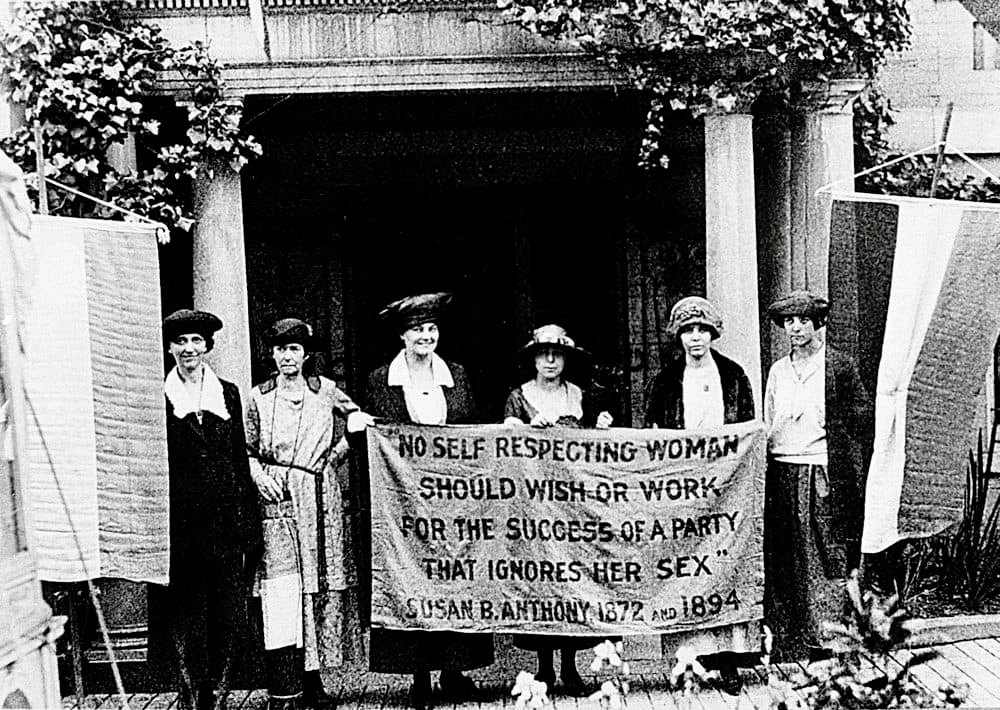
And then there is the Green Party, which presents itself as the most progressive force in British politics and whose treatment of women deserves its own reckoning. While Labour ignores the women it has, and the Tories promote women who serve capital rather than class, the Greens have pioneered a third approach.
In the 2026 elections they actively fielded biological males identifying as transgender as candidates, presenting this as an advance for diversity and inclusion. In Scotland, a biological male identifying as transgender and non-binary was elected to Holyrood as one of the Scottish Greens’ first transgender MSPs. In Harrow, a Green candidate running in the English local elections described themselves as “a transgender woman” standing to build a safer borough for everyone.
The party whose leader cannot define what a woman is has no difficulty finding biological males to stand in women’s name.

This is not a new pattern for the Green Party. Labour Heartlands has documented at length how both the Green Party of England and Wales and the Scottish Greens have spent years pursuing, suspending, and expelling their own female members for holding gender-critical beliefs: the simple, scientifically grounded, and now legally confirmed position that biological sex is real and immutable.
The Green Women’s Declaration has commenced formal legal proceedings against the party for discrimination under the Equality Act. The Scottish Greens carried out their own purge of members who refused to accept that biology was optional. The Supreme Court has since confirmed what those women always knew. The party’s response was to keep fighting. And now, having driven out the women who insisted on defining what a woman is, the Greens offer biological males as their answer to the question of female representation. The circle is complete.
There is a phrase that progressive politics has made fashionable: “toxic masculinity”. It describes the social conditioning that leads men to dominate, to crowd out, to assume that every space belongs to them by right. Labour’s male-only leadership is one expression of it. The Conservative tradition of elevating women who implement a man’s economic programme is another. And a party that purges women for stating biological reality, then fields biological males as proof of its commitment to diversity, is a third. The mechanism differs. The result is the same. The women are still not in the room.
The Glass Ceiling Labour Built: 12 White Men in a Row

If Andy Burnham or Wes Streeting wins, Labour will have been led by one white man after another since the party was founded in 1900. Clement Attlee, Hugh Gaitskell, Harold Wilson, Jim Callaghan, Michael Foot, Neil Kinnock, Tony Blair, Gordon Brown, Ed Miliband, Jeremy Corbyn, Keir Starmer: eleven consecutive leaders, all of them white, all of them male. Burnham would be the twelfth.
Some on the Labour right will argue that Burnham is the only figure with the political weight to take the fight to Reform UK and to speak convincingly to working-class communities in the North and Midlands. They are not entirely wrong. Others on the left will argue that the identity of the leader matters less than the programme they advance. They have a point too. Class politics is about interests, not faces.
But the question of who leads Labour is inseparable from the question of who Labour actually takes seriously. A party that cannot find its way to placing a woman in its highest office is a party that, at some deep structural level, does not yet believe women belong there. No number of All-Women Shortlists, no number of diversity statements, no number of speeches about glass ceilings at party conference can paper over that fundamental failure.
The Conservatives broke five glass ceilings while Labour was writing pamphlets about them. When a party of the establishment has a better record of placing women and people of colour at its summit than the self-proclaimed party of equality, one of two things is true. Either the Conservative Party is far more progressive than it pretends to be. Or the Labour Party is far less.
Only one of those explanations holds up to scrutiny.
“A party that tells women they matter while ensuring men decide everything is not a party of equality. It is a party of apology.”
Enjoyed this read? I’m committed to keeping this space 100% ad-free so you can enjoy a clean, focused reading experience. Crafting these articles takes a significant amount of research and heart. If you found this helpful, please consider a “small donation” to help keep the lights on and the content flowing. Every bit of support makes a huge difference.

Support Independent Journalism Today
Our unwavering dedication is to provide you with unbiased news, diverse perspectives, and insightful opinions. We're on a mission to ensure that those in positions of power are held accountable for their actions, but we can't do it alone. The Heartlands Tribune is primarily funded by me, Paul Knaggs, and by the generous contributions of readers like you. Your donations keep us going and help us uphold the principles of independent journalism. Join us in our quest for truth, transparency, and accountability – donate today and be a part of our mission!
Like everyone else, we're facing challenges, and we need your help to stay online and continue providing crucial journalism. Every contribution, no matter how small, goes a long way in helping us thrive. By becoming one of our donors, you become a vital part of our mission to uncover the truth and uphold the values of democracy.
While we maintain our independence from political affiliations, we stand united against corruption, injustice, and the erosion of free speech, truth, and democracy. We believe in the power of accurate information in a democracy, and we consider facts non-negotiable.
Your support, no matter the amount, can make a significant impact. Together, we can make a difference and continue our journey toward a more informed and just society.
Thank you for supporting Labour Heartlands