After catastrophic local election losses, the Prime Minister offered Britain more of the same. The working class heard him clearly.
Is there any sight more pitiable than a Prime Minister clinging to the wreckage of a failed ideology while the icy waters of public contempt rise to meet him? On Monday morning, Keir Starmer took to the lectern at Coin Street Community Centre, not as a leader on course, but as a man desperately trying to convince the passengers that the gaping hole in the hull is superficial, a chip on the paint.
The setting was carefully chosen. Community. Roots. Solidarity. The scenery was working class; the politics were anything but. What followed was a speech billed by almost every commentator in Westminster as his final chance to save his premiership. What the country received was a masterclass in managed decline, dressed up as resolve.
Labour has just lost more than fourteen hundred councillors across England, haemorrhaging support to Reform UK and the Greens in equal measure. In the Labour heartlands of the north, the midlands, and the valleys, the party that once defined working class aspiration is now regularly running third. Starmer stood before his remaining supporters and told them “incremental change won’t cut it.” Then he offered nothing that was not already announced, or already happening anyway.
Stories beat spreadsheets. People need hope. But you cannot manufacture hope from a void.
THE MYTH OF THE SELF-IMPOSED CAGE
The Prime Minister’s rhetoric remains predictably trapped. He blames the economy on Brexit with the weary consistency of a man who never wanted to leave the room, let alone the building. To the liberals, the globalists, and the North London dinner-party circuit, this is comforting music. To the people of the Labour heartlands, it rings hollow as a struck bell.
They know, because they live it, that the so-called restrictions of Brexit are largely self-imposed. The failure to nationalise our crumbling infrastructure, to construct a genuine industrial strategy, or to shield working class communities from the predations of the market is not the fault of a Brussels divorce.
It is the fault of weak politicians without vision: politicians who never wanted to leave the European Union in the first place, and who have spent the near-decade since the referendum watering down, undermining, and quietly suffocating the democratic mandate the British people gave them in 2016.
Starmer told his audience that taking “a big leap forward with the EU” was among his government’s most urgent priorities. He pines, openly now, for the green pastures the remainers have always painted.
But he is strikingly silent on the landscape of the actual continent. French prime ministers are replaced with the frequency of seasonal menus. The European industrial heartland is sinking into its own malaise. The economies of the bloc have contracted, stagnated, and contracted again. Why the Prime Minister wishes to tether this country’s future to that particular anchor is a question only his pollsters can honestly answer.
A GHOST OF AN INDUSTRIAL STRATEGY
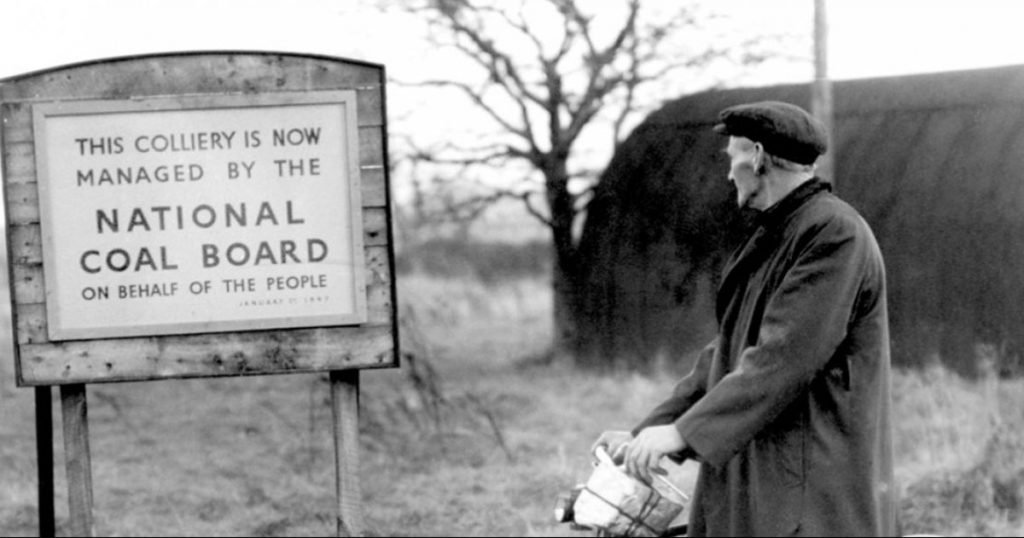
We were told, again, that British Steel will be nationalised. It is a welcome step. It should also have happened the moment this government took office, with the urgency of a country that understands what it means to let the last blast furnaces go cold. Instead it arrives after months of drift, announced with all the enthusiasm of a man reading out the minutes of a meeting he did not want to attend.
This should be the cornerstone of something much larger: a genuine industrial reconstitution of Britain, rooted in our energy, our rail, our water, and the communities that built this country and were abandoned by every government since Thatcher. Instead, the centrepiece offering is a youth mobility scheme with the European Union, a policy that is fine for the graduate classes and entirely invisible to the young man in Scunthorpe or the mother in Hartlepool who wants a job that pays, a street that is safe, and a government that knows they exist. Starmer offers a holiday visa. The country needs a vocation.
You cannot defeat the populist right by offering a more competent version of the status quo that created them.
THE BURNING OF GORTON AND DENTON

Nothing illustrates the terminal contraction of the Starmer project more starkly than the question of Andy Burnham. Asked directly on Monday whether he would allow the Mayor of Greater Manchester to fight a Westminster by-election and potentially mount a leadership challenge, Starmer hid behind the National Executive Committee. The NEC, his NEC, stuffed with loyalists, had already blocked Burnham from contesting Gorton and Denton. The result was not ambiguous. Labour came third, behind Reform and the Greens, in a seat the party should have held in its sleep.
This is not caution. It is a scorched-earth policy. Starmer would rather watch the party lose safe seats to the Greens and Reform than permit a figure who might challenge him to gain a foothold. He speaks at length about hope, about stories, about urgency. His only story, it turns out, is one of bureaucratic self-preservation conducted at the expense of the people he was elected to serve.
THE MUTINY GATHERS

By the time Starmer had finished speaking, Catherine West, the former junior minister for the Indo-Pacific, was already collecting names. She had given No. 10 advance notice: if no serious candidate came forward by Monday, she would trigger the process herself. Following the speech, she called it “too little, too late” and declared that what was best for the party and the country was an orderly transition, with a new leader elected by September.
More than thirty Labour MPs have now publicly called for Starmer to resign or to set a departure timetable, including his former ally Josh Simons, who wrote in The Times that Starmer had simply “lost the country.” Angela Rayner, his former deputy, said on Sunday that “what we are doing isn’t working, and it needs to change.” This may, she added, be Labour’s last chance. She is not wrong, though one notes that silence has its own politics.
The financial markets, characteristically, expressed the only opinion that the political class reliably takes seriously. Yields on benchmark ten-year government bonds rose as the scale of the election defeat became apparent. The country’s borrowing costs ticking upward while a Prime Minister delivers a speech about hope is its own kind of editorial comment.
THE DARK PATH HE IS PAVING

Starmer’s most repeated warning on Monday was his starkest. If Labour fails, he said, the country will go down “a very dark path” led by Nigel Farage. He is right about the destination. He is dangerously wrong about the cause.
Reform UK did not emerge from a vacuum. It rose from the ashes of communities that were told, for thirty years, that there was no alternative to the market, that their industries could not be saved, that their concerns about work and wages and community were, at best, nostalgia and, at worst, something shameful. It rose, specifically, because the political party that was supposed to represent those communities chose instead to manage their decline professionally, with better rhetoric and softer vowels.
Starmer’s approval rating stands at minus fifty-four. Only eighteen per cent of the British public views him favourably. Labour trails Reform in the national polls. These are not the numbers of a government that has made mistakes. They are the numbers of a government that has lost the argument about what it is for.
He says he will not walk away. The country will note that the voters already have.
The Prime Minister stares at the iceberg and tells the passengers the fundamentals are sound. History is not kind to captains who confuse composure with navigation.
Enjoyed this read? I’m committed to keeping this space 100% ad-free so you can enjoy a clean, focused reading experience. Crafting these articles takes a significant amount of research and heart. If you found this helpful, please consider a “small donation” to help keep the lights on and the content flowing. Every bit of support makes a huge difference.

Support Independent Journalism Today
Our unwavering dedication is to provide you with unbiased news, diverse perspectives, and insightful opinions. We're on a mission to ensure that those in positions of power are held accountable for their actions, but we can't do it alone. The Heartlands Tribune is primarily funded by me, Paul Knaggs, and by the generous contributions of readers like you. Your donations keep us going and help us uphold the principles of independent journalism. Join us in our quest for truth, transparency, and accountability – donate today and be a part of our mission!
Like everyone else, we're facing challenges, and we need your help to stay online and continue providing crucial journalism. Every contribution, no matter how small, goes a long way in helping us thrive. By becoming one of our donors, you become a vital part of our mission to uncover the truth and uphold the values of democracy.
While we maintain our independence from political affiliations, we stand united against corruption, injustice, and the erosion of free speech, truth, and democracy. We believe in the power of accurate information in a democracy, and we consider facts non-negotiable.
Your support, no matter the amount, can make a significant impact. Together, we can make a difference and continue our journey toward a more informed and just society.
Thank you for supporting Labour Heartlands