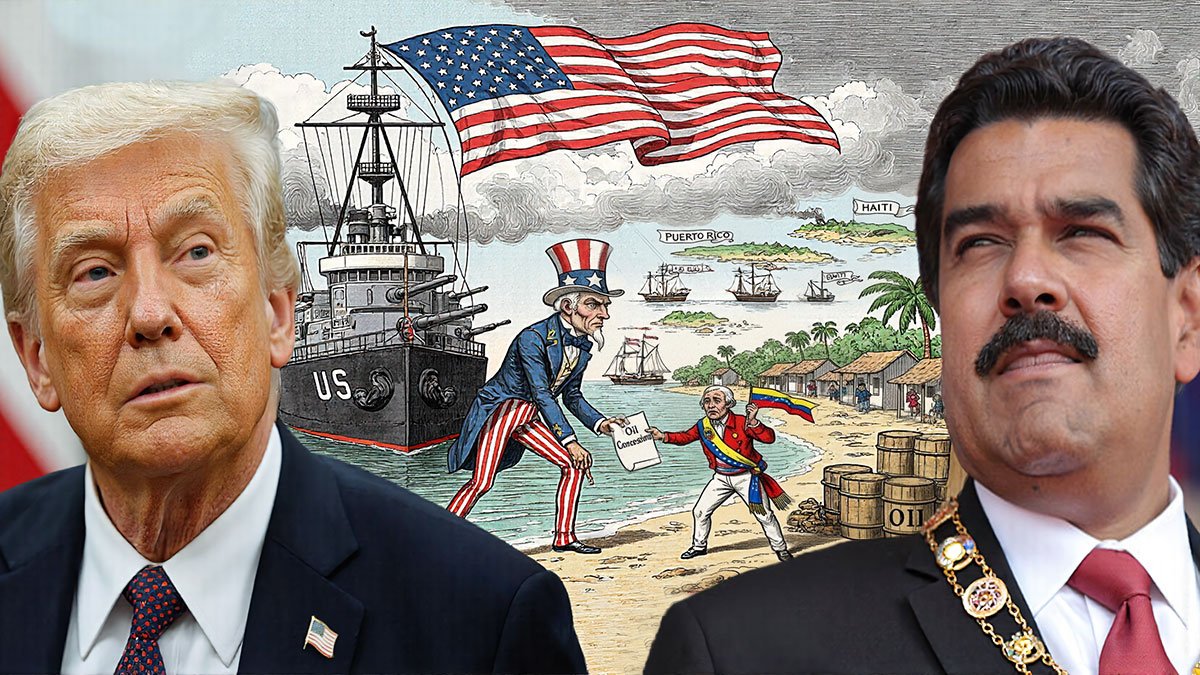
Gunboat Diplomacy Returns: The US Blockade of Venezuela
When does a naval blockade stop being law enforcement and become what it actually is: piracy on the high seas? The answer, apparently, is when Washington decides that international law is an inconvenience rather than a constraint.
The US Coast Guard is currently pursuing vessels in international waters near Venezuela, having already seized two oil tankers this month alone. On Saturday, a tactical team boarded a Panama-flagged vessel in international waters. Another pursuit is underway. The Trump administration calls this sanctions enforcement. Venezuela calls it piracy. International law suggests Venezuela has the better argument.
This is not hyperbole. Under the United Nations Convention on the Law of the Sea, to which the United States is a party through the 1958 Convention on the High Seas, seizing foreign-flagged vessels on the high seas without flag state consent is prohibited except in cases of piracy, slave trade, or statelessness. Domestic sanctions, no matter how enthusiastically proclaimed, confer no authority under international law to board and seize vessels in international waters.
Yet here we are, watching the United States seize tankers, pursue vessels, and announce a “total and complete blockade” of a sovereign nation’s oil exports. Secretary of State Marco Rubio has declared the current status quo with Venezuela “intolerable” and vowed to “change that dynamic.” His deputy, Stephen Miller, went further, claiming that Venezuelan oil rightfully belongs to the United States because “American sweat, ingenuity and toil created the oil industry in Venezuela.”
Read that again. A White House official is asserting American ownership of another nation’s natural resources based on historical corporate involvement. This is colonial logic dressed in policy jargon. It is the United Fruit Company’s playbook updated for the 21st century, and it should alarm anyone who values international law and national sovereignty.
The historical precedent is not on America’s side. Venezuela nationalised its oil industry in 1976 under President Carlos Andrés Pérez, a process completed by Hugo Chávez in 2007. While ExxonMobil and ConocoPhillips received arbitration awards (which Venezuela has yet to pay), this does not transform sovereign nationalisation into theft, nor does it grant the United States military authority to seize vessels in international waters decades later. The principle of permanent sovereignty over natural resources is established international law. Venezuela’s oil belongs to Venezuela, full stop.
Trump’s claim that Venezuela “stole” American oil, land, and assets is historically illiterate propaganda. What actually happened was a sovereign nation exercising its right to control its own resources, a right recognised in international law. That American corporations once profited from Venezuelan oil no more makes it American property than British investment in Indian railways made India British property in perpetuity.
But the oil is merely the prize. The justification being peddled to the American public is drugs. The administration claims these vessels carry narcotics funding “narco-terrorism.” Yet it has provided precisely zero public evidence for this assertion. None. Meanwhile, since September, US forces have conducted at least 28 strikes on alleged drug boats, killing 104 people. One strike involved a follow-up attack that killed survivors clinging to wreckage in the water, what multiple legal experts have called a clear war crime.
The UN Office on Drugs and Crime flatly contradicts the administration’s narrative. The majority of drugs entering the United States do not come from Venezuela or through the Caribbean. They come from Colombia and Peru, transported via the Pacific coast. Venezuela is not even identified as a cocaine-producing country by the UN. This is not a war on drugs. It is a pretext for regime change dressed in counter-narcotics clothing.

We have seen this film before, and we know how it ends. Between 1898 and 1994, the United States successfully intervened to change governments in Latin America 41 times. Once every 28 months for an entire century. Guatemala 1954, Chile 1973, Nicaragua throughout the 1980s. The pattern is consistent: economic interests clash with a sovereign government’s policies, corporate lobbying intensifies, dubious intelligence claims emerge about threats to American security, and military intervention follows.
In Guatemala, the United Fruit Company’s land was redistributed to peasants. The CIA engineered a coup. 250,000 people died in the subsequent four decades of military dictatorship. In Chile, Salvador Allende’s democratic socialism threatened American corporate interests. Augusto Pinochet’s CIA-backed coup installed a regime that killed 28,000 people. In Nicaragua, the Contras received American backing despite a congressional ban, leaving 30,000 dead.
Now Marco Rubio, the same man who championed Elliott Abrams (convicted for his role in Iran-Contra) as special envoy to Venezuela in 2019, declares Venezuela’s status quo “intolerable” and promises to change the “dynamic.” The administration has deployed what Trump calls “the largest Armada ever assembled in the History of South America” off Venezuela’s coast. It is seizing oil tankers in international waters. It is killing boat crews without trial or evidence. And Venezuela, conveniently, possesses the world’s largest proven oil reserves.
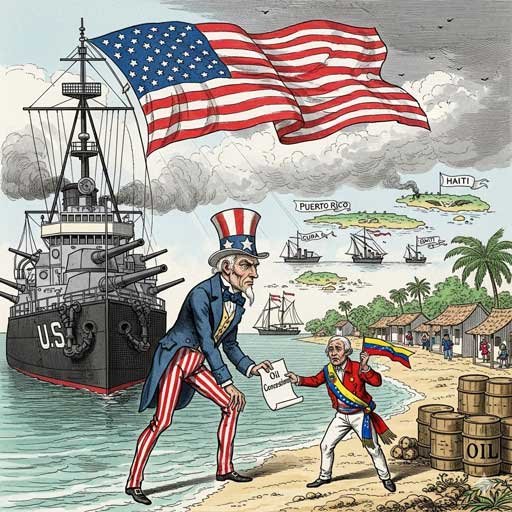
The International Tribunal for the Law of the Sea has made clear that states cannot unilaterally board and enforce domestic law against foreign-flagged ships outside their coastal waters unless UNCLOS provides an exception. Claims of suppressing criminality or terrorism do not suffice for seizures on the high seas. Yet the United States proceeds regardless, treating international law as optional when it conflicts with American interests.
Venezuela’s UN Ambassador Samuel Moncada accurately characterized Trump’s demands: “The US government is claiming the world’s largest oil reserves as its own, in what would be one of the greatest acts of plunder in human history.” This is not diplomatic hyperbole. It is a precise description of what American officials are openly stating.
What comes after piracy? History suggests regime change, followed by a compliant government that will grant favourable terms to American corporations. Politico has already reported the Trump administration approaching private oil companies about returning to Venezuela once Maduro is removed. The oil executives showed little interest, but the approach itself reveals the endgame.
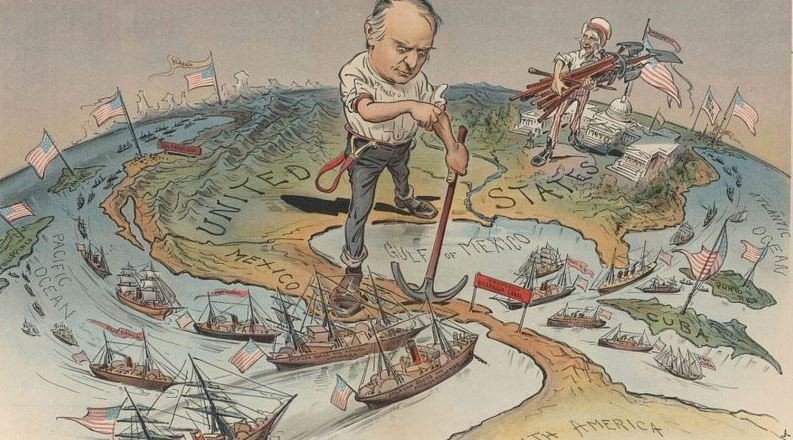
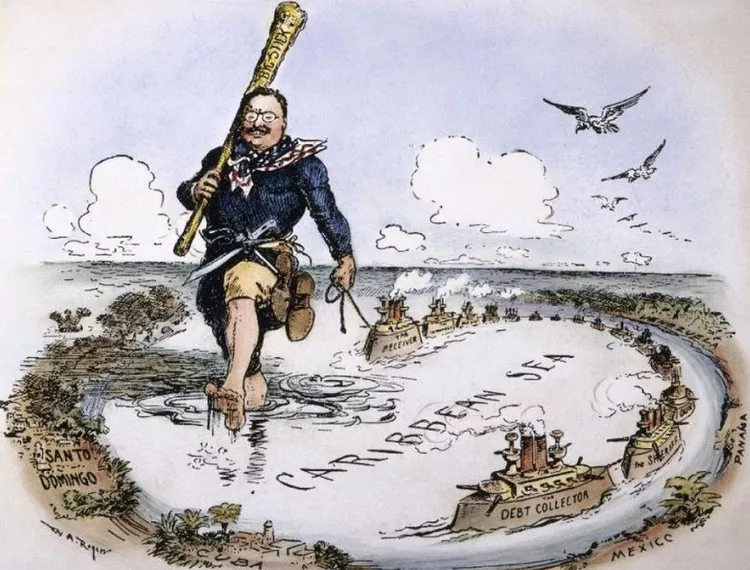
This is imperialism. Not the subtle kind that operates through international financial institutions and structural adjustment programs, though that continues apace. This is gunboat diplomacy, the raw assertion of military power to seize resources and overthrow governments that dare nationalise their own wealth. It is Rome acting out its imperial prerogatives, secure in the knowledge that no international body will meaningfully challenge American military supremacy.
The implications extend far beyond Venezuela. If the United States can blockade a country, seize its vessels in international waters, kill its citizens without trial, and demand the return of nationalised assets from half a century ago, then international law is dead. What remains is the law of the strongest, where might makes right and sovereignty exists only at Washington’s pleasure.
Working people in Britain should pay attention. The same forces that see Venezuelan oil as rightfully American property will not hesitate to treat our resources, our labour, and our sovereignty with similar contempt when it suits their interests. The fight against imperialism is not abstract internationalism. It is recognising that the same capitalist interests that want Venezuela’s oil want to privatise our NHS, exploit our workers, and subordinate our democracy to their profit margins. Starmer will bend the knee to any demand by Trump.
International law is meant to protect smaller nations from the predations of larger ones. When the world’s most powerful military openly flouts those protections, seizing vessels and killing crews on the high seas while claiming another nation’s resources as its own, we are witnessing the death of that legal order. What replaces it will not be pretty, and it will not be just.
The US Coast Guard’s pursuit of Venezuelan vessels is not law enforcement. It is piracy in service of regime change. And if we allow this precedent to stand unchallenged, if we accept that America can blockade nations and seize their resources whenever “the current status quo is intolerable,” then we have returned to an age where international law means nothing and military power is the only currency that matters. That is not a world any of us should want to live in, but it is precisely the world Washington is building, one seized tanker at a time.

Support Independent Journalism Today
Our unwavering dedication is to provide you with unbiased news, diverse perspectives, and insightful opinions. We're on a mission to ensure that those in positions of power are held accountable for their actions, but we can't do it alone. Labour Heartlands is primarily funded by me, Paul Knaggs, and by the generous contributions of readers like you. Your donations keep us going and help us uphold the principles of independent journalism. Join us in our quest for truth, transparency, and accountability – donate today and be a part of our mission!
Like everyone else, we're facing challenges, and we need your help to stay online and continue providing crucial journalism. Every contribution, no matter how small, goes a long way in helping us thrive. By becoming one of our donors, you become a vital part of our mission to uncover the truth and uphold the values of democracy.
While we maintain our independence from political affiliations, we stand united against corruption, injustice, and the erosion of free speech, truth, and democracy. We believe in the power of accurate information in a democracy, and we consider facts non-negotiable.
Your support, no matter the amount, can make a significant impact. Together, we can make a difference and continue our journey toward a more informed and just society.
Thank you for supporting Labour Heartlands