Millions of files, images, and videos, and one woman is in prison. The rest walked free.
HOW EPSTEIN’S NETWORK BOUGHT ITS FREEDOM
That is the central obscenity of the Epstein affair, and no amount of document releases, committee hearings, or carefully worded ministerial apologies will change it. Ghislaine Maxwell, convicted in December 2021 on five federal counts of sex trafficking and conspiracy, is serving twenty years at Federal Prison Camp Bryan in Texas. Jeffrey Epstein, the man at the centre of the abuse operation, died in his cell in August 2019 in circumstances that the state insists were suicide and that a considerable portion of the public refuses to accept. And the dozens of men who constituted his network, his co-conspirators, his clients, his enablers, the hedge fund managers and the politicians and the princes and the modelling agents who made his operation possible and his lifestyle comfortable: they are at their desks, at their galas, or in the ground.
In December 2025, Maxwell’s own habeas corpus petition made the case plain in legal language: twenty-nine men, by her account, reached secret settlements with prosecutors and walked free. Four of them were named as co-conspirators in Epstein’s 2007 non-prosecution agreement. Twenty-five more, her petition alleges, settled civil claims through confidential agreements that functioned as a shield against criminal liability. Not one has been charged. Not one has been tried. Not one is in prison.
This is not a failure of justice. A failure suggests an honest attempt that fell short. This is something colder and more deliberate: the active protection of the powerful by institutions designed, in theory, to hold the powerful to account.
One woman is in prison. Twenty-nine men, by Maxwell’s own account, bought their way to freedom. This is not a failure of justice. It is its deliberate opposite.
THE ANATOMY OF A NON-PROSECUTION

Begin with the mechanics of escape, because they matter. The 2007 non-prosecution agreement that then-U.S. Attorney Alexander Acosta negotiated with Epstein in Florida was, at the time, one of the most criticised prosecutorial decisions in living memory. Epstein, who faced potential life imprisonment on federal sex trafficking charges involving dozens of minors, received an eighteen-month sentence in a county jail with work release privileges that allowed him to spend much of his time outside its walls. The agreement contained a clause, extraordinary in its scope, extending immunity to unnamed co-conspirators.
Acosta later claimed he had been told to back off, that Epstein was “above his pay grade.” He joined the Trump cabinet as Secretary of Labor in 2017, resigned over the Epstein controversy in 2019, and has not been prosecuted for anything. The co-conspirators named in that 2007 agreement have never been publicly identified. They have never been charged. The agreement, designed to bury the case, very nearly succeeded in burying it permanently.
It was investigative journalism, not prosecutorial diligence, that kept the case alive. The Miami Herald’s Julie K. Brown spent years documenting Epstein’s crimes and the agreement that concealed them. Her reporting led directly to Epstein’s 2019 arrest in New York, his death in custody, and the subsequent prosecution of Maxwell. She deserves more credit for this outcome than the entire Department of Justice combined.
THE TWENTY-NINE: WHAT MAXWELL ALLEGES

Maxwell’s habeas corpus petition, filed on 17 December 2025 without legal representation, is not a document that courts are likely to act upon. Habeas petitions are, by design, last resorts, and they are routinely denied. But the substance of her allegations deserves scrutiny regardless of their legal fate.
The petition alleges that prosecutors were aware of twenty-five civil settlements reached between Epstein’s accusers and men the petition describes as co-conspirators.
These settlements, Maxwell’s filing argues, were structured with non-disclosure provisions that prevented the accusers from providing testimony or evidence in criminal proceedings. The effect, she contends, was to immunise those men from prosecution while allowing her to be tried as if she had acted alone.
“None of the four named co-conspirators or the twenty-five men with secret settlements were indicted,” the petition states. “None of these men have been prosecuted, and none has been revealed to the petitioner; she would have called them as witnesses had she known.”
When Deputy Attorney General Todd Blanche was asked about these allegations, he offered what has become the characteristic response of this saga:
“To the extent that such arrangements exist, I’m not aware of them.”
Perhaps someone should inform him that his own department made them. The Department of Justice has declined to confirm or deny the existence of the settlements. It has not explained why.
Maxwell’s motivations in making these claims are, of course, self-interested. She wants out of prison, and alleging prosecutorial misconduct is her best remaining legal avenue. But self-interest does not make a claim false. The pattern she describes, of wealthy men purchasing civil silence as a substitute for criminal immunity, is entirely consistent with how power protects itself.
The pattern Maxwell describes, of wealthy men purchasing civil silence as a substitute for criminal immunity, is entirely consistent with how power protects itself.
THE CONVICTED, THE DEAD, AND THE UNTOUCHABLE
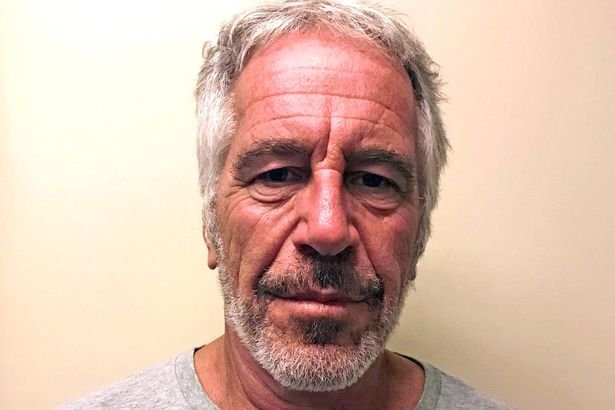
Let us take stock of who has actually faced legal consequences for their role in Epstein’s network, and who has not. The arithmetic of accountability in this case is instructive.
Those Who Faced Justice…
Jeffrey Epstein: charged with sex trafficking of minors, died in federal custody in August 2019, aged fifty-six. His death was ruled suicide, though the circumstances remain contested.
Ghislaine Maxwell: convicted December 2021 on five federal counts; sentenced to twenty years. Currently serving her sentence at Federal Prison Camp Bryan, Texas. The only person ever to have been convicted of crimes related to Epstein’s trafficking operation.
Jean-Luc Brunel: the French modelling agent and close Epstein associate was arrested in Paris in December 2020 as part of a French judicial investigation into rape, sexual assault, and harassment of minors and adults. He was suspected of transporting and housing young women for Epstein, co-founding modelling agencies that allegedly served as recruitment fronts, and receiving substantial funding from Epstein across decades. Brunel was found hanging in his cell at La Sante Prison in Paris in February 2022. The French investigation against him was subsequently dropped. He took whatever he knew to his grave, and the grave obliged him with the immunity the state had been unwilling to confirm.
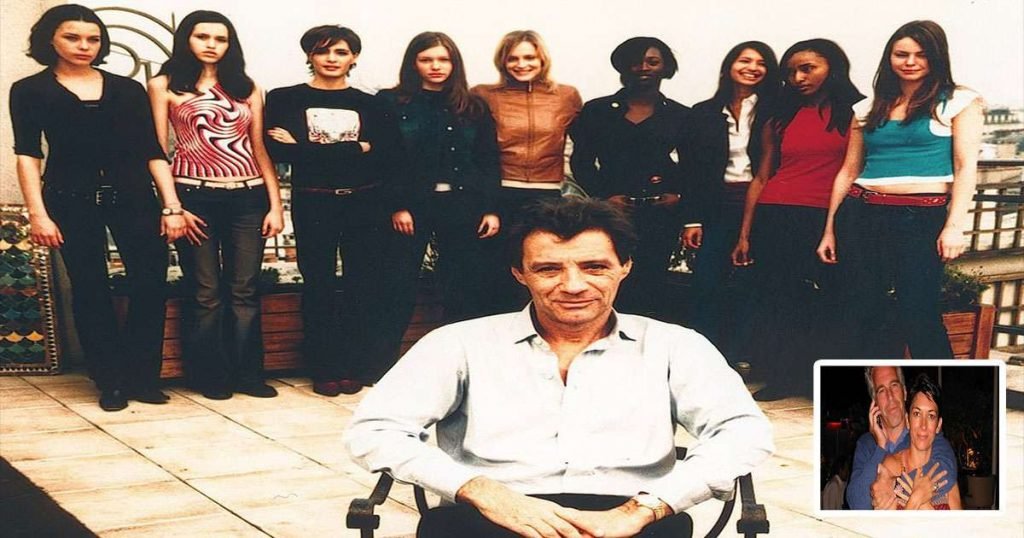
In 2026, French prosecutors have reportedly reopened examination of evidence relating to Brunel’s case following the release of Epstein files, but a dead man cannot be tried. The photographs recovered from Epstein’s Paris apartment, walls covered with images of women and a red-walled room equipped with sex toys, have intensified French scrutiny of the broader network. Paris prosecutors formed a special team of magistrates to examine evidence potentially implicating French nationals, with Brunel’s case central to their inquiry.
The Arrested But Not Charged

Andrew Mountbatten-Windsor (formerly Prince Andrew): arrested on 19 February 2026 at his home on the Sandringham estate, on suspicion of misconduct in public office. The accusation relates to the alleged sharing of confidential trade documents with Epstein while he was serving as the UK’s Special Representative for International Trade and Investment. He was released after eleven hours in custody, “under investigation,” meaning neither charged nor exonerated. He became the first member of the British royal family to be arrested in modern history. He had previously settled a civil lawsuit brought by Virginia Giuffre, who alleged he had sexually abused her as a minor, paying an undisclosed sum while refusing to admit wrongdoing.
Peter Mandelson: arrested on 23 February 2026, released on bail. The former Business Secretary, EU Trade Commissioner, and most recently UK Ambassador to the United States under Keir Starmer, is suspected of misconduct in public office for allegedly passing sensitive government information to Epstein. The released files appear to show Mandelson tipping off Epstein about Gordon Brown’s intention to resign as Prime Minister, about a European Union bailout before it was announced, and about the existence of a secret tunnel between Downing Street and the Ministry of Defence. Separate files suggest financial transfers totalling seventy-five thousand dollars from Epstein to accounts linked to Mandelson or his partner. Mandelson resigned from the Labour Party and the House of Lords in early February, before his arrest, saying he did not wish to cause the party further embarrassment. Morgan McSweeney, Starmer’s chief of staff, subsequently resigned, taking responsibility for Mandelson’s original ambassadorial appointment.
The Charged Abroad

Thorbjorn Jagland: former Prime Minister of Norway, former Secretary-General of the Council of Europe, and former chair of the Nobel Committee, has been charged with aggravated corruption by Norwegian authorities. Released files show his family received fully funded visits to Epstein’s properties. Other documents indicate Epstein attempted to arrange a meeting between Jagland and Vladimir Putin.
Mona Juul and Terje Rod-Larsen: a Norwegian diplomatic couple with distinguished careers, including a central role in the Oslo Accords. Rod-Larsen, who described Epstein as his “best friend” in released emails, ran the International Peace Institute. Reports by Norwegian newspaper Aftenposten allege that the Institute brought in young women from Eastern Europe as interns, with their photographs shared with Epstein. Juul has been charged with aggravated corruption; Rod-Larsen faces charges of contributing to aggravated corruption. Juul has resigned as Norway’s ambassador to Jordan and Iraq and has had her security clearance withdrawn.
Jack Lang: former French Culture Minister and head of the Arab World Institute, is under investigation by French financial crimes prosecutors for suspected laundering of proceeds linked to aggravated tax fraud, following reporting on his close association with Epstein. He has stepped down from his position at the Institute.
THE CORPORATE PAY OFF
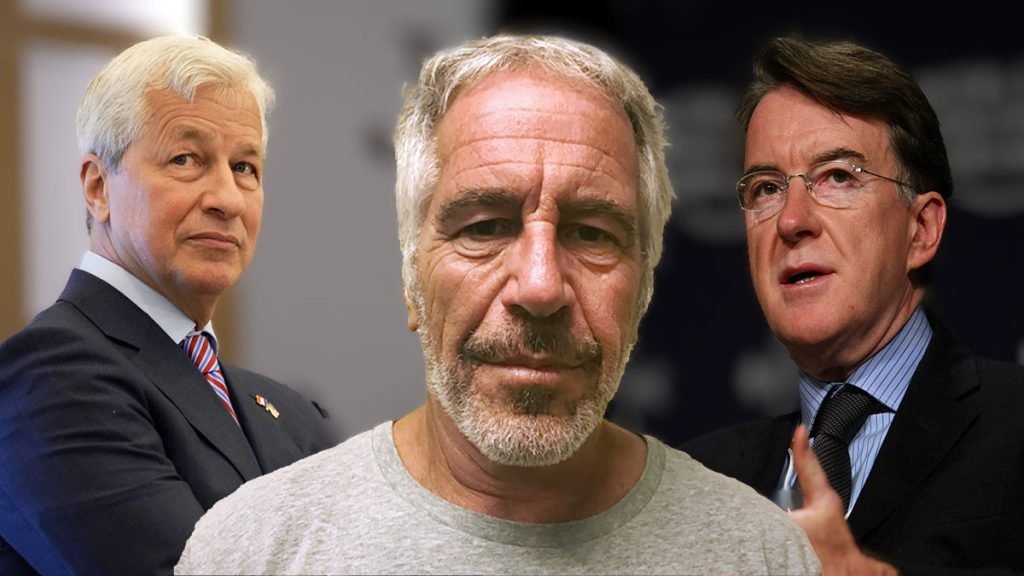
If individuals have mostly escaped, institutions have paid. But corporate settlements, however large the sums, are not criminal convictions. They are the price of doing business while looking away.
JPMorgan Chase agreed to pay two hundred and ninety million dollars to settle a class-action lawsuit brought by Epstein’s victims. The lawsuit alleged that the bank knowingly facilitated his sex trafficking operation for over a decade, prioritising profit over both legal obligation and basic human decency. Court documents established that Epstein made suspicious cash withdrawals of between forty thousand and eighty thousand dollars monthly, flagged repeatedly by compliance officers. The bank continued processing the transactions. It also paid seventy-five million dollars to the US Virgin Islands to settle separate claims that it had facilitated human trafficking in the territory where Epstein owned his private island.
The bank’s settlement statements expressed “regret” and acknowledged association with Epstein was a “mistake.” They admitted no legal liability. No JPMorgan executive has been charged with any crime.
Jes Staley, the former JPMorgan executive who maintained a close personal relationship with Epstein and is alleged to have shielded him from internal scrutiny, has not been charged. In an extraordinary footnote to the Mandelson affair, it was reported that Mandelson lobbied the Obama administration in 2010 to water down proposed restrictions on US bank trading activities, on behalf of both Epstein and Staley. The three men shared not merely a social network but an apparent alignment of financial interests.
Corporate settlements, however large the sums, are not criminal convictions. They are the price of doing business while looking away, laundered through legal language and paid from funds no executive will personally miss.
THE NAMED AND THE NOTORIOUS

Beyond the arrested and the charged, a longer roster of powerful figures has faced the softer consequences of association: resignation, reputational damage, the loss of positions they had held for years. These are the people the Epstein files caught in the light, without yet exposing them to the full glare of prosecution.
Tom Pritzker resigned as executive chairman of Hyatt Hotels Corporation after emails emerged showing sustained contact with Epstein and Maxwell, continuing well after Epstein’s 2008 conviction. The correspondence involved planning dinners and meetings.
Kathy Ruemmler, former White House Counsel under Barack Obama and until recently chief legal officer at Goldman Sachs, resigned after emails showed friendly exchanges with Epstein, discussions about potential Department of Justice appointments, and acceptance of gifts including a Hermes handbag and a Four Seasons spa day.
Brad Karp, longtime chairman of the prestigious law firm Paul, Weiss, Rifkind, Wharton and Garrison, stepped down after emails emerged showing gratitude for what he described as a “once-in-a-lifetime” evening hosted by Epstein.
Sultan Ahmed bin Sulayem, chairman and chief executive of DP World, one of the world’s largest logistics companies, resigned after thousands of emails with Epstein were released. In one 2013 exchange, Epstein described Sulayem as “one of my most trusted friends in every sense of the word.”

Sarah Ferguson, former Duchess of York and ex-wife of Andrew Mountbatten-Windsor, maintained contact with Epstein regarding her personal finances while he was serving his prison sentence for soliciting sex from a minor, and visited his residence with her daughters. Ferguson’s charity trust, Sarah’s Trust, has shut down.
Crown Princess Mette-Marit of Norway exchanged hundreds of emails with Epstein, stayed at his Palm Beach house in his absence, and maintained their relationship after his 2008 conviction. She has issued a public apology under growing pressure.

The list continues: academics, lawyers, diplomats, a UN General Assembly president, a former Slovenian security adviser. The files released in January 2026, three million documents from the Department of Justice, continue to generate new names and new scandals with each subsequent examination. The narrative, managed through slow release rather than comprehensive disclosure, rolls on.
THE FINANCIAL ENABLERS: HOW MONEY MOVED

Richard Kahn, Epstein’s longtime accountant and now an executor of his estate, appeared before the House Oversight Committee in March 2026. He told lawmakers he had not personally witnessed the sexual abuse, while providing a fuller picture of how Epstein’s wealth was accumulated and distributed.
Representative James Comer revealed that Kahn’s deposition confirmed Epstein received significant sums from Les Wexner, the former retail billionaire; Glenn Dubin, the hedge fund manager; Steven Sinofsky, the tech entrepreneur; Leon Black, the investor; and individuals connected to the Rothschild family. None has been accused of wrongdoing, though Democrats on the committee argued that anyone with substantial financial ties to Epstein warranted scrutiny.
Kahn also told the committee that Epstein had financial ties to Ehud Barak, the former Israeli Prime Minister. Barak has acknowledged his association with Epstein and expressed regret, but has not been accused of specific wrongdoing.
Representative James Walkinshaw offered a blunter assessment: “Jeffrey Epstein’s sex trafficking ring would not have been possible without Richard Kahn, who managed Epstein’s money for years and authorised payments, including payments to victims and survivors.”
Kahn has not been charged with any crime.
Glenn Dubin, one of the more specific figures named in victim testimony, has never been charged. His former butler, Rinaldo Rizzo, testified in a related defamation lawsuit that a fifteen-year-old Swedish girl was brought to the Dubin family’s New York apartment by Epstein and Maxwell.

Rizzo described finding the girl crying in the kitchen; she told him Maxwell and Epstein associate Sarah Kellen had demanded sex from her and confiscated her passport.
Dubin has consistently denied wrongdoing. He was not called to testify before the Oversight Committee. He has not been charged.
WHY MAXWELL ALONE? THE SCRUTINY GAP
The question that haunts this entire saga is not simply who escaped, but why. What is the structural logic that produces an outcome in which one woman serves twenty years while dozens of men, many of them named in testimony, financial records, and court documents, continue their lives undisturbed?
Part of the answer is procedural. Maxwell was prosecuted in New York on charges that could be tried after Epstein’s death; the case against her was built on testimony from victims who came forward and could be verified through flight logs, financial records, and corroborating witnesses. The cases against unnamed associates require either victim testimony, documentary evidence, or both, and the confidential settlement agreements that many of those associates appear to have reached were specifically structured to prevent such evidence from reaching prosecutors.
Part of the answer is political. Epstein’s network encompassed men who sit on the boards of major financial institutions, who have advised governments, who have funded political campaigns on both sides of the Atlantic. Prosecuting them would not merely be a legal exercise. It would be a political earthquake, and political earthquakes are precisely what justice systems, staffed by ambitious lawyers and overseen by elected officials, are structurally inclined to avoid.
And part of the answer is simply the oldest truth in the law: that money buys outcomes.
Civil settlements can be structured to function as de facto immunities. Legal teams can manage narratives. Institutions can choose which investigations to pursue with vigour and which to pursue with studied slowness. The Department of Justice that declined to identify Epstein’s co-conspirators in 2007, that allowed him to spend his sentence on work release, that failed to act for twelve more years until investigative journalists forced the issue: this is the same Department of Justice now managing the release of three million documents at a pace calibrated, whether by design or institutional inertia, to prevent any single revelation from dominating the news cycle long enough to demand consequences.
Maxwell, for all her crimes, and they are not in question here, is the most convenient defendant the system could have found. She was Epstein’s instrument, certainly. But she was also a woman, an outsider despite her elite connections, someone whose father’s disgrace had already placed her outside the innermost circle of British establishment protection. She could be sacrificed. The others could not.
Maxwell is the most convenient defendant the system could have found. She could be sacrificed. The men at the centre of the network could not.
In November 2025, President Trump signed the Epstein Files Transparency Act, mandating the release of all Epstein-related records by 19 December 2025. The Department of Justice announced it would review a total of up to 5.2 million pages, with some four hundred lawyers involved. It missed the deadline.
The DOJ released approximately 3 million documents on 30 January 2026, claiming no further files existed. Representatives Ro Khanna and Thomas Massie threatened contempt charges against Attorney General Pam Bondi for non-compliance with the law. The slow drip of releases, the missed deadlines, the claims of completeness that subsequent revelations immediately contradict: this is not transparency. It is the management of transparency, which is its opposite.
Meanwhile, Maxwell’s habeas petition sits before a court that is structurally unlikely to grant it. The Supreme Court has already declined to hear her appeal. The legal routes are narrowing. The public attention span, as the establishment knows from long experience, is finite.
WHAT JUSTICE WOULD ACTUALLY LOOK LIKE
It would begin with the names. The twenty-five men who reached confidential settlements should be identified. The four co-conspirators named in the 2007 non-prosecution agreement should be identified. The pretence that confidentiality agreements negotiated in civil proceedings can function as permanent shields against criminal inquiry should be challenged explicitly and in public.
It would continue with the institutions. JPMorgan Chase did not pay three hundred and sixty-five million dollars in settlement because of paperwork errors. It paid because evidence showed it knowingly processed the financial infrastructure of a sex trafficking operation. The question of individual criminal liability within that institution has not been answered. It should be.
It would require the full release of the Epstein files without further redaction or delay, under independent oversight rather than departmental management. The appointment of a special prosecutor, insulated from political pressure, to examine the 2007 non-prosecution agreement and the conduct of those who negotiated it is not a radical demand. It is the minimum that justice requires.
And it would demand, most fundamentally, an honest accounting of why the system repeatedly failed. Not the failure of individuals, though individuals did fail, but the failure of structures: the legal structures that allow civil settlements to suppress criminal evidence; the financial structures that allowed Epstein to maintain his operation through banks that asked no questions; the political structures that allowed a convicted sex offender to maintain relationships with government ministers, diplomats, and royalty on both sides of the Atlantic for decades after his first conviction.
THE NAMES THEY WON’T RELEASE

We do not know who the twenty-nine are. We may never know. The agreements that protected them were designed with precisely that outcome in mind. But we know enough to state plainly what the absence of those names represents.
It represents a justice system that convicted the instrument while protecting the principals. It represents financial institutions that paid the cost of complicity in corporate settlements rather than in the currency of individual accountability. It represents governments on both sides of the Atlantic that maintained relationships with a known sex offender and his network for years, and that are now, somewhat belatedly and under considerable legal pressure, beginning to examine the consequences.
Ghislaine Maxwell sits in a Texas prison, teaching classes on female empowerment to her fellow inmates while serving a sentence for crimes she committed alongside others who remain free. Andrew Mountbatten-Windsor and Peter Mandelson have been arrested and released on bail, suspected of misconduct in public office, while the more serious question of whether either facilitated or benefited from Epstein’s trafficking operation remains, officially, unasked. The Norwegian diplomats face corruption charges in Oslo. The French prosecutors form committees. The Department of Justice releases documents at the pace of an institution that understands the value of managed disclosure.
The establishment, as it always does, is managing the story. The question is whether the public, and the journalists and lawmakers who serve it, will allow that management to succeed.
They are counting on our forgetfulness. They are betting that the next scandal will arrive before the last one has been resolved, that the sheer volume of names and revelations will exhaust rather than animate public anger, that the slow release of heavily redacted documents will be mistaken for transparency.
We should prove them wrong. Not merely for Maxwell’s sake, who may yet be as guilty as convicted, but for the dozens of women whose suffering was traded away in confidential settlements signed by men who continue to attend their galas and manage their funds and walk the corridors of power without a day in a courtroom to their names.
The twenty-nine who walked did not escape justice. Justice was offered to them, by a system that understood what it was doing, and accepted. That is the difference between a failure and a crime.
They are counting on our forgetfulness. The twenty-nine who walked are betting that power always outlasts memory. We have to make sure they lose that bet…
Enjoyed this read? I’m committed to keeping this space 100% ad-free so you can enjoy a clean, focused reading experience. Crafting these articles takes a significant amount of research and heart. If you found this helpful, please consider a “small donation” to help keep the lights on and the content flowing. Every bit of support makes a huge difference!

Sources: Ghislaine Maxwell habeas corpus petition (17 December 2025); Al Jazeera, ‘Epstein Files: The Arrests and the Resignations’ (24 February 2026); NBC News reporting on Mandelson and Mountbatten-Windsor arrests (February 2026); ABC News reporting on DOJ prosecution memoranda (February 2026); Wikipedia, ‘Relationship of Peter Mandelson and Jeffrey Epstein’; House Oversight Committee deposition of Richard Kahn (March 2026); JPMorgan Chase settlement documents; French prosecutor’s office statements (February 2026); Aftenposten reporting on Rod-Larsen and Juul.
Support Independent Journalism Today
Our unwavering dedication is to provide you with unbiased news, diverse perspectives, and insightful opinions. We're on a mission to ensure that those in positions of power are held accountable for their actions, but we can't do it alone. Labour Heartlands is primarily funded by me, Paul Knaggs, and by the generous contributions of readers like you. Your donations keep us going and help us uphold the principles of independent journalism. Join us in our quest for truth, transparency, and accountability – donate today and be a part of our mission!
Like everyone else, we're facing challenges, and we need your help to stay online and continue providing crucial journalism. Every contribution, no matter how small, goes a long way in helping us thrive. By becoming one of our donors, you become a vital part of our mission to uncover the truth and uphold the values of democracy.
While we maintain our independence from political affiliations, we stand united against corruption, injustice, and the erosion of free speech, truth, and democracy. We believe in the power of accurate information in a democracy, and we consider facts non-negotiable.
Your support, no matter the amount, can make a significant impact. Together, we can make a difference and continue our journey toward a more informed and just society.
Thank you for supporting Labour Heartlands