Mandelson, the Trilateral Commission, and the Security Veto That Was Overruled in 48 Hours
Keir Starmer faces parliament today claiming he knew nothing. The 48-hour overrule of his own security services says otherwise. This is not a story about poor judgment. It is a story about whose interests this government actually serves.
The vetting decision arrived on 28 January 2025. It said no. Within 48 hours, the Foreign Office had overruled it.
That single fact is the axis around which everything else in this story rotates. Not Mandelson’s ten appearances in Epstein’s contact book. Not the handwritten birthday message in which a serving cabinet minister called a convicted child sex offender his best pal. Not the calls placed to a Florida jail cell while Mandelson held the office of Business Secretary.
All of those things matter. But this detail matters more, because it tells us something the others only imply: the appointment of Peter Mandelson as Britain’s ambassador to Washington was not a decision taken in Britain’s interest. It was an obligation discharged on behalf of a network to which Keir Starmer, like Mandelson before him, and Jeffrey Epstein owes a primary loyalty that predates, and may outlast, his relationship with the British electorate.
Today, Starmer faces a House of Commons in which MPs from every party, including a growing and increasingly audible number from his own, are demanding an answer to one question: when did he know? He claims to be furious. His cabinet has rallied. The loyalty, for now, holds. But the question does not go away, because the pattern beneath it does not allow it to.
He asks us to believe the Foreign Office overruled an intensive security vetting process without telling him. This from a Prime Minister who concealed his own Trilateral Commission membership from his party leader.
Starmer asks us to simply accept that the Foreign Office overruled an intensive security vetting process, one that had required full disclosure of personal finances, business connections, and sexual history, regarding the most sensitive appointment of his government, and told him nothing.
He asks us to believe that a prior Cabinet Office review had already flagged concerns about Mandelson’s Epstein associations and the resulting reputational risks, and that he remained genuinely unaware. He asks us to believe that direct warnings from an Epstein survivor did not materially change his understanding of what he knew. And he asks us to accept all of this from a man who, in 2017, joined the Trilateral Commission without informing his own party leader; a man who, as Director of Public Prosecutions, made secret visits to Washington that went unrecorded against protocol; a man whose leadership campaign was underwritten by a prominent pro-Israel lobbyist whose involvement he did not disclose to party members.
He asks us to accept one thing further. On 12 September 2025, the day after Mandelson was sacked, David Maddox, political editor of The Independent, texted Downing Street’s Director of Communications, Tim Allan, to say that two sources had told him Mandelson had failed his security vetting. Allan’s reply was terse: vetting was done by the FCDO in the normal way. Four days later, on 16 September, Liberal Democrat MP Rachel Gilmour raised the matter in the House of Commons, citing a source from MI6 who had reportedly claimed the security services failed to clear Mandelson. Seven months passed.
The Guardian then published a multi-source account in April 2026 confirming the vetting failure in fuller detail, and only then did the current crisis erupt. Maddox has since stated publicly that the idea Downing Street only found out in April 2026 is, in his word, complete nonsense. The story was put to No 10 directly in September 2025. No 10 knew.
This is not the profile of a careless man. Starmer is exceptionally careful about which information he is seen to possess.
THE REAL MISSION IN WASHINGTON

Mandelson’s appointment was presented as pragmatism. Here was a man who knew trade, who had negotiated at the highest levels as EU Trade Commissioner, who could operate inside the new Trump administration’s unusual courtly rituals. All of that was accurate. None of it explains why the security services said no and were overruled within two days.
To understand the appointment’s true purpose, you need to understand what the Trilateral Commission is operationally for. Regular readers will know this publication’s extensive documentation of the Commission’s foundations: the 1975 Crisis of Democracy report, the managed globalisation agenda, the founding conviction that mass democratic participation is a problem to be managed rather than a principle to be honoured. The ideological architecture is documented. What matters here is how it translates into action.
The Commission exists, at its core, to maintain the conditions in which global capital moves freely across borders with minimal democratic friction. Its founding logic holds that elected governments are temporary and therefore unreliable stewards of an interconnected economic order that requires consistent expert management. This is not a conspiracy theory. The Commission has said it, in its own documents, without embarrassment.
Into the Washington posting, at a moment when Donald Trump’s nationalist trade agenda threatened to rupture the very free-trade architecture the Commission had spent fifty years constructing, Starmer sent the Commission’s European trade specialist.
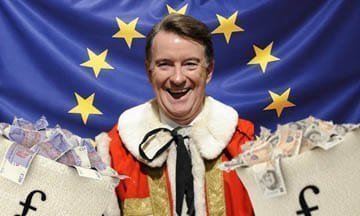
As EU Trade Commissioner from 2004 to 2008, Mandelson had been among the key architects of the multilateral trading system the Commission regards as its primary institutional achievement. His actual brief in Washington was not to secure the best terms for British workers or British industry. His brief was to stabilise the relationship between two critical nodes of the Trilateral order at a moment of maximum stress. The trade deal he helped broker with the Trump administration, praised universally as his finest hour in post, was negotiated from within that framework.
Whether it serves Britain’s working people, as opposed to the interests of global capital that flows through the Trilateral network, remains a question that has received far less scrutiny than it deserves.
He was not Britain’s man in Washington. He was the Trilatrals man. The security services knew it. That is why they said no.
The EU trade connection is not incidental. Mandelson’s Global Counsel, the lobbying firm he co-founded after leaving the EU Commission, built its entire business model on monetising the access and institutional knowledge he accumulated in public service. Trade policy, in the hands of those who move between Trilateral Commission membership, EU commissioner roles, and private advisory firms, becomes not a mechanism for distributing national prosperity but a revenue stream for a network that converts public authority into private advantage.
The firms and financial institutions that have engaged Global Counsel over the years are not retained for their faith in democracy. They are retained because they understand that the men who shape trade rules and the men who profit from them are, in this world, frequently the same men.
EPSTEIN’S FUNCTION: THE QUESTION THE FILES HAVE NOW ANSWERED

The Epstein dimension of this story is the element most consistently misread, because most coverage still treats it as scandal rather than structure. The question is not whether Mandelson had an imprudent friendship with a convicted sex offender. The question is what Epstein was actually for in these elite networks, and what the answer to that question means for those who circulated in them.
What is now on the public record goes considerably further than what was known before January 2026. The US Department of Justice’s release of 3.5 million pages of Epstein-related documents included an FBI memo from the Los Angeles field office, dated October 2020, in which a confidential source described Epstein as having been trained as a spy for Israeli intelligence and as having maintained ties to US and allied intelligence circles through his personal attorney Alan Dershowitz. This is not an assertion from a journalist or a website. It is a document produced by the FBI.
The Mossad connection remains unproven as an operational fact. Israeli officials, including former Prime Ministers Naftali Bennett and Benjamin Netanyahu, and former Mossad director Yossi Cohen, have rejected the claims forcefully and on the record. Those denials are noted here. They do not, however, explain the FBI memo, and they do not resolve the structural question that the confirmed evidence already permits.
Whether or not Epstein was formally recruited by any intelligence agency, his function within elite networks is now documented with sufficient clarity to permit a clear analysis. He provided access: to his Manhattan townhouse, to his Caribbean island, to his New Mexico ranch, and to the extraordinary range of powerful individuals who attended them. The DOJ documents confirm what investigators had long reported: Epstein filmed his guests. He recorded conversations. Senior UK national security official Lynette Nusbacher, a credible figure not given to conspiratorial speculation, acknowledged to journalists that Epstein’s profile, unexplained wealth, elite access, transnational mobility, and repeated investigative shutdowns, was precisely the kind of profile intelligence services seek to cultivate as assets. She considered his formal officer status unlikely. She considered his asset function possible.
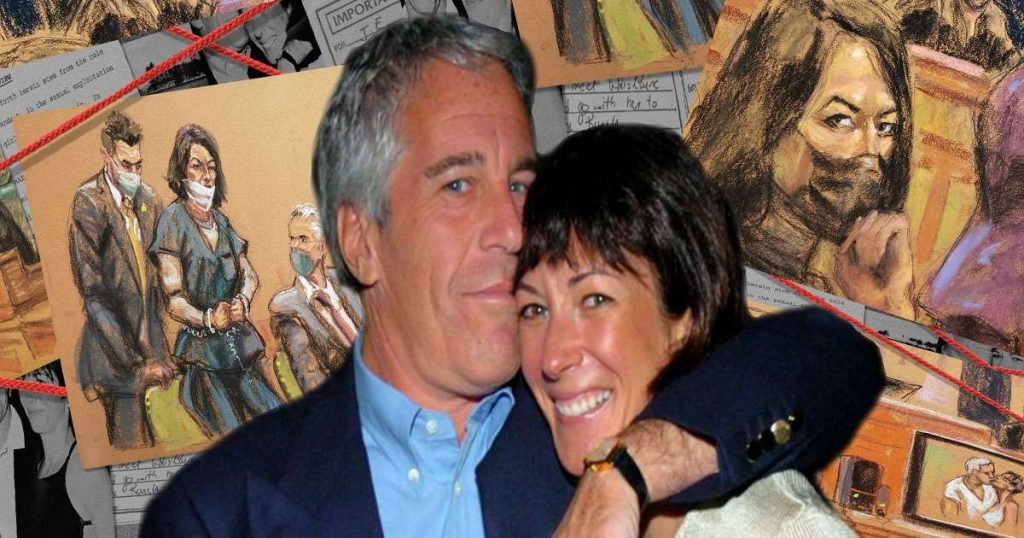
The Maxwell lineage belongs in this analysis because it is not speculative. Robert Maxwell, Ghislaine’s father, was reported by multiple credible sources as a Mossad asset throughout his career. His death under disputed circumstances in 1991, which came shortly after he had allegedly threatened to expose his intelligence activities unless given hundreds of millions to rescue his crumbling financial empire, was attended at the funeral by multiple Israeli prime ministers. Shimon Peres delivered the eulogy. Epstein’s most intimate associate was Robert Maxwell’s daughter. Former Israeli intelligence officer Ari Ben-Menashe has alleged, in extended testimony, that Epstein and Ghislaine Maxwell ran a honeytrap operation targeting elites, collecting compromising material that could be leveraged for influence. Epstein’s 2018 email to former Israeli Prime Minister Ehud Barak, joking that Barak should make clear he did not work for Mossad, reads differently in this light.
Child abusers exist across every class and every society. What does not exist everywhere is a system that records, archives, and weaponises that abuse for strategic ends.
The honest answer to the question of Epstein’s formal intelligence affiliation is that it has not been proven. The honest answer to the question of his structural function is that it is no longer uncertain. He provided the infrastructure of compromise: the locations, the recording equipment, the access, the blackmail potential. Whether that infrastructure was directed by any state, or whether it operated as a freelance leverage mechanism serving whoever found it useful, the effect was the same. Powerful people were brought into documented proximity with criminal activity, and then kept close to a man who could prove it. Deals were smoothed. Access was granted. Silence was purchased. That is not a theory. That is a structural description of what the documents now show.
That is what Peter Mandelson’s best pal was doing. That is what Mandelson was doing when he visited Epstein’s Manhattan townhouse in 2009, while Epstein was still serving his prison sentence for soliciting prostitution from a minor, and wrote that he believed the conviction to be wrongful and should be challenged. And that is the man whose security clearance was rejected by Britain’s own vetting services and reinstated within 48 hours by an unaccountable official in the Foreign Office, without, we are invited to believe, the Prime Minister’s knowledge.
THE COST OF LOYALTY
Starmer will likely survive Monday’s session. Parliamentary arithmetic currently suggests as much, and cabinet discipline is holding in the face of external pressure; after all, their jobs rely on it. But the political cost is accumulating in ways arithmetic does not fully capture, and the calendar ahead is unforgiving.

On 27 April, one week from today, the Old Bailey opens proceedings in the trial of three men charged with conspiracy to commit arson with intent to endanger life, the targets being properties linked to the Prime Minister himself. Roman Lavrynovych, 21, and Petro Pochynok, 35, are Ukrainian nationals. Stanislav Carpiuc, 27, is Ukrainian-born with Romanian citizenship. All three have been held on remand in Belmarsh since their arrest in May 2025. What distinguishes this case from a straightforward arson prosecution is the investigation surrounding it. The Metropolitan Police’s Counter Terrorism Command, not an ordinary criminal unit, leads the inquiry. The Financial Times, citing unnamed government officials, reported that investigators were examining whether Russian intelligence agencies had played a role in recruiting the men, possibly without their full awareness of who was ultimately directing them. Ukraine’s own military intelligence directorate, the HUR, issued an unusual public warning days after the arrests, cautioning that Russian services had intensified recruitment of Ukrainian nationals in the EU for illegal operations.
Two of the accused described themselves as aspiring male models. Lavrynovych had signed a contract with a modelling agency. Carpiuc’s profile on a casting website stated his ambition to become the top male model in the world. Whether the men had any prior connection to Starmer has never been formally established, and it has equally never been formally denied.
George Galloway put the question directly, in public, months ago: has the Prime Minister met, or does he have any personal relationship with, any of the three accused? It remains unanswered. A trial of this nature, at this proximity to a Prime Minister already fighting for his political survival, with unanswered questions about motive, recruitment, and connection, does not stay in the courts. It moves into the Commons chamber and onto the front pages. Whatever the verdict, the questions it opens will not close quietly.
Local and regional elections in May are expected to produce results that a significant number of Labour MPs will interpret as a verdict, not on global instability or the cost of living in the abstract, but on a Prime Minister whose most visible decisions have consistently served the same constituency: not the working people who voted Labour in 2024, but the elite networks that made Starmer’s rise possible and extracted from him, in the appointment of Peter Mandelson, a debt that proved almost politically fatal.
The Mandelson appointment is not the only source of Labour’s difficulties. But it crystallises all the others, because it is not, at its core, a story about inadequate vetting procedures or misplaced personal loyalty. It is a story about whose interests a government serves when no one is looking. Starmer appointed Mandelson despite internal warnings. He maintained Mandelson in post despite public revelations. He stood in the House of Commons in February 2025 and stated that Mandelson had cleared independent security vetting. David Maddox had already reported the vetting failure to No 10 in September 2025. Rachel Gilmour had raised it on the floor of the Commons. The Guardian’s April 2026 reporting confirmed what was already on the record. He sacked Mandelson not when he learned the truth, but when Bloomberg published it. What changed in September 2025 was not what Starmer knew. It was what the public knew. The firing was not a response to revelation. It was a response to exposure.
That is a specific kind of loyalty, and it is worth naming precisely. It is not loyalty to the British public. It is not loyalty to the victims of Jeffrey Epstein. It is the loyalty that functioning elite networks exact from those they sponsor: the willingness to absorb political cost in defence of the network’s assets and the network’s agenda, until the moment that defence becomes structurally untenable.
The Trilateral Commission’s 1975 report diagnosed an excess of democracy. Fifty years later, we can see what the treatment looks like. It looks like a security clearance overruled in 48 hours. It looks like a Prime Minister claiming fury at everyone but himself. It looks like a network that placed its own man in Washington and called it Britain’s national interest.
The network’s men may yet prove untouchable. But they are no longer invisible. And that, at least, is something.
When a Prime Minister’s own security services say no and his Foreign Office says yes within 48 hours, the question is not who misled parliament. The question is, who gave the order?
Enjoyed this read? I’m committed to keeping this space 100% ad-free so you can enjoy a clean, focused reading experience. Crafting these articles takes a significant amount of research and heart. If you found this helpful, please consider a “small donation” to help keep the lights on and the content flowing. Every bit of support makes a huge difference.

Labour Heartlands is an independent left-wing publication. labourheartlands.com
Support Independent Journalism Today
Our unwavering dedication is to provide you with unbiased news, diverse perspectives, and insightful opinions. We're on a mission to ensure that those in positions of power are held accountable for their actions, but we can't do it alone. The Heartlands Tribune is primarily funded by me, Paul Knaggs, and by the generous contributions of readers like you. Your donations keep us going and help us uphold the principles of independent journalism. Join us in our quest for truth, transparency, and accountability – donate today and be a part of our mission!
Like everyone else, we're facing challenges, and we need your help to stay online and continue providing crucial journalism. Every contribution, no matter how small, goes a long way in helping us thrive. By becoming one of our donors, you become a vital part of our mission to uncover the truth and uphold the values of democracy.
While we maintain our independence from political affiliations, we stand united against corruption, injustice, and the erosion of free speech, truth, and democracy. We believe in the power of accurate information in a democracy, and we consider facts non-negotiable.
Your support, no matter the amount, can make a significant impact. Together, we can make a difference and continue our journey toward a more informed and just society.
Thank you for supporting Labour Heartlands