The Warning Starmer Chose to Ignore
The Mandelson Files confirm what we already knew: the Prime Minister was told of the ‘reputational risk’ before the appointment, and proceeded anyway. Now the British taxpayer is subsidising the consequences.
There is a phrase that tends to appear in the suppressed documents, the buried memos, and the vetting files that powerful men would rather you never read. It is a quiet phrase, almost bureaucratic in its restraint. It asks you to note a ‘general reputational risk.’ Those four words, contained in a Cabinet Office due diligence document sent to Keir Starmer in December 2024, are now at the centre of the most serious crisis of his premiership.
The words were a warning. The Prime Minister read them. Then he appointed Peter Mandelson anyway.
Today, the government published the first batch of the so-called Mandelson Files: 147 pages of documents released only because MPs forced the issue, only because a motion passed in the Commons compelled a transparency that Downing Street would have preferred to delay indefinitely. What they reveal is not simply a failure of vetting. They reveal a failure of judgment so profound, and so consequential, that it demands a reckoning not just with Peter Mandelson’s conduct but with the culture of the establishment that protects men like him.
The Document That Should Have Ended the Appointment
Let us be precise about what Starmer was told. The due diligence report, prepared by the Cabinet Office before Mandelson’s appointment as UK Ambassador to Washington, noted that Mandelson had maintained a ‘particularly close relationship’ with Jeffrey Epstein. It stated that after Epstein’s conviction in 2008 for procuring an underage girl for prostitution, ‘their relationship continued across 2009 to 2011, beginning when Lord Mandelson was business minister and continuing after the end of the Labour government.’ The document recorded that Mandelson reportedly stayed in Epstein’s New York home while Epstein was in jail in June 2009.
The section of the report concluded with a note: ‘To note, general reputational risk.’
General reputational risk. A sitting Cabinet minister accepting the hospitality of a convicted child sex offender’s property while the offender was behind bars, and the note to the Prime Minister uses the language of a mild accounting concern. This is how the establishment speaks to itself: in the passive, the understated, the deliberately unseeable.
Starmer read it. Questions were then put to Mandelson by advisers in Downing Street. Mandelson answered them. The appointment proceeded. Nine months later, when the US Department of Justice published 3.5 million pages of Epstein files and the true depth of the relationship could no longer be managed by a careful answer to a carefully framed question, Mandelson was sacked.
‘If anything goes wrong, you could be more exposed as the individual is more connected to you personally.’ That warning was in the files. Starmer ignored it too.
Weirdly Rushed

The files reveal something else that deserves far more attention than it has received. Jonathan Powell, Starmer’s own national security adviser, told the Prime Minister’s general counsel that he found the appointment process ‘weirdly rushed.’ Powell raised concerns about Mandelson’s ‘reputation’ directly to Morgan McSweeney, Starmer’s then-chief of staff. McSweeney’s response, recorded in an official note of the call, was that ‘the issues had been addressed.’
The issues had been addressed. By whom? On what basis? The files do not tell us, because the correspondence between Downing Street and Mandelson in which follow-up questions were put, and Mandelson’s answers recorded, has been withheld on the grounds that it is central to the Metropolitan Police’s ongoing criminal investigation. We are asked, in other words, to accept that the Prime Minister took a man at his word, while the document recording that word is under active police scrutiny.
McSweeney has since resigned. So has Tim Allan, the director of communications. The captain maintains he was deceived by his crew. The crew have quietly departed. And the ship, listing visibly, sails on.
What Was Actually Being Shared

To understand why this is not merely a scandal of social indiscretion, one must understand what the Epstein files revealed about the substance of the Mandelson relationship. This is not a matter of two men attending the same parties. This is alleged state criminality.
The DOJ documents show that in 2009, while serving as Business Secretary in Gordon Brown’s government during the most acute phase of the global financial crisis, Mandelson appears to have transmitted real-time, market-sensitive information to a convicted sex offender. He forwarded an internal government report outlining potential mechanisms for raising public funds, including asset sales, information that had no business being in Epstein’s inbox. He appears to have advised Epstein that he was lobbying colleagues to reduce a tax on bankers’ bonuses, and suggested that JPMorgan‘s CEO should ‘mildly threaten’ the Chancellor over the policy. Hours before the announcement of the European Union’s 500 billion euro bailout of the Greek debt crisis, Mandelson messaged Epstein that the deal was nearly complete.
The government’s own assessment, passed to the Metropolitan Police, was that this material constituted ‘likely market-sensitive information.’ The police arrested Mandelson on 23 February on suspicion of misconduct in public office, an offence punishable in the United Kingdom by a maximum sentence of life imprisonment. He has been released without bail conditions but remains under investigation. He has denied criminal wrongdoing.
Starmer appointed a man now under criminal investigation for leaking state secrets to a convicted paedophile. He appointed him to one of the most sensitive diplomatic posts in the world. He did it in a rush. And he knew there was a reputational risk.
The Club Nobody Talks About

To understand why Starmer remained, until the last possible moment, tethered to Mandelson, one must look beyond the immediate machinery of government and into the narrow, unaccountable world these men inhabit together.
Peter Mandelson is a member of the Trilateral Commission. Jeffrey Epstein was a member of the Trilateral Commission. Keir Starmer served as a member of the Trilateral Commission while sitting in Jeremy Corbyn’s shadow cabinet, a fact that is verifiable, documented, and rarely discussed. This is not conspiracy theory. It is institutional overlap, the kind that creates the loyalties and the blind spots that override the plain evidence in front of you.
The Commission, founded in 1973 by David Rockefeller, has as its explicit purpose the coordination of policy across North America, Europe, and Asia by representatives of business, government, and media, away from the direct accountability of democratic electorates. Its 1975 report on the ‘Crisis of Democracy’ did not identify the crisis as a shortage of democracy. It identified the crisis as too much of it. When you understand this, the patience of establishment figures with one another, even across enormous scandal, becomes more legible.
British law requires MPs and police officers to declare Freemasonry membership. The rationale is that secret networks create patronage and conflicts of interest that undermine public trust. Yet membership of the Trilateral Commission, an invitation-only organisation explicitly designed to shape policy beyond democratic accountability, requires no declaration whatsoever. This anomaly is not accidental.
The files also reveal that in 2014, well after Epstein’s conviction, Mandelson agreed to become a ‘founding citizen’ of an ocean conservation group founded by Ghislaine Maxwell and funded by Epstein. Maxwell was at that point known to be Epstein’s close associate. She was subsequently convicted of sex trafficking and sentenced to twenty years in prison. Mandelson signed up to be a founding citizen of her project four years after Epstein had been to jail. He did not think this worth mentioning during his vetting.
£75,000 Severance: The Public Funded Mandelson’s Exit After Starmer’s “Litany of Deceit”
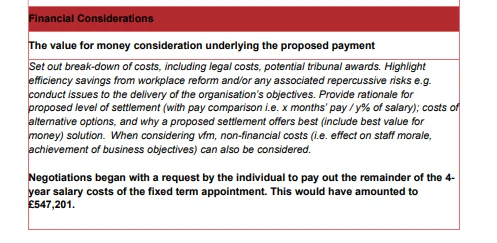
Then there is the money. The British public, currently living through an age of benefit cuts, frozen public sector wages, crumbling public services, and the government’s own references to a ‘fiscal black hole,’ has now learned that it funded a £75,000 severance payout for the man Starmer has described as having maintained a ‘litany of deceit.’
Seventy-five thousand pounds is not, of course, the figure Mandelson’s representatives initially sought. The files record that negotiations began with a request to pay out the remainder of his four-year salary contract in full: a sum of £547,201. The government declined. But it paid £75,000. Three months’ pay plus a termination payment, issued to a man who is under active criminal investigation for misconduct in public office, and whose sacking Starmer described as the only possible response once the truth emerged.
The victims of Jeffrey Epstein’s crimes will receive no severance payment for nine months of enduring a man who called their abuser his ‘best pal’ as Britain’s senior diplomat in Washington. The nurses whose cases we have covered on these pages, abandoned by institutions that were supposed to protect them, received no golden goodbye. The working people of the north whose communities were dismantled by the very globalisation Mandelson so eagerly championed received no termination payment for the decades of managed decline.
Seventy-five thousand pounds, from the public purse, to ease the exit of a man Starmer now says should never have been afforded the privilege of public office. The indignity is not merely financial. It is the clearest statement of whose comfort this government prioritises.
THE VICTIMS, MENTIONED IN PASSING
Listen carefully to any politician who speaks about the Epstein files and you will notice a consistent grammatical structure. The victims come first. They arrive in the opening sentence, honoured, acknowledged, grieved over. Then the politician moves on to the substance of what they actually want to say, which is invariably about process, about vetting failures, about litanies of deceit, about the unfortunate necessity of transparency. The victims are the threshold you cross to get to the politics. They are not the destination.
Keir Starmer has expressed his sorrow for Epstein’s victims more times than can easily be counted since September 2025. He has apologised to them for believing Mandelson’s lies. He has described himself as appalled. He has ordered urgent reviews. He has said, with evident feeling, that if he had known then what he knows now, Mandelson would never have been anywhere near government.
But there is a question that none of this remorse answers. A question that the victims themselves are entitled to put to this Prime Minister directly.
No One Mentioned the Victims in December 2024?

When the Cabinet Office document landed on Starmer’s desk, noting that Mandelson had maintained contact with a convicted child sex offender after his conviction, that he had reportedly stayed in that offender’s home while the offender was in jail, that the vetting process itself had identified a ‘general reputational risk,’ where in that calculation did the interests of Epstein’s victims appear? They were not in the room. They were not in the document. They were not in the rushed conversations between advisers who concluded that the issues had been addressed. They were not consulted when Jonathan Powell’s concerns were passed to Morgan McSweeney and McSweeney judged them manageable.
The victims entered the story only at the point where the story became politically uncontainable. They were not a consideration when the appointment was made. They became a consideration when the appointment became a liability. That is not compassion. That is sequencing.
This matters because the language of victim-solidarity, deployed retrospectively and reliably, performs a specific function in establishment scandal management. It pre-empts the charge of callousness. It signals appropriate feeling. It allows the speaker to present their own embarrassment as grief on behalf of others. But the women who suffered at Epstein’s hands did not need Keir Starmer to feel bad about his appointment nine months after he made it. They needed him to feel something in December 2024, when the file was open and the warning was written and the choice was still before him.
He did not put the victims first. He put Mandelson first. Everything since has been the management of that original decision.
The Defence That Doesn’t Hold

Darren Jones told Parliament on Wednesday that the due diligence process ‘did not expose the depth and extent’ of Mandelson’s friendship with Epstein, and that Mandelson had lied to the Prime Minister. Starmer has repeated this defence at every available opportunity, saying he ‘deeply regrets’ taking Mandelson at his word.
Let us grant, for a moment, that this is entirely true. Let us accept that Mandelson actively deceived a Prime Minister who exercised every reasonable caution.
The question that remains is this: what reasonable caution consists of reading that a man ‘reportedly stayed in Epstein’s house while he was in jail,’ noting the ‘general reputational risk,’ and then proceeding with the appointment on the basis of that man’s own verbal assurances? A man who had previously been forced to resign from Cabinet twice, in 1998 and in 2001, over separate financial improprieties. A man whose appointment Jonathan Powell found ‘weirdly rushed.’ A man whose relationship with Epstein, as the Commission documents noted, had been ‘extensively’ reported in the press as recently as January 2024, a full year before the appointment.
The Prime Minister was not deceived into ignorance. He was deceived into proceeding despite knowledge. That is a different category of failure entirely. It is the failure of a man who saw the risk, calculated that the diplomatic utility of Mandelson’s establishment connections outweighed the moral discomfort, and was wrong.
In public life, the test of character is not what you do when things go well. It is what you do when the document on your desk says ‘general reputational risk’ and you have the power to set it aside. Starmer set it aside.
The Pattern Behind the Scandal

This is not, at its root, a story about one bad appointment. It is a story about a system that reproduces itself, that immunises its participants from the consequences that would end any ordinary career, and that mistakes the loyalty of networks for the interests of the public.
Epstein was not simply a predator who accumulated powerful friends through charm and money, though he was certainly that. He was also a demonstration of what happens when elite networks lose the capacity for self-correction. Men like Mandelson did not simply fail to notice who Epstein was. They continued to correspond, to socialise, to seek favours, and in Mandelson’s case apparently to share state secrets, years after anyone with ordinary moral judgment would have walked away. They did not walk away because the network made walking away costly and staying comfortable.
Starmer belongs to that network. He does not talk about it. He does not declare it. When he appointed Mandelson, he was not simply making a diplomatic judgment about who could best manage Donald Trump’s Washington. He was making a calculation within a world where the Trilateral Commission, Global Counsel, Downing Street, and Epstein’s address book are not separate universes but overlapping circles on the same map.
The Mandelson Files have begun to make that map visible. There are more files to come.
They told him. He appointed him anyway. Seventy-five thousand pounds later, the public is paying for a mistake only the establishment could have made.
What Must Happen Now

The Metropolitan Police investigation must be allowed to proceed without political interference of any kind. The remaining documents, including the withheld correspondence between Downing Street and Mandelson, must be published in full the moment the police determine it is safe to do so. There must be no editing, no redaction on grounds of political sensitivity, and no further delay.
The £75,000 severance payment must be reviewed. If Mandelson is convicted of misconduct in public office, the question of reclaiming public money paid to a man convicted of abusing his office must be answered clearly, in legislation if necessary.
More fundamentally, a select committee with full powers of evidence-taking should examine the vetting process that allowed this appointment to proceed, the role of Morgan McSweeney in determining that ‘the issues had been addressed,’ and the institutional culture that permits men with this level of documented risk to be placed in the most sensitive diplomatic roles the country possesses.
And Parliament should consider, seriously and without the usual political theatre, whether membership in bodies such as the Trilateral Commission should require the same declaration as other professional affiliations that create conflicts of interest in public life. If we require police officers to declare their lodge membership, we can require our Prime Ministers to declare the private organisations that shape their view of the world and their loyalty to those within it.
The warning was on the page. Keir Starmer read it, set it aside, and gave Jeffrey Epstein’s closest British friend the keys to America.
Enjoyed this read? I’m committed to keeping this space 100% ad-free so you can enjoy a clean, focused reading experience. Crafting these articles takes a significant amount of research and heart. If you found this helpful, please consider a “small donation” to help keep the lights on and the content flowing. Every bit of support makes a huge difference.

Labour Heartlands is an independent left-wing publication committed to class politics and investigative journalism. labourheartlands.com
Support Independent Journalism Today
Our unwavering dedication is to provide you with unbiased news, diverse perspectives, and insightful opinions. We're on a mission to ensure that those in positions of power are held accountable for their actions, but we can't do it alone. Labour Heartlands is primarily funded by me, Paul Knaggs, and by the generous contributions of readers like you. Your donations keep us going and help us uphold the principles of independent journalism. Join us in our quest for truth, transparency, and accountability – donate today and be a part of our mission!
Like everyone else, we're facing challenges, and we need your help to stay online and continue providing crucial journalism. Every contribution, no matter how small, goes a long way in helping us thrive. By becoming one of our donors, you become a vital part of our mission to uncover the truth and uphold the values of democracy.
While we maintain our independence from political affiliations, we stand united against corruption, injustice, and the erosion of free speech, truth, and democracy. We believe in the power of accurate information in a democracy, and we consider facts non-negotiable.
Your support, no matter the amount, can make a significant impact. Together, we can make a difference and continue our journey toward a more informed and just society.
Thank you for supporting Labour Heartlands