When Your Home Became Their Portfolio
When did the roof over a Londoner’s head become nothing more than a high-yield asset class for a shell company in the British Virgin Islands?
Walk through Battersea. Look up at Circus West Village, the first phase of the Power Station redevelopment. Nearly every window frames an empty chair, an unlived-in kitchen. Of the 866 luxury apartments built here, 824 were sold before construction even began. The overwhelming majority went to overseas investors who will never turn a key in these locks, never complain about the boiler, never learn their neighbours’ names.
This is not housing. This is financial engineering dressed in glass and steel.
The Architecture of Extraction
The numbers confirm what Phin Harper observed when he surveyed London’s skyline. In some new developments, the percentage of homes sold to overseas investors approaches totality: 96%, 88%, 100%. These are not homes being built for people who need shelter. They are products being manufactured for people who need somewhere to park money.
Analysis published in January 2026 by Tax Policy Associates reveals that approximately 45,000 UK properties, valued at £190 billion, are owned through offshore structures where the beneficial owner cannot be identified. London accounts for £107 billion of this hidden wealth. In 44% of cases, despite legal requirements to disclose ownership, the real human beings behind these corporate veils remain invisible.
The architects of these developments are not to blame for their “anodyne and charmless” appearance. They are responding rationally to their clients’ requirements. An overseas investor scrolling through property brochures in Singapore or Dubai does not care about street-level vitality or neighbourly interaction. They care about capital preservation, currency hedging, and quarterly returns. The resulting architecture reflects this perfectly: buildings with the emotional resonance of a bank vault and the civic contribution of a storage unit.
Harper’s phrase “high emissions, low joy” captures something essential. These are structures optimised for financial performance, not human flourishing. They house capital, not communities.
The Price of Refuge

London, City of Gentrification…
Research by economist Filipa Sá, published by the Royal Economic Society, demonstrates that foreign investment in residential property raised house prices across England and Wales by an estimated 19%. Without this offshore demand, the average home in 2014 would have cost approximately £174,000 instead of £215,000.
This is not abstract market pressure. It is a direct transfer of wealth from working people who need housing to global investors who need somewhere safer than their home currencies. The “trickle down” is real, but it flows upward. Every luxury apartment purchased sight-unseen in Knightsbridge exerts gravitational pull on prices in Peckham, in Barking, in zones four and five where actual Londoners struggle to remain.
The historical parallel is instructive. Victorian Britain saw vast capital accumulation through imperial extraction, which then sought returns in domestic property. The landed gentry became rentiers. Today’s pattern is remarkably similar, except the empire is financial rather than territorial, and the extraction is mediated through tax havens rather than colonial administration.
The British Virgin Islands, Jersey, and Guernsey feature prominently in property ownership data not because they are centres of British culture or business, but because they are centres of British opacity. They allow wealth to flow freely while accountability dissolves.
The Broken Promise of Supply

The standard neoliberal defence runs as follows: overseas investment funds construction that would not otherwise occur. More supply means lower prices. Everyone benefits.
This is demonstrably false. Sá’s research found no evidence that increased foreign investment leads to increased housing construction. The money does not build more homes. It simply bids up the price of existing and planned supply.
Consider the mechanism. When a developer can pre-sell an entire apartment block to overseas buyers before breaking ground, they face reduced financial risk. This makes projects more viable. So far, accurate. But here is what the defenders omit: that same overseas demand crowds out domestic purchasers from the market entirely. The homes that do get built are permanently removed from the pool of housing available to Londoners.
A 2017 LSE study, often cited by industry advocates, claimed that less than 1% of overseas purchases result in permanently empty properties. But this statistic obscures as much as it reveals. A property occupied by an absentee owner’s university-age child for eight months, then empty for four, does not appear in “buy to leave” statistics. Neither does a pied-à-terre used for occasional business trips. Yet neither contributes to the stable, year-round residential community that makes neighbourhoods function.
More importantly, the “rental to Londoners” defence misses the fundamental point. When foreign capital purchases housing as an asset class, it converts a social good into a financial instrument. The relationship between resident and housing changes from citizen and home to tenant and investment vehicle. Power shifts. Rents rise. Security vanishes.
4 Policies to Stop Foreign Investors Pricing Londoners Out

Transparency alone will not suffice. The Register of Overseas Entities was meant to shine light into these shadows. Yet here we are, two years after its creation, with 44% of offshore-owned properties still concealing their beneficial owners. Companies House lacks the resources to verify filings. HMRC lacks the appetite to prosecute false declarations. The system was designed for compliance, not enforcement.
We require structural reform that prioritises use rights over investment returns.
First, strict residency requirements for new developments. Any building receiving planning permission should be required to market at least 70% of units to residents of the United Kingdom for a minimum of two years before offering them internationally. This is not xenophobia; it is the same policy Singapore, Hong Kong, and Vancouver have implemented to protect their own housing markets from speculative excess.
Second, a substantial levy on empty properties. If a residential unit is unoccupied for more than 120 days in a calendar year, and the owner cannot demonstrate extenuating circumstances, impose a tax equal to 10% of the property’s assessed value. This is not punitive; it is corrective. Housing in a city of housing shortage should be used or released.
Third, prohibit any entity registered in a tax haven from owning residential land in the United Kingdom. The British Virgin Islands, Jersey, Guernsey, the Cayman Islands, and similar jurisdictions exist primarily to obscure beneficial ownership and facilitate tax avoidance. If transparency is genuinely the goal, this follows logically. If an owner is unwilling to register their property through a transparent, tax-compliant structure, they should not be permitted to own British land.
Fourth, empower local authorities to use compulsory purchase powers to acquire long-term vacant properties at discounted rates and convert them to social housing. The Cadogan Estate in Kensington contains luxury flats that have stood empty for 5, 10, even 15 years. This is an obscenity in a city where families sleep in temporary accommodation. Compulsory purchase, at a valuation reflecting vacant rather than market rates, would both punish hoarding and expand affordable supply.
The Politics of Shelter

This is not a technical problem requiring technical solutions. It is a political problem requiring political courage. The property development industry funds political parties, lobbies planning authorities, and shapes economic policy discourse. The City of London benefits enormously from capital inflows, regardless of their effect on housing affordability. British banks profit from lending against inflated property values. Solicitors, estate agents, and wealth managers all take their percentage.
The political class has chosen, repeatedly and deliberately, not to intervene in this market because intervention would threaten powerful interests. Labour councils sell off housing estates to overseas consortiums. Conservative governments implement toothless transparency measures that change nothing fundamental. The Liberal Democrats talk about building more supply while ignoring the question of who that supply serves.
Meanwhile, working families in London face a choice between crippling housing costs and displacement. The average house price in the capital now exceeds £500,000. A couple earning median wages cannot afford to buy. Private rents consume 40% or more of take-home income. Social housing waiting lists stretch into decades.
This is the material consequence of treating housing as just another asset class, no different from shares or bonds or foreign currency holdings. When the wealthiest 1% of global citizens can use London property as a safe deposit box for their capital, ordinary Londoners cannot afford to live in their own city.
A City or a Commodity
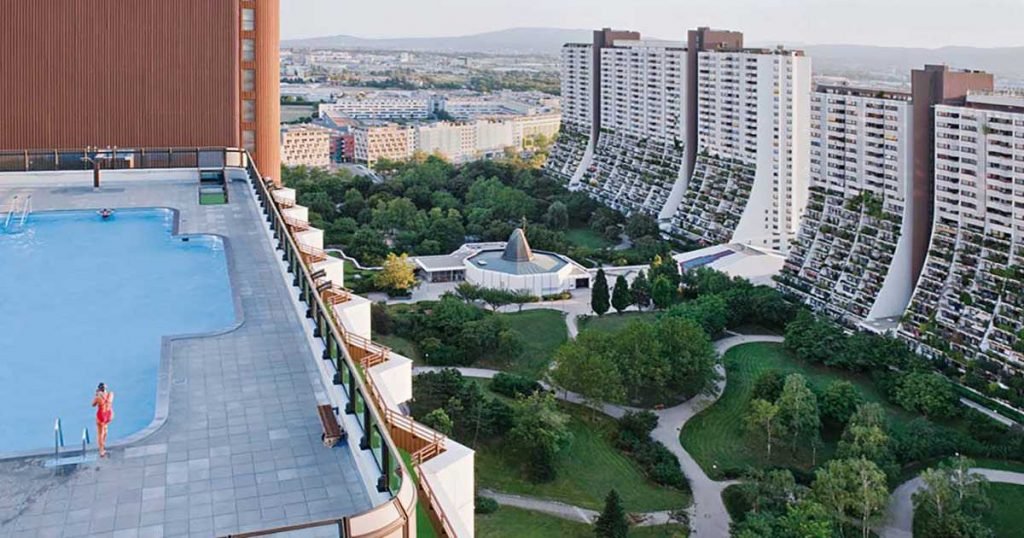
London should be a city for its people, not a diversified portfolio for a billionaire in a different time zone. The skyline should tell a story about communities, about history, about the people who live and work here. Instead, it tells a story about opacity, extraction, and the slow conversion of the city into a financial instrument.
Harper is right: architecture has become a commodity, “good at moving money around, good as an investment opportunity, somehow less good at its deeper purpose.” Until we decide that housing serves people before profits, this will continue. More estates will be sold. More towers will rise. More ordinary Londoners will be forced out.
The question is simple. Do we believe housing is a human right, or do we believe it is an asset class? We cannot have both. And if we continue choosing the latter, we should stop pretending we are building a city at all.
London’s skyline is no longer a silhouette of a city. It is a bar chart of stolen wealth.

Support Independent Journalism Today
Our unwavering dedication is to provide you with unbiased news, diverse perspectives, and insightful opinions. We're on a mission to ensure that those in positions of power are held accountable for their actions, but we can't do it alone. Labour Heartlands is primarily funded by me, Paul Knaggs, and by the generous contributions of readers like you. Your donations keep us going and help us uphold the principles of independent journalism. Join us in our quest for truth, transparency, and accountability – donate today and be a part of our mission!
Like everyone else, we're facing challenges, and we need your help to stay online and continue providing crucial journalism. Every contribution, no matter how small, goes a long way in helping us thrive. By becoming one of our donors, you become a vital part of our mission to uncover the truth and uphold the values of democracy.
While we maintain our independence from political affiliations, we stand united against corruption, injustice, and the erosion of free speech, truth, and democracy. We believe in the power of accurate information in a democracy, and we consider facts non-negotiable.
Your support, no matter the amount, can make a significant impact. Together, we can make a difference and continue our journey toward a more informed and just society.
Thank you for supporting Labour Heartlands