Caught on Tape: The APCO Cover-Up That Is Now a Potential Criminal Matter
Tapes. A whistleblower. A Serious Fraud Office referral. Evidence withheld from the Standards Adviser. And John McDonnell standing in the House of Commons today, refusing to let the powerful bury what they did. The Labour Together scandal has crossed a threshold: this is no longer merely a political embarrassment. It is a potential obstruction of justice.
They said there was nothing to hide. They said it was an administrative error. They said the journalists were looked into only as a precaution, a response to a suspected hack, nothing more. And then the tapes came out.
In the House of Commons this morning, John McDonnell, MP for Hayes and Harlington and the most persistent parliamentary voice on this scandal, placed on the formal record something that cannot be easily dismissed: audio recordings now exist in which APCO Worldwide’s head of European media relations, Tom Harper, discusses the deletion of an email account and wonders aloud, and the phrasing here deserves to be read carefully, “whether they will be able to see that through digital forensics or something like that.” The same recordings contain references to processes designed, in Harper’s own language, to “muddy the waters and the audit trail.”
This is not spin. This is not a disputed political interpretation. This is a senior executive at a corporate intelligence firm, which was paid at least thirty-six thousand pounds of political money to compile dossiers on British journalists, appearing to discuss how to obstruct forensic scrutiny of his firm’s own work. A whistleblower who heard those words reported the instruction to destroy files to the Serious Fraud Office. That same whistleblower is now being pursued through a secretive London arbitration court by APCO’s lawyers.
We have covered this story since its earliest days. In Operation Cannon: Labour’s War on the Fourth Estate and in The Spider’s Web: Labour Together and the Democracy They Bought, this publication set out the architecture of what was done and who was responsible. Those pieces remain essential reading for anyone who wants to understand the context of today’s revelations. But what has happened in the past seventy-two hours represents a distinct and alarming escalation. The question is no longer whether Labour Together and APCO behaved improperly. The question is now whether criminal offences have been committed in order to conceal that impropriety.
THE TAPES, THE WHISTLEBLOWER, AND WHAT THE SFO NOW KNOWS
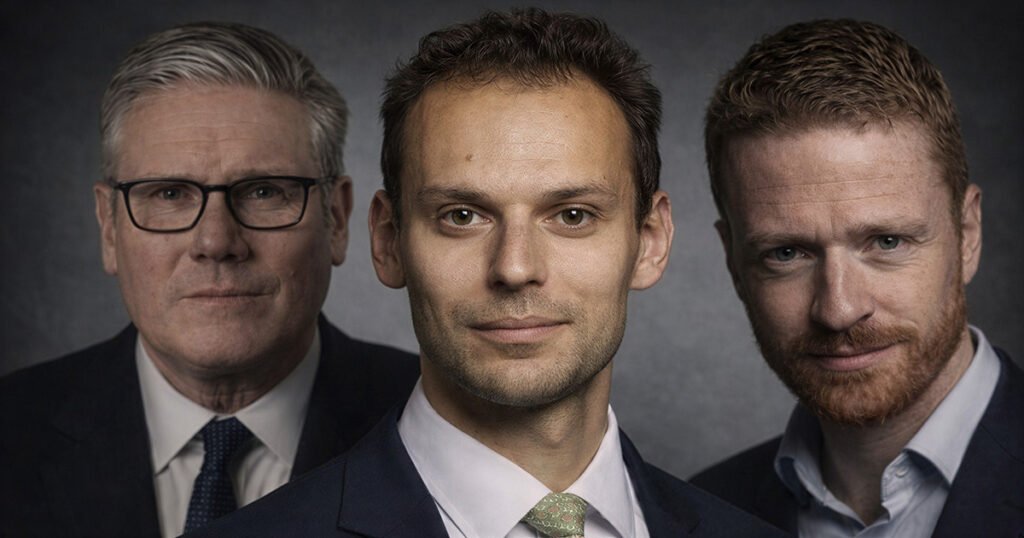
The sequence of events matters. In late 2023, Labour Together, then run by Josh Simons, paid APCO Worldwide to investigate journalists who were examining the think tank’s undisclosed donations, donations that amounted to over seven hundred thousand pounds and that were hidden from the Electoral Commission in breach of electoral law. The resulting operation, codenamed Operation Cannon, produced dossiers on named journalists from the Sunday Times, the Guardian, and Declassified, treating them as, in APCO’s own words, “significant persons of interest” and identifying potential “leverage” over them. One document ran to almost ten pages on a single Jewish journalist’s personal background, faith, and family relationships. APCO also suggested, without a shred of evidence, that the journalism had been enabled by a Russian or Chinese hack of the Electoral Commission. This fabricated narrative was then briefed to other journalists and reported to the National Cyber Security Centre.

When Democracy for Sale broke the story in February 2026, the response from APCO and Labour Together was denial and delay. Simons claimed he had been surprised that APCO had gone beyond its brief. The word “naive” was deployed. But even as those words were being spoken publicly, something else was happening privately: according to the whistleblower, Harper was instructing a freelance contractor involved in the project to destroy the files. The material was subject to a legal hold, a formal instruction from company lawyers to preserve documents that might be relevant to anticipated or threatened litigation.
The whistleblower did not comply. They made a protected disclosure to the Serious Fraud Office. For this act of civic courage, they are now being taken to a secretive arbitration court by one of London’s most expensive law firms.
This is the detail that should provoke the sharpest moral response. A person who witnessed what they believed to be an instruction to commit a criminal act, who then did the right thing by reporting it to the proper authorities, is now facing the full weight of corporate legal resources for having done so. The Public Relations and Communications Association has opened an investigation into APCO’s conduct. John McDonnell has tabled an early day motion calling on Justice Secretary David Lammy to urgently assess the adequacy of whistleblower protections. Neither of these processes is adequate to the gravity of what is alleged.
THE CABINET OFFICE WITHHELD EVIDENCE FROM THE STANDARDS ADVISER
There is a second revelation in McDonnell’s statement today that deserves equally serious attention, and which has so far received none. Paul Holden, one of the journalist-victims of the APCO operation, submitted evidence to Sir Laurie Magnus, the Prime Minister’s independent adviser on ministerial standards, who was examining whether Josh Simons had breached the Ministerial Code. That evidence, McDonnell told the House, was not supplied by the Cabinet Office to Magnus. It was submitted by Holden directly, through the NUJ parliamentary group.
The implications are stark. A standards investigation into a minister who commissioned intelligence operations against journalists was apparently conducted without the Cabinet Office ensuring that the testimony of one of those journalists reached the investigator. Magnus concluded, on the evidence available to him, that Simons had not breached the code, but acknowledged there was significant “distraction and reputational damage.” Simons resigned. The investigation was treated as closed. But if material evidence was not placed before the adviser, then the conclusion it reached is built on a foundation with a missing stone.
Who decided that Holden’s evidence should not be forwarded? Who reviewed it, and on what grounds was it withheld, or simply not transmitted? These are questions that Darren Jones, Chancellor of the Duchy of Lancaster, must now answer publicly. As we documented in The Spider’s Web, Jones himself received over fifty-seven thousand pounds in seconded staffing from Labour Together before the 2024 election, support he has insisted does not constitute receiving “a pound” from the organisation. The men overseeing the investigation of Labour Together were, in several cases, beneficiaries of Labour Together. This is not coincidence. It is the systemic problem at the heart of the entire affair.
MCSWEENEY’S CONTRITION, AND WHAT IT DOES NOT COVER

Yesterday, twenty-four hours before McDonnell rose to speak, Morgan McSweeney sat before the Foreign Affairs Select Committee and submitted himself, with practised humility, to two hours of questioning about the Mandelson appointment. He said it was a “serious error of judgment.” He apologised to the victims of Jeffrey Epstein. He said that when he saw the Bloomberg story revealing the full extent of Mandelson’s relationship with the financier in September 2025, it felt “like a knife through my soul.”
The performance was calibrated and credible. McSweeney is not a fool. He understands that a well-delivered mea culpa on the Mandelson question allows him to avoid, at least for the moment, the harder questions about his role in everything that preceded it. But the committee was not examining Operation Cannon. It was not examining the dark money that funded Starmer’s leadership campaign. It was not examining who, within Downing Street, knew that APCO had been retained to compile dossiers on journalists. It was examining a single bad appointment, for which McSweeney has now accepted public blame.
He did not swear at the Foreign Office. He did not pressure the security services. He regrets Mandelson. These are the admissions. The tapes from APCO’s Tom Harper are not, at present, part of the same conversation. That asymmetry is not accidental.
To his partial credit, McSweeney did offer one piece of intelligence that complicates the official narrative. He told the committee that the first person to put Mandelson’s name forward for the Washington ambassadorship was Mandelson himself, a revelation that drew audible laughter in the otherwise sombre committee room. Mandelson had been lobbying his own appointment, briefing journalists, making his ambitions known across London. McSweeney, whatever his other failings, was working with material that Mandelson had placed in front of him. The mentor positioned himself; the protege endorsed the positioning. The catastrophe that followed was jointly authored.
But this is context, not exculpation. McSweeney knew, while serving as Chief of Staff, that APCO had investigated journalists on behalf of an organisation he had co-founded. He knew that GCHQ had been briefed with fabricated evidence of a Russian hack. He knew that a minister in the government he helped lead had commissioned intelligence operations against reporters. He said nothing publicly. He resigned only when the Mandelson scandal made his position untenable. The Labour Together questions remained, until today, in a separate category. They will not stay there.
THE SURVEILLANCE OF MPS: AN UNREPORTED SCANDAL WITHIN THE SCANDAL

Buried within the cascade of revelations is a matter that has received far less attention than it warrants. When McDonnell and other MPs submitted subject access requests to APCO under data protection law, asking what information the company held about them personally, they received responses. Those responses were heavily redacted. But they confirmed something that should alarm every member of the legislature: APCO was collecting information on Members of Parliament.
McDonnell received eleven pages of largely blacked-out emails. APCO gave no explanation of why it held data on him, who commissioned that work, or for what purpose. Leeds East MP Richard Burgon submitted a similar request and received an extension of the response deadline, citing a “large volume of data.” Labour Together told Burgon it would respond to his own request by the eighteenth of May.
This parliament has, in recent years, passed legislation in the name of protecting citizens from surveillance. Framed, as we noted in our piece on Starmer’s internet crackdown, as safeguards against harm, these powers have been constructed to give ministers expanding authority over digital communication. Meanwhile a corporate intelligence firm, retained by a political think tank to protect its undisclosed donations, was quietly accumulating files on MPs. The irony is not subtle. The people legislating surveillance were themselves being surveilled. The state’s interest in protecting privacy apparently did not extend to asking what APCO was doing, or why.
THE PRESS THAT WILL NOT LOOK

McDonnell’s statement today was made in a House of Commons largely empty of the press interest it demands. The mainstream media has spent the past two days fixated, understandably, on McSweeney’s performance at the Foreign Affairs Select Committee and on the government’s narrow survival of a vote to refer Starmer to the Privileges Committee over claims he misled parliament on the Mandelson appointment. These are important matters. But the tape recordings, the Serious Fraud Office referral, the withheld evidence, the MP surveillance: these received scant coverage.
The reason is not hard to identify. The Sunday Times and the Guardian, whose journalists were directly targeted by APCO’s operations, have covered the scandal with appropriate seriousness. But the targets of Operation Cannon also included Paul Holden and Shadow World Investigations, smaller, independent outlets without the institutional support of major newspaper groups. As we have observed before in these pages, established media will defend itself. It will not always defend those who operate outside its protection. Holden has spent twenty years pursuing grand corruption across three continents. He has recovered nearly a billion dollars in stolen assets from the Gupta network in South Africa. He has been sued by Russian oligarchs. And he was targeted by a British political think tank’s intelligence operation because he wrote a book about Morgan McSweeney and Keir Starmer. This scandal did not begin with Mandelson and it will not end with McSweeney’s mea culpa.
NOW WHAT…
Three developments in the past twenty-four hours have changed the terms of this debate. First, the existence of tapes in which a senior APCO executive appears to discuss the destruction of evidence subject to a legal hold raises questions that go beyond political accountability into potential criminal liability. The Serious Fraud Office has been notified. It must now act with the urgency this warrants, regardless of the political sensitivity of the individuals involved.
Second, the revelation that evidence submitted by one of the journalist-victims was not placed before the standards adviser who concluded that no ministerial code breach had occurred is a direct challenge to the integrity of that finding. Sir Laurie Magnus should be given the opportunity to review what he was not shown. If the Cabinet Office withheld relevant evidence from an independent investigation, that fact must be established and those responsible identified.
Third, the confirmation that APCO was collecting data on MPs, without their knowledge and without any publicly established commission to do so, requires the Information Commissioner’s Office to conduct a full investigation and to answer the question that the deputy speaker correctly directed McDonnell toward: was the law complied with, and if not, by whom and in whose interests?
The counterargument, offered loyally by ministers and their supporters, is that the relevant bodies are already examining these questions and that independent processes should be allowed to proceed. This would carry more weight if the independent process on ministerial standards had not been conducted with incomplete evidence, if the Cabinet Office inquiry had not been led by a department whose own minister commissioned the operations under scrutiny, and if the trade body examining APCO’s conduct were a statutory regulator rather than a voluntary industry association.
John McDonnell is one of the few MPs with the persistence, the knowledge, and the moral authority to continue forcing this story into the public record against the resistance of his own party’s machine. A growing number of MPs from multiple parties are supporting his call for an independent inquiry. That call is now, in the light of today’s revelations, not merely appropriate but urgent.
They said the files were deleted. The tapes say otherwise. They said the standards investigation was complete. The withheld evidence says otherwise. They said Morgan McSweeney has answered for his mistakes. The unanswered questions about what he knew, and when, say otherwise. In the end, cover-ups do not fail because the powerful lose their nerve. They fail because the evidence refuses to disappear. These tapes exist. The SFO knows. And so, now, do you.
Enjoyed this read? I’m committed to keeping this space 100% ad-free so you can enjoy a clean, focused reading experience. Crafting these articles takes a significant amount of research and heart. If you found this helpful, please consider a “small donation” to help keep the lights on and the content flowing. Every bit of support makes a huge difference.

Support Independent Journalism Today
Our unwavering dedication is to provide you with unbiased news, diverse perspectives, and insightful opinions. We're on a mission to ensure that those in positions of power are held accountable for their actions, but we can't do it alone. The Heartlands Tribune is primarily funded by me, Paul Knaggs, and by the generous contributions of readers like you. Your donations keep us going and help us uphold the principles of independent journalism. Join us in our quest for truth, transparency, and accountability – donate today and be a part of our mission!
Like everyone else, we're facing challenges, and we need your help to stay online and continue providing crucial journalism. Every contribution, no matter how small, goes a long way in helping us thrive. By becoming one of our donors, you become a vital part of our mission to uncover the truth and uphold the values of democracy.
While we maintain our independence from political affiliations, we stand united against corruption, injustice, and the erosion of free speech, truth, and democracy. We believe in the power of accurate information in a democracy, and we consider facts non-negotiable.
Your support, no matter the amount, can make a significant impact. Together, we can make a difference and continue our journey toward a more informed and just society.
Thank you for supporting Labour Heartlands