Why Defending Britain’s Borders Is a Working-Class Issue
When did defending your country’s borders become right-wing? When did suggesting that mass migration serves Capital rather than the common people become unspeakable in polite progressive company? And when, precisely, did the British left decide that working-class communities must simply absorb unprecedented demographic change while being called bigots for noticing?
These questions cut to the heart of what socialism means. Because if socialism is not about protecting the material interests of working people, the security of their communities, and their democratic right to determine who enters their country, then it is not socialism at all. It is bourgeois liberalism with a red flag draped over it.
Britain has experienced a demographic transformation without precedent in peacetime. Net migration peaked at 944,000 in the year to March 2023, a figure so staggering that the ONS initially underestimated it. It has since fallen sharply to 345,000 by the end of 2024, and further to 204,000 by June 2025. Yet even this “lower” figure remains historically elevated, and the cumulative impact of the Boris-era surge has fundamentally altered the country.
Labour Heartlands defends controlled borders, not because we hate foreigners but because we understand class. Mass migration is a tool of Capital, used to depress wages, weaken unions, and fragment working-class solidarity. Anyone who tells you otherwise is either ignorant of basic economics or serving interests that are not yours.
Bernie Sanders: A Socialist Who Actually Gets It
Bernie Sanders spent the better part of his political career explaining something that the British left has forgotten: mass migration is a right-wing policy.
In 2007, Sanders voted against comprehensive immigration reform in the United States Senate, standing alongside the AFL-CIO and against the corporate lobby. His reasoning was crystal clear. The bill would have brought millions of guest workers into America to “work for lower wages than American workers and drive wages down even lower than they are now.” He warned that at a time when “poverty is increasing and wages are going down”, flooding the labour market made no sense for working people.
Sanders was not some Johnny-come-lately to this position. Throughout his career, he consistently opposed guest worker programmes and mass migration schemes that served corporate interests. In 2009, he supported an amendment with Republican Chuck Grassley to prohibit banks that received federal bailout funds from hiring guest workers. In 2005, he backed legislation to reduce permanent resident visas. His argument never wavered: American workers come first.
In a 2007 press conference, with AFL-CIO President Richard Trumka standing behind him, Sanders said: “I believe we have very serious immigration problems in this country. Sanctions against employers who employ illegal immigrants is virtually nonexistent. Our border is very porous. And I think at a time when the middle class is shrinking, the last thing we need is to bring over, in a period of years, millions of people into this country who are prepared to lower wages for American workers.”
He did not mince words about corporate patriotism either. Sanders condemned companies that chose profit over country: “We would hope that companies in the United States would have just enough patriotism, maybe just a little bit of patriotism, so they would work to hire qualified American workers. But if you look at the statements and conduct of some of these companies, you realise that patriotism, love of country, is becoming a dated concept for those who are pushing extreme globalisation.”
Then came the 2015 interview with Vox that made him a target of liberal outrage. Asked about open borders, Sanders was blunt: “Open borders? No. That’s a Koch brothers proposal.” He explained that open borders were “a right-wing proposal, which says essentially there is no United States. It would make everybody in America poorer. You’re doing away with the concept of a nation state, and I don’t think there’s any country in the world that believes in that. What right-wing people in this country would love is an open-border policy. Bring in all kinds of people, work for two or three dollars an hour, that would be great for them.”
Sanders understood what many on the left refuse to acknowledge: borders are not instruments of oppression. They are instruments of sovereignty and democracy. Every socialist country in history, from the Soviet Union to China, maintained strict control over its borders. Why? Because protecting your labour market and your national community is a prerequisite for building socialism.
It is true that Sanders later shifted his position, voting for immigration reform in 2013 and softening his rhetoric during his presidential campaigns. This was not principle. This was politics. Latino advocacy groups and Democratic Party operatives pressured him to abandon the working-class position he had held for decades. He capitulated, as politicians do. But his original instinct, his 2007 stance backed by organised labour, was the correct one.
The lesson for British socialists is clear: if even Bernie Sanders, the most prominent democratic socialist in America, recognised that mass migration serves billionaires and harms workers, perhaps we should stop pretending that border control is a far-right conspiracy.
The Reserve Army: Marx Explained This
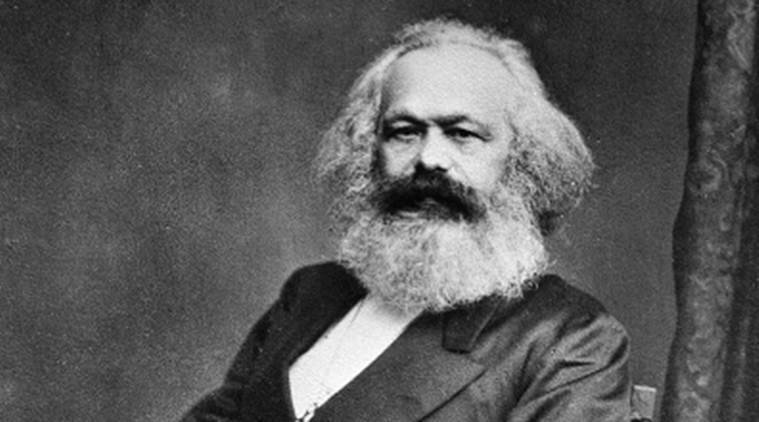
Karl Marx did not write policy papers on visa quotas, but he explained the mechanism by which Capital uses labour supply to discipline workers. The “reserve army of labour” is not a metaphor. It is the structural reality of capitalism.
When employers can draw on a vast pool of workers, wages fall and conditions deteriorate. Workers compete against each other rather than unite against the boss. This is not incidental. It is how the system functions.
Large-scale migration, unmanaged and driven by business lobbies, expands that reserve army. It weakens collective bargaining, makes unionisation harder, and ensures a steady supply of people desperate enough to accept poverty wages. British-born or migrant, it does not matter to Capital. What matters is that there are always more workers than jobs, always more people willing to undercut the going rate.
This is why socialists historically supported controlled migration. Not out of xenophobia, but out of solidarity with the working class. The alternative is what we have now: a race to the bottom in which everyone loses except the shareholders.
What Happened: The Numbers That Matter

Between 2012 and 2021, net migration added roughly 2.2 million people to the UK population. Then, in just three years from 2021 to 2024, net migration added another 2.2 million people, matching the entire previous decade in a third of the time.
The peak came in the year to March 2023, when net migration reached 944,000. That single year saw more net migration than the entire decade of the 1990s. It has since fallen dramatically to 345,000 by December 2024 and 204,000 by June 2025, representing a 78% decline from the peak. But the damage is done.
The UK population now stands at roughly 69.3 million, an increase of about five million people since 2013, an 8% rise in a decade. Net migration drove around 60% of that growth. Meanwhile, young British workers are emigrating in record numbers. Between 2021 and 2024, nearly a million UK citizens left the country. Net emigration of British nationals ran at 109,000 in the year to June 2025. They are leaving because they see no future here, priced out by a housing market inflated by demand and a labour market flooded by supply.
This is not a migration policy. It is a wealth transfer from the working class to landlords and employers.
Boris’s Boom, Starmer’s Silence

The Conservatives promised to “take back control” of the borders. They delivered the opposite. After Brexit, net migration surged to record highs, driven by post-Brexit visa changes, health and care worker visas, student visas, and special schemes for Hong Kong and Ukraine.
The business lobby got what it wanted: more workers, lower wages, and communities too fragmented to organise. Workers got stagnating pay, rising rents, and longer NHS queues.
Labour under Keir Starmer has made some technical tweaks but refuses to challenge the underlying model. Net migration has fallen from the 2023 peak, yes, but remains historically high. More importantly, Labour has abandoned any pretence of defending working-class communities from the pressures of rapid demographic change.
The Tory story was “global Britain” and a pipeline for cheap labour. The Labour story is “skills and compassion” with better branding but the same class logic. Neither party serves the common people.
Small Boats: Why They Matter

Around 36,816 people crossed the English Channel in small boats in 2024, with over 190,000 making the journey since 2018. In 2024 alone, 73 people died attempting the crossing, more than all previous years combined.
Liberal commentators dismiss small boat arrivals as a tiny fraction of total migration. They are technically correct. Set against 898,000 total arrivals in the year to June 2025, small boats represent about 4%. But this misses the point entirely.
Small boat crossings matter not because of the numbers but because of what they represent: a complete breakdown of border security and the rule of law. When people can cross from France, a safe and prosperous country, and claim asylum in Britain without any documentation or security vetting, the entire concept of controlled migration collapses.
France is not a war zone. It is not Syria or Afghanistan. It is one of the richest countries on earth, with functioning asylum systems and welfare provision. People crossing the Channel are not fleeing persecution. They are shopping for the most generous settlement terms, often paying criminal gangs thousands of pounds for the privilege.
The demographics tell their own story. Around 76% of small boat arrivals in 2024 were adult men. Where are their wives, their daughters, their mothers? If these are genuinely families fleeing war and persecution, why are the women and children left behind? And if the women are indeed left behind in conflict zones, does that not prove the case for safe zones in neighbouring countries rather than resettlement thousands of miles away?
The liberal answer is to shrug and call this racist. The socialist answer is to demand honesty. Young men paying smugglers to cross from France are not the wretched of the earth. They are economic migrants gaming a system that refuses to acknowledge basic facts.
And the security risk is real. Undocumented people arriving from safe countries with no
papers, no biometric data, and no background checks are a threat to public safety. Not because all migrants are criminals, but because a system that cannot distinguish between genuine refugees and dangerous individuals is a system that protects no one.
The Refugee Convention: Stuck in 1951

The 1951 Refugee Convention was written for a different world. It was designed to handle the aftermath of World War Two, when millions of displaced Europeans needed resettlement. The numbers were finite, the distances were manageable, and the expectation was that refugees would return home once conflicts ended.
That world no longer exists. Today, conflicts are protracted, distances are irrelevant in an age of air travel, and the concept of temporary asylum has been replaced by permanent resettlement. The Convention has become a legal fiction used to justify policies that serve neither refugees nor host communities.
The principle of non-refoulement, which prohibits returning people to countries where they face persecution, is sound. But it does not require Britain to accept asylum claims from people who have passed through multiple safe countries. It does not require us to resettle people thousands of miles from their homes when safe zones could be established in neighbouring regions. And it certainly does not require us to ignore the security implications of undocumented arrivals.
The United Nations has failed in its duty to establish and police safe zones near conflict areas. Why are Syrian refugees crossing the Mediterranean and the Channel when neighbouring countries like Turkey, Lebanon and Jordan could house them safely? The answer is money. Wealthy Western nations provide better welfare, housing and prospects. But this is not humanitarianism. It is a global free-for-all in which people with resources and connections jump the queue while the most vulnerable rot in camps.
A modernised framework would prioritise safe zones close to conflict, resettlement only for the most vulnerable (women, children, the elderly, those facing specific persecution), strict security vetting for all arrivals, and cooperation with countries of transit to prevent onward movement. It would also recognise that Britain has no obligation to accept asylum claims from people arriving from safe third countries.
The current system is not compassionate. It is chaotic, unfair and dangerous. It benefits smugglers, enriches traffickers, and endangers everyone involved. Defending it is not progressive. It is negligent.
Wages: Who Wins, Who Loses
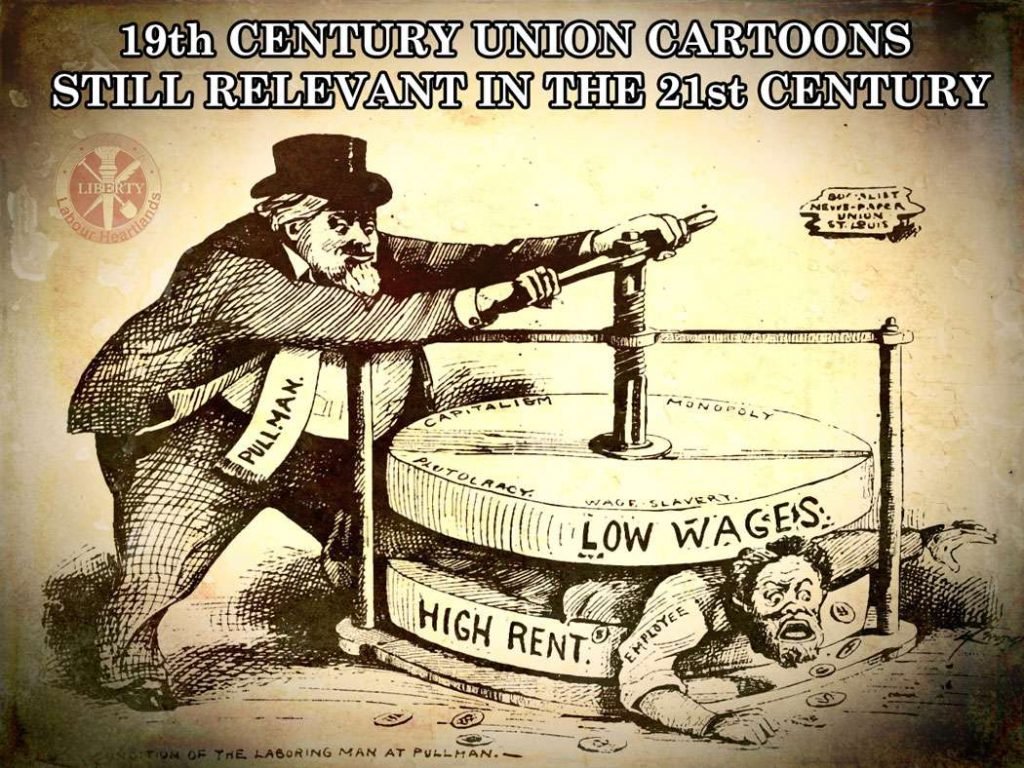
The liberal position on migration and wages is ideologically convenient and empirically dishonest. “All the evidence shows immigration doesn’t hurt wages,” they tell us. This is propaganda.
The empirical picture is clear. Research by University College London found that a 1% increase in the immigrant share of the UK population leads to a 0.6% decline in wages for the lowest 5% of earners, while wages for higher earners increase. Another study on the semi-skilled and unskilled service sectors found that a 10 percentage point rise in the immigrant share reduced average wages in those occupations by around 2%.
The Migration Advisory Committee concluded that immigration has had “little effect on employment and unemployment of UK-born workers” overall, but noted that “wages for the low paid may be lowered as a result of migration.” The distributional impact is undeniable: low-paid workers lose, high-paid workers gain, Capital wins.
In plain English, if you are a banker, a landlord, or a tech entrepreneur, high migration is excellent for you. Your assets appreciate, your labour costs fall, and your political power grows. If you are a care worker, cleaner, warehouse picker or hospitality worker, migration makes your life harder. Wages stagnate, rents rise, and job security evaporates.
This is not a bug. It is the entire point. Mass migration serves Capital by disciplining labour. Socialists who defend it have forgotten which side they are on.
Their GDP Is Not Ours

The business case for migration rests on a single statistic: GDP growth. More people doing more work means higher GDP. This is technically true and politically worthless.
What matters to working people is not the total size of the economy but GDP per capita, wages after housing costs, access to a GP, school class sizes, and commute times. On every one of these measures, high migration without matched investment makes life worse, not better.
The Migration Advisory Committee noted that net migration has been the main driver of population growth since 2004, accounting for around 60% of it. Without corresponding expansion in housing, schools, hospitals and transport, that growth creates pressure, not prosperity.
Successive governments have taken the GDP headline, pocketed the extra tax revenue, and left working-class communities to manage the consequences. Their GDP is not our GDP. In capitalist Britain, “growth” is a story told to justify policies that enrich asset-owners while everyone else fights over shrinking resources.
Housing: Crisis by Design
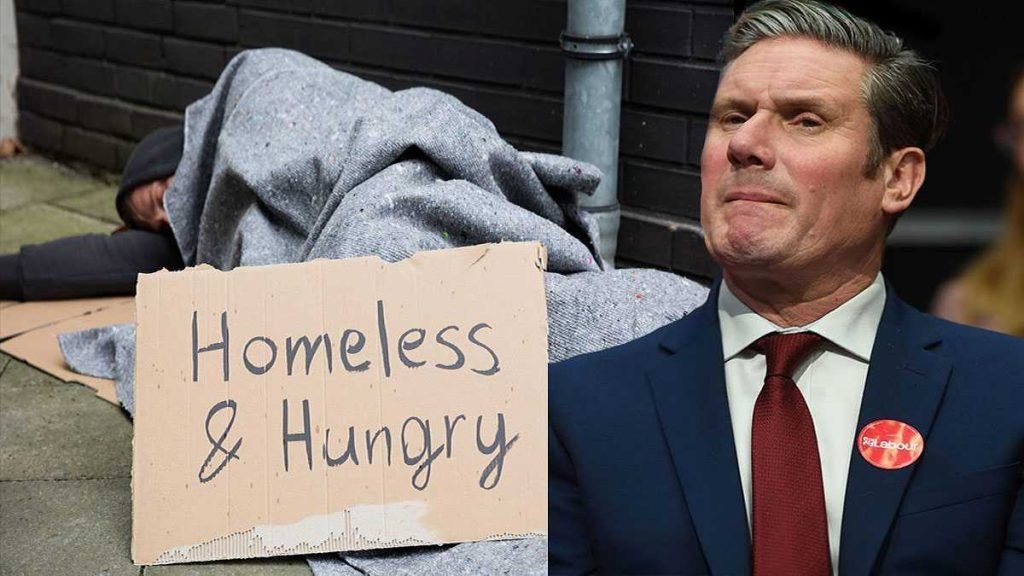
The collision between migration and housing reveals the moral bankruptcy of both major parties. The UK population grew by 755,300 in a single year to mid-2024, driven overwhelmingly by net migration. Meanwhile, housebuilding collapsed. Only around 180,000 homes are being built annually, while England alone needs at least 90,000 new social rent homes every year just to clear waiting lists.
As of March 2024, 1.33 million households are on social housing waiting lists in England. Over 131,000 households, including nearly 170,000 children, are living in temporary accommodation. In three London councils (Westminster, Enfield, Merton), waiting times for social housing now exceed 100 years. Over the past decade, there has been a net loss of 180,067 social homes, even as the population surged.
Into this catastrophe, governments poured extraordinary levels of net migration with no programme of council house building or rent control. Councils spent £2.7 billion on temporary accommodation in 2024/25, a 25% increase on the previous year, much of it on privately owned hotels.
The result is predictable: rents driven up, families trapped in squalor, communities destabilised. Not because migrants exist, but because the ruling class chose profit over planning.
If you pour a million people into a housing system already on its knees without building homes to house them, you manufacture resentment. The blame lies not with those seeking shelter but with those who profit from scarcity.
Services Under Strain

The NHS, schools and local services were systematically starved under austerity. Meanwhile, the population grew by millions, with net migration accounting for most of that growth. The Oxford Migration Observatory has documented how migration data itself is riddled with gaps, making rational planning nearly impossible.
Central government moves large numbers of people around with minimal consultation. Councils are told to cope on gutted budgets. Communities see rapid change with little investment. Any attempt to discuss the pressures is dismissed as racism by commentators who live nowhere near the affected areas.
Immigration is now one of the top concerns in national polling, often overtaking the economy. Yet local polls show a more complex picture: only about a quarter say immigration is a major issue in their own area, while a majority see it as a national problem. This suggests media framing is doing much of the work, amplifying real pressures in some places while creating moral panics in others.
What is missing is any attempt by Westminster to distinguish between the two or to address the material conditions driving discontent.
The Socialist Position: Controlled Borders, Safe Zones, Workers First

Labour Heartlands’ position is rooted in class politics and democratic sovereignty:
Defend Britain’s borders. Mass migration is not inevitable. It is a policy choice that serves Capital. Controlled migration, subordinated to industrial strategy and community capacity, is both possible and necessary.
Stop small boat crossings. People crossing from France, a safe country, are not refugees. They are economic migrants exploiting a broken system. Britain has no obligation to accept asylum claims from safe third countries. Safe routes for genuine refugees can be established through proper channels with full security vetting.
Modernise the Refugee Convention. The 1951 framework is outdated. The UN must establish safe zones near conflict areas, funded and policed by wealthy nations. Resettlement should be limited to the most vulnerable. Security risks from undocumented arrivals are real and cannot be ignored.
End the race to the bottom. Strong sectoral collective bargaining, equal rights from day one for all workers, and aggressive enforcement against employers who undercut wages. Remove the incentive to use migration as a weapon against British workers.
Build homes and services first. If migration continues at elevated levels, we need a New Deal for housing and public services, starting with areas carrying the heaviest burdens. But the honest answer is to reduce migration to levels that match our capacity.
Reject liberal utopianism. Socialism is not about abolishing borders. Even the Soviet Union and China maintained strict immigration control. Borders protect workers, communities and democracy. Defending them is not reactionary. It is socialist.
Glasgow is putting asylum seekers in over 50 hotels because people granted leave to remain have nowhere to go. The strain on the council budget is £66 million. A socialist says: reduce arrivals, build council housing, fund local services, and stop using migration to paper over decades of underinvestment.
The Pendulum Swings: From Liberal Chaos to Populist Reaction
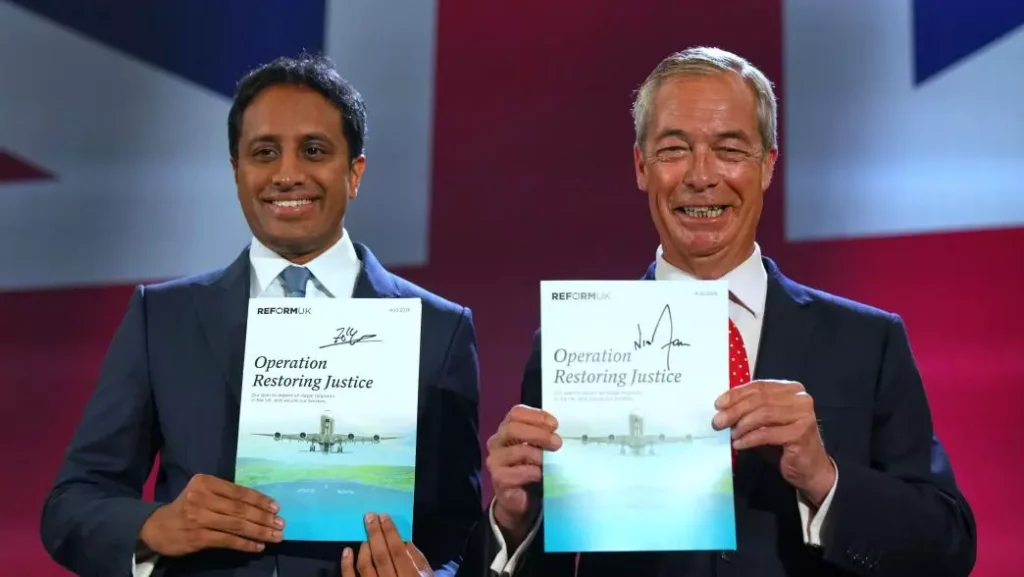
And now we face the consequences of decades of dishonesty. Nigel Farage is flying in the polls, the heir apparent to a political establishment that has lost all credibility. Reform UK promises an end to mass migration and deportations resembling Trump’s “send them home” campaign. The party is surging precisely because the liberal consensus refused to acknowledge what was happening in working-class communities.
This is the pendulum effect. When you push something too far in one direction, it comes smashing back with equal force. Years of uncontrolled immigration, dismissed concerns, and accusations of racism for noticing demographic change have created the conditions for reactionary populism. What we are witnessing is not the product of thoughtful debate about the common good. It is a backlash born of frustration, resentment and the total failure of the political class to govern honestly.
The danger is real. A Britain, or indeed a Europe, that closes its borders completely in a spasm of populist rage will not build the democratic socialism we need. It will create new injustices, new divisions, and new opportunities for Capital to exploit chaos. Trump-style deportation raids, families torn apart for the cameras, legal migrants scapegoated alongside illegal ones, this is not controlled migration policy. It is theatre designed to channel working-class anger away from the ruling class and onto the most vulnerable.
But make no mistake: the liberal establishment created Farage. Every time they called voters racist for raising legitimate concerns. Every time they prioritised abstract principles over material reality. Every time they told working people that their communities did not matter, that borders were oppressive, that nationhood was fascist. They built the powder keg and handed Farage the match.
Labour Heartlands refuses both extremes. We will not defend the liberal open-borders fantasy that brought us to this point. But we will not embrace the populist reaction that promises simple solutions to complex problems. Controlled migration, democratic sovereignty, and working-class solidarity require serious policy, not slogans. They require a state that can enforce its laws, build homes, protect wages and plan for the future. They require socialism, not nationalism draped in the Union Jack.
The question before us is whether Britain can chart a path between liberal globalisation and reactionary closure. Can we defend our borders without descending into xenophobic purges? Can we protect our workers without abandoning internationalism? Can we build a society that is both secure and just?
The answer depends on whether the left can recover its nerve and tell the truth. Mass migration serves Capital. Border control serves workers. And the failure to make that argument honestly has delivered us into the hands of demagogues who will exploit the crisis without solving it.
Where We Go From Here
Net migration has fallen from the Boris-era peaks, but the structural questions remain. The population is still rising. Young Britons are leaving because they see no future. Social housing is in crisis. Wages for the low-paid are suppressed while landlords prosper.
The choice is not between Fortress Britain and liberal borderlessness. It is between controlled, democratic migration within a planned economy, and the current chaos where migrants are blamed for problems created by a ruling class that serves Capital above all else.
Labour Heartlands will continue to remind people that mass migration is a billionaire-backed project. Not to join a culture war, but because working people deserve better than being used as pawns in someone else’s GDP growth.
Socialism is about security, dignity and power for the common people. That requires homes, jobs, services, democracy and borders. It requires an economy run for the many, not the few. And it requires the courage to tell the truth about who benefits from the current disorder.
Anything less is not socialism. It is liberalism with a red rosette, and it will betray the working class just as surely as the Tories did.

Support Independent Journalism Today
Our unwavering dedication is to provide you with unbiased news, diverse perspectives, and insightful opinions. We're on a mission to ensure that those in positions of power are held accountable for their actions, but we can't do it alone. Labour Heartlands is primarily funded by me, Paul Knaggs, and by the generous contributions of readers like you. Your donations keep us going and help us uphold the principles of independent journalism. Join us in our quest for truth, transparency, and accountability – donate today and be a part of our mission!
Like everyone else, we're facing challenges, and we need your help to stay online and continue providing crucial journalism. Every contribution, no matter how small, goes a long way in helping us thrive. By becoming one of our donors, you become a vital part of our mission to uncover the truth and uphold the values of democracy.
While we maintain our independence from political affiliations, we stand united against corruption, injustice, and the erosion of free speech, truth, and democracy. We believe in the power of accurate information in a democracy, and we consider facts non-negotiable.
Your support, no matter the amount, can make a significant impact. Together, we can make a difference and continue our journey toward a more informed and just society.
Thank you for supporting Labour Heartlands