Is it possible for a man to dedicate his life to a Party while simultaneously entangling his private life, clubs, and finances with a convicted predator?
Lord Mandelson, the high priest of New Labour spin, has finally reached the end of his rhetorical tether. His resignation from the Labour Party this weekend, ostensibly to avoid “further embarrassment,” is not an act of nobility. It is a tactical retreat by a man whose proximity to the late Jeffrey Epstein has transitioned from a reputational stain to a potential criminal liability.

The latest disclosures from the US Department of Justice are not merely “unfortunate.” They are forensic. Bank statements appear to show three separate payments totalling $75,000 made to accounts linked to Mandelson and his husband, Reinaldo Avila da Silva, between 2003 and 2004. At the time, Mandelson was a sitting Member of Parliament. While he claims to have “no record or recollection” of these transactions, the cold ink of a JPMorgan ledger is rarely prone to the same convenient amnesia as a British politician.
A Pattern of Proximity
History suggests that power in the New Labour era was often brokered in the shadows of the super-rich. We must remember the 1998 home loan scandal or the 2001 Hinduja passport affair, both of which saw Mandelson forced from the Cabinet. Each time, the pattern was identical: a blurring of the lines between public duty and private favour.
The Epstein connection, however, represents a far deeper rot. This was not merely about a lavish loan. It was about an enduring association with a man whose wealth was used to procure and abuse children. Documents suggest that as late as 2009, Mandelson was allegedly advising Epstein on how to avoid gift-tax filings by framing payments as “loans.” The moral gravity of such a relationship cannot be dismissed as a mere “error of judgment.” It is a window into a world where elite capture is so complete that the law is seen as a hurdle to be navigated, rather than a standard to be upheld.
The Trilateral Connection
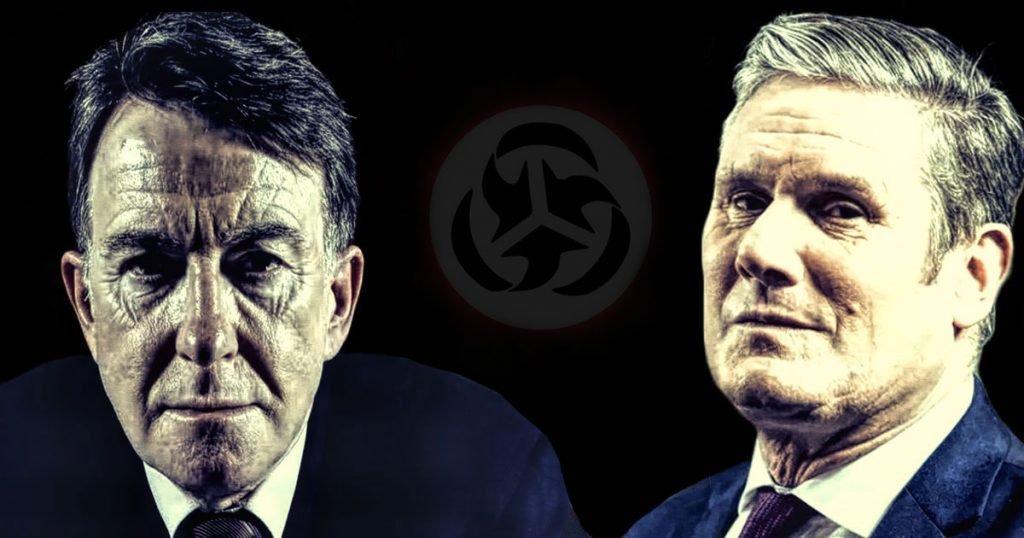
The government’s current defence, that they were “unaware” of these specific financial links, is an admission of catastrophic failure. Sir Keir Starmer’s decision to appoint Mandelson as US Ambassador last year, despite the common knowledge of his Epstein ties, was a signal that the “adults in the room” prioritised elite networks over ethical clarity.
The fact that Starmer, Mandelson, and Epstein himself all belonged to the Trilateral Commission, that secretive forum where global financial and political elites shape policy with no accountability and far from public scrutiny, is more than just coincidence. It illuminates the interconnected networks of power that bind these figures together. Out of 650 MPs, Starmer was the only one invited to join this exclusive club in 2019. This shared membership in one of the world’s most exclusive policy-making circles helps explain why certain establishment figures, despite maintaining troubling associations long after they became indefensible, face no real consequences.
I try to undermine Jeremy Corbyn ‘every single day’
There is an old saying, often attributed to Sun Tzu: if you wait by the river long enough, the bodies of your enemies will float by. Jeremy Corbyn, who Mandelson once infamously boasted of trying to “undermine every single day,” might be forgiven a wry smile this weekend. The Prince of Darkness spent years waging war on Labour’s socialist wing, using every ounce of his considerable influence to destroy a movement that threatened the very elite networks in which he was so deeply embedded. Now those same networks have brought him to ruin.
The Myth of Vetting
Mandelson’s departure is a necessary cleansing, but it must be followed by a total disinfectant of the party’s power structures. The vetting process that somehow deemed a man with ten separate entries in Epstein’s “little black book” suitable to represent Britain in Washington was not merely inadequate. It was non-existent. Mandelson was not subjected to in-depth security vetting until after his appointment was announced.
The “Prince of Darkness” may have stepped into the shadows, but the light must now be turned on those he left behind. Starmer’s judgment in appointing him, despite years of public warnings about the Epstein connection, raises fundamental questions about whose interests this Labour government truly serves. Is it the working people who put them in power, or the elite networks that welcomed both leaders into their exclusive councils?
Spin can delay the truth, but it can never defeat the receipts. And sometimes, if you wait by the river long enough, justice floats by on its own.

Support Independent Journalism Today
Our unwavering dedication is to provide you with unbiased news, diverse perspectives, and insightful opinions. We're on a mission to ensure that those in positions of power are held accountable for their actions, but we can't do it alone. Labour Heartlands is primarily funded by me, Paul Knaggs, and by the generous contributions of readers like you. Your donations keep us going and help us uphold the principles of independent journalism. Join us in our quest for truth, transparency, and accountability – donate today and be a part of our mission!
Like everyone else, we're facing challenges, and we need your help to stay online and continue providing crucial journalism. Every contribution, no matter how small, goes a long way in helping us thrive. By becoming one of our donors, you become a vital part of our mission to uncover the truth and uphold the values of democracy.
While we maintain our independence from political affiliations, we stand united against corruption, injustice, and the erosion of free speech, truth, and democracy. We believe in the power of accurate information in a democracy, and we consider facts non-negotiable.
Your support, no matter the amount, can make a significant impact. Together, we can make a difference and continue our journey toward a more informed and just society.
Thank you for supporting Labour Heartlands