Venezuela Raid: China’s ‘Lawfare’ Response and a New World Order comes with a $105 Billion Question: Can Contracts Survive Regime Change?
Does anyone seriously believe that Washington’s midnight raid on Caracas was about cocaine or that Nicolás Maduro will get a fair trial?
In the early hours of 3 January 2026, over 150 American aircraft bombed Venezuela’s capital while Delta Force operators plucked Nicolás Maduro from his presidential compound and flew him, handcuffed and blindfolded, to a Manhattan courtroom. Donald Trump, basking in Mar-a-Lago’s winter sun, declared the United States would “run Venezuela” and hinted at seizing the country’s oil reserves. The raid killed more than 80 people, including 32 Cuban military advisers. It was, Trump crowed, one of the “most stunning displays of American military might” in history.
What Trump may not have grasped is that he fired the starting gun on something far more consequential than another Latin American adventure. Hours after Maduro’s capture, China’s foreign ministry issued what amounted to a declaration of economic war: not with tanks or missiles, but with lawyers, arbitration tribunals, and the full machinery of international commercial law.
Never mind, nobody seriously believes that Washington’s midnight raid on Caracas was about cocaine or that Nicolás Maduro will get a fair trial.
This isn’t about one oil-rich dictatorship. This is about whether the 21st century will be governed by enforceable rules or by whoever controls the most firepower. And for once, the question may not be settled in Washington’s favour.
The $105 Billion Question Nobody in Westminster Wants to Ask

China has lent Venezuela over $105 billion since 2007, mostly through oil-backed infrastructure deals structured as state-to-state contracts. These aren’t personal arrangements with Maduro. They’re sovereign obligations that survive changes of government. Or at least, that’s how international law is supposed to work.
The moment American helicopters touched down in Caracas, Beijing’s financial regulators ordered every major Chinese bank to report their Venezuela exposure immediately. Not because they feared losing the money (though they might). Because if Washington can abduct a sitting president and install a friendly government without legal consequence, then every Chinese lending contract from Nairobi to Islamabad becomes instantly negotiable.
That’s not paranoia. That’s actuarial calculation.
Within hours, China’s foreign ministry had condemned the operation as a “hegemonic act” that “seriously violates international law.” But the key sentence wasn’t rhetorical posturing. It was this: “Chinese interests in Venezuela will be protected under international law.”
That clause is doing heavy lifting. Beijing isn’t threatening aircraft carriers. It’s promising lawyers. Lots of them.
Lawfare Before Warfare: The Strategy Trump Doesn’t See Coming
While Trump boasted about “running” Venezuela and bringing in American oil companies to “fix the badly broken infrastructure,” China was already mobilising a different kind of force. Not battalions. Bilateral investment treaties. Not missiles. Arbitration mechanisms.
Beijing has signalled it will pursue international arbitration for any breach of treaty obligations, invoke every commercial protection clause in its contracts, and rally diplomatic pressure in forums from the United Nations to The Hague. The goal isn’t to rescue Maduro (Beijing has no romantic attachment to him). The goal is to make the legal cost of regime change so catastrophically high that no future administration can afford it.
This is power projection through contract law. If China wins even a single arbitration ruling against a post-Maduro government, it establishes precedent: regime change does not cancel sovereign obligations. Suddenly, American-style regime change becomes legally radioactive. Investors demand guarantees. Military occupation becomes uninsurable.
Trump thinks power looks like stealth bombers over Caracas. China believes power lives in arbitration clauses and enforceability. Both are acting rationally within their own worldviews. But only one of those worldviews scales to a multipolar planet.
The Orwell Nobody Wants to Remember

In 1984, Orwell sketched a world carved into three superstates: Oceania, Eurasia, and Eastasia, locked in perpetual conflict over contested zones while maintaining rigid spheres of influence in their home territories. The parallels to what’s emerging now are uncomfortable enough that most commentators prefer not to mention them.
Trump has explicitly revived the Monroe Doctrine, declaring Latin America to be America’s sphere of influence where Washington will act as “international police.” On the same day his forces captured Maduro, Trump renewed his threats to seize Greenland, posting that America “needs it for defence.” Katie Miller, wife of Trump’s deputy chief Stephen Miller, helpfully illustrated the point by posting a map of Greenland draped in the American flag with the caption “SOON.”
Meanwhile, Xi Jinping used his New Year’s Eve address to declare Taiwan’s “reunification” with China “unstoppable,” while Chinese social media lit up with commentary about how Venezuela provides a template for dealing with Taiwan. Russian state media noted approvingly that Trump was demonstrating “spheres of influence” thinking, precisely the logic Putin used to justify Ukraine.
What we’re witnessing isn’t a return to Cold War bipolarity. It’s the collapse of the post-1945 rules-based order into something older and more dangerous: a world where great powers carve territories into zones of control, enforce their will through military or economic coercion, and recognise each other’s domains through mutual restraint rather than international law.
The Trilateral Commission, founded in 1973 by David Rockefeller and Zbigniew Brzezinski to manage interdependence between America, Europe, and Japan, envisioned a world where economic integration would transcend narrow nationalism. What they got instead is Trump threatening NATO allies while China prepares to enforce contracts through parallel legal systems because it no longer trusts Western courts.
The Taiwan Calculation: A Grand Bargain Built on Blood and Oil?
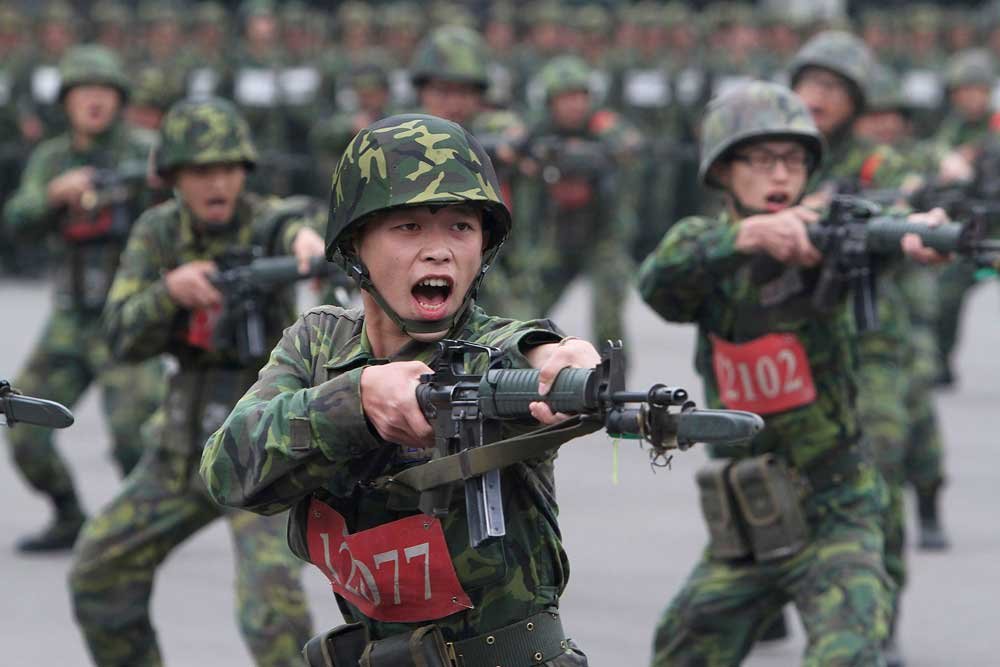
Here’s the scenario nobody in power will say aloud but everyone is thinking: Could Trump’s Venezuela raid signal a tacit understanding with Beijing about spheres of influence?
America gets the Western Hemisphere. China gets Taiwan. Russia gets its near abroad. Europe becomes a contested buffer zone. The rest of the world scrambles to pick sides.
It sounds absurd until you remember that Trump spent his first term praising Xi as “a very good friend,” has consistently questioned America’s commitment to Taiwan, and has now demonstrated he’s willing to violate international law and NATO solidarity (Greenland is Danish, and Denmark is a NATO member) to secure what he views as vital interests.
Chinese analysts are already gaming this out. If Washington accepts spheres of influence as the governing principle, why should Beijing hesitate over Taiwan? The main deterrent to Chinese action has always been American military support and the moral authority of international law. Trump just dynamited both.
Taiwan’s government is watching Venezuela’s fate with cold dread. Like Venezuela, Taiwan relies on informal great power backing against a neighbour that claims sovereignty. Like Venezuela, Taiwan assumed that international norms and American support would provide some buffer. Maduro’s capture in a blindfold suggests those assumptions were optimistic.
Why British Workers Should Care About Caracas
This isn’t some distant drama about oil or Latin American politics. This is the foundational question of the 21st century: Will the global economy be governed by enforceable law, or by whoever has the most impressive military parade?
If China succeeds in forcing even partial legal vindication of its rights against American-installed regimes, it rewrites the rules for sovereign debt, foreign investment, and international trade. Every multinational lender, every infrastructure investor, every sovereign state will have to reckon with the precedent. From Angola to Pakistan to Indonesia, governments will be choosing not based on ideology but on which system they believe will honour contracts after a coup.
For Britain, the implications are stark. We’ve spent decades assuming the American security umbrella came with an American commitment to rules-based trade. What Trump is signalling is that Washington wants all the prerogatives of empire with none of the obligations of law. That’s fine for America. It’s catastrophic for medium powers like Britain who lack the military muscle to enforce our interests through coercion.
The coming months won’t be dramatic. No mushroom clouds. No tank columns. Just filings. Jurisdictions. Precedents. Arbitration panels meeting in conference rooms in Paris and Singapore. Chinese banks quietly restructuring their exposure. American lawyers arguing that sovereign immunity doesn’t apply to drug kingpins (even if they were elected heads of state). International judges deciding whether contracts survive regime change.
It sounds technical because it is. But these technical questions will determine whether working people in Britain can rely on stable trade relationships, enforceable contracts, and open markets, or whether we’re entering a world where economic relationships depend on military alliances and protection rackets.
The Coming War
None of these visions puts working people first. Trump wants America to run its hemisphere by force while cutting deals with other empires about who gets what. China wants contracts that survive coups and invasions, which at least offers some predictability in trade and employment. Russia wants the West to stop encircling it with military bases and accept that NATO expansion threatens its security. Europe wants technocrats in Brussels to enforce austerity through binding treaties that override what voters actually want.
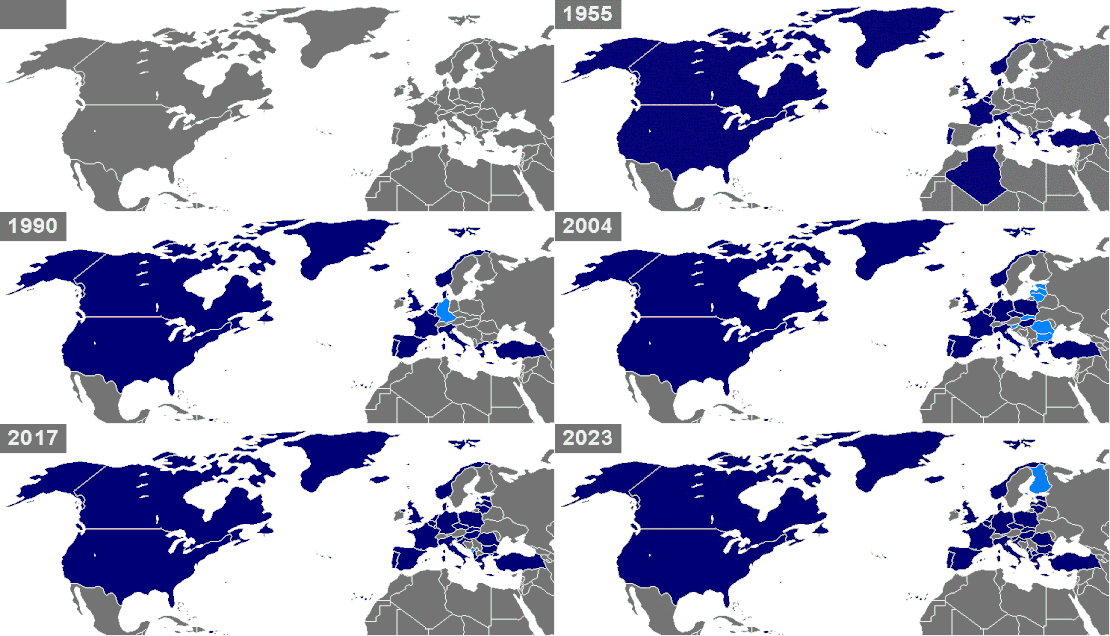
For working people, every option is rotten. But there are degrees of rot. A world where contracts mean something across borders gives ordinary families some chance of stable employment and predictable trade. A world where American special forces decide which governments survive offers only chaos and plunder. And a world where unelected EU bureaucrats use legal mechanisms to dismantle labour protections, impose austerity, and override democratic decisions simply replaces bombs with binding arbitration to serve the same neoliberal masters.
The substitution of lawfare for warfare isn’t moral progress. It’s the same imperial project conducted through conference rooms instead of command centres. Either way, it’s working people who pay the price. Our jobs shipped overseas. Our rights eroded through treaties we never voted for. Our sovereignty transferred to institutions we cannot vote out. The great powers are carving up spheres of influence while pretending to defend democracy and rules-based order. What they’re actually defending is their own power and their own profits.
Venezuela’s tragedy is that it became the test case. Maduro was a disaster for his people, running the country into economic ruin while enriching cronies. But the manner of his removal matters. If abducting elected leaders becomes normalised, if sovereign immunity becomes meaningless, if international law is simply whoever has the best special forces, then we’re not building a better world order. We’re building Orwell’s nightmare.
The difference is that in 1984, the superstates maintained perpetual war as social control. What we’re getting may be worse: perpetual legal warfare where the collateral damage is measured in defaulted debts, broken supply chains, and working families crushed between competing systems that recognise no neutral ground.
There’s Always a Kicker…
Global power won’t be decided by who builds more carriers. It will be decided by who writes the contracts and whose courts can enforce them when empires try to bend the rules. Trump just bet everything that military might still trumps legal process. China’s response was to hire every international arbitration lawyer between Beijing and The Hague. The outcome of that contest won’t be settled in Caracas or Washington. It’ll be settled in courtrooms and arbitration panels where working people have no voice, no vote, and no recourse except to hope that someone, somewhere, still believes contracts should mean something more than “enforceable until the Americans show up with Delta Force operators, hanging on zip lines from helicopters,” or they better do for all our sakes…

Support Independent Journalism Today
Our unwavering dedication is to provide you with unbiased news, diverse perspectives, and insightful opinions. We're on a mission to ensure that those in positions of power are held accountable for their actions, but we can't do it alone. Labour Heartlands is primarily funded by me, Paul Knaggs, and by the generous contributions of readers like you. Your donations keep us going and help us uphold the principles of independent journalism. Join us in our quest for truth, transparency, and accountability – donate today and be a part of our mission!
Like everyone else, we're facing challenges, and we need your help to stay online and continue providing crucial journalism. Every contribution, no matter how small, goes a long way in helping us thrive. By becoming one of our donors, you become a vital part of our mission to uncover the truth and uphold the values of democracy.
While we maintain our independence from political affiliations, we stand united against corruption, injustice, and the erosion of free speech, truth, and democracy. We believe in the power of accurate information in a democracy, and we consider facts non-negotiable.
Your support, no matter the amount, can make a significant impact. Together, we can make a difference and continue our journey toward a more informed and just society.
Thank you for supporting Labour Heartlands