The Health Secretary’s WhatsApp dump reveals less about transparency and more about the anatomy of a leadership bid disguised as candour
_______________________________________________
When a politician voluntarily publishes private messages, the first question is never what the messages contain. It is why they are being published now.
On Monday, Health Secretary Wes Streeting handed his WhatsApp exchanges with Peter Mandelson to Sky News, declaring he had “nothing to hide.”
The messages, spanning August 2024 to October 2025, show Streeting confiding in the disgraced peer that he feared being “toast at the next election,” that the government had “no growth strategy at all,” and that Israel was “committing war crimes before our eyes.” Bloomberg’s Alex Wickham called it “the least subtle leadership positioning in history.” He was not wrong.
Streeting insists he released the messages to counter weekend smears suggesting he was “closer” to Mandelson than previously known. But the timing, content, and choreography of this disclosure tell a different story.
Every message published serves a specific purpose: to distance Streeting from Mandelson while simultaneously positioning him as the honest, critical voice Labour members might want leading them next.
I. The Anatomy of a Controlled Leak

What Streeting chose to reveal matters, the hours spent on what should go and what should stay. The messages paint a portrait of a man who saw Labour’s failures clearly, criticised government strategy privately, held morally serious views on Palestine, and maintained only a casual relationship with Mandelson. It is, in effect, an application form for the Labour leadership, presented as an act of transparency.
In March 2025, Streeting told Mandelson he feared being “toast at the next election” after Labour lost its safest ward in Redbridge to a Gaza independent. “There isn’t a clear answer to the question: why Labour?” he wrote. When Mandelson complained about the absence of an economic philosophy, Streeting agreed: “No growth strategy at all.” These are not the words of a loyal team player. They are the words of a man building a case.
Sunlight is Not a Disinfectant When You’re Hiding Your Own Shadow: Wes Streeting’s Mandelson Problem
The Health Secretary’s WhatsApp dump reveals less about transparency and more about the anatomy of a leadership bid disguised as candour
When a politician voluntarily publishes private messages, the first question is never what the messages contain. It is why they are being published now.
On Monday, Health Secretary Wes Streeting handed his WhatsApp exchanges with Peter Mandelson to Sky News, declaring he had “nothing to hide.”
The messages, spanning August 2024 to October 2025, show Streeting confiding in the disgraced peer that he feared being “toast at the next election,” that the government had “no growth strategy at all,” and that Israel was “committing war crimes before our eyes.” Bloomberg’s Alex Wickham called it “the least subtle leadership positioning in history.” He was not wrong.
Streeting insists he released the messages to counter weekend smears suggesting he was “closer” to Mandelson than previously known. But the timing, content, and choreography of this disclosure tell a different story.
Every message published serves a specific purpose: to distance Streeting from Mandelson while simultaneously positioning him as the honest, critical voice Labour members might want leading them next.
Most striking were the Palestine exchanges from July 2025. Streeting described Israel as a “rogue state” committing war crimes and called for state-level sanctions, not merely measures against individual ministers. “This is rogue state behaviour,” he wrote. “Let them pay the price as pariahs.” Privately, the Health Secretary held positions that the government he served publicly refused to adopt.
Middle East Eye was right to observe that these comments will embarrass the Starmer government, which has “repeatedly refused to accuse Israel of committing war crimes” while continuing military collaboration throughout the assault on Gaza.
Now ask yourself: does a man with nothing to hide publish messages that happen to contain every view a future Labour selectorate would want to hear?
II. The Friendship That Wasn’t (Except When It Was)

Streeting’s attempts to minimise his relationship with Mandelson require a certain suspension of disbelief. In his Guardian article, he claimed he “was not a ‘close friend'” and that they “saw each other for dinner on average once a year with others.” This is a carefully constructed sentence. It does not say they only communicated once a year. It says they dined together approximately annually. The WhatsApp messages tell a different story of regular, substantive contact.
The reality, reported by The Guardian itself, is that Mandelson was a member of a “Sunday supper party” whose regular guests included Streeting and his partner Joe Dancey. Dancey, now Labour’s Executive Director of Policy and Communications (a role paying over £104,000), previously worked as a special adviser to Mandelson in the early 2000s.
The couple attended Labour fundraisers with Mandelson as recently as November 2023, when Mandelson visited Hartlepool for a “packed fundraiser” at which Dancey was present. Attendees were already asking publicly about Mandelson’s Epstein connections in the replies beneath the social media posts celebrating the event.
The messages themselves reveal a relationship far warmer than occasional dinners. Messages suffixed with kisses. Streeting praising “lovely photos” in a newspaper profile. A request, in June 2025, to speak with Mandelson before an unplanned call with US Health Secretary Robert Kennedy Jr, because the departmental briefing was inadequate. In September, Streeting asked Mandelson to arrange a meeting with Pete Buttigieg. When Mandelson was sacked as ambassador, he sent Streeting his farewell letter to embassy staff. This is the behaviour of a mentor-mentee relationship, not a casual acquaintance who dines together twelve times a decade.
Streeting told Sky News he was “embarrassed to have known Peter Mandelson.” Yet in September 2025, just months before this embarrassment supposedly crystallised, Streeting publicly defended Mandelson, arguing he should not be judged “guilty by association” over Epstein. The timeline matters. Streeting’s position shifted not when the evidence changed, but when the political cost became unbearable.
III. The Professional Politician: A Career in Pattern Recognition
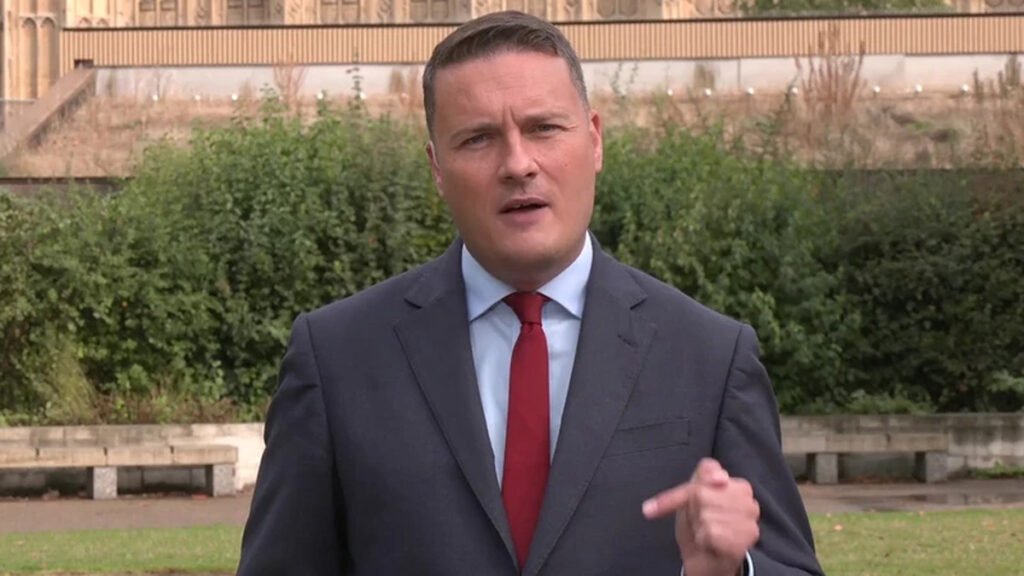
Wes Streeting’s career trajectory follows a pattern so familiar in modern Labour politics that it has become almost invisible. Student politics at Cambridge, where he became union president. The NUS presidency, where he reversed the organisation’s opposition to tuition fees, putting it to the right of the Liberal Democrats. A spell at Progress, the Blairite pressure group funded by Lord Sainsbury. A brief period at PricewaterhouseCoopers, the consultancy whose “swanky offices” in Canary Wharf impressed him greatly. Then a council seat, a parliamentary seat, and a steady ascent through Starmer’s shadow cabinet.
This is the political production line that Mandelson helped build. Cambridge or Oxford, student union, NUS, think tank, safe seat, front bench. At each stage, ideological commitments are adjusted to match career requirements. Streeting briefly left Labour over Iraq, then returned declaring Tony Blair “a hero.” He opposed tuition fees, then accepted them as NUS president. He championed LGBT rights at Stonewall, then as Health Secretary described trans women as not women and proposed “third spaces” in hospitals and public venues. The pattern is consistent: principles held until they become inconvenient, then quietly revised.
None of this disqualifies Streeting from public life. Politicians change their minds. But it does provide essential context for understanding Monday’s WhatsApp release. This is a man trained, from his earliest political career, in the art of positioning. His mentors include Mandelson himself, the man who more than anyone else perfected the dark arts of political communication in modern British politics. When such a person tells you he is being transparent, check the lighting.
IV. Follow the Money: The Private Healthcare Question

Whatever happens to Streeting’s leadership ambitions, there is a more pressing question about his fitness for his current role. Research by the Good Law Project and the campaign group EveryDoctor has revealed that more than 60 per cent of Streeting’s declared donations since entering Parliament in 2015 have come from companies and individuals with links to private healthcare. The total now exceeds £372,000.
The largest single source is Peter Hearn, a millionaire recruitment executive whose companies, MPM Connect and OPD Group Ltd, specialise in placing senior executives in both the NHS and the private healthcare sector. Through these entities, Hearn has donated over £260,000 to Streeting and other Labour frontbenchers. In February 2025, just weeks before Streeting announced the abolition of NHS England and 9,000 redundancies, OPD Group provided him with £53,000 for “staffing costs in his constituency office.” MPM Connect, the primary vehicle for these donations, has no internet presence, no website, and according to its own accounts, zero employees.
Streeting has also accepted £15,000 from hedge fund manager John Armitage, whose Egerton Capital fund holds a stake reportedly exceeding £800 million in UnitedHealth, America’s largest private health insurer. He has taken hospitality from FGS Global, a lobbying firm whose clients include Optum, the UK subsidiary of UnitedHealth. The Tony Blair Institute covered his travel costs to a Brussels conference. Labour Together, the organisation that controlled candidate selection under Morgan McSweeney, has provided donations-in-kind of staff and research services.
As Jo Maugham of the Good Law Project has asked: “Those backers are not stupid and this is not a remarkable coincidence. What do those backers think they are getting for their money?” The question answers itself when you observe Streeting’s record: defending private sector involvement in the NHS as both “pragmatic” and “principled,” abolishing NHS England, cutting public sector jobs, and describing the British Medical Association as a “cartel-like” union. This is not a health secretary funded by the private healthcare industry who happens to favour privatisation. It is a health secretary who favours privatisation and is funded by the private healthcare industry. The direction of causation matters less than the outcome, which is identical either way.
V. The Jess Phillips Defence and What It Conceals

Perhaps the most revealing moment in Streeting’s intervention was his invocation of Jess Phillips. “We need to be honest about the fact that if women like Jess Phillips had been in that room when the decision was taken, Peter Mandelson would never have been sent to Washington,” he wrote in the Guardian.
This is a clever sentence doing heavy lifting. It simultaneously distances Streeting from the Mandelson appointment, flatters the Labour left by citing Phillips (who resigned as safeguarding minister over Gaza policy), and implies that the problem was a lack of good people in the room rather than a systemic failure of judgement. Streeting positions himself as someone who “stood by, knowing enough to feel uneasy and yet not speaking loudly enough to influence the decision.”
But this framing conceals a harder truth. The question is not whether Jess Phillips would have blocked the appointment. The question is why the entire senior leadership of the Labour Party, including Streeting, maintained relationships with a man whose Epstein connections were public knowledge well before the latest file releases. The Mandelson-Epstein association was not a secret. It was reported nationally. It was raised directly with Labour figures at public events, including the 2023 Hartlepool fundraiser attended by Streeting’s own partner. Streeting is not a bystander who failed to speak up. He is a member of the network that normalised the association.
VI. The Sewage Strategy: Getting in Front of What Cannot Be Outrun

In crisis management, there is a well-established technique: when damaging information is inevitable, release it yourself, on your own terms, before someone else does. Frame the narrative. Choose the outlet. Shape the interpretation. This is precisely what Streeting has done.
The weekend before his disclosure, reports emerged suggesting Streeting’s relationship with Mandelson was deeper than he had acknowledged. Rival camps, reportedly aligned with Angela Rayner, briefed that Streeting was “tainted” by the association. The threat was clear: in a future leadership contest, the Mandelson connection would be deployed as a weapon. Streeting’s response was not to wait for the blow. It was to throw the punch himself, on ground of his choosing.
The WhatsApp release achieves multiple objectives simultaneously. It defines the boundaries of the Mandelson relationship on Streeting’s terms (casual, not close). It demonstrates critical independence from Starmer (no growth strategy, toast at the next election). It establishes foreign policy credentials that appeal to the Labour membership (Israel is a rogue state). And it generates a news cycle dominated by Streeting’s candour rather than his complicity.
This is not transparency. It is reputation management executed with professional precision by a politician whose partner runs Labour’s communications operation and whose entire career has been spent in the machinery of political messaging. The Streeting who learned the “dark arts of briefing and rebuttal” at Mandelson’s knee is now deploying those same techniques to survive the fallout from Mandelson’s disgrace.
VII. The Deeper Rot: Networks, Not Individuals
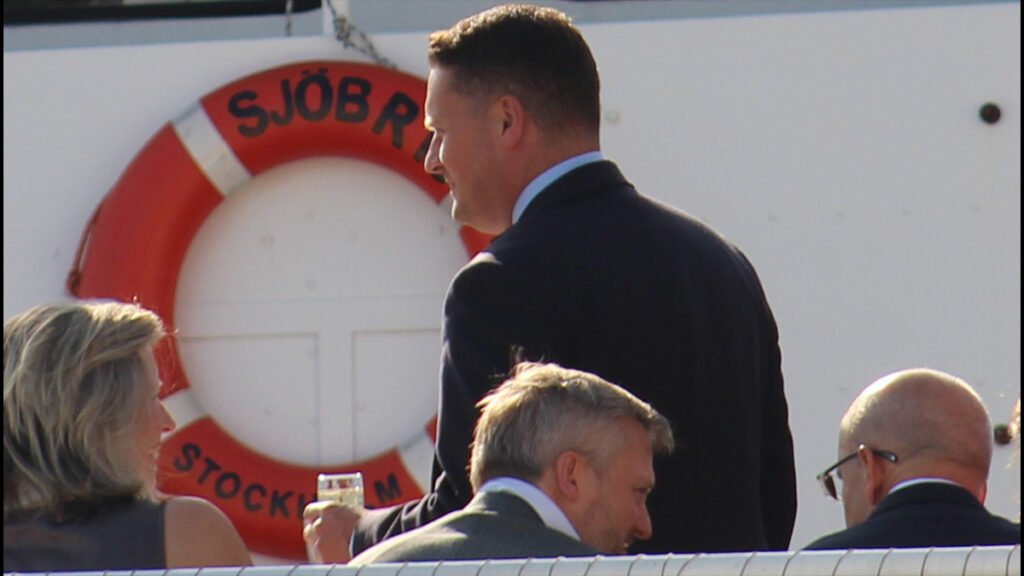
The danger of the Streeting WhatsApp story is that it reduces a systemic crisis to a question of individual character. Did Streeting know about Mandelson and Epstein? Was he really a close friend? Are his Palestine views sincere? These questions, while legitimate, obscure the structural problem.
The network that produced Streeting is the same network that produced the Mandelson appointment. It operates through overlapping memberships in organisations like the Trilateral Commission (of which both Starmer and Mandelson are members), through attendance at Bilderberg meetings (Streeting attended in 2025, alongside figures from Palantir, Pfizer, and the defence industry), and through the financial architecture of political donations that binds politicians to corporate interests before they take office.
Morgan McSweeney, Starmer’s now-departed chief of staff, pushed hardest for the Mandelson appointment. McSweeney’s wife Imogen Walker received campaign donations from Mandelson’s fundraising network. McSweeney controlled Labour’s candidate selection through Labour Together, the organisation that also provided donations-in-kind to Streeting. These are not coincidences. They are the architecture of influence: a system in which power circulates through personal relationships, financial dependencies, and institutional loyalties that override democratic accountability.
Streeting is not the architect of this system. But he is one of its most polished products. His career, from NUS to PwC to Progress to Parliament, follows the precise trajectory that Mandelson’s New Labour project was designed to produce: politicians who understand power, serve its requirements, and present its conclusions as their own convictions. That Streeting now distances himself from his mentor tells us nothing about the system’s operation. It tells us only that the system has identified which parts of itself to sacrifice.
VIII. What Real Accountability Looks Like

Streeting says “sunlight is the best disinfectant.” This is a fine principle when applied honestly. But sunlight requires someone other than the subject of scrutiny to hold the torch.
Real accountability would mean a full, independent inquiry into the Mandelson appointment, including what every cabinet member knew and when. It would mean transparency about the financial relationships between private healthcare donors and the politicians who decide the NHS’s future. It would mean an end to the revolving door between consultancy firms, lobbying operations, and ministerial offices. And it would mean asking why, in a party founded to represent working people, the Health Secretary’s largest donors are recruitment executives who profit from NHS privatisation.
Streeting’s WhatsApp disclosure answers none of these questions. It was designed not to answer them. It was designed to change the subject, from a systemic crisis of elite networks and institutional capture to a personality contest between would-be leaders jostling for position over a political corpse.
The Labour Party does not need a new leader who is better at managing scandals. It needs to confront the networks, donors, and institutional relationships that make these scandals inevitable. Until it does, every leadership contest will simply rearrange the same compromised personnel around the same corrupted structures, and tell the public it represents change.
Wes Streeting did not publish those messages because he has nothing to hide. He published them because he has everything to protect.

Support Independent Journalism Today
Our unwavering dedication is to provide you with unbiased news, diverse perspectives, and insightful opinions. We're on a mission to ensure that those in positions of power are held accountable for their actions, but we can't do it alone. Labour Heartlands is primarily funded by me, Paul Knaggs, and by the generous contributions of readers like you. Your donations keep us going and help us uphold the principles of independent journalism. Join us in our quest for truth, transparency, and accountability – donate today and be a part of our mission!
Like everyone else, we're facing challenges, and we need your help to stay online and continue providing crucial journalism. Every contribution, no matter how small, goes a long way in helping us thrive. By becoming one of our donors, you become a vital part of our mission to uncover the truth and uphold the values of democracy.
While we maintain our independence from political affiliations, we stand united against corruption, injustice, and the erosion of free speech, truth, and democracy. We believe in the power of accurate information in a democracy, and we consider facts non-negotiable.
Your support, no matter the amount, can make a significant impact. Together, we can make a difference and continue our journey toward a more informed and just society.
Thank you for supporting Labour Heartlands