The Forever Wars…
When the cheques being written exceed the GDP of nations, when the sums involved could rebuild entire regions, and when the bills keep mounting while the bodies keep falling, you have to stop and ask: who exactly is this war serving?
The European Union has just committed €90 billion to Ukraine over two years. Not as a gift, mind you, but as a loan backed by European taxpayers rather than frozen Russian assets (Belgium’s concerns about potential liability proved sufficient to scupper that more palatable arrangement). This comes atop the United States’ staggering $175 billion in approved spending since 2022, of which $66.5 billion represents direct military assistance.
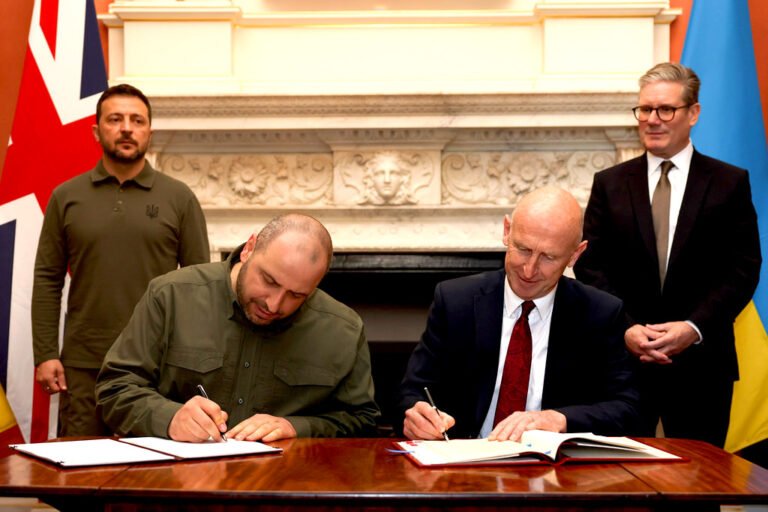
The United Kingdom has committed £21.8 billion in total support, comprising £13 billion in military assistance, £5.3 billion in non-military aid, and £3.5 billion in export finance guarantees. Prime Minister Keir Starmer has pledged to sustain £3 billion per year in military aid “until 2030/31 and for as long as it takes,” a formulation that conspicuously lacks any deadline or strategic endpoint. This open-ended commitment was enshrined in the UK-Ukraine 100 Year Partnership Declaration signed on 16 January 2025, a sweeping agreement spanning defence, security, economy, energy, justice, and culture that binds Britain to Ukraine’s interests for the next century. The UK expects to provide £4.5 billion to Ukraine in 2025 alone, more than in any previous year.
To put that in perspective: the UK’s entire annual NHS budget is approximately £165 billion. The United States spends roughly $80 billion on education annually. We are discussing sums that could transform societies, rebuild crumbling infrastructure, or address the housing crisis that leaves millions across the West struggling to keep roofs over their heads. Instead, these vast resources flow into an industrial complex that turns treasure into ordnance, and ordnance into corpses.
Add in contributions from Canada, Japan, and bilateral European aid, and the total Western commitment to Ukraine now exceeds €350 billion.
The human arithmetic makes for grim reading. Ukraine’s President Zelenskyy acknowledged in February 2025 that over 46,000 Ukrainian soldiers have been killed, with 380,000 wounded (though independent estimates suggest the true figures may be far higher, with some projections exceeding 100,000 dead). Russian casualties are even more catastrophic, with Western intelligence estimating over 1.1 million killed and wounded, including upwards of 250,000 dead. The daily casualty rate in late 2024 reached 1,570 Russian soldiers per day. Verified civilian deaths in Ukraine exceed 14,500, though the actual toll is certainly higher given the impossibility of documenting casualties in occupied territories. In total, somewhere between 200,000 and 350,000 human beings have died in this conflict. Hundreds of thousands more carry wounds that will never fully heal.
These are not mere statistics. They are sons and daughters, fathers and mothers, predominantly drawn from working-class communities who lack the connections or resources to avoid the front lines. The BBC and Mediazona’s analysis of Russian casualties reveals that 67 per cent of confirmed deaths come from settlements with fewer than 100,000 people. Russia’s ethnic minorities from impoverished regions suffer disproportionately. On the Ukrainian side, Dnipropetrovsk Oblast has recorded over 16,000 dead or missing, with poverty-stricken regions paying the heaviest price. As ever, it is the poor who bleed while the wealthy write cheques.
And write cheques they do, though remarkably few of those cheques represent genuine sacrifice from those who profit most from this arrangement. Consider the defence contractors whose executives openly celebrated the business opportunities presented by the invasion even before the first shot was fired. In January 2022, Raytheon Technologies CEO Greg Hayes told investors that tensions in Eastern Europe represented “opportunities for international sales.” His Lockheed Martin counterpart, James Taiclet, spoke enthusiastically of “renewed great power competition” boosting defence budgets.

How prescient they proved. Since the invasion, BAE Systems’ stock price has surged 26 per cent, Lockheed Martin’s climbed 24 per cent, and Raytheon’s rose 20 per cent. Rheinmetall, the German arms manufacturer, saw its shares skyrocket 88 per cent. BAE Systems alone reported £2.6 billion in profit for 2023, an eight per cent increase from the previous year. In 2022, America’s ‘Big Five’ defence contractors added over $58 billion to their combined market valuations (excluding Boeing, which struggled with unrelated supply chain issues). Analysts project that by the end of 2026, the top five US defence contractors will generate $26 billion in cash flow.
Mechanisms of War Profitability: Why This Particular War is Different
The Ukraine war has proven uniquely profitable due to its intensity, its duration, and its position at the intersection of conventional and modern technological warfare. Unlike the low-intensity counter-insurgency operations in the Middle East, this conflict is an “industrial war” that consumes materiel at a rate not seen since World War II.
| Industry Segment | Avg Annual Profit 2018-2021 (USD B) | Avg Annual Profit 2022-2024 (USD B) | Percentage Increase |
| Top 5 US Defense Primes | ~$22.5 | ~$23.5* | +4.4% |
| Top European Defense Firms | ~$5.8 | ~$9.8 | +69% |
| Combined Group | ~$28.3 | ~$33.3 | +18% |
The mechanisms of profit extraction are straightforward. Much of the military aid comprises weapons drawn from existing stocks, paid for years ago but now requiring replacement at today’s inflated prices. The Javelin Joint Venture between Raytheon and Lockheed Martin secured a $1.3 billion contract in August 2024 to replenish anti-tank missiles sent to Ukraine, with production ramping up to 3,960 missiles annually by late 2026. Germany, having transferred its own Patriot systems to Ukraine, placed new orders with Raytheon totalling $2.4 billion. The Pentagon itself acknowledges that Ukraine-related military aid has pumped $36.8 billion into the US domestic industrial base, with Arkansas and Pennsylvania alone receiving nearly $5 billion between them.
The European Défense Renaissance: The Case of Rheinmetall and CSG
The most acute growth has been observed in European defense firms located closer to the conflict. Excluding Russia, 23 of the 26 European companies in the SIPRI Top 100 recorded increasing arms revenues in 2024, with an aggregate growth of 13% to reach $151 billion.
Germany’s Rheinmetall has emerged as a symbol of this rearmament. The company’s stock price has risen 15-fold since the invasion, and it reported weapons profits of €339 million in 2024. Rheinmetall has aggressively expanded its production of artillery shells and armoured vehicles, segments that were long neglected in the post-Cold War era. Similarly, the Czech-based Czechoslovak Group (CSG) reported the sharpest percentage increase in arms revenues of any Top 100 company in 2024—a 193% surge to $3.6 billion—attributing the majority of this growth to Ukraine-related ammunition orders.
This is the military-industrial complex operating exactly as President Eisenhower warned in 1961. “We must guard against the acquisition of unwarranted influence, whether sought or unsought, by the military-industrial complex,” he cautioned. “The potential for the disastrous rise of misplaced power exists and will persist.” Seven decades later, that potential has become reality. Defence contractors spend millions lobbying Congress members who sit on Armed Services Committees.
During the 2022 election cycle alone, these committee members received $5.8 million from the defence sector. A July 2022 analysis revealed that when $10 million was distributed to certain committee members, the Défense Department received a $45 billion spending increase—a return of 450,000 per cent on investment. Nearly 700 former high-ranking US government officials now work for defence contractors, the “revolving door” ensuring that those who award contracts today become those who bid for them tomorrow.
You might argue, and many do, that supporting Ukraine represents a moral imperative. Russia’s invasion violated international law. Ukrainian sovereignty deserves defence. Abandoning Ukraine would embolden authoritarians globally. These arguments carry weight, particularly when emanating from those with no financial stake in perpetual conflict. But they become rather less compelling when uttered by those whose portfolios swell with each artillery barrage, whose bonuses depend on sustained hostilities, whose entire business model requires the regular incineration of working-class youth in conflicts that rarely threaten the children of those who profit from them.
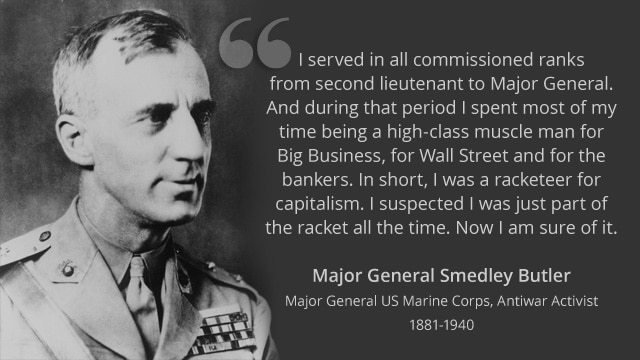
The uncomfortable truth is that the Western approach to Ukraine has evolved from initial defensive assistance into something resembling the business model that sustained Vietnam, Iraq, and Afghanistan: wars fought not to be won, but to be sustained. Each new aid package arrives not with a strategic endgame, but with procurement orders. The EU’s €90 billion loan will cover Ukraine’s needs through 2027, ensuring two more years of orders for contractors. The US commitment extends through 2025 at minimum, with Trump’s return to office creating uncertainty but doing nothing to address the fundamental question: what is the path to peace, and who has an interest in finding it?
Germany’s Friedrich Merz, presumably untroubled by the irony of a German chancellor speaking of war reparations given his nation’s historical default on such obligations, declared the agreement “a decisive message because Putin will only make concessions once he realises his war will not pay off.” But Putin is not the only one calculating whether war pays. For Raytheon, Lockheed Martin, BAE Systems, and dozens of smaller contractors, war pays extraordinarily well. It pays in stock prices and executive bonuses. It pays in fat contracts and guaranteed future revenue. It pays in political influence and regulatory capture.
Energy Industry: The Quadrupling of Profits
For the energy sector, the “pre-war” period (2018–2021) was an era of recovery and transition. The “post-escalation” period (2022–2024) has been an era of historic windfall.
| Industry Segment | Avg Annual Profit 2018-2021 (USD B) | Avg Annual Profit 2022-2024 (USD B) | Percentage Increase |
| Saudi Aramco | ~$89.5 | ~$129.5 | +45% |
| US/EU “Big Five” Majors | ~$41.8 | ~$95.0 | +127% |
| Total Major Energy Group | ~$131.3 | ~$224.5 | +71% |
Note: The “Big Five” average includes the recovery year of 2021 and the heavy losses of 2020, which drag down the pre-war average significantly. If comparing 2022–2024 to the 2018–2019 “normal” baseline, the increase remains over 100% for the Western majors.
The data from 2022 to late 2024 demonstrates that the escalation of the Ukraine war has indeed become a source of dramatic profitability for both arms and energy companies. Total profits for the energy majors have effectively doubled compared to the pre-war period, while the defense industry has seen its revenues surge to record levels, supported by a trillion-dollar expansion of global military budgets.
This profitability is not a transient anomaly but the result of a fundamental structural shift in the global order. The decoupling of European energy from Russia has created a permanent high-margin market for alternative suppliers, while the return of high-intensity conventional warfare has revitalised a defence-industrial base that was previously focused on low-volume, high-tech systems. As we look toward 2026 and beyond, the massive backlogs of companies like Lockheed Martin ($176B) and Northrop Grumman ($91.5B) ensure that the “war dividend” will persist long after the current front lines stabilise. The conflict in Ukraine has redefined the economics of security, creating a world where industrial success is increasingly predicated on the management of perpetual geopolitical tension. The forever wars…
Meanwhile, working-class communities on both sides bury their dead. Ukrainian villages that survived German occupation in 1941 face extinction from depopulation as young men disappear into the meat grinder. Russian families in Buryatia and Dagestan receive zinc coffins from a government that views their sons as more expendable than Muscovites. British workers, already struggling with a cost-of-living crisis that has seen real wages stagnate for fifteen years, watch their taxes fund Challenger tanks while their schools crumble and their hospitals face staff shortages that kill more Britons annually than Russia’s entire military could hope to.
This is not a call for abandoning Ukraine to Russia or the Donbass to the Ukrainians. It is a demand for honesty about what is occurring and who benefits. The path to peace exists: negotiations, territorial compromises, however unpalatable, security guarantees that address legitimate concerns on all sides, and an end to the killing. But peace would inconvenience those whose quarterly earnings depend on continued hostilities. Peace would require Western leaders to admit that indefinite military support without diplomatic strategy serves corporate boardrooms rather than Ukrainian families. Peace would demand acknowledging that working-class Russian conscripts and working-class Ukrainian defenders have more in common with each other than either has with the executives and politicians who profit from their deaths.
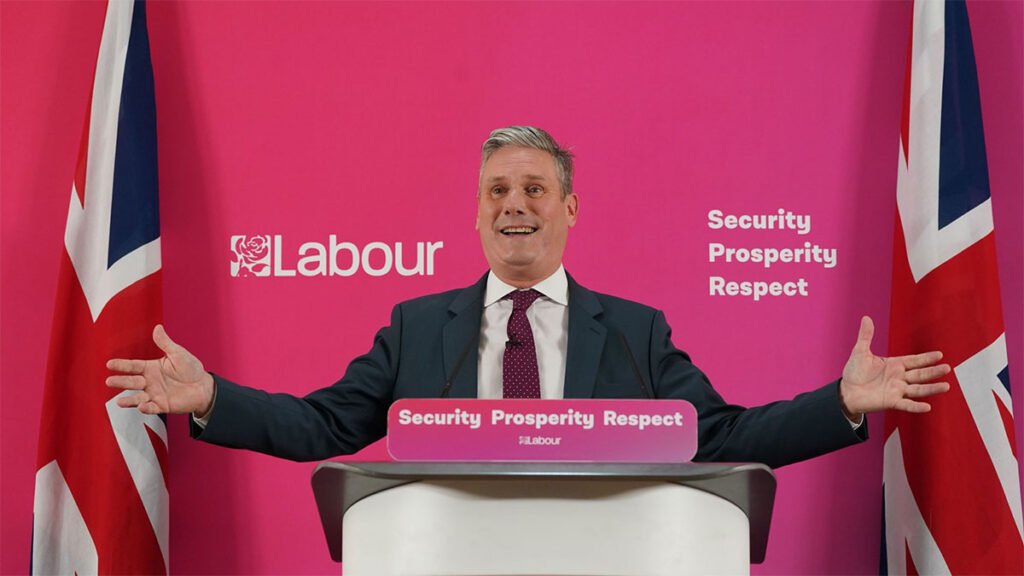
Instead, we get more aid packages, more solemn declarations of support “for as long as it takes,” more contracts signed in boardrooms while coffins are sealed in morgues. Belgian Prime Minister Bart De Wever, who opposed the reparations loan, observed that “when we explained the text again, there were so many questions that I said, ‘I told you so.’ There are a lot of loose ends.” Those loose ends include the fundamental question of whether this war is being sustained not to defeat Russia, but to sustain the political and economic arrangements that benefit those least affected by the carnage.
British spy chief Richard Moore estimated in September 2025 that Russia had suffered approximately one million casualties. Ukrainian casualties, though less openly discussed, likely number between 400,000 and 500,000 killed and severely wounded. Civilian casualties continue rising, with a 30 per cent increase in 2024 compared to 2023 as Russia intensified its use of aerial bombs and long-range weapons. Ukraine’s energy infrastructure operates at roughly one-third of pre-invasion capacity. Some 5.7 million Ukrainians remain internally displaced, with another 3.8 million scattered as refugees across Europe.
This is the reality for most, and particularly those on the front lines: war at all costs. The costs are measured in shattered bodies and destroyed cities, in widows and orphans, in trauma that will echo through generations. The costs are borne by those who carry rifles, not those who sign contracts. The costs are paid by working families struggling to heat homes while billions flow to defence contractors. The costs accumulate in occupied villages and depopulated regions, in PTSD-stricken veterans and grieving mothers.
But for some, there are no costs. Only returns. Only opportunities. Only that delightful situation where humanitarian rhetoric masks profitable arithmetic. Until we name this arrangement honestly, until we demand that those who profit from war also bear its costs, until we insist that diplomatic solutions receive the same urgency as weapons procurement, the dying will continue while the share prices climb. That is the bargain the West has struck: purchase stability at any price, so long as someone else does the dying and someone well-connected does the profiting.
The machinery of perpetual war grinds on, fuelled by working-class blood and oiled by corporate dividends. One day, perhaps, we shall remember that peace is cheaper than war, and that the dead cannot be invoiced for their sacrifice. Until then, the contractors will write their quarterly reports while the gravediggers do theirs.
For Raytheon and Lockheed Martin, the war in Ukraine isn’t a humanitarian crisis requiring resolution—it’s a revenue stream requiring preservation.

Support Independent Journalism Today
Our unwavering dedication is to provide you with unbiased news, diverse perspectives, and insightful opinions. We're on a mission to ensure that those in positions of power are held accountable for their actions, but we can't do it alone. Labour Heartlands is primarily funded by me, Paul Knaggs, and by the generous contributions of readers like you. Your donations keep us going and help us uphold the principles of independent journalism. Join us in our quest for truth, transparency, and accountability – donate today and be a part of our mission!
Like everyone else, we're facing challenges, and we need your help to stay online and continue providing crucial journalism. Every contribution, no matter how small, goes a long way in helping us thrive. By becoming one of our donors, you become a vital part of our mission to uncover the truth and uphold the values of democracy.
While we maintain our independence from political affiliations, we stand united against corruption, injustice, and the erosion of free speech, truth, and democracy. We believe in the power of accurate information in a democracy, and we consider facts non-negotiable.
Your support, no matter the amount, can make a significant impact. Together, we can make a difference and continue our journey toward a more informed and just society.
Thank you for supporting Labour Heartlands