When nearly three million people sign a petition, politicians notice. When that petition becomes the fourth largest in British parliamentary history, they retreat. The government’s hasty rollback of mandatory digital ID cards offers a rare glimpse of what public pressure can achieve. But before celebrating this tactical withdrawal, we should examine what it reveals about who shapes policy in Britain today, and what dangers persist despite the U-turn.
This is not a story about sensible governance responding to legitimate concerns. This is about elite ambition colliding with democratic resistance, about technocratic hubris meeting its limits, and about a surveillance infrastructure that continues its expansion under different branding.
The Blairite Resurrection: The Think Tank Network Behind Labour’s Digital ID Push

The digital ID scheme emerged from a familiar network of influence. In June 2025, Labour Together (a think tank established by Blairite MPs to restore the party to power) published its “BritCard” proposal. The lead author, Kirsty Innes, had previously worked at the Tony Blair Institute for Global Change, where she advocated for vaccine passports in 2021. Blair himself has championed digital ID for two decades, his institute claiming the system could save taxpayers £2 billion annually while conveniently positioning its major funder, Oracle founder Larry Ellison’s technology empire, for lucrative government contracts.
Within four months of Labour Together’s publication, Prime Minister Keir Starmer announced the scheme at Labour conference in September 2025. The speed was remarkable. No prolonged consultation. No parliamentary preparation. Just a confident declaration that “you will not be able to work in the United Kingdom if you do not have Digital ID.”
The haste betrayed the strategy. This was policy laundering at its most transparent: an influential think tank with deep Labour connections drafts proposals that align suspiciously well with corporate interests, and the government adopts them wholesale. What Labour Together called “a new piece of civic infrastructure” and “an eye-catching, memorable brand,” others recognised as Tony Blair’s failed 2006 Identity Cards Act repackaged for smartphones.
That earlier scheme cost between £5 billion and £20 billion before the Conservative-Liberal Democrat coalition scrapped it in 2010. The public rejected it then. Blair’s institute has been working to change that verdict ever since, arguing that Britons would “sacrifice privacy for efficiency” and that “digital ID is the disruption the UK desperately needs.”

The announcement triggered immediate cross-party opposition. Jeremy Corbyn called it “an affront to our civil liberties.” George Galloway simply stated: “Let’s turn Digital ID into Keir Starmer’s Poll Tax moment.” Nigel Farage declared it “firmly opposed” and predicted it “will make no difference to illegal migration.” Ed Davey’s Liberal Democrats vowed to “fight it tooth and nail.” Even more critically, Scottish First Minister John Swinney and Northern Ireland’s Michelle O’Neill opposed the scheme, with Swinney warning it appeared designed to “force every Scot to declare ourselves British.”
What made this coalition lethal to the government was its composition. When both Jeremy Corbyn and Nigel Farage agree something threatens fundamental freedoms, you have united libertarian right and progressive left against elite technocratic overreach. More damaging still, Labour backbenchers refused to defend the policy. One MP told PoliticsHome: “It’s hard to find a backbench MP who will advocate for mandatory digital ID in public, or a minister who will defend it in private.”
The petition numbers confirmed the scale of opposition. By October 2025, nearly three million signatures represented genuine public alarm, not manufactured outrage. Polling showed support for digital ID collapsed after Starmer’s announcement. In June 2025, over 50 per cent backed the concept. By October, nearly half opposed it.
The government now insists the rollback is not a U-turn but merely a “tweak before detailed consultation.” This language deserves scrutiny. The original proposal made digital ID mandatory for right-to-work checks. The revised version keeps “mandatory digital right to work checks” but allows verification through “existing documents such as a passport.” The distinction is semantic. If you can verify your right to work through your passport, the digital ID becomes optional in practice, whatever officials claim about maintaining “mandatory” checks.
What changed? A government source told The Times that “the compulsory nature of the original plans was stopping conversation about what digital IDs could be used for generally.” Translation: we wanted to build the infrastructure first, then expand its use cases later. Mandatory employment verification would force universal adoption, creating a database that could subsequently be extended to healthcare, housing, benefits, and more. The public saw through this strategy.
A Tactical Retreat, Not a Defeat: Why the Digital ID Infrastructure Remains a Threat

Here is the uncomfortable truth opponents must acknowledge: the digital ID scheme is not dead. It is merely postponed and rebranded. The government remains committed to digital verification infrastructure. The £1.8 billion allocated over three years continues. Technology contracts will be awarded. The authentication systems will be built.
What has changed is the compulsion, not the architecture. The government still plans to roll out GOV.UK Wallet by 2029, offering digital versions of driving licences, National Insurance cards, marriage certificates, and birth certificates. Digital veteran cards launched in October 2025. Digital driving licences follow. Each voluntary adoption normalises the technology, making future mandates easier to implement.
This is the standard pattern of surveillance creep. Introduce the infrastructure as optional and convenient. Allow voluntary adoption to create network effects. Wait for businesses and services to prefer digital verification over paper documents. Eventually, practical necessity achieves what legal mandate could not: a population dependent on state-issued digital credentials for daily life.
The risks remain identical to those that prompted three million signatures. Age verification systems now required under the Online Safety Act force users to submit biometric face scans or passport copies to third-party companies. A Home Office data corruption scandal in March 2024 saw 76,000 e-Visa records display incorrect photos, passport numbers, and nationalities. The MOVEit breach in 2023 exposed millions of sensitive government records. These are not theoretical vulnerabilities. These are documented failures of systems handling mass personal data.
Beyond technical security concerns lies the question of state power. Britain already makes over 30 arrests daily for online communications, a 121 per cent increase since 2017. Over 12,000 people were arrested under the Communications Act 2003 in 2023 alone, with fewer than 10 per cent convicted. Freedom House downgraded the UK’s internet freedom score in 2025 specifically because of “the proliferation of criminal charges, arrests, and convictions concerning online speech, including speech protected under international human rights standards.”
Digital ID infrastructure makes such enforcement trivially easier. Every online interaction tied to verified identity becomes traceable, searchable, and prosecutable. The government claims strong encryption will protect privacy. The Electronic Frontier Foundation counters that the Online Safety Act’s Section 121 enables client-side scanning of encrypted messages, the kind of surveillance that makes end-to-end encryption meaningless.
What the Digital ID Rollback Reveals About Public Resistance

The rollback demonstrates that organised public opposition works. Three million signatures forced a government retreat on a policy championed by its most influential advisers. Labour backbenchers broke ranks, refusing to defend indefensible overreach. Cross-party and cross-border coalitions formed around civil liberties concerns that transcended partisan positioning.
This matters because it contradicts the dominant narrative about technocratic inevitability. Tony Blair’s institute insists digital ID is merely technological progress, that resistance reflects “outdated narratives and unfounded fears.” The actual sequence of events suggests otherwise. When the public understands the stakes and mobilises accordingly, even well-funded think tanks with direct access to government cannot simply impose their preferred infrastructure.
From BritCard to GOV.UK Wallet: How Surveillance Creep Continues Under New Branding
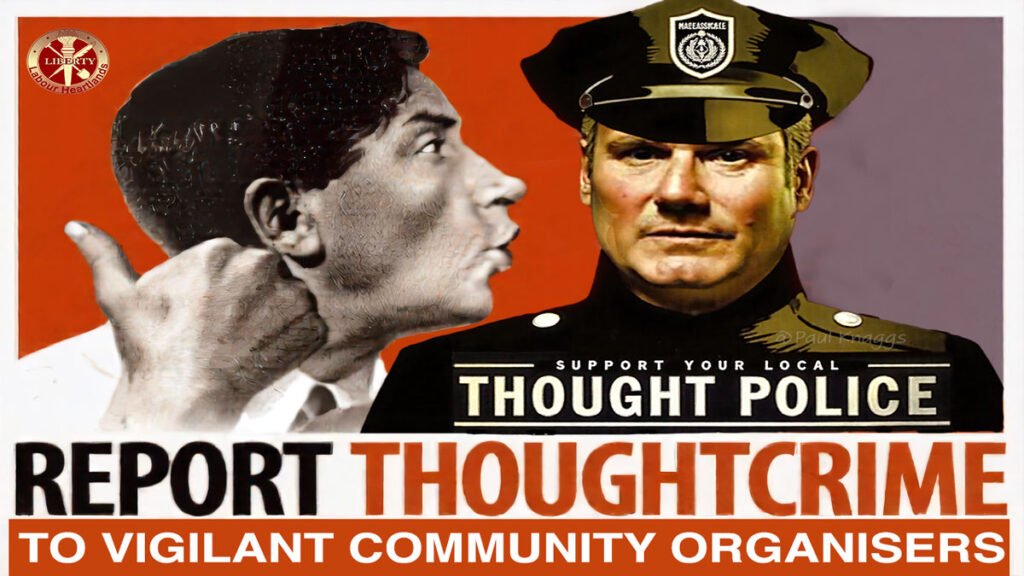
But vigilance requires sustaining attention beyond immediate victories. The government has not abandoned its objectives, merely its tactics. The same officials who designed mandatory ID under one framework will design voluntary adoption under another. The same contractors who bid for BritCard systems will bid for GOV.UK Wallet infrastructure. The same integration between digital credentials and state services will proceed at slightly reduced speed.
Democratic oversight demands scrutiny of every contract awarded, every system integration proposed, every expansion of voluntary systems into mandatory requirements. It demands transparency about who profits from building this infrastructure and what their connections to government decision-makers reveal about policy formation. Most critically, it demands we reject the framing that presents surveillance as synonymous with safety or efficiency as equivalent to progress.
The alternative is not administrative chaos or security vulnerability. Estonia’s digital ID system, frequently cited by digital ID proponents, was implemented with transparency, robust data protection, and genuine public consultation over two decades. Britain’s approach has been the opposite: hastily announced, inadequately scrutinised, sold primarily as immigration enforcement rather than improved public services.
Democracy Requires Friction
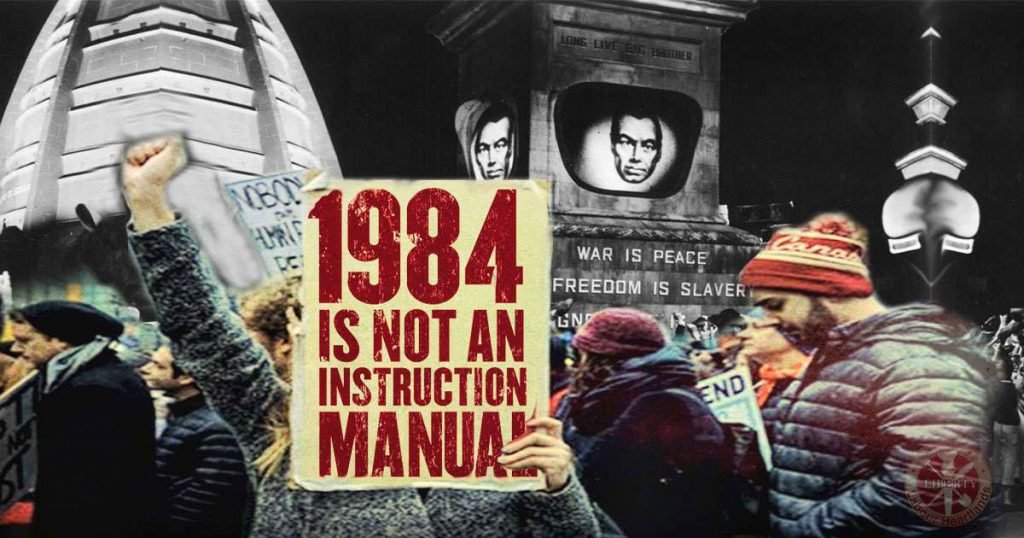
The digital ID rollback reveals a government capable of tactical retreat but unwilling to reconsider its fundamental trajectory. Ministers speak of “cutting the faff” and “test-and-learn design practices” as if governance were a product launch rather than the exercise of state power over peoples’ lives. This language is telling. It positions democratic deliberation as inefficiency and public concern as consumer resistance to be overcome through better marketing.
But democracy requires friction. It requires the ability to say no, to demand justification, to insist that convenience does not outweigh liberty. It requires maintaining spaces where state verification is not prerequisite for participation, where anonymity remains possible, where surveillance is the exception rather than the default.
The three million signatures achieved something important: they demonstrated that despite media narratives about surveillance fatigue and privacy apathy, a significant portion of the British public remains unwilling to accept authoritarian infrastructure packaged as administrative reform. They exposed the gap between elite consensus (Blair’s institute, Labour Together, government ministers) and public sentiment. They forced government retreat on a policy assumed inevitable by its designers.
What remains uncertain is whether this resistance can be sustained. Digital ID infrastructure will return, possibly under different names, certainly with more careful messaging. The challenge for those concerned with civil liberties is maintaining focus as the government pursues the same objectives through incremental voluntary adoption rather than immediate mandatory implementation.
Three million signatures forced one U-turn. The real question is whether we can build the permanent oversight necessary to prevent the next thirteen.

Support Independent Journalism Today
Our unwavering dedication is to provide you with unbiased news, diverse perspectives, and insightful opinions. We're on a mission to ensure that those in positions of power are held accountable for their actions, but we can't do it alone. Labour Heartlands is primarily funded by me, Paul Knaggs, and by the generous contributions of readers like you. Your donations keep us going and help us uphold the principles of independent journalism. Join us in our quest for truth, transparency, and accountability – donate today and be a part of our mission!
Like everyone else, we're facing challenges, and we need your help to stay online and continue providing crucial journalism. Every contribution, no matter how small, goes a long way in helping us thrive. By becoming one of our donors, you become a vital part of our mission to uncover the truth and uphold the values of democracy.
While we maintain our independence from political affiliations, we stand united against corruption, injustice, and the erosion of free speech, truth, and democracy. We believe in the power of accurate information in a democracy, and we consider facts non-negotiable.
Your support, no matter the amount, can make a significant impact. Together, we can make a difference and continue our journey toward a more informed and just society.
Thank you for supporting Labour Heartlands