Trump’s “Board of Peace”: A $1 Billion Buy-In for the World’s Oligarchs
Donald Trump stood before reporters in Davos and delivered what should have been an extraordinary diplomatic announcement. Vladimir Putin, he claimed, had accepted an invitation to join his newly minted “Board of Peace”. The Russian president would sit alongside world leaders on a body designed to oversee Gaza’s reconstruction and, if Trump got his way, eventually supplant the United Nations itself.
There was only one problem. Putin hadn’t actually accepted anything.
Within hours of Trump’s declaration, the Kremlin issued its standard diplomatic demurral. Moscow was “studying the details”, spokesman Dmitry Peskov explained. They hoped to “contact the American side to clarify all the nuances”. Putin himself told Russia’s Security Council that the foreign ministry was still reviewing the proposal and would “respond in due course”.
The lie matters less than what it obscures. Trump’s casual fabrication about Putin’s acceptance diverted attention from the actual scandal: the structure of the Board itself. This is not a peace-building institution. It is the privatisation of international relations, the transformation of diplomacy into a luxury good where billionaires purchase permanent seats and Trump personally controls a multi-billion dollar fund.
The $1 Billion Buy-In

The draft charter circulated to national capitals reads like a prospectus for an exclusive investment club, not a framework for international cooperation. Countries receive three-year terms by default, but those willing to contribute $1 billion in cash within the first year secure permanent membership. The funds will be “controlled by Chairman Donald Trump”.
Trump alone determines membership. He holds lifetime chairmanship. He exercises unilateral veto power over every decision. The Board can convene only when Trump approves the agenda. It can pass resolutions only with Trump’s consent. It exists entirely at his pleasure.
But look at who actually sits on the Executive Board: Marc Rowan, CEO of Apollo Global Management, one of the world’s largest private equity firms. Ajay Banga, President of the World Bank. Jared Kushner, Trump’s son-in-law whose private equity firm raised $3 billion from Saudi Arabia and the UAE after leaving the White House. And Tony Blair, whose institute has spent years advising autocratic governments whilst developing Gaza “reconstruction” plans that include a “Trump Riviera” coastal resort and an “Elon Musk” manufacturing hub.
This is not a gathering of diplomatic expertise. This is a merger of state power and private capital, with conflict zones reimagined as investment opportunities and reconstruction rebranded as development deals. The Board of Peace is essentially a corporate consortium with geopolitical authority, where the price of permanent membership happens to match the kind of cheques sovereign wealth funds and oligarchs can comfortably write.
From Diplomacy to Deal-Making
The traditional model of international peacebuilding, whatever its failures, at least nominally operated on principles: sovereignty, self-determination, humanitarian law, accountability to the United Nations system. Trump’s Board dispenses with all of it. Peace becomes a transaction. Reconstruction becomes a portfolio. Post-conflict governance becomes a market.
Consider who benefits from this structure. Not Gaza’s displaced population, whose territory is being parceled out without their meaningful input. Not the international community, whose institutions are being systematically undermined. The beneficiaries are those with $1 billion to spare and an interest in accessing the spoils of reconstruction contracts, development rights, and political influence in strategically valuable territories.
The Guardian called it “a Trump-dominated pay-to-play club”. That’s accurate but incomplete. This is the logical endpoint of decades of elite capture, where the line between public office and private enrichment has been so thoroughly eroded that Trump can simply announce a new international body structured like a business venture and expect the world to treat it as legitimate diplomacy.
The Blair Doctrine: Advising Autocrats, Planning Resorts

Tony Blair’s presence on the Executive Board illuminates the entire project. Since leaving office in 2007, Blair has operated through his Tony Blair Institute, advising autocratic governments from Egypt to Saudi Arabia on how to improve their international image whilst maintaining repressive domestic control. His appointment isn’t about his experience as UK Prime Minister. It’s about his track record of making elite power look respectable.
Blair’s institute has worked on Gaza planning alongside Israeli business figures. Their proposals didn’t focus on rebuilding homes, schools, or hospitals. They focused on a coastal resort and a manufacturing hub, named after Trump and Musk respectively. These are not reconstruction plans. They are development schemes that assume Palestinian displacement and treat occupied territory as investable real estate.
This is the model Trump’s Board will follow. Reconstruction as opportunity. Governance as management contract. Peace as the stable investment climate that allows capital to extract value from territories previously rendered unprofitable by conflict. The people who actually live in these places become inconvenient variables in someone else’s business plan.
Blair brings to Trump’s Board exactly what it needs: the veneer of international statecraft applied to fundamentally extractive projects. The fact that he is widely viewed across the Arab world as a war criminal is not a bug in Trump’s system. It is a feature. It signals that this Board operates beyond accountability, beyond justice, beyond the constraints that nominally govern how democracies behave in the world.
The Charter That Mentions Everything But Gaza
The Board of Peace charter does not mention Gaza once. Not a single reference to the Palestinian territory whose reconstruction supposedly justifies the Board’s existence. Instead, the charter describes “an international organization that seeks to promote stability, restore dependable and lawful governance, and secure enduring peace in areas affected or threatened by conflict”.
This is a global mandate, deliberately written to encompass any conflict zone Trump might decide to involve himself in. The United Nations Security Council resolution that supposedly authorises the Board was passed in November 2025 based on how the plan was presented at the time: a Gaza-specific reconstruction effort with a two-year mandate. The charter circulated two months later bears no resemblance to what the Security Council believed it was endorsing.
Trump has been explicit about his ambitions. Asked whether the Board of Peace might replace the United Nations, he responded: “It might”. He complained that “the United Nations never helped me on one war” and suggested the UN “hasn’t been very helpful” despite its “potential”. The subtext is clear: the UN imposes constraints, requires consensus, maintains some nominal commitment to international law. Trump’s Board answers to no one but Trump.
The Oligarchic International Order

What we are witnessing is the construction of an alternative international architecture where power flows not through democratic institutions or international law, but through personal relationships and financial transactions. Sovereign wealth funds get permanent seats for $1 billion. Private equity executives sit on the Executive Board. The chairman’s son-in-law helps oversee reconstruction that his investment firm might profit from. Former prime ministers who now advise autocrats provide the veneer of legitimacy.
This is oligarchy elevated to the level of international relations. Not rule by one strongman, but rule by a transnational elite that transcends national boundaries and operates according to market logic rather than political principle. The Board of Peace is their vehicle, and conflict zones are their emerging markets.
The pattern is already visible in how reconstruction deals have worked in recent decades. Iraq’s post-invasion reconstruction became a bonanza for Western contractors whilst the country descended into sectarian violence. Afghanistan’s international assistance created a kleptocratic elite whilst ordinary Afghans remained impoverished. Syria’s frozen assets and potential reconstruction have become bargaining chips in geopolitical negotiations that have nothing to do with Syrian needs.
Trump is simply making explicit what has been implicit: that post-conflict reconstruction is less about helping people rebuild their lives and more about powerful actors positioning themselves to profit from the rubble. The Board of Peace is the institutional form this logic was always going to take.
The Democratic Response That Isn’t

The countries invited to join Trump’s Board face a straightforward question. Do you participate in a structure designed to undermine the United Nations and concentrate power in the hands of a US president who controls a multi-billion dollar fund and grants himself veto power over all decisions? Or do you refuse, accept the economic retaliation, and maintain some residual commitment to the principle that international cooperation should not be mediated through a billionaire’s investment vehicle?
Most will choose the former. They will join with caveats, participate with reservations, and tell themselves they can moderate Trump’s worst instincts from inside the room. Emmanuel Macron declined the invitation. Trump responded with threats of 200% tariffs on French wine and champagne. The message to other democracies is clear: compliance or punishment, membership or isolation.
Keir Starmer declined to endorse the Board but won’t say he’s refusing to join. Canada accepted “in principle” but won’t pay the fee. These are the compromises democracies make when faced with naked power: rhetorical objections combined with practical acquiescence. The result is an international order where oligarchic structures advance unopposed because no one is willing to bear the cost of resistance.
The Commodity Called Peace
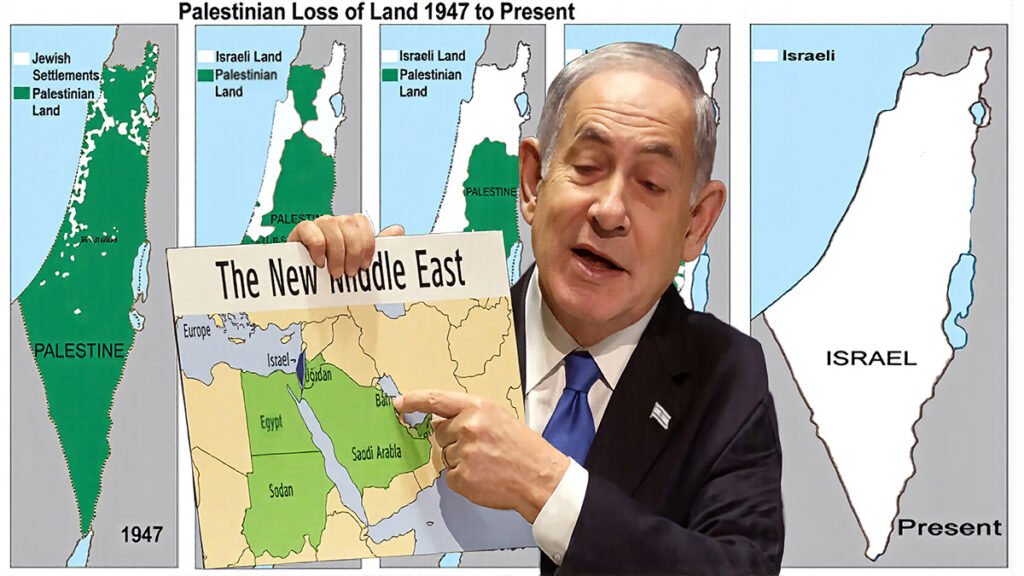
Trump’s Board will proceed. It will hold its signing ceremony in Davos, announce its founding members, and begin raising its multi-billion dollar fund. Gaza will remain devastated, its reconstruction contingent on political compromises that have nothing to do with Palestinian self-determination. Other conflict zones will be added to the Board’s remit, each one treated as a market opportunity rather than a humanitarian crisis.
The Executive Board will meet periodically, approving plans developed by consultants and investment advisers. Contracts will be awarded to firms with the right connections. Reconstruction will proceed in ways that maximise returns rather than serve local needs. And throughout it all, the language of peace-building and international cooperation will be deployed to describe what is fundamentally a system of elite extraction.
This is the logical conclusion of decades of neoliberal governance: the complete merger of state power and private capital, where even the most basic functions of international cooperation are restructured as investment opportunities. Trump hasn’t invented this system. He has simply removed the diplomatic niceties that used to obscure how it actually operates.
Vladimir Putin hasn’t accepted Trump’s invitation. But it hardly matters. Trump is building exactly the kind of international order that benefits oligarchs regardless of nationality: one where money purchases access, where billionaires decide the future of territories they’ll never live in, and where peace itself is just another asset class for those wealthy enough to buy a seat at the table.

Support Independent Journalism Today
Our unwavering dedication is to provide you with unbiased news, diverse perspectives, and insightful opinions. We're on a mission to ensure that those in positions of power are held accountable for their actions, but we can't do it alone. Labour Heartlands is primarily funded by me, Paul Knaggs, and by the generous contributions of readers like you. Your donations keep us going and help us uphold the principles of independent journalism. Join us in our quest for truth, transparency, and accountability – donate today and be a part of our mission!
Like everyone else, we're facing challenges, and we need your help to stay online and continue providing crucial journalism. Every contribution, no matter how small, goes a long way in helping us thrive. By becoming one of our donors, you become a vital part of our mission to uncover the truth and uphold the values of democracy.
While we maintain our independence from political affiliations, we stand united against corruption, injustice, and the erosion of free speech, truth, and democracy. We believe in the power of accurate information in a democracy, and we consider facts non-negotiable.
Your support, no matter the amount, can make a significant impact. Together, we can make a difference and continue our journey toward a more informed and just society.
Thank you for supporting Labour Heartlands