Starmer’s 1992 Warning: Scrap Juries, Get “Conveyor-Belt Justice”
The Architect of His Own Critique…
Does a right cease to be “fundamental” simply because the Crown’s spreadsheets are in the red? This is the question currently facing the British public as the Justice Secretary, David Lammy, prepares to take a sledgehammer to an 800-year-old pillar of our democracy: the right to a trial by a jury of one’s peers.
The Government’s justification is the “backlog,” that modern bureaucratic monster used to excuse every erosion of liberty. But while Mr Lammy speaks of “efficiency,” a ghost from 1992 has emerged to pull the rug from beneath him. That ghost is the Prime Minister himself.
There is a report gathering dust in the archives of British legal history, written by a young human rights lawyer fresh from a delegation to Belfast. It contains, in precise and unambiguous language, a devastating warning about what happens when the state removes the jury from the dock and installs itself as the sole arbiter of fact.
That lawyer was Keir Starmer, and his 1992 report for the Haldane Society of Socialist Lawyers concluded that scrapping juries produced “conveyor-belt justice” and enabled wrongful convictions to occur even in the absence of procedural error. He argued then that removing the public from the courtroom made it almost impossible to raise a “reasonable doubt.”
Today, the organisation that helped shape his career now finds itself pointing to his own signature as evidence of his hypocrisy. The Prime Minister is currently spearheading the very “telescoping of the trial process” he once correctly identified as a threat to the innocent. He is no longer the man who inspects injustice; he is the man who legislates it.
He would do well to listen to the lawyer he used to be, before the pursuit of administrative speed permanently outpaced the pursuit of truth.
Justice is not a backlog to be cleared; it is a right to be defended. The arbiter of guilt. The man who wrote it is now the Prime Minister. He has either not re-read it, or he has read it and decided he no longer agrees with himself, after all, we are talking about a man of many, many contradictions.

That is the extraordinary situation now confronting this country as the Courts and Tribunals Bill, piloted by Justice Secretary David Lammy, moves toward its next Commons hurdle on May 15th. The bill proposes to strip away the right to jury trial for any offence carrying a sentence of under three years, covering a swathe of crimes, including theft, burglary, assault, and lower-level fraud: the very offences that ordinary working people, if they are ever unfortunate enough to encounter the criminal justice system, are most likely to face.
The justification is administrative. The court backlog stands at around 80,000 cases. Something must be done. Efficiency demands sacrifice. But the sacrifice being demanded is not the government’s to make, and the efficiency being promised is a sleight of hand. The Institute for Government has already concluded that the bill’s impact on delays would be negligible. We are being asked to surrender eight centuries of hard-won democratic participation in exchange for a rounding error in the Ministry of Justice’s spreadsheets.
The Ghost of 1992
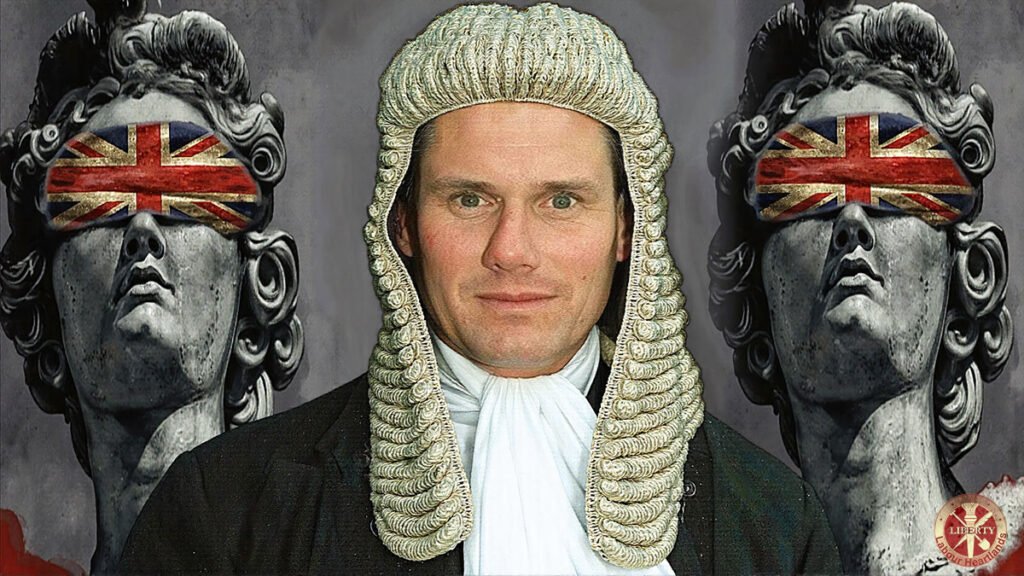
In 1991, Keir Starmer, then serving as secretary of the Haldane Society of Socialist Lawyers, organised a delegation to Belfast. Their purpose was to examine the Diplock court system, introduced during the Troubles as a supposedly temporary emergency measure to try serious and terrorism-related offences without a jury. What they found alarmed them.
The report they produced the following year, titled “Upholding the Rule of Law? Northern Ireland: Criminal Justice Under the Emergency Powers in the 1990s,” was a meticulous and damning document. Its central finding was direct and unequivocal: the removal of juries “enables wrongful convictions to occur in the absence of any procedural or judicial error.”
“The right to trial by jury is an important factor in the delicate balance between the power of the state and the freedom of the individual. The further it is restricted, the greater the imbalance.” – Keir Starmer, Socialist Lawyer, Spring 1992

The report documented a conviction rate of over 90 per cent in Diplock courts, an astonishing figure that the authors rightly treated not as a sign of prosecutorial success but as evidence of systemic failure. Where conviction is almost a foregone conclusion, justice has not been served; it has been simulated.
The authors identified what they called a “telescoping” of the entire trial process, with cases increasingly decided “on the papers,” meaning on written evidence alone, without oral hearings and without the testing of witnesses that a jury demands. The challenging role of the defence, they concluded, was significantly curtailed. Cross-examination withered. Reasonable doubt became harder, perhaps impossible, to establish. The system had not merely changed the form of the trial; it had changed its substance.
The Danger of the “Case-Hardened” Judge
“The right to trial by jury is an important factor in the delicate balance between the power of the state and the freedom of the individual. The further it is restricted, the greater the imbalance.” Keir Starmer wrote that. In 1992. He needs to read it again.”

Among the most prescient observations in the 1992 report was its identification of what the authors called “case-hardening.” Judges who repeatedly hear similar cases, particularly in judge-only proceedings where they must determine both the law and the facts, risk becoming desensitised to the nuances of a defence. Familiarity breeds not wisdom but assumption. The thousandth burglary trial looks very much like the nine-hundred-and-ninety-ninth.
The government’s defenders will argue that modern judges are professionals of the highest integrity, trained to resist such tendencies. This misses the point entirely. The risk of case-hardening is not a moral failing; it is a structural one. It arises not from bias but from the accumulated weight of experience, the very experience that qualifies a judge to try cases in the first place. You cannot simultaneously argue that an experienced judge is the best person to weigh the facts and that experience poses no risk to impartiality.
A jury of twelve citizens brings something the judiciary cannot replicate: genuine unfamiliarity with the machinery of prosecution. They have not seen a thousand cases like this one. This particular defendant, with this particular set of circumstances, is the only case they have ever tried. That freshness is not a weakness. It is the whole point.
The Haldane Verdict: Hypocrite

The Haldane Society of Socialist Lawyers, the organisation through which Starmer built his reputation as a human rights advocate, has not been quiet. In a statement on their website, the Society quotes the Prime Minister’s own words from a 1992 article in their journal: that the right to jury trial is “an important factor in the delicate balance between the power of the state and the freedom of the individual,” and that restricting it produces an ever-greater imbalance in the state’s favour.
The Society then uses a word that should sting: hypocrite. Their current position is that the court backlog is the product of years of deliberate underfunding, not the jury system, and that the bill will not solve it. They are right on both counts.
“Each jury is a little parliament. The jury sense is the parliamentary sense. I cannot see the one dying and the other surviving. The first object of any tyrant in Whitehall would be to make Parliament utterly subservient to his will; and the next to overthrow or diminish trial by jury, for no tyrant could afford to leave a subject’s freedom in the hands of twelve of his countrymen.” – Sir Patrick Devlin
The irony runs deeper than the policy. Starmer, during his time as secretary of the Society, championed a proposal to remove the word “socialist” from its name, preferring “progressive” or “democratic.” The membership rejected it. That rejection, it turns out, was prophetic. You cannot strip the socialist content from an institution and expect the principles to survive intact. The same logic applies to a man.
The Haldane Society, which shaped him, has now condemned him. He was, they declared after his leadership of Labour began, “demonstrably not a socialist.” He was not expelled; he had already resigned on becoming Director of Public Prosecutions. He simply departed, as he has departed from every principle that once defined him.
The Labour Duopoly and the Paralysed Left

― George Orwell, 1984
“The day before Starmer entered Downing Street, Labour Heartlands published a warning: the left would find itself paralysed, caught between loyalty and horror. Ninety Labour MPs abstaining rather than voting to protect jury trial is that paralysis made visible.”
Here is the mechanism that makes all of this possible, and it is one that demands attention beyond this specific bill. This government can introduce legislation that no Conservative administration could have passed without mass protest in the streets. Thatcher at her most authoritarian, Major at his most reactionary, never quite managed to strip the public of the right to a jury trial. Not because they lacked the inclination, but because the left would have marched.
The left is not marching now. Not because it approves of what is being done, but because the psychological barriers erected by tribal loyalty are formidable. Many of those who would ordinarily form the vanguard of resistance voted for this government. They waited years for it. They cannot easily take to the streets against their own. Protest requires a clean conscience, and the conscience of the Starmer voter is not, at this moment, entirely clean.
This is the trap of the duopoly. When power rotates between two parties that have converged on the same essential programme, the left simply cheers a different colour of the same erosion. The Courts and Tribunals Bill is not an aberration; it is the logical end-point of a politics that treats the state as benign and efficiency as the supreme value. Starmer knows, from his own 1992 report, that judge-only trials produce injustice. He is proceeding anyway. The question is not whether he understands the consequences; it is whether the consequences matter to him.
And this matters beyond jury trials. The same logic applies wherever executive power advances: the Online Safety Act, the expansion of surveillance infrastructure, the erosion of protest rights, the growth of administrative detention. Each step, on its own, can be defended in the language of necessity. In aggregate, they constitute something else: a state that is progressively less accountable to the people it governs.
Starmer’s 2026 Decrees: Scrap Juries… Next Step: May 15
The rebellion in the Labour Party is real, even if it has been temporarily quietened by the hollow concession of a committee seat. Karl Turner, one of the few MPs who has shown genuine courage on this question, has accurately described the Prime Minister’s position as knowing the cost of jury trials while ignoring their value. That formulation is correct, and it deserves to be heard in every constituency that returned a Labour MP.
The concession that silenced the rebellion, a seat on the public bill committee for a dissenting MP, is a procedural placation, not a substantive one. The bill remains intact. The principle remains under attack. Ninety Labour MPs abstained at Second Reading rather than vote against. Abstention is not opposition; it is permission wrapped in cowardice.
Shadow Justice Secretary Nick Timothy, for whom Labour Heartlands does not ordinarily find much cause for praise, is right on this: the Prime Minister should read the report he helped to write. Not as a political exercise in embarrassment, but because the arguments in it are correct, and they are his arguments. They belonged to the version of Keir Starmer that still believed justice was a principle rather than a policy instrument.
The Diplock Warning

In 1991, a young, principled human rights lawyer named Keir Starmer led a delegation to Belfast. Their mission, supported by the Haldane Society of Socialist Lawyers, was to inspect the “Diplock” courts, where juries had been scrapped in favour of judge-only trials for Troubles-era offences.
The report Starmer co-authored in 1992 was a devastating indictment of what happens when you remove the public from the seat of judgement. He concluded that scrapping juries led to “conveyor-belt justice” and enabled wrongful convictions to occur even without procedural errors.
The report noted a conviction rate of over 90 per cent. It found that without a jury to convince, the “challenging role of the defence is significantly curtailed.” In Starmer’s own words, the removal of the jury made it almost impossible to raise a “reasonable doubt.”
The bill must be stopped, or at minimum substantially amended, to preserve jury trial for every offence that carries any prospect of immediate imprisonment. The Haldane Society’s position on this is clear. The bar associations are clear. The experience of the Diplock courts is clear. Only the government is unclear, because it has decided that clarity is inconvenient.
The Knock on the Door
“Those who would give up essential Liberty, to purchase a little temporary Safety, deserve neither Liberty nor Safety.”
Benjamin Franklin
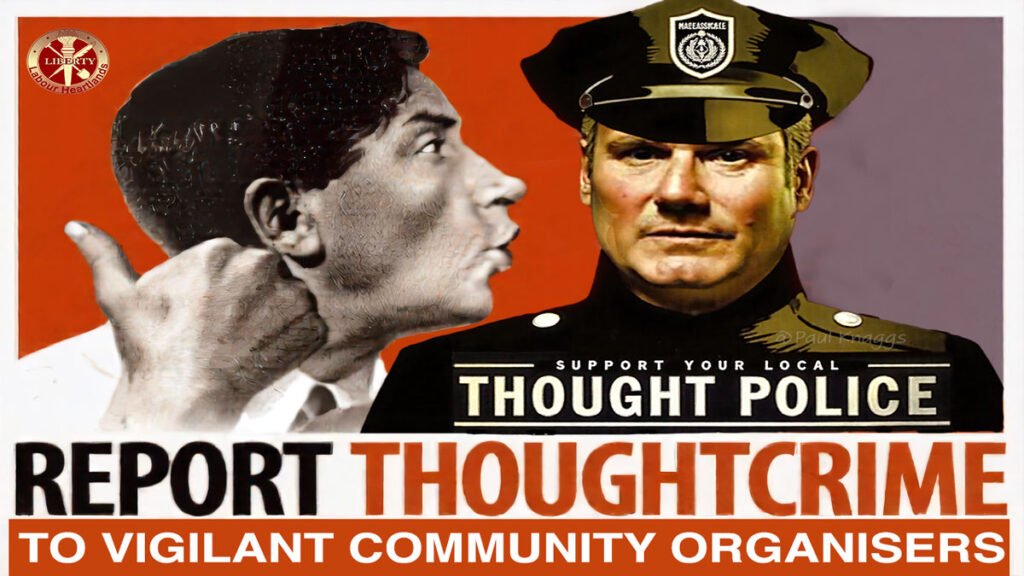
I wrote some time ago that Starmer would introduce laws that no right-wing government could ever get past the British public. People would protest and march against a Conservative government that attempted this. They would not accept it. They would not tolerate it. But they will tolerate it from Labour, and that is the point, that is the design, whether intended or not.
To those who believe their liberties are safe in Labour hands: they are not. To those who believe the duopoly provides any meaningful protection against the encroachment of the state: it does not. What this government is constructing, one administrative reform at a time, is a legal architecture that its successors will inherit. The next government, of whatever colour, will arrive to find the jury system diminished, the space for challenge narrowed, and the apparatus of conviction streamlined in the state’s favour.
Once a liberty is surrendered to the state, it is not returned by request. It is not returned by voting. It is returned only by struggle, and only after considerable damage has been done.
Keir Starmer knew this in 1992. He wrote it down. His comrades in the Haldane Society published it. The Diplock courts proved it. Nothing has changed except the man.
“Beware the knock on the door that comes with no jury to answer to, no appeal to be heard, and no principle left to stand between the people and the state. That knock is not a distant threat. They are already drafting the legislation.”
The Courts and Tribunals Bill returns to the Commons on May 15, 2026. The first oral evidence session of the public bill committee is scheduled for March 25. The 1992 Haldane Society report is titled “Upholding the Rule of Law? Northern Ireland: Criminal Justice Under the Emergency Powers in the 1990s.”
Enjoyed this read? I’m committed to keeping this space 100% ad-free so you can enjoy a clean, focused reading experience. Crafting these articles takes a significant amount of research and heart. If you found this helpful, please consider a “small donation” to help keep the lights on and the content flowing. Every bit of support makes a huge difference!

Support Independent Journalism Today
Our unwavering dedication is to provide you with unbiased news, diverse perspectives, and insightful opinions. We're on a mission to ensure that those in positions of power are held accountable for their actions, but we can't do it alone. Labour Heartlands is primarily funded by me, Paul Knaggs, and by the generous contributions of readers like you. Your donations keep us going and help us uphold the principles of independent journalism. Join us in our quest for truth, transparency, and accountability – donate today and be a part of our mission!
Like everyone else, we're facing challenges, and we need your help to stay online and continue providing crucial journalism. Every contribution, no matter how small, goes a long way in helping us thrive. By becoming one of our donors, you become a vital part of our mission to uncover the truth and uphold the values of democracy.
While we maintain our independence from political affiliations, we stand united against corruption, injustice, and the erosion of free speech, truth, and democracy. We believe in the power of accurate information in a democracy, and we consider facts non-negotiable.
Your support, no matter the amount, can make a significant impact. Together, we can make a difference and continue our journey toward a more informed and just society.
Thank you for supporting Labour Heartlands