The Wigan Test: If Your Socialism Fails the Council Estate, It Fails Entirely
🎧 AI Audio Trial: The Socialism of the Hearth (MP3)
When Zarah Sultana declared there is “no room for socially conservative views in a left-wing socialist party,” she wasn’t simply staking out political territory. She was drawing a line through the very heart of the British working class, severing the labour movement from its deepest roots. And in doing so, she exposed a profound fracture in contemporary left politics: the unbridgeable chasm between a managerial liberalism that speaks in the language of academic abstraction, and a working-class socialism grounded in place, community, and lived experience.
This is not an abstract dispute about party membership criteria. It strikes at something fundamental: can there be a socialism that despises the people it claims to represent?
The uncomfortable truth Sultana and her liberal allies refuse to confront is this: most working-class people are socially conservative and economically left-wing. Not because they lack education or enlightenment, but because their politics emerge from material reality. From the street they grew up on, the pits their fathers worked in, the schools their children attend, the shops on their high street, the dead they bury and the living they care for. This is not ideology absorbed from university seminars. This is politics forged in the foundry of actual existence.
Bevan’s Heartlands: Why Socialism Cannot Survive Without the Socialism of the Hearth
Working-class patriotism has never been nationalism in the imperial sense. It isn’t Rule Britannia or nostalgic fantasising about empire. It is something far more profound: the socialism of the hearth and the hometown. It is loving your country because it is your neighbours, your football club, your local, your trade union branch, your community centre. It is remembering your grandfather’s regiment not because you glorify war, but because his life and sacrifice shaped your family’s story. It is valuing your community’s traditions not because you fear change, but because continuity and belonging provide the foundation for solidarity.
George Orwell grasped this when he wrote in 1941 that “patriotism is usually stronger than class-hatred, and always stronger than any kind of internationalism.” He wasn’t celebrating jingoism or empire nostalgia. He was describing the material reality of working-class life. The English working class, Orwell noted, possessed a “profound” but “unconscious” patriotism, one that had nothing to do with Rule Britannia and everything to do with the pit village, the fishing port, the factory town. It was love of place and people, not flag and crown.
This is what I call the socialism of the hearth. It’s the politics of your grandad’s regiment and your nana’s strike stories. It’s remembering the terraced rows that raised you, the dialect you speak, the people you bury. It’s not nationalism; it’s belonging. And belonging isn’t an ideology to be interrogated by university seminar. It’s a memory, a lived experience, a foundation for solidarity that cannot be manufactured in a think tank or a Twitter thread.
Aneurin Bevan, the miner’s son from Tredegar who created the NHS, understood this instinctively. He didn’t arrive at socialism through abstract theory. He grew up with a collective model of universal healthcare in the Tredegar Medical Aid Society, where 95 percent of the town contributed to and benefited from community provision. When he brought the NHS into being, he explicitly said he wanted to “Tredegarise” Britain. That wasn’t an accident of phrasing. It was a declaration that socialism grows from place, from community, from the practical solidarity of working people looking after their own.
Clement Attlee and his generation understood this completely. They shared an instinctively patriotic view of British political culture, and what Labour added was a new note of social patriotism that presented the welfare state as the next stage in securing British liberties and democracy. They didn’t sneer at working-class values. They came from them. The old trade unionists who built the labour movement weren’t embarrassed by British identity. They saw it as the basis for common purpose, for mutual obligation, for collective action.
And here is where the liberal capture of socialism becomes most visible: in their selective outrage. They will lecture a working-class man in Wigan that valuing family structure or defending women’s single-sex spaces makes him “regressive.” They will burn a woman at the proverbial stake for stating the biological reality that men are not women. Yet confront them with far more conservative cultural practices in communities where such criticism might attract accusations of racism, and suddenly they fall silent. The moral certainty evaporates. The fierce advocacy for women’s rights becomes conveniently conditional.
This is not solidarity. This is not principled feminism. This is moral cowardice dressed up as cultural sensitivity, where the rights they’ll defend depend entirely on who they’re defending them against. A working-class woman in Doncaster gets no protection, but the liberal academic writing about intersectionality gets a standing ovation. Selectivity in politics is simply bigotry with better table manners.
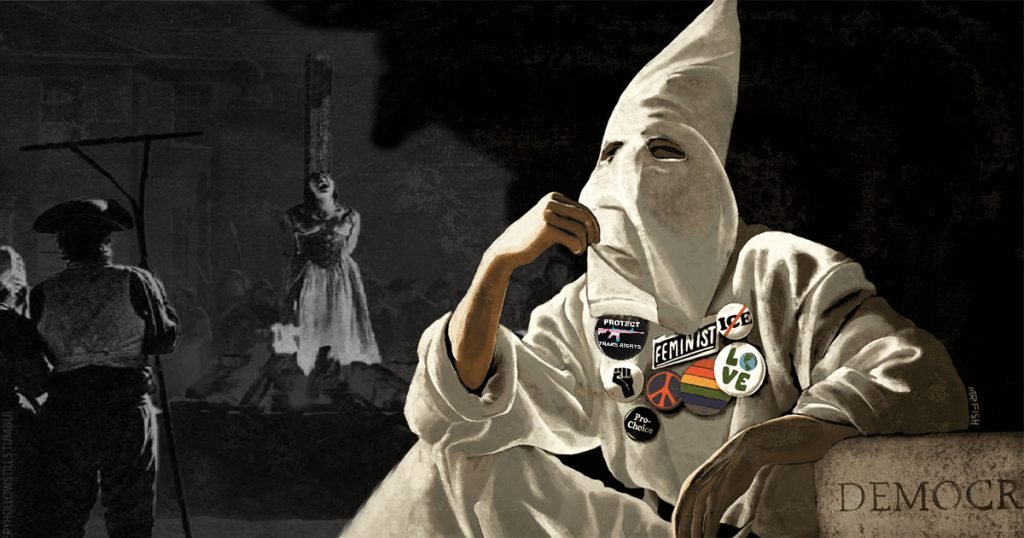
The historical irony would be almost amusing if the stakes weren’t so high. The Diggers of 1649, who proclaimed the earth “a common treasury for all,” sought to create an egalitarian rural community based on shared cultivation of the land. The Levellers demanded universal male suffrage, equality before the law, and freedom of worship. These were English radicals rooted in English soil, drawing on English traditions of resistance to arbitrary power. They loved their country precisely because they wanted to transform it, to make it worthy of the common people who worked its land and built its wealth.
The Chartists marched under the British flag. The Tolpuddle Martyrs sang hymns in English churches. The suffragettes fought for British women’s citizenship. The dockers and miners who built the trade union movement were fiercely proud of their British working-class identity. This tradition runs like a golden thread through our history: a radical English socialism that loves country, community, and class in equal measure.
In 2019, Eddie Dempsey, now general secretary of the RMT union dared to say at a Brexit rally that people who attend Tommy Robinson demos “are right to hate” the liberal left because it treats working-class people “like the scum of the Earth,” Owen Jones and Ash Sarkar pulled out of a People’s Assembly event because he was on the platform.
Labour MP Clive Lewis compared him to fascist Oswald Mosley, and the RMT responded by removing Lewis from the union’s parliamentary group. Dempsey’s crime? Pointing out that the Labour Party had been “captured” by a coalition of “liberals” while bypassing “organised labour, particularly in the old industrial heartlands”.
For stating this observable fact about Labour’s electoral strategy, for refusing to pretend that class politics didn’t matter, he was cast into the outer darkness by people who claim to speak for the working class but recoil in horror from actual working-class voices. Obviously, you can’t keep a good man down; he followed Mick Lynch as RMT general secretary…
When Adnan Hussain pointed out that several UK communities historically fused social conservatism with political socialism, from Welsh Nonconformists to Scottish crofters to East End Jews grounding leftist activism in faith and tradition, he was stating historical fact. Yet Sultana’s response was to declare he had no place in her movement. Hussain has since withdrawn from Your Party’s steering group, citing a “toxic, exclusionary” culture and “veiled prejudice” against Muslim men. The party that was supposed to provide an alternative to Labour’s betrayals is already eating itself alive over who gets to be considered authentically socialist.
Socialism Without the Working Class is Just Middle-Class Liberalism

Again, back to Orwell who made the same point in wartime: “Patriotism is usually stronger than class-hatred.” He wasn’t lamenting this; he was recognising it as the basis for an “intelligent Socialist movement” that would “use their patriotism, instead of merely insulting it.” The revolution he envisioned was English through and through, one that would see the end of the Stock Exchange and the House of Lords, but the survival of the monarchy and the ancient heraldic lion and unicorn on soldiers’ buttons. Messy, contradictory, undoctrinaire, and entirely practical.
The tragedy is that this new liberalism, rootless and managerial, treats socially conservative working-class people as obstacles to be overcome rather than the foundation of any real movement for economic justice. They want a politics completely detached from class, place, history, and material reality. They prefer a floaty world of identity categories, hashtags, and academic terminology that never sets foot on a council estate or in a working men’s club.
Let me be plain: I am a socialist. A socialist in the tradition of Winstanley and the Diggers, of the Chartists and the suffragettes, of Bevan and Attlee. A socialism that stands for public ownership of our water, our energy, our transport. A socialism that defends our fisherfolk and farmers. A socialism grounded in material conditions: secure employment, decent housing, living wages, and the dignity that comes from useful work fairly rewarded. I love my family, my community, and my country. There is no contradiction in those things because real socialism has always been anchored in place, class, community, and mutual care.
The ultra-liberals depend on historical ignorance. They want to hijack the word “socialism” and strip it of its cultural weight, its connection to actual working-class life, its roots in the struggles of ordinary people for economic justice. But 21st-century radical socialism cannot be built on contempt for the people. You cannot construct a mass movement by telling the masses their values are illegitimate.
Here’s what the liberal left keeps forgetting: you cannot build a socialist society if you despise the people who live in it. You don’t win the working class by lecturing them, mocking them, or pathologising their values. You win them by standing with them on wages, housing, public ownership, energy bills, and democratic control over the things that shape their lives. And yes, by recognising their right to love the communities that raised them.
The working class did not abandon the left. The liberal left abandoned the working class. Until that changes, they will continue losing. Not because the people have moved right, but because the self-appointed guardians of progressive politics have moved into a rarified atmosphere where ordinary working people can no longer breathe.
And in that rarefied air, socialism suffocates. Because socialism without the working class is just middle-class liberalism with better branding.
And until that changes, they will keep losing, not because the people have moved right, but because the self-appointed moral guardians of the left have moved away from the people entirely. They have forgotten that socialism isn’t a seminar. It’s the fierce, quiet love of the streets that raised you, waiting to be channelled into a movement that builds power for those who have none.

Support Independent Journalism Today
Our unwavering dedication is to provide you with unbiased news, diverse perspectives, and insightful opinions. We're on a mission to ensure that those in positions of power are held accountable for their actions, but we can't do it alone. Labour Heartlands is primarily funded by me, Paul Knaggs, and by the generous contributions of readers like you. Your donations keep us going and help us uphold the principles of independent journalism. Join us in our quest for truth, transparency, and accountability – donate today and be a part of our mission!
Like everyone else, we're facing challenges, and we need your help to stay online and continue providing crucial journalism. Every contribution, no matter how small, goes a long way in helping us thrive. By becoming one of our donors, you become a vital part of our mission to uncover the truth and uphold the values of democracy.
While we maintain our independence from political affiliations, we stand united against corruption, injustice, and the erosion of free speech, truth, and democracy. We believe in the power of accurate information in a democracy, and we consider facts non-negotiable.
Your support, no matter the amount, can make a significant impact. Together, we can make a difference and continue our journey toward a more informed and just society.
Thank you for supporting Labour Heartlands