15 Minutes to Fortune: How Wall Street Cashed In on War Before the World Knew
Is the fog of war being used as a literal smokescreen for a multi-billion dollar heist?
Fifteen minutes before the world learned that war had been paused, someone already knew.
At 6:49 am New York time on Monday 23 March, the market moved. In a single minute, 6,200 crude oil futures contracts changed hands, representing roughly 5.8 billion dollars of nominal value. At 6:50 am, more than a billion dollars of S&P 500 index futures were traded in a concentrated burst. Then, at 7:05 am, President Trump posted on social media: he was suspending planned strikes on Iranian energy facilities for five days. Peace, for the moment, had broken out. Oil prices fell. Stocks rose.
The traders who placed those bets minutes before the announcement made a fortune. The question is how they knew.
“It is abnormal,” said John Sfakianakis, chief economist and head of economic research at the Gulf Research Center, in an interview with Sky News: “Before an announcement by President Trump, unusual activity takes place. There is unusual activity that takes place. We have seen it now.”
“Before an announcement by President Trump, unusual activity takes place. We have seen it now.” — John Sfakianakis, Gulf Research Center
Sfakianakis, a senior scholar at Pembroke College, Cambridge, and an associate fellow of Chatham House, was speaking with the measured restraint of an economist who has spent decades watching markets in the Gulf and beyond. But his message was unmistakable: the pattern is clear, and it is repeating.
The Ten-Minute Window of Wealth
Let us lay out the sequence, because precision matters.
On Monday morning, at 7:05 am Eastern Time, President Trump announced on Truth Social that he had engaged in “productive dialogue” with Iran and was suspending plans to strike Iranian energy facilities for a period of five days.
At 6:49 am, sixteen minutes earlier, approximately 6,200 crude oil futures contracts were traded. That is not a normal volume for that time of day, on a day with no scheduled economic data releases, no Federal Reserve announcements, no obvious catalyst. The trades were concentrated in a single minute.
At 6:50 am, fifteen minutes before the announcement, a separate burst of trading hit S&P 500 e-Mini futures. This time, the pattern was more specific still: someone had taken a long position of 1.5 billion dollars on the index, while simultaneously selling 192 million dollars of oil futures.
The directional logic was flawless. When the announcement came, oil dropped and stocks rose. The trades placed in those two minutes, in that precise configuration, were positioned to profit from the exact market movement that followed.
As one US broker-dealer market strategist told reporters: “It’s hard to prove causality, but you have to wonder who would be so aggressive selling futures 15 minutes before Trump’s statement” .
A portfolio manager was blunter: “A series of large, well-timed trades has left investors feeling quite frustrated”.
The evidence from just this week:
- The $580 Million Oil Bet: Roughly 15 minutes before President Trump announced “productive talks” and a delay in strikes on Iranian energy infrastructure, a surge of over $580 million in oil futures hit the market.
- The S&P 500 Surge: A $1.5 billion purchase of S&P 500 futures was recorded just five minutes before a de-escalatory social media post.
- The Prediction Market Pioneers: On platforms like Polymarket, “six suspected insiders” reportedly turned a $1.2 million profit by betting on the exact timing of military actions.
These are not the lucky guesses of “clairvoyant traders”. This is the surgical precision of those who know the headline before it is written.
A Systemic Rot

What makes this incident particularly troubling is that it is not isolated. It is the latest in a series of suspicious trading patterns that have preceded major geopolitical announcements from the Trump administration over the past year.
In February 2026, six anonymous accounts on the cryptocurrency prediction market Polymarket collectively earned 1.2 million dollars by correctly betting that the United States would strike Iran on 28 February. Blockchain analytics firm Bubblemaps traced the wallets: all had been created and funded within 24 hours of the attack, and most had placed their bets hours before explosions were reported in Tehran. The accounts had no trading history before or since.
In January 2026, before the US military operation that captured Venezuelan President Nicolas Maduro, three Polymarket accounts placed large bets on his removal. One address began building its position six days before the operation occurred, on 27 December 2025. Together, the three accounts profited more than 630,000 dollars. The accounts were created and funded just before the event, then disappeared.
The pattern is algorithmic in its consistency: an account appears, funds itself, places concentrated bets on a low-probability geopolitical event, profits massively, and vanishes. The only plausible explanation is access to non-public information. The only plausible source of that information is proximity to the decision-makers.
The Oligarchy’s Feast
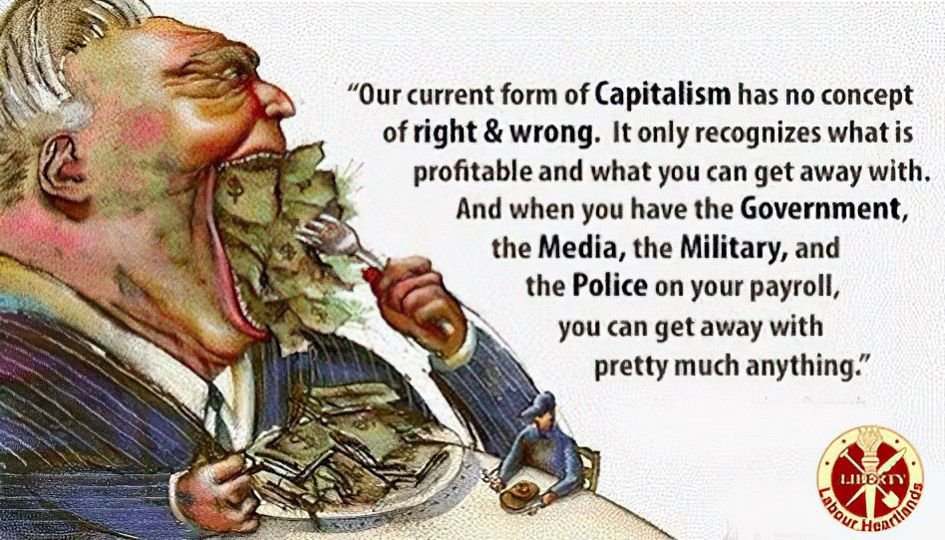
The emergence of crypto-based prediction markets has created a new frontier for insider trading, one that operates outside the regulatory architecture designed to prevent it. Polymarket, the dominant platform, requires no know-your-client verification. Accounts can be created anonymously, funded through cryptocurrency, and dissolved without trace.
As Rajiv Sethi, an economist at Barnard College, Columbia University, recently noted, this is not a theoretical concern. “There is some fairly strong evidence that insiders have been trading ahead of military strikes, on at least three occasions,” he wrote. “The insiders don’t have to be primary decision-makers, they just need to have access to closely held information.”
Sethi recalled a 2003 Pentagon proposal, led by Admiral John Poindexter, to create a futures market for trading on terrorist attacks, assassinations and coups. The idea was met with bipartisan condemnation in Congress. It was described as “morally repugnant and grotesque”. Poindexter lost his job.
Yet here we are, two decades later, with exactly such markets operating in plain sight. The difference is that they are now run by private companies, not the Pentagon. And the profits flow not to intelligence analysts but to those with access to the president’s inner circle.
THE REGULATORS WHO WILL NOT REGULATE

If the pattern is so clear, why is no one being prosecuted?
The answer, in part, lies in the state of US financial regulation. The Securities and Exchange Commission, tasked with policing insider trading, has been systematically hollowed out.
On the same day as the oil futures trades, news broke that the SEC’s enforcement chief had abruptly resigned after just six months in the role. According to multiple sources, she wanted to pursue aggressive insider trading cases, including some that touched the president’s circle. She faced resistance from SEC chair Paul Atkins and other top Republican appointees. Rather than compromise, she left.
Two of the cases that prompted the conflict reportedly involved cryptocurrency entrepreneur Justin Sun and Elon Musk. Neither, it should be noted, related to the far larger and more consequential trades that preceded Trump’s Iran announcement. But the message was received: investigations that get too close to power will not be tolerated.
The Commodity Futures Trading Commission, which oversees prediction markets, has also shown limited appetite for intervention. In February, CFTC chairman Mike Selig called exchanges the “first line of defence” against insider trading, a formulation that suggests the regulator sees itself as a spectator rather than an enforcer.
The message was received: investigations that get too close to power will not be tolerated.
THE WAR THAT CHANGES DAILY
To understand why the trading patterns matter, we must also understand the context in which they occur. The Iran conflict itself has been characterised by shifting justifications and timelines that critics say reflect a lack of coherent planning.
On 28 February, Trump announced “major combat operations” against Iran, calling on Iranians to “take over” their government. He vowed to “destroy their missiles and raze their missile industry to the ground” and “annihilate their navy” .
By 2 March, he was projecting the war would last four to five weeks. By 9 March, he was telling CBS News “I think the war is very complete, pretty much,” while simultaneously telling reporters “we’ve already won in many ways, but we haven’t won enough.” On 20 March, he announced he was considering winding down military efforts but ruled out a ceasefire.
Secretary of State Marco Rubio and Trump have openly contradicted each other on why the war began. Rubio said the US attacked because Israel forced its hand. Trump said he ordered the strikes because he believed Iran was about to strike first.
This is not a war with clear objectives. It is a war whose narrative is being rewritten daily, and whose market implications are being traded on by those with advance knowledge of the next twist.
THE PROFIT OF PEACE

There is a particular obscenity to the trades placed on Monday morning. The announcement that preceded them was one of de-escalation. The president was pausing strikes, engaging in dialogue, pulling back from the brink. Peace, however provisional, was the news.
And someone profited from knowing it before the rest of the world did.
This inverts the usual logic of war profiteering. The great fortunes of past conflicts were built on selling arms, supplying logistics, reconstructing what bombs destroyed. Those are profiteering of a familiar kind: ugly but explicable. What we are seeing now is something different: the monetisation of the announcement itself. The value is not in the war but in the knowledge of what the president will say before he says it.
The Necessity of Investigation

John Sfakianakis was careful in his language. He did not accuse. He observed. He noted the abnormality, the unusual activity, the pattern that repeats. He is an economist, not a prosecutor. His job is to describe, not to condemn.
But his description is itself a condemnation. When the chief economist of a respected research centre can state on national television that unusual trading activity consistently precedes presidential announcements, and when no one in authority seems particularly concerned, something has broken.
The trades on Monday morning were not subtle. They were not the work of a genius who had outsmarted the market. They were the work of someone who knew, sixteen minutes before the rest of us, what the president was about to say. They were the work of access, of proximity, of a system in which political power and financial gain have become so entangled that the boundary between them has ceased to exist.
As Sfakianakis rightly observes, this is not just a matter for the SEC or the CFTC; it is a global crisis of confidence.
If the UK and US authorities do not investigate who is behind these billion-dollar bets, they are effectively sanctioning a new form of state-sponsored plunder.
Structural reform is no longer a “radical” demand; it is a requirement for survival. We must demand full transparency of the identities behind these trades and a total ban on financial speculation by those with access to national security intelligence.
The trades were placed at 6:49 am. The announcement came at 7:05 am. The profits were made before the rest of us even knew there was news.
That is not a market. That is a heist…
Enjoyed this read? I’m committed to keeping this space 100% ad-free so you can enjoy a clean, focused reading experience. Crafting these articles takes a significant amount of research and heart. If you found this helpful, please consider a “small donation” to help keep the lights on and the content flowing. Every bit of support makes a huge difference!

*Sources: Sky News interview with John Sfakianakis (March 2026); Caixin/China News Service reporting on pre-announcement trading (March 2026); Gulf Research Centre official biography of Dr John Sfakianakis; Polymarket blockchain analysis via Bubblemaps (February-March 2026); CoinDesk reporting on Polymarket insider trades (February 2026); Reuters timeline of shifting Iran war justifications (March 2026); Rajiv Sethi, Columbia University, on geopolitical prediction markets (February 2026); SEC enforcement chief resignation reporting (March 2026).*
Support Independent Journalism Today
Our unwavering dedication is to provide you with unbiased news, diverse perspectives, and insightful opinions. We're on a mission to ensure that those in positions of power are held accountable for their actions, but we can't do it alone. Labour Heartlands is primarily funded by me, Paul Knaggs, and by the generous contributions of readers like you. Your donations keep us going and help us uphold the principles of independent journalism. Join us in our quest for truth, transparency, and accountability – donate today and be a part of our mission!
Like everyone else, we're facing challenges, and we need your help to stay online and continue providing crucial journalism. Every contribution, no matter how small, goes a long way in helping us thrive. By becoming one of our donors, you become a vital part of our mission to uncover the truth and uphold the values of democracy.
While we maintain our independence from political affiliations, we stand united against corruption, injustice, and the erosion of free speech, truth, and democracy. We believe in the power of accurate information in a democracy, and we consider facts non-negotiable.
Your support, no matter the amount, can make a significant impact. Together, we can make a difference and continue our journey toward a more informed and just society.
Thank you for supporting Labour Heartlands