The female changing room is not a debating chamber. It is not a seminar room for gender theory, nor a “safe space” for the validation of metaphysical identities. It is a place of strictly material necessity. It is where tired women…nurses, cleaners, porters, strip off their uniforms at the end of a twelve-hour shift. It is a space of vulnerability, where the boundaries of privacy are not theoretical, but physical.
For the eight nurses at Darlington Memorial Hospital, this space became a battleground. Not because they sought a fight, but because their employer decided that “ideology” trumped biology.
What does it say about British public services when eight women have to fight through an employment tribunal simply to get changed for work without a man present?
Today’s landmark ruling from Employment Judge Seamus Sweeney answers that question with uncomfortable clarity. County Durham and Darlington NHS Foundation Trust subjected female nurses to harassment by forcing them to share changing facilities with a biological male. The trust violated their dignity and created what the tribunal described as a hostile, intimidating, humiliating and degrading environment. Not through malice, perhaps, but through something potentially more dangerous: ideological capture.
A Victory Built on Common Sense

The facts are stark. From 2019, Rose Henderson, a biological male who identifies as a woman, used female-only changing rooms at Darlington Memorial Hospital. When nurses raised concerns in 2023, the trust’s response was not to protect women’s privacy. Instead, they were offered “kindness training.”
Let us pause to appreciate the Orwellian texture of that phrase. When a female employee says, “I do not feel safe undressing in front of a man,” management diagnosed her discomfort not as a natural reaction to a breach of privacy, but as a moral failing, a defect of character to be corrected by re-education. The nurses were told to broaden their mindsets, to be more inclusive, to compromise.
This is the classic manoeuvre of the modern managerial class. They do not argue with you; they pathologise you. If you object to the erosion of your rights, you are not a worker with a grievance; you are a bigot in need of therapy. It is a dismal, coercive form of bullying masquerading as virtue.
Bethany Hutchison, the lead claimant, described the ruling as a victory for common sense. She is right. But the fact that such a case reached tribunal at all exposes how far institutional Britain has drifted from material reality.
The tribunal heard testimony from Karen Danson, who encountered Henderson in the changing room wearing tight black boxer shorts. Henderson allegedly asked her three times whether she would be getting changed. For Danson, a survivor of childhood sexual abuse, the incident triggered panic attacks and re-traumatised her.
The trust’s solution? Provide inadequate temporary facilities (offices) for objecting nurses while Henderson continued using the female changing room. A sign was taped to the door reading “INCLUSIVE CHANGING ROOM”, as if rebranding erasure as inclusion would make it acceptable.
The Great Betrayal: The Unions That Abandoned Women

In any just world, this is the moment where the trade unions would have stepped in. The protection of female workers from harassment and the defence of safe working conditions are, quite literally, the reason unions exist.
So, where were they? Where was the mighty machinery of Unison, the UK’s largest union with a predominantly female membership? Where were the GMB and Unite?
They were not standing on the picket line with these nurses. In a grotesque inversion of their founding principles, elements of the trade union movement were actively lining up against them.
Instead of defending their members’ material reality, union leaderships have been too busy waging war on it. When the Supreme Court ruled in April that “sex” in the Equality Act refers to biological sex, a ruling that provides the legal bedrock for single-sex spaces, major unions did not celebrate this clarity. They mourned it. They have spent months issuing statements “standing in solidarity” not with the women losing their privacy, but against the legal definition of reality itself.
This is perhaps the most shocking element of this case, not what the NHS trust did, but what the unions failed to do. When working women needed their unions most, they found the door slammed in their faces.
It is a matter of record that the head of Unison has previously dismissed concerns like those of the Darlington nurses as “transphobic bigotry.” Think about that. A union leader, whose salary is paid by the dues of working-class women, dismissing their safety concerns as bigotry.
Steve North, former president of Unison, (Steve North, is suspended from holding any office within the union.) publicly accused the Darlington nurses of “anti-trans bigotry” for not wanting to undress in front of a man.
Bethany Hutchison’s response cut through the noise. “76% of Unison members are women, so this is not a great look for Mr North. He has, however, encapsulated perfectly why we are faced with what we are and why we have had to launch our own Union to defend basic women’s rights and dignity at work.”
The nurses had no choice but to form their own union, the Darlington Nursing Union, because the institutions supposedly representing working people had been captured by an ideology that treats women’s material concerns as expendable.
This was not an isolated failing. At Unison’s “women’s” conference in February 2025, delegates voted that trans women are women and trans men are men. Steve North boasted that not a single person spoke against the motion. In a world of increasing hate and division, he declared himself proud that his union was a beacon of unity.
Unity built on silencing dissent is not unity. It is conformity enforced through intimidation. And when that conformity demands women accept males in their private spaces, it is not progressive. It is patriarchy with a new vocabulary.
The betrayal was so total that the Darlington nurses were forced to bypass the established unions entirely. Abandoned by the labour movement that claims to speak for them, they had to rely on the Christian Legal Centre for support and were driven to form their own breakaway organisation: the Darlington Nursing Union (DNU).
This should shame every trade union official in the country. When workers have to build their own structures because the existing ones are too captured by middle-class identity politics to do their job, the movement is in deep crisis.
Institutional Betrayal Across the Movement
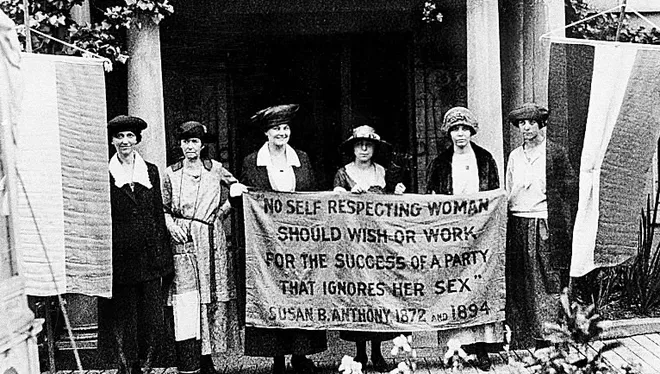
The pattern extends across Britain’s trade union movement. In early 2024, GMB, Unite and Unison in Scotland could not bring themselves to vote in favour of a motion acknowledging women’s sex-based rights. GMB has 50% female membership. Unite has 28%. Unison has 76%. Yet none would defend the principle that women’s rights exist as a material category.
Following the April 2025 Supreme Court ruling that sex means biological sex, the Trades Union Congress voted unanimously to oppose the judgment. Unite’s national LGBT+ committee announced it was deeply concerned. Barbara Plant, GMB president, called the Equality and Human Rights Commission’s guidance “ill-considered, rushed and far from being coherent.”
This is the same Supreme Court ruling that provided the legal foundation for today’s tribunal victory. The unions opposed it. They organised protests against it. They called it segregation, compared it to far-right politics, and accused the Labour government of sacrificing trans people.
At the September 2025 TUC conference, a transgender Unison delegate warned that the equalities minister was overseeing the segregation of trans people in society. Another TUC LGBT+ committee member accused the government of being prepared to sacrifice trans people. They were talking about guidance that says women have the right to female-only changing rooms, hospital wards, and refuges.
When trade unions describe protecting women’s dignity as segregation and sacrifice, they have lost the plot entirely.
Ideology as Luxury Belief

This betrayal reveals a class dimension that any genuinely left-wing analysis must confront. The nurses are working women, doing physically and emotionally demanding jobs in an NHS stretched to breaking point. They could not work from home. They could not opt out of shared facilities. They faced their employer’s policy every single day they came to work.
Meanwhile, union officials and administrators enforcing gender self-identification operated from offices where such policies had no personal impact on their own daily lives. When did Steve North last get changed in a shared facility? When did GMB’s leadership face the material reality of their ideological commitments?
This is ideology as luxury belief, a term coined to describe positions adopted by elites that confer status on the holder while imposing costs on the working class. Gender self-identification in workplace changing rooms is the perfect example. It costs union bureaucrats nothing to proclaim their progressive credentials. It costs working women their privacy, dignity, and safety.
The unions will protest this characterisation. They will point to their LGBT+ committees, their diversity training, their pride in trans-inclusive policies. They will frame opposition as hatred and those who disagree as bigots aligned with the far right.
But material analysis does not care about rhetorical framings. It asks: who bears the cost? Who holds the power? Whose interests are served?
The answer is clear. Working women bear the cost. Male administrators and ideologically captured union officials hold the power. And the interests served are those of a progressive middle class more concerned with symbolic inclusion than material protection.
Institutional Ideology Over Individual Safety
This case demonstrates a pattern that extends far beyond one NHS trust or one union failure. It reveals how gender ideology has captured institutional decision-making across public services and the labour movement, prioritising abstract identity claims over concrete material realities.
The Supreme Court ruled in April 2025 that woman and sex in the Equality Act refer to biological women and biological sex. As Labour Heartlands documented at the time, this was not a radical departure but a restoration of legal clarity. The Equality Act already protects people with the characteristic of gender reassignment. But those protections cannot and should not override women’s sex-based rights to privacy, dignity, and safety in single-sex spaces.
County Durham NHS Trust operated under a transitioning in the workplace policy that allowed anyone who identified as a woman to access female facilities. This policy has since been withdrawn, but only after the Supreme Court ruling forced institutional hand-wringing. The damage, however, was done, the trauma inflicted.
The Counterargument and Why It Fails

Defenders of self-identification policies argue that excluding trans-identified males from women’s spaces causes harm through invalidation and exclusion. They frame this as a clash of rights requiring careful balance.
But this framing is itself ideological sleight of hand. Women’s rights to single-sex spaces are not abstract principles to be balanced against subjective identity claims. They are material protections grounded in biological reality and the documented patterns of male violence against women.
The tribunal made this distinction explicit. It found that Rose Henderson had not personally harassed the nurses. The harassment came from the trust itself, from an institutional policy that treated women’s bodies, boundaries, and dignity as negotiable in service of gender ideology.
No individual’s sense of identity, however sincerely held, can override another person’s right to bodily privacy. A society that cannot grasp this distinction has lost its moral bearings. A trade union movement that brands women defending this principle as bigots has abandoned its purpose.
The Law vs. The Blob
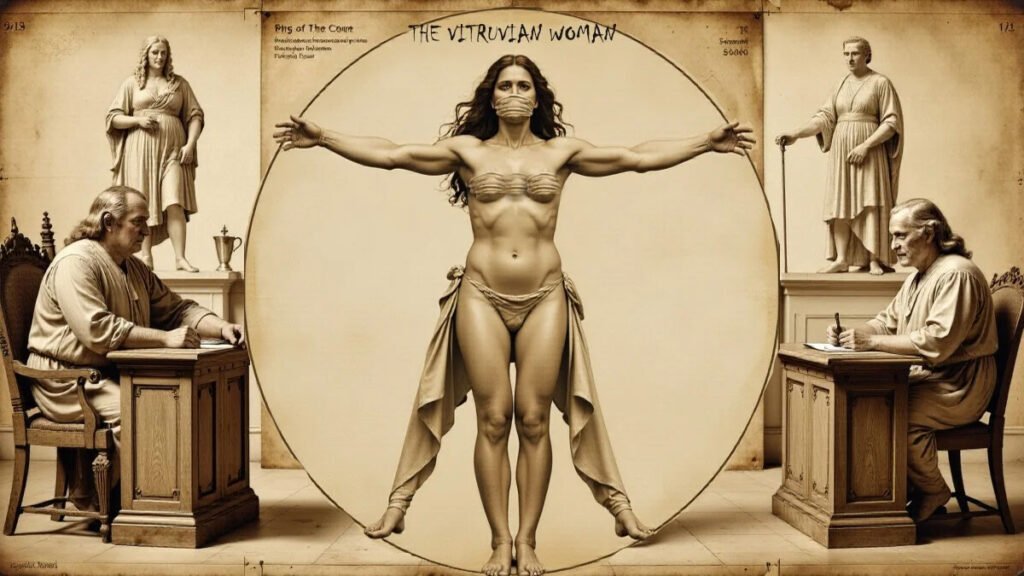
The nurses’ victory is also a triumph for the rule of law over institutional drift. The Trust’s actions flew in the face of the Supreme Court’s clarification that “sex” in the Equality Act refers to biological sex.
Yet, despite this legal clarity, the NHS bureaucracy (often dubbed “The Blob”) has continued to act as if the law is optional, a suggestion rather than a command. They have been emboldened by Stonewall-style guidance that encourages organisations to go “beyond the law,” which in practice means breaking it.
The April 2025 Supreme Court judgment was unequivocal. Sex means biological sex. Single-sex services must be organised on that basis where objectively justified, as they clearly are for changing facilities.
The Supreme Court Ruling Should Have Settled This…
Yet here we are, nine months later, with a tribunal forced to rule on what should have been self-evident. County Durham NHS Trust had months to update its policies in line with the law. Instead, it defended its position through expensive litigation, forcing eight women to publicly relive their trauma and discomfort.
This pattern repeats across public bodies. The Equality and Human Rights Commission has had to pursue NHS England over its continued failure to update guidance on single-sex wards. British Transport Police only revised its policy allowing male officers with gender recognition certificates to strip-search female detainees after public outcry.
The institutional resistance reveals something important. This is not about confusion or good faith disagreement. It is about an entrenched ideology within Britain’s administrative class and union bureaucracy, one that treats biological sex as a bigoted fiction and women’s boundaries as obstacles to progress.
What Must Change
The Darlington nurses’ victory must not remain an isolated judgment. Every public body, every NHS trust, every local authority must now review and revise policies that permit males into female-only spaces based on self-declared identity.
And every trade union must examine how it came to abandon its female members so completely. The unions will resist this reckoning. They will claim they support both trans rights and women’s rights, that the two are not in conflict. But today’s judgment proves otherwise. When push came to shove, when working women needed protection, the unions chose ideology over their members.
The law is clear. The Supreme Court has spoken. The tribunal has ruled. Material reality has not changed, and it never will. Men cannot become women through declaration, and women’s rights to privacy, dignity, and safety cannot be wished away by bureaucratic fiat or union resolution.
This means concrete action. NHS England must update its guidance on single-sex wards immediately. Trusts must provide genuinely single-sex changing facilities, toilets, and accommodation. Staff must be protected from ideologically motivated disciplinary action when they refuse to pretend that sex does not exist.
Parliament must also act. The Equality Act protections for women’s single-sex spaces have been systematically undermined through creative interpretation and wilful institutional defiance. If the law requires strengthening to prevent such abuse, strengthen it.
And unions must rebuild trust with their female members. That means acknowledging material reality. It means defending sex-based rights without equivocation. It means recognising that women’s concerns about privacy and safety are not bigotry to be educated away, but legitimate protections to be defended.
The Deeper Question

But this case raises a question that extends beyond policy. How did we reach a point where eight healthcare workers had to take their own employer to tribunal to secure the basic human dignity of not undressing in front of a male colleague? And how did their own unions not just fail to support them, but actively brand them as bigots?
The answer lies in the intersection of identity politics, elite institution capture, and the abandonment of materialist analysis. When subjective feelings trump objective reality, when identity claims override bodily boundaries, when administrators and union officials can dismiss women’s concerns as requiring re-education, we have created the conditions for systematic abuse dressed up as progressive inclusion.
The left, historically grounded in material analysis of power, has too often surrendered this terrain to liberals who mistake linguistic games for liberation. Renaming male people as women does not redistribute power. It erases the category on which women’s oppression is based.
As Labour Heartlands has argued consistently, any genuine left-wing politics must begin with material reality. Women exist as a biological class. Their oppression is rooted in that material existence. And their liberation requires the defence of sex-based rights and protections, not their dissolution in favour of self-declared identity.
A Turning Point or Business as Usual?

Bethany Hutchison called this ruling a turning point. One hopes she is right. But institutional ideology does not surrender easily. Already, some NHS trusts continue to resist clear legal guidance. Already, some campaigners frame this judgment as an attack on trans existence rather than a defence of women’s boundaries. And already, union officials continue to oppose the Supreme Court ruling that made today’s victory possible.
The fight is far from over. But today’s ruling matters. It affirms what should never have required affirmation: that women have the right to get changed for work without men present, that their discomfort and trauma matter, that their bodies are not ideological territory to be colonised by progressive administrators or sacrificed by captured unions.
For eight nurses in Darlington, this is vindication. For women across the NHS and beyond, it should be a blueprint for resistance. For the trade union movement, it should be a moment of reckoning about whose interests they actually serve.
When institutions demand you accept the impossible, when they tell you to broaden your mind about the evidence of your senses, when they brand your boundaries as bigotry, the answer must be clear and uncompromising: no.
Reality does not require anyone’s validation. And women’s rights are not up for negotiation by union bureaucrats who have forgotten what solidarity means.

Support Independent Journalism Today
Our unwavering dedication is to provide you with unbiased news, diverse perspectives, and insightful opinions. We're on a mission to ensure that those in positions of power are held accountable for their actions, but we can't do it alone. Labour Heartlands is primarily funded by me, Paul Knaggs, and by the generous contributions of readers like you. Your donations keep us going and help us uphold the principles of independent journalism. Join us in our quest for truth, transparency, and accountability – donate today and be a part of our mission!
Like everyone else, we're facing challenges, and we need your help to stay online and continue providing crucial journalism. Every contribution, no matter how small, goes a long way in helping us thrive. By becoming one of our donors, you become a vital part of our mission to uncover the truth and uphold the values of democracy.
While we maintain our independence from political affiliations, we stand united against corruption, injustice, and the erosion of free speech, truth, and democracy. We believe in the power of accurate information in a democracy, and we consider facts non-negotiable.
Your support, no matter the amount, can make a significant impact. Together, we can make a difference and continue our journey toward a more informed and just society.
Thank you for supporting Labour Heartlands