The Gorton Guillotine and the End of Labour
In 1999, Peter Mandelson told a cabinet colleague not to worry about the working class deserting Labour. “They’ve got nowhere else to go,” he said. Last night, in the early hours of a damp Manchester morning, the people of Gorton and Denton answered him. They found somewhere else to go. They found quite a few places, in fact.
They Found Somewhere Else to Go…
The results arrived just after 4 a.m., and with them came the kind of history that is not easily unmade. For the first time in nearly a century, this patch of inner Manchester has rejected the Labour Party. In a seat where they once commanded a majority of 13,413 votes, Keir Starmer’s project has been relegated to a humiliating third place, behind a local plumber and a television presenter whose qualifications for public office consist largely of being professionally outraged for a living.
The figures are worth setting out plainly, because their plainness is their power. Hannah Spencer of the Green Party secured 14,980 votes, representing 40.7 per cent of all ballots cast. Reform UK’s Matt Goodwin came second with 10,578 votes. Labour, the party of government, the self-described party of working people, the party that has held this ground through depression and war and social upheaval, limped home third with just 9,364 votes. In a by-election, with a turnout of 47.6 per cent, which is itself remarkable and speaks to the intensity of feeling, they could not persuade one in four voters to back them.
Gorton has not returned a non-Labour MP since 1931. That was the year of the National Government, of Ramsay MacDonald’s great betrayal, of a Labour Party torn apart by crisis and perceived treachery. The parallel is not comfortable. It should not be intended to be.
The Architecture of Betrayal

This defeat was not stumbled into. It was constructed, brick by deliberate brick, in the offices of Labour’s National Executive Committee. When speculation arose that Andy Burnham, the Mayor of Greater Manchester and the one figure who might have held this seat through sheer force of popular will, could stand, the NEC moved swiftly to foreclose the possibility. Control was preferred to competence. Party management was preferred to democratic appeal. The result is what you see: a candidate, Angeliki Stogia, who arrived as a loyal servant of the machine and departed as the symbol of its failure.
Starmer himself arrived in Gorton the day before polling. He did not knock on doors. He did not campaign in any recognisable sense of the word. He arrived, spoke to cameras, and left.
A reminder of Orwell’s observation in “The Road to Wigan Pier” that it is a kind of duty to see and smell such places now and again, “especially smell them, lest you should forget that they exist; though perhaps it is better not to stay there too long.” Sir Keir appeared to share that instinct. He sniffed, and he fled. You suspect the smell of his own culpability, hanging over Gaza as much as Greater Manchester, made a longer stay unthinkable.
The Workers Party of Britain made a different calculation. They stood aside, describing it as in the best interests of the working class for both Labour and Reform to lose. That disciplined restraint, whatever one thinks of George Galloway’s politics, allowed the anti-establishment vote to consolidate rather than fracture. It was a significant act of strategic coherence, and its consequences are now written into the parliamentary record.
Nowhere Else to Go: The Reckoning

Mandelson’s remark was made in 1999, in private, to a colleague who had expressed concern about Labour’s drift away from its base communities. Stop fussing, Mandelson said, in effect. They have nowhere else to go. It was the authentic voice of an establishment that had confused captive voters with loyal ones, and which had forgotten, in its obsession with triangulation and the courtship of middle England, that even captive populations eventually find the door.
Between 1997 and 2005, Labour lost five million working-class voters. Brexit hollowed out the Red Wall. The Runcorn by-election went to Reform by six votes. Caerphilly fell to Plaid Cymru. And now Gorton, the reddest of red heartlands, has gone Green while Reform presses hard at the door. In each case, the logic is the same. Take the base for granted long enough, and the base stops being yours.
“Nothing is more unpredictable than the mob, nothing more obscure than public opinion…”
— Cicero
Starmer’s response to the gathering crisis of working-class desertion was to invite Mandelson deeply and deliberately into the tent. The architect of the “nowhere else to go” doctrine was appointed US Ambassador, brought back to the centre of power precisely at the moment when the working class was demonstrating, seat by seat, that it had indeed found somewhere else. This was not merely ironic. It was a statement of values. It told the country, in the plainest possible terms, whose company this leadership keeps and whose interests it serves.
Then came the Epstein disclosures. Bank statements appearing to show payments linked to Mandelson. JPMorgan ledgers that, unlike British politicians, suffer no convenient amnesia. The Prince of Darkness resigned from the Labour Party in February, ostensibly to spare further embarrassment. The embarrassment, of course, was not primarily Mandelson’s. It was Starmer’s: the man who appointed him despite years of public warnings about those Epstein connections, the man who shared with Mandelson membership of the Trilateral Commission, that exclusive forum where global elites shape policy far from democratic scrutiny. Out of 650 MPs, Starmer was the only one invited to join it in 2019.
The appointment, the silence, and then the belated retreat: this is the architecture of the scandal that preceded Gorton. The voters of inner Manchester did not need to read the Epstein files to feel their shape. They felt it in their bones. And they acted accordingly.
A Green Victory: But For Whom?

Let us not, however, mistake the winner’s celebration for a straightforward moral verdict. The Green Party’s Hannah Spencer ran a skilful, energetic campaign, and the personal achievement of a 34-year-old local plumber defeating the full machinery of a governing party deserves genuine respect. But the Greens did not win Gorton and Denton on the basis of their programme for industrial renewal, or their vision for the deindustrialised towns that stretch across Greater Manchester.
They won largely because they were not Labour, and because Gaza provided the combustible fuel that tactical voting poured into a ready engine.
This matters for what comes next. The Green Party is, in many of its instincts and commitments is now in foreign territory, a southern Party in northern lands. It carries deep contradictions to both sides of this constituency. Its open borders policies, its institutional embrace of gender identity ideology over women’s sex-based rights, its reflexive coastal progressivism, its capacity to shapeshift into a softer neoliberalism when proximity to power beckons: none of these sit easily with the working-class communities of inner Manchester, whose politics are shaped by deindustrialisation, housing insecurity, and a rather more material set of grievances than the metropolitan Green movement typically addresses.
Gaza was real. The anger over this government’s complicity in what the United Nations has described as a genocide is real, and it is moral, and it deserves to be taken seriously rather than managed. But the sectarian dimension of this contest cannot be simply wished away on a wave of post-result euphoria. Democracy Volunteers, attending 22 of the 45 polling stations, reported family voting in 68 per cent of locations, affecting an estimated 12 per cent of observed voters, by their own assessment the highest level recorded in ten years of electoral observation. That is not a reason to invalidate the result, but it is a reason to understand it with clear eyes rather than rose-tinted ones.
The vote fractured in two distinct directions simultaneously. In Gorton, disgust over Gaza and the government’s casual contempt for Muslim communities drove voters to Spencer. In Denton, something older and more territorial was at work, as Reform’s Goodwin collected votes from people whose concerns are about wages, housing, community change, and the accumulated sense of being abandoned. This was not one movement. It was two separate ones, moving in the same direction by chance, united only by their rejection of what Labour had become.
Matt Goodwin’s response to defeat, in which he spoke of “dangerous Muslim sectarianism” and declared that Britain has “only one general election left to save itself,“ tells you everything you need to know about what Reform’s presence in this contest actually represented. That his party secured over ten thousand votes despite running a candidate capable of such language is not a cause for celebration. It is a warning that should concentrate minds considerably more than it apparently has.
The Hollow Majority

The defenders of the status quo will reach for the familiar consolation: this is merely a by-election, a protest, a one-off. They are wrong in the way that men are always wrong when they explain to the crowd that the building is not actually on fire. The smoke and the heat are simply not being adequately communicated.
Labour holds a parliamentary majority that sits upon it, in Macbeth’s phrase, “like a giant’s robe upon a dwarfish thief”. The seats remain. The authority has evaporated. Jon Trickett, MP for Normanton and Hemsworth, was characteristically precise: “I think this signals a bigger change in the way that people see the country, its politics and its leaders.”
Claudia Webbe who found the most devastating formulation of what the night actually meant: “Labour held Gorton and Denton for 52 years. A majority of 13,413 in 2024. Last night Labour came third, behind a plumber. Their vote share crashed from 50.8 per cent to 25 per cent. This isn’t decline. It’s a political extinction event. Starmer killed Labour in its own heartland.” These are not fringe voices. These are people reading the map while the captain stares at the horizon.
The Tory-Labour duopoly, those two cheeks of the same establishment behind which a generation of voters have been told there is no alternative, has been tested to destruction. There is an alternative to perpetual austerity while infrastructure crumbles. There is an alternative to foreign policy conducted in service of arms manufacturers and geopolitical vanity rather than human lives. There is an alternative to a political class more interested in the approval of Davos than the needs of Denton. Last night demonstrated that voters, from very different directions, are determined to find it.
The Reckoning Cannot Be Managed
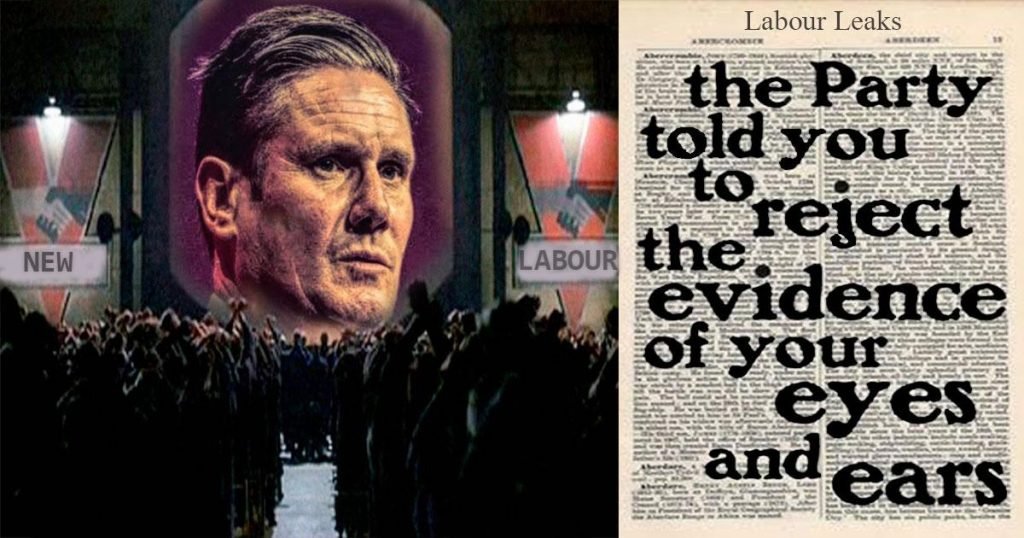
Replacing Starmer with another smooth technocrat, another focus-grouped product birthed from the think tank of the same professional political culture, will not answer what Gorton has said. The foundation has turned to sand, and new masonry laid upon sand does not stand. The structural question is not who leads Labour but what Labour is for, and whether anything it is currently for corresponds to the daily material reality of the communities whose name it still bears.
Mandelson’s dictum has been answered. Hartlepool answered it first, then Runcorn, then Caerphilly, and now the streets of inner Manchester, where Labour held on through the Depression, through the war, through Thatcher, through Blair’s own betrayals, have finally, irreversibly said: enough.
The working class did have somewhere else to go. Some went left; some went right. Some held their noses and voted for a party whose instincts they do not share, because the alternative was worse. That is not a ringing endorsement of Green politics. That is a final, desperate withdrawal of consent from an establishment that mistook tolerance for loyalty.
Democracy, when it finally moves, does not wait for permission; it is a thundering herd that carries the weight of a world reborn.
Peter Mandelson said the working class had nowhere else to go. Gorton and Denton just sent back the receipt…
Enjoyed this read? I’m committed to keeping this space 100% ad-free so you can enjoy a clean, focused reading experience. Crafting these articles takes a significant amount of research and heart. If you found this helpful, please consider a “small donation” to help keep the lights on and the content flowing. Every bit of support makes a huge difference!

Support Independent Journalism Today
Our unwavering dedication is to provide you with unbiased news, diverse perspectives, and insightful opinions. We're on a mission to ensure that those in positions of power are held accountable for their actions, but we can't do it alone. Labour Heartlands is primarily funded by me, Paul Knaggs, and by the generous contributions of readers like you. Your donations keep us going and help us uphold the principles of independent journalism. Join us in our quest for truth, transparency, and accountability – donate today and be a part of our mission!
Like everyone else, we're facing challenges, and we need your help to stay online and continue providing crucial journalism. Every contribution, no matter how small, goes a long way in helping us thrive. By becoming one of our donors, you become a vital part of our mission to uncover the truth and uphold the values of democracy.
While we maintain our independence from political affiliations, we stand united against corruption, injustice, and the erosion of free speech, truth, and democracy. We believe in the power of accurate information in a democracy, and we consider facts non-negotiable.
Your support, no matter the amount, can make a significant impact. Together, we can make a difference and continue our journey toward a more informed and just society.
Thank you for supporting Labour Heartlands