Are we being asked, once again, to believe in the impossible to justify the indefensible? In 2003, it was the infamous “45-minute” claim, a dossier-driven fiction that dragged Britain into the graveyard of Iraq. Today, as the smoke clears over the Indian Ocean, a new number is being etched into the public consciousness: 4,000 kilometres.
On Friday, the world was told that Iran launched two ballistic missiles at the joint UK-US base on Diego Garcia. This claim does not merely signal an escalation; it shatters the known laws of Iranian physics. For years, Tehran has maintained a 2,000-kilometre ceiling on its missile programme. Suddenly, at the precise moment Prime Minister Keir Starmer authorises the use of British soil for ‘Operation Epic Fury’, the enemy develops a reach that is exactly, conveniently, double its previous limit.

In 2003, a single number, forty-five minutes, was used to take Britain to war on a lie. The man who challenged it was found dead on a hillside nine days after he was named. This week, a new number has arrived: 4,000 kilometres. The mechanism is identical. Only the theatre has changed.
From 45 Minutes to 4,000 Kilometres: How the Same War Machine Keeps Selling Lies

There is a template. It was not invented in Washington in 2003, though it was refined there to a lethal precision. It does not require fabrication in the crude sense of the word. It requires only three things: a number, a conveyor belt of unnamed officials to deliver it, and a press corps too timid, too embedded, or too captured to ask whether the number has been verified by anyone who has put their name to the claim.
The number in 2003 was forty-five minutes. Saddam Hussein, Britain’s public was told, could deploy weapons of mass destruction against British forces within forty-five minutes of an order. The claim was in a government dossier. It made headlines. It silenced doubters. It helped take this country into the worst foreign policy catastrophe since Suez, at the cost of hundreds of thousands of lives. And the man who knew the claim was, at minimum, profoundly misleading was found dead on Harrowdown Hill on 17 July 2003, nine days after he was named, having appeared before the Foreign Affairs Select Committee two days prior.
The number in 2026 is 4,000 kilometres. We are told that Iran fired two intermediate-range ballistic missiles toward Diego Garcia. We are told neither struck the island. We are told one failed in flight, that a US warship fired an interceptor at the other, and that it remains unconfirmed whether that interceptor made contact. We are told all of this by unnamed American officials whose claims were first published in the Wall Street Journal. There has been no on-the-record Pentagon statement. There has been no acknowledgement from Tehran. There is, however, a geopolitical gift of almost indecent precision.
The template has been activated. The question is whether, this time, we are capable of noticing.
MANUFACTURING CONSENT: HOW THE MACHINE WORKS

In 1988, Edward Herman and Noam Chomsky published a study of how democratic societies manage public opinion without resort to overt coercion. They called it Manufacturing Consent. Their central argument was not that governments forge documents or invent events wholesale. It was subtler and, for that reason, more disturbing: that the flow of information through a media ecosystem structurally dependent on official sources will, without conscious conspiracy, produce a propaganda function indistinguishable from state direction.
The third of their five filters was sourcing. Governments, military establishments, and large corporations are what Herman and Chomsky called ‘primary definers.’ They produce information in volume, on schedule, with the imprimatur of authority. A defence reporter on deadline does not have time to independently verify a missile’s range. He has time to call a ministry press officer, receive a briefing from unnamed officials, and file. The claim arrives in print dressed in the authority of its origin, never stripped of that authority by the qualifier it deserves: unverified, unattributable, and serving an identifiable political purpose.
When we ask how the forty-five minute claim survived so long without mainstream challenge, this is the answer. When we ask how the 4,000-kilometre figure passed through Friday’s news cycle essentially unexamined, this is the answer. The machine does not require malice. It requires only the path of least institutional resistance.
The forty-five minutes did not need to be a lie in the strict sense. It needed only to be unverified, amplified, and delivered at the moment a government required the public’s consent for something the public had not been asked about. Sound familiar?
DAVID KELLY AND THE PRICE OF DISSENT
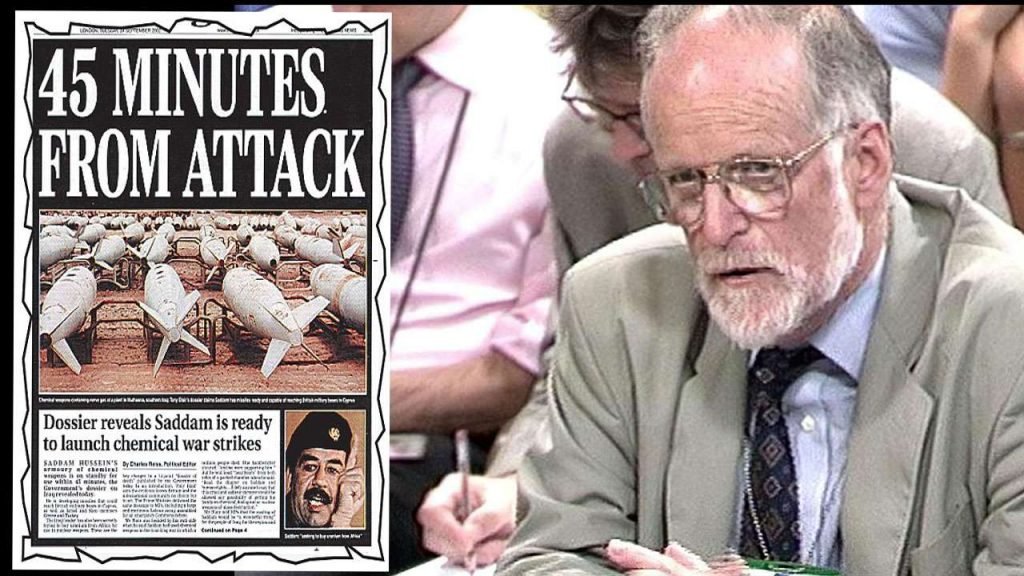
To understand why the 4,000-kilometre claim matters beyond its technical merits, you must understand what happened to the last British expert who applied professional scrutiny to a government’s convenient numbers.
David Kelly was not a dissident. He was not a radical. He was a civil servant, a biological warfare expert of international reputation, a former UN weapons inspector who had led ten missions into Iraq between 1991 and 1998. He had proofreaded sections of the September 2002 dossier and he was, in the words of those who knew his work, one of the few people in Whitehall actually qualified to assess what it claimed. He believed Iraq retained some biological weapons capability. He was not opposed to the war in principle. What he was opposed to was the specific claim that Saddam Hussein could deploy chemical and biological weapons within forty-five minutes of an order.
Kelly told the BBC’s Andrew Gilligan at the Charing Cross Hotel on 22 May 2003 that the forty-five minute claim had been, in his words, ‘a mistake to put in.’ He described it as single-sourced, uncorroborated, and transformed in the week before publication to make the dossier, in Gilligan’s notes, ‘sexier.’ The intelligence, as later established, related to battlefield delivery systems within Iraq, not ballistic weapons capable of reaching the West. The claim had been dressed up to suggest something it did not mean, at the moment a government needed the public to feel personally threatened.
When Gilligan’s report aired, the government did not correct the record. It went to war with the BBC. Kelly was named. He appeared before the Foreign Affairs Select Committee on 15 July, questioned aggressively about his own credibility. Two days later he was found on Harrowdown Hill. His wrist had been cut. A packet of painkillers was near the body with one of thirty tablets remaining. Lord Hutton was appointed to inquire into the circumstances, delivered a report that cleared the government entirely, and was condemned by critics across the political spectrum as one of the more thorough institutional whitewashes in modern British history. The BBC’s chairman resigned. Its director-general was fired. Alastair Campbell was exonerated.
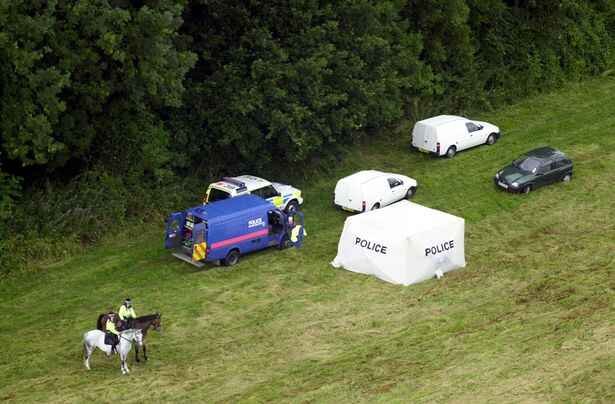
Several medical doctors wrote to the Guardian raising doubts about whether the injuries were consistent with the official verdict. Norman Baker, the Liberal Democrat MP, spent years investigating the case and published his findings in a book whose title, The Strange Death of David Kelly, says more than its pages were able to prove. No further inquest was ever ordered. The case was officially closed.
This article makes no allegation about how David Kelly died. What it does observe is the effect of how he died. In the twenty-three years since Harrowdown Hill, no British government weapons expert has publicly contradicted a ministerial narrative about an adversary’s military capabilities. The silencing that requires no directive is the most effective silencing of all.
You do not need to threaten every scientist in Whitehall. You need only to make an example of one. The lesson of David Kelly was not lost on those who came after him. It was, perhaps, the point.
CYPRUS: THE DRESS REHEARSAL

The Diego Garcia narrative did not arrive without a preceding act. On the night of 1-2 March, a drone struck the runway at RAF Akrotiri, Britain’s sovereign base on the southern tip of Cyprus. Cypriot President Nikos Christodoulides initially identified it as Iranian. The British Ministry of Defence confirmed an attack. The story ran as Iranian aggression against a British base. The political consequence was immediate: Keir Starmer announced that the United States could use British bases for strikes against Iranian missile sites.
Within days, quietly, the MoD issued a correction. The drone had not been launched from Iran at all. It had been fired, they believed, by a pro-Iranian militia in Lebanon or western Iraq. The investigation, they added with careful imprecision, had been unable to conclusively establish the origin. No party ever claimed responsibility. The launch point was never confirmed. The event had done its political work before the correction arrived.
There was a further detail that received rather less attention than it warranted. The drone struck Akrotiri within one hour of Starmer’s announcement allowing US base access. Yvette Cooper, pressed on the coincidence of timing, offered an explanation that should have provoked more forensic scrutiny than it received: drones, she observed, are often launched a long time before they hit their targets. Quite so. But if the drone was already in flight before London had publicly committed to the conflict, someone had anticipated the announcement and launched against a British base before Britain had officially taken sides. That is either a remarkable coincidence or evidence of foreknowledge that demands a proper accounting.
Instead, it was absorbed into the general narrative of Iranian aggression and forgotten by the following week’s news cycle. This is the Cyprus template: an attack attributed to Iran, used to justify British escalation, subsequently complicated by evidence that the attribution was wrong, by which point the political decision it enabled could not be reversed.
THE OVERNIGHT MIRACLE OF THE DOUBLED RANGE

Against this background, examine the Diego Garcia claim with the rigour it has not so far received. Iran’s foreign minister Abbas Araghchi stated publicly last month that Tehran maintains a self-imposed ceiling of 2,000 kilometres on its ballistic missile programme. That ceiling, formalised in 2015, was a deliberate policy choice: precision and accuracy were prioritised over range, partly as a signal to European capitals that they were not in Tehran’s sights.
On Friday night, that ceiling was not merely exceeded. It was exactly doubled, in combat conditions, under the most intensive aerial bombardment in the country’s history, with an estimated 7,000 targets struck in the preceding weeks and Iranian missile production infrastructure severely degraded. No public test programme preceded this debut. No satellite imagery has confirmed the launch point. No on-the-record official has attached their name to the assessment. The source is unnamed US officials, transmitted through a single American newspaper.
The physics are not, in principle, impossible. France, Germany, and the United Kingdom told the UN Security Council in 2019 that a Khorramshahr variant with a lighter nose cone could theoretically reach approximately 3,000 kilometres. Iran Watch, the Wisconsin Project’s monitoring body, has estimated a theoretical ceiling of up to 4,000 kilometres if warhead mass were significantly reduced. Iran’s Khorramshahr-4, known as the Kheibar, carries a warhead of 1,500 to 1,800 kilograms, the heaviest in Tehran’s known inventory. Strip that warhead to a fraction of its weight and the range expands. These are real variables. They are not to be dismissed.
What is to be examined, with professional scepticism rather than credulity, is the gap between a theoretical maximum under laboratory conditions and a successful operational deployment at that maximum, against a specific small island in the middle of the Indian Ocean, in the middle of a war.
WHAT THE GUNNER KNOWS

Those of us who served in the Royal Artillery understand that range is only the first problem. I spent time in the 50 Missile Regiment RA, Britain’s sole nuclear-capable missile regiment during the Cold War, handling the MGM-52 Lance system. The education in ballistics that service provides is not abstract. It is numerical and unforgiving.
Error in long-range ballistics is measured in milliradians. One mil, roughly 0.057 degrees of deviation, sounds negligible. At 4,000 kilometres it places your warhead four kilometres from the intended target. A single degree of deviation means a miss of nearly seventy kilometres. To hit a specific military installation at that distance requires real-time satellite guidance for mid-course correction, Coriolis compensation, atmospheric density modelling, and a terminal phase accurate enough to matter against a target of any military significance.
Iran’s Khorramshahr-4 incorporates a maneuverable reentry vehicle with small thruster corrections in its terminal phase, and its mid-course navigation uses inertial guidance with possible satellite augmentation. These are genuine advances on older systems, and they deserve to be acknowledged honestly. Guidance technology has improved enormously since my service. I would not pretend otherwise.
But: augmented by whose satellite? The United States operates GPS. Russia operates GLONASS. China operates BeiDou. Iran operates none of them. Without a sovereign global positioning constellation, mid-course correction at 4,000 kilometres is severely constrained. A missile fired at Diego Garcia without that constellation is not a precision instrument. It is a statement of intent aimed at a very large ocean in the hope that the island is somewhere beneath it. Both missiles missed. One failed in flight. This is either the catastrophic combat debut of a weapon system Iran waited until now to reveal, or it is precisely what physics would predict from a system operating at the very outer boundary of its performance envelope.
The laws of physics do not adjust for political convenience. I learned that early. It is a lesson that appears not to have reached the foreign desks of those reporting this story.
When the trajectory does not hold up to trigonometry, the only thing being targeted is the truth. But in modern information warfare, that is often sufficient.
CUI BONO: THE ARCHITECTURE OF A NARRATIVE

Set the technical questions aside and apply the most basic principle of investigative analysis. Examine what the claim does before you examine whether it is true.
Keir Starmer benefits directly. A prime minister who authorised the use of British sovereign territory for what critics, including members of his own backbenches, have argued is an illegal war of choice was facing mounting parliamentary pressure and calls for a Commons vote from the Liberal Democrats and the Greens. An Iranian strike on Diego Garcia, however unsuccessful, transforms Britain from a secondary participant enabling American aggression into a direct victim exercising the inherent right of self-defence. The political manoeuvre is elementary. It has worked before. It is working again.
Donald Trump benefits strategically. He has spent three weeks attempting and failing to bring NATO into a war his allies have refused to legitimise. Germany’s Boris Pistorius said it without diplomatic packaging: this is not our war. The EU’s Kaja Kallas told reporters that nobody is ready to put their people in harm’s way in the Strait of Hormuz, and that European governments had not been consulted before the war began and did not understand its objectives. France, Japan, Australia, South Korea: all declined. The coalition Trump needed to construct before the war, and did not, has proven impossible to assemble after it.
What might change that European calculation? Precisely what the 4,000-kilometre claim provides. The Washington Examiner, not a publication given to subversive interpretation, noted without apparent irony that the new range puts nearly all of Europe within Iran’s missile envelope, and could change NATO countries’ calculus on whether to combat Iran. Athens. Rome. Paris. London. These cities enter the theoretical targeting radius not because of a verified Iranian technological breakthrough, but because of an unverified claim by unnamed officials passed through a single newspaper on the same day Starmer expanded British military commitment. The range claim is not primarily a military assessment. It is a political instrument aimed at a European audience that has so far proved resistant to pressure.
Herman and Chomsky called this the manufacture of an existential threat. The fifth of their five filters was anti-communism, later updated by analysts to encompass the fear of a designated enemy. The enemy does not need to be capable of what it is claimed to be capable of. It needs only to appear so, long enough for the political decision to be made. By the time the evidence is interrogated, the decision is irreversible.
THE COST HIDDEN BEHIND THE HEADLINE

While the commentariat debates the theoretical flight path of two missiles that missed an island, the actual cost of this conflict falls, as it always does, on those with least power to resist it. Brent crude has traded above one hundred dollars a barrel since the Strait of Hormuz was effectively closed in early March. Iranian attacks on Qatar’s LNG infrastructure have disrupted nearly a fifth of production at the world’s largest liquefied natural gas facility: the same supply chain Europe scrambled to secure after Russia’s invasion of Ukraine. The working people of Britain are paying for Operation Epic Fury at the petrol pump and on their heating bills, while a prime minister who won an election on a mandate for economic stability delivers neither stability nor an honest accounting of what he has committed this country to.
More than 3,000 Iranians are reported dead, a significant proportion civilians. Thirteen American service personnel have been killed. The Pentagon seeks two hundred billion dollars in additional funding. Trump is simultaneously declaring that the war is nearly won and demanding that Europe send warships. These are the realities against which the question of whether an unnamed official’s claim about an unverified missile’s range is literally true might appear academic. It is not academic. It is the mechanism by which these realities are extended, legitimised, and placed beyond political challenge.
THE OBLIGATION WE OWE THE DEAD

David Kelly is buried in the churchyard of St Mary the Virgin in Longworth, Oxfordshire. He was fifty-nine years old when he died. He had spent his professional life trying to establish what was and was not true about the weapons programmes of authoritarian states. He was, by every account, meticulous, cautious, and committed to the difference between evidence and assertion. He was destroyed, officially or otherwise, for that commitment.
The obligation his fate places on those of us still doing this work is not to allege what cannot be proved. It is to ask what he asked. It is to apply professional expertise to official claims made in the service of military escalation. It is to notice when a government needs a threat to exist and a new number appears to supply it. It is to say, clearly and on the record, that the burden of proof for claims used to justify war falls on those making the claims, not on those questioning them.
This article does not assert that the Diego Garcia strike was fabricated. The event may have occurred. Iran may have fired two missiles toward the Indian Ocean. The Khorramshahr series may, under specific and so far unverified conditions, reach further than Tehran has publicly acknowledged. The Cyprus drone was real enough; it struck a British base and caused damage. Real events can still serve manufactured narratives. That is, in fact, how the template most effectively operates.
What this article asserts is that none of the claims currently in circulation have been verified by anyone prepared to put their name to the verification; that the timing of each escalation in the British involvement has been preceded by a convenient attack on a British asset; that the range claim serves an identifiable political purpose of the first order; and that the last time a British expert applied rigorous professional scrutiny to the government’s convenient numbers, the institutional weight of the state was brought to bear on him in a manner that ended his career, his freedom, and, by the official account, his life.
The Chilcot Inquiry, published thirteen years after the invasion of Iraq, concluded that the intelligence had been flawed and the case for war had been presented with a certainty that was not justified. Thirteen years. By then, the country had been remade, the casualties were a settled fact, and the men who made the decisions had received their peerages, their directorships, and in one case a role as Middle East peace envoy of sufficient irony to constitute its own condemnation.
We cannot wait thirteen years this time. The war is three weeks old and escalating. The template is operating at speed. The questions must be asked now, by those of us who still have the professional standing and the institutional independence to ask them, before the next set of unnamed officials delivers the next convenient number.
They gave us forty-five minutes to believe a lie that cost a million lives. They are giving us 4,000 kilometres to believe the next one. The only weapon that has ever stopped this machine is the refusal to be counted among the credulous. Use it…
Enjoyed this read? I’m committed to keeping this space 100% ad-free so you can enjoy a clean, focused reading experience. Crafting these articles takes a significant amount of research and heart. If you found this helpful, please consider a “small donation” to help keep the lights on and the content flowing. Every bit of support makes a huge difference!

Editorial note: This article raises questions of evidence and accountability regarding unverified claims made by unnamed officials in the context of an active armed conflict. No allegation of fabrication is made. All technical assessments are grounded in publicly available intelligence documentation, UN Security Council records, and the author’s professional military experience in ballistic missile systems with 50 Missile Regiment RA. The account of David Kelly’s death reflects the findings of the Hutton Inquiry, publicly available medical correspondence in the Guardian, and Norman Baker’s published investigation. We invite any serving minister to correct the factual record on the public platform they control.
Principal sources: Wall Street Journal (unnamed US officials); UK Ministry of Defence statements (March 2026); Wikipedia / Long War Journal (RAF Akrotiri drone strikes); Iran Watch / Wisconsin Project missile capability assessments; UN Security Council letter S/2019/270 (France, Germany, UK, 27 March 2019); Chilcot Inquiry Report (2016); Hutton Inquiry Report (2004); Norman Baker, The Strange Death of David Kelly (2007); Edward Herman and Noam Chomsky, Manufacturing Consent (1988); Al Jazeera; ITV News; CNBC; The National; NPR; NBC News; Army Recognition.
Support Independent Journalism Today
Our unwavering dedication is to provide you with unbiased news, diverse perspectives, and insightful opinions. We're on a mission to ensure that those in positions of power are held accountable for their actions, but we can't do it alone. Labour Heartlands is primarily funded by me, Paul Knaggs, and by the generous contributions of readers like you. Your donations keep us going and help us uphold the principles of independent journalism. Join us in our quest for truth, transparency, and accountability – donate today and be a part of our mission!
Like everyone else, we're facing challenges, and we need your help to stay online and continue providing crucial journalism. Every contribution, no matter how small, goes a long way in helping us thrive. By becoming one of our donors, you become a vital part of our mission to uncover the truth and uphold the values of democracy.
While we maintain our independence from political affiliations, we stand united against corruption, injustice, and the erosion of free speech, truth, and democracy. We believe in the power of accurate information in a democracy, and we consider facts non-negotiable.
Your support, no matter the amount, can make a significant impact. Together, we can make a difference and continue our journey toward a more informed and just society.
Thank you for supporting Labour Heartlands