From NCCL to Epstein: The Labour Paedophile Scandal Pattern
When a political ideology ends not with a whimper but with criminal investigations into market manipulation and associations with convicted child sex offenders, perhaps the time has come to speak plainly about what that ideology actually was.
Lord Maurice Glasman, founder of Blue Labour and until this morning a relatively circumspect critic of the Labour establishment, appeared on Sky Sunday Morning with Trevor Phillips to deliver what can only be described as last rites. His message to Keir Starmer’s government: New Labour is not merely failed policy or mistaken strategy. It is “sin” that led directly to “perversion and paedophilia.” And sin, as Glasman reminded Trevor Phillips’ viewers, requires repentance.
This is not hyperbole dressed as analysis. This is a Labour peer, who personally warned Number 10 about Peter Mandelson’s Epstein connections before his disastrous ambassadorial appointment, now publicly connecting the dots between an ideological project and its material consequences. The uncomfortable truth Glasman articulates is this: when you build a political movement on the worship of wealth, the celebration of global finance, and the systematic transfer of power from democratic institutions to private capital, you should not be surprised when that movement produces leaders who leak market-sensitive information to convicted paedophiles during a national economic crisis.
The Warning They Ignored
The timeline matters. In January 2025, Glasman attended Donald Trump’s inauguration as the only Labour politician invited. He was there because JD Vance, years earlier, had taken an interest in his writing about rebuilding working-class political coalitions. What Glasman found in Washington was not the diplomatic triumph Number 10 might have hoped for. Instead, he encountered Americans who walked up to him showing photographs on their phones: Peter Mandelson blowing out birthday candles with Jeffrey Epstein, Mandelson in a bathrobe with Epstein, Mandelson engaged in what can only be described as intimately compromising situations with a man already convicted of soliciting children for prostitution.
Glasman did what any responsible political figure would do. He compiled this information into a confidential briefing document and sent it directly to Morgan McSweeney, Sue Gray, and senior staff at Number 10. His message was unambiguous: “Withdraw Peter Mandelson. He is the wrong man at the wrong time in the wrong place.”

The warning was not abstract. Glasman explained to the Prime Minister’s inner circle that in American political culture, particularly among the MAGA coalition that would control the next administration, Epstein represents “metaphysical evil.” The QAnon conspiracy universe had transformed Epstein into a symbol of elite corruption and child exploitation. Whether you consider such views rational is irrelevant. The incoming Trump administration would be populated by people who believed them. Appointing Mandelson was not merely poor judgment. It was political suicide.
Number 10 ignored him. Morgan McSweeney, who Glasman describes as someone caught perpetually between New Labour and Blue Labour instincts, chose to back Mandelson. David Lammy and Jonathan Powell reportedly expressed scepticism. But Starmer, exhibiting the same deference to New Labour grandees that has characterised his entire political career, proceeded with the appointment.
The result? A scandal that has consumed the government, prompted criminal investigations by the Metropolitan Police, forced Gordon Brown to hand evidence to detectives, and exposed the rot at the heart of Britain’s political class.
The Scapegoat and What It Reveals

Morgan McSweeney’s resignation this morning was designed to be a firebreak. His statement hits the required notes: accepts responsibility, acknowledges damage, speaks of honour, remains loyal to the Prime Minister while stepping aside. It is, by Westminster standards, a well-executed fall on the sword.
But McSweeney’s resignation actually makes Keir Starmer’s position indefensible rather than salvageable. Consider what his statement confirms:
First, it acknowledges the Mandelson appointment was “wrong” and “damaged our party, our country and trust in politics itself.” This is not minor error requiring tactical adjustment. This is catastrophic failure requiring accountability at the highest level.
Second, McSweeney explicitly states he “advised the Prime Minister to make that appointment” and takes “full responsibility for that advice.” This confirms what Glasman revealed: the decision came from Starmer’s inner circle, with McSweeney as its champion.
Third, and most damningly, McSweeney notes he “did not oversee the due diligence and vetting process” but believes “that process must now be fundamentally overhauled.” This raises the obvious question: if McSweeney didn’t oversee that process, who did? And how did that process produce a recommendation for Mandelson despite warnings from security services, Cabinet Office ethics teams, Maurice Glasman, and a Financial Times journalist who spoke directly to Starmer in January 2024?
The answer is clear: the due diligence process worked. It produced warnings. Those warnings were ignored.
McSweeney’s resignation attempts to frame this as an advisory failure. But Starmer is not a clerk who rubber-stamps recommendations. He is Prime Minister. His job is to assess advice, weigh risks, and make final decisions that serve the national interest. If the advice was so catastrophically wrong that the adviser must resign, why is the decision-maker who accepted that advice still in office?
This is the classic Westminster scapegoat operation: sacrifice the staff to protect the principal. But it fails on its own terms because McSweeney’s statement confirms the scale of the disaster while attempting to limit accountability to himself. The more honourable and responsible McSweeney appears in resignation, the more cowardly and irresponsible Starmer appears in remaining.
The statement’s final line gives the game away: “I remain fully supportive of the Prime Minister.” This is not genuine accountability. This is choreographed protection. McSweeney exits to contain the damage while maintaining that Starmer bears no responsibility for the decision Starmer actually made.
But the public is not stupid. If the Mandelson appointment damaged “our party, our country and trust in politics itself,” and if “responsibility must be owned when it matters most,” then that responsibility extends to the person with ultimate authority: the Prime Minister who received multiple warnings and proceeded regardless.
McSweeney’s resignation will satisfy no one because it attempts to answer a question nobody is asking: was Morgan McSweeney’s advice good? The actual question is: why did Keir Starmer ignore warnings from security services, ethics teams, and Labour peers to appoint a man who maintained close friendship with a convicted paedophile and leaked state secrets to him during a national crisis?
That question has only two possible answers, both disqualifying, and McSweeney’s resignation does nothing to resolve them.
A Pattern, Not an Aberration

Before examining the ideological origins of this catastrophe, we must acknowledge an uncomfortable historical truth: this is not the first time senior Labour figures associated with New Labour’s ascendancy have been connected to institutional failures regarding child protection.
In the 1970s and early 1980s, the National Council for Civil Liberties (NCCL, now Liberty) maintained an affiliate relationship with the Paedophile Information Exchange (PIE), an organisation that openly campaigned for lowering the age of consent to four years old and argued that “childhood sexual experiences, willingly engaged in with an adult, result in no identifiable damage.”
Three figures who would become central to New Labour held senior positions at NCCL during PIE’s affiliation: Patricia Hewitt served as general secretary from 1974 to 1983. Harriet Harman worked as legal officer from 1978 to 1982. Jack Dromey, Harman’s husband, sat on the executive committee from 1970 to 1979.
During this period, NCCL submitted parliamentary briefings defending PIE members from “attacks,” argued that proposed child pornography laws would “increase censorship,” and claimed that images of naked children should only be considered indecent if harm to the subject could be proven. The organisation only expelled PIE in 1983, after arrests and sustained public pressure.
When this history resurfaced in 2014, the responses varied. Hewitt eventually apologised, admitting she had been “naïve and wrong” to accept PIE’s presentation of itself as a “campaigning and counselling group.” Harman expressed “regret” but refused to apologise, characterising media scrutiny as a “smear campaign.” All three insisted they personally opposed PIE’s aims and that the affiliation was an organisational structure issue rather than active support.
This matters not because individual politicians endorsed paedophilia, which they consistently denied. It matters because it establishes a pattern: senior figures who would later become architects and defenders of New Labour repeatedly prioritised institutional loyalty and career advancement over confronting organisations connected to child abuse. When faced with evil requiring moral courage to oppose, they chose accommodation, minimisation, or silence.
The Mandelson scandal is not isolated. It is the culmination of an institutional culture that has existed for decades.
The Ideological Origins of Corruption

What makes Glasman’s intervention this morning so devastating is not merely that he was proved right about Mandelson. It is that he explicitly locates this catastrophe, and the pattern it represents, within New Labour’s ideological framework.
At least seven PIE members were subsequently jailed for paedophilia offences. The organisation’s chairman later claimed that Harman and Hewitt did not actively support PIE but “didn’t even try” to remove it from NCCL because “their careers depended upon them not rocking the boat too much.”
Mandelson was not some aberrant figure who infiltrated Labour. He was, as Glasman correctly identifies, the intellectual founder and enforcer of New Labour itself. Tony Blair and Gordon Brown were the parliamentary carriers. Anthony Giddens provided academic cover with Third Way theory. But Mandelson was the architect who transformed a social democratic party into what Glasman describes as a vehicle for “globalisation worship” and “success and money worship” combined with “Maoist managerialism.”
This was not evolution. It was, in Glasman’s words, “a very systematic, hostile takeover of the Labor Party.” The acceptance of the Thatcher settlement. The embrace of financial deregulation. The celebration of oligarchic wealth. The systematic destruction of party democracy through centralised candidate selection and factional purges. All of this flowed from a coherent ideological project that explicitly rejected Labour’s historical commitment to working-class power in favour of accommodation with global capital.
The Epstein connection is not incidental to this project. It is its logical conclusion.
When your political philosophy centres on proximity to wealth and power, when your personal networks are built through elite gatherings and corporate consultancies, when your income derives from advising oligarchs and investment banks, you inevitably find yourself in rooms with people like Jeffrey Epstein. The convicted sex offender was not peripheral to elite financial networks. He was central to them, precisely because his intelligence operation (and let us not pretend it was merely personal perversion) serviced the needs of powerful men who required leverage over one another.
Mandelson’s leak of market-sensitive information to Epstein during the 2008 financial crisis was not an unfortunate lapse in judgment. It was the natural behaviour of someone whose entire political identity was constructed around serving financial interests rather than democratic accountability. The June 2009 email forwarding confidential Downing Street documents about £20 billion in asset sales. The December 2009 correspondence coaching Epstein on how JPMorgan CEO Jamie Dimon should “mildly threaten” the Chancellor over bonus taxes. The advance notice of Gordon Brown’s resignation. The revelation of a secret tunnel between Downing Street and the Ministry of Defence.
These were not the actions of a public servant. These were the actions of an agent of private capital embedded within government.
The Conspiracy Theory That Came True

Glasman made an observation this morning that should chill anyone concerned with democratic legitimacy: “When a conspiracy theory is confirmed, it’s basically true. This is a catastrophic event because people lose trust in the system.”
He is correct, though perhaps not quite in the way he means. The problem is not that outlandish theories have been vindicated. The problem is that the underlying critique of elite power they imperfectly articulate has been demonstrated beyond dispute.
Consider what we now know as established fact, documented in Department of Justice releases and confirmed by Cabinet Office referrals to police:
A senior British government minister maintained a close friendship with a convicted paedophile. That minister received substantial financial payments from the paedophile, including putting the minister’s partner on a monthly stipend. The minister then leaked confidential government information about financial markets, banking regulation, and political transitions to the paedophile during a period of national economic crisis. The paedophile used this information in his capacity as an advisor to JP Morgan and other financial institutions. The same minister was appointed Britain’s ambassador to the United States despite these connections being known to security services and senior government officials.
This is not conspiracy theory. This is documented institutional failure.
The QAnon narrative about satanic paedophile rings controlling Western governments is, of course, paranoid fantasy. But the kernel of truth it distorts is real: elite networks do operate through personal relationships that transcend institutional boundaries, and those relationships do facilitate behaviour that would be criminal for ordinary people. The Epstein files demonstrate precisely this dynamic. They show how someone with money and connections could maintain social and financial ties with senior political figures even after conviction for child sex offences.
The catastrophe Glasman identifies is that mainstream political institutions have lost the capacity to police their own elite. When the only way the British public learns about a Cabinet minister’s conduct is through American prosecutors, not British oversight mechanisms, trust collapses. When the response to revelation is defensive minimisation rather than institutional accountability, trust collapses further.
Why New Labour Cannot Survive This

Glasman’s call for Labour to “repent” and “reject New Labour as an alien body that took over the party” will strike many as excessive. Peter Mandelson’s personal conduct is not Tony Blair’s responsibility. Gordon Brown appointed him to Cabinet, but Brown has now provided evidence to police. Why should an entire ideological tradition be discarded because one of its architects engaged in corrupt behaviour?
The answer lies in understanding what New Labour actually was.
New Labour was not merely a set of policies. It was a fundamental reimagining of Labour’s purpose. Where the party had historically positioned itself as representing working-class interests against capital, New Labour explicitly rejected this framework. The party would instead position itself as facilitating the smooth operation of global markets while ameliorating their most socially disruptive effects through targeted welfare interventions.
This required cultivating relationships with financial elites. It required accepting donations from oligarchs. It required former ministers moving seamlessly into lucrative consultancy roles advising the same corporations they had regulated in government. It required treating proximity to wealth as evidence of political sophistication rather than potential corruption.
Peter Mandelson exemplified this model. His lobbying firm Global Counsel, in which he retained a significant stake even while serving as ambassador, exists precisely to monetise the relationships between government and capital. The leaked emails show him not merely sharing information with Epstein but actively collaborating with him to influence government policy in ways that would benefit JP Morgan.
This is not aberration. This is the system working as New Labour designed it.
The tragedy is that Labour possessed an alternative tradition. Glasman articulates it in explicitly moral terms: mutual aid, solidarity, the dignity of work, the democratic governance of economic life. This was not communist fantasy. This was the practical politics that built trade unions, cooperative societies, and the welfare state. It was, as Glasman notes, “one of the great miracles of our country.”
New Labour systematically suppressed this tradition in favour of technocratic management and elite accommodation. The result, three decades later, is not merely policy failure. It is moral catastrophe.
The Political Class Confronts Its Reflection

What makes this moment particularly uncomfortable for the Labour establishment is that Mandelson’s behaviour implicates the entire structure of contemporary elite politics, and demonstrates that multiple senior figures either knew or should have known what they were enabling.
There was a cast of characters who possessed information about Mandelson’s Epstein connections before his ambassadorial appointment:
Keir Starmer received a Cabinet Office due diligence report warning about the relationship. A Financial Times journalist had told him about it in January 2024. He appointed Mandelson anyway, then claimed he had been “lied to” about the “extent” of the relationship. Morgan McSweeney received Maurice Glasman’s explicit warning, complete with details about the photographic evidence circulating in Washington political circles. He championed the appointment regardless. David Lammy worked closely with Mandelson in the Department for Business during the exact period when sensitive information was being leaked to Epstein. He expressed scepticism about the ambassadorial appointment but did not block it. Jonathan Powell, now National Security Adviser, saw Mandelson forced to resign twice during Blair’s government for other scandals. He knew the pattern of behaviour. Security services allegedly shared concerns with Starmer before the appointment was finalised.
None of these figures are fools. They are experienced political operators who understood the risks. They proceeded because they shared fundamental assumptions with Mandelson about how politics works. They believed that elite relationships transcend institutional rules. They believed that “getting things done” requires cultivating proximity to power and wealth. They believed that someone like Mandelson, despite his scandals, remained valuable because of his connections rather than dangerous because of them.
Most damningly, they believed their own judgment about acceptable risk should override warnings from security services, ethics teams, and Labour peers who had witnessed American political culture firsthand. This is not merely a failure of individual judgment. This is systemic rot born of elite arrogance.
The same worldview that led Labour to appoint Mandelson as ambassador led them to embrace Peter Mandelson’s Third Way politics in the first place. The same assumptions that made his lobbying career seem unproblematic made his leaks to Epstein seem like unfortunate but understandable lapses. The same deference to New Labour grandees that protected him from accountability for decades is now demanding that the party move on quickly rather than reckon with what this scandal reveals.
The same institutional culture that allowed NCCL to maintain affiliation with PIE for eight years in the 1970s and 1980s, prioritising organisational structure over moral clarity, has reproduced itself across fifty years. When confronted with associations that should disqualify, Labour’s establishment response has consistently been minimisation, procedural justification, and protection of careers over confrontation with evil.
Glasman’s call for repentance is not religious posturing. It is political necessity. If Labour cannot distinguish between its historical commitment to working-class representation and the elite accommodation project that hijacked the party for fifty years, it deserves the electoral oblivion that Reform UK now threatens to deliver.
What Repentance Would Require
Morgan McSweeney’s resignation provides a perfect demonstration of what repentance is not: the sacrifice of subordinates to protect principals, the performance of accountability without its substance, the attempt to contain catastrophic failure through limited damage rather than institutional transformation.
What would it actually mean for Labour to repent of New Labour?
First, it would require acknowledging that the Third Way was not merely mistaken policy but a fundamental betrayal of the party’s purpose. You cannot simultaneously serve working-class interests and global financial capital. The two have opposing material interests. New Labour’s attempt to reconcile them through technocratic management was always fantasy. The result was a party that talked left while governing right, that promised redistribution while facilitating wealth concentration, that claimed to represent ordinary people while taking money from oligarchs.
McSweeney’s statement speaks of supporting “a government that puts the lives of ordinary people first.” But a government that puts ordinary people first does not appoint as its senior ambassador a man who leaked market-sensitive information to a convicted paedophile so that investment banks could profit during a national crisis. The contradiction between rhetoric and practice is precisely what repentance would require Labour to acknowledge.
Second, it would require institutional reforms to prevent the revolving door between government and corporate lobbying. The spectacle of former Cabinet ministers cashing in through consultancies that advise the same interests they regulated in office is not democratic governance. It is legalised corruption. If Labour cannot establish clear boundaries between public service and private enrichment, it has no business claiming to represent the public interest.
Third, it would require acknowledging that elite social networks are not benign. The “great and the good” who gather at Davos and Bilderberg meetings do not represent the public interest, no matter how many humanitarian causes they publicly champion. These networks exist to facilitate the exercise of private power. When Labour politicians treat inclusion in such networks as validation rather than compromise, they signal whose interests they actually serve.
Fourth, it would require democratising the party itself. The candidate selection processes that delivered a generation of special advisers and think tank operatives rather than trade unionists and community organisers were not accidents. They were deliberate efforts to prevent the membership from exercising meaningful control. A Labour Party that cannot trust its own members to select parliamentary candidates cannot claim to represent democratic values.
Fifth, and most fundamentally, it would require Labour to decide whether it exists to win elections or to exercise power on behalf of working people. These are not the same thing. New Labour’s entire project rested on the assumption that winning required accommodating capital. The Mandelson scandal demonstrates where that logic leads: to a party so captured by elite interests that its leaders cannot distinguish between public service and private corruption.
The Zombie Must Be Buried

Glasman describes New Labour as a “zombie” and “walking corpse.” The metaphor is apt. Zombie organisms appear alive but lack consciousness. They move through force of habit, consuming everything in their path. They cannot be reasoned with because they cannot think. They can only be stopped by destroying what animates them.
What animates New Labour’s zombie is not ideology but institutional inertia. The networks of special advisers who moved from Blair’s government to think tanks to Starmer’s government. The donors who fund conferences and campaigns. The journalists who treat proximity to power as sophistication. The consultants who promise electoral victory through targeted messaging and demographic analysis. The academics who provide theoretical cover for elite accommodation.
These networks survived Corbyn’s leadership not because they won the argument but because they controlled the institutional machinery. They survived the 2019 defeat not because they had solutions but because they had relationships. They have survived the Mandelson scandal so far not because they have answers but because they occupy positions that do not require answering.
For Labour to survive as anything other than another vehicle for elite management, these networks must be dismantled. Not through purges or vendettas, but through institutional transformation that makes elite capture impossible. That means party democracy. That means strict controls on outside income for MPs. That means ending the revolving door between government and lobbying. That means treating proximity to wealth as disqualification rather than credential.
It also means recovering the political tradition that New Labour suppressed. Not the state socialism that led to nationalisation without worker control, but the mutualist, democratic socialism that built cooperative societies and trade unions through voluntary association rather than state direction. This tradition understood that working-class power must be built from below through democratic organisation, not delivered from above through enlightened technocracy.
Glasman speaks from within this tradition. His critique of New Labour is not conservative nostalgia but radical democratic politics. He understands that Labour’s historical achievement was not creating the welfare state but building institutions through which ordinary people could exercise collective power. The party was strongest not when it governed most effectively but when it represented most authentically.
Starmer’s Impossible Position

Morgan McSweeney’s resignation has clarified rather than resolved Keir Starmer’s fundamental problem. The sacrifice of his chief of staff confirms the catastrophic nature of the Mandelson appointment while attempting to insulate the Prime Minister from its consequences. But this scapegoat operation only sharpens the questions Starmer must answer.
The timeline remains unforgiving. Security services warned about the Epstein connection. The Cabinet Office produced a due diligence report documenting concerns. Maurice Glasman sent a detailed briefing with photographic evidence directly to Number 10’s senior staff. David Lammy and Jonathan Powell expressed scepticism. A Financial Times journalist had informed Starmer about the relationship as early as January 2024. Morgan McSweeney advised the appointment.
Starmer, as Prime Minister, reviewed this information and proceeded. Then, when the scandal broke, he claimed he had been “lied to” and did not know the “extent” of the relationship. McSweeney’s resignation, accepting responsibility for his advice, does not answer the central question: why did the Prime Minister accept advice that contradicted warnings from security services, ethics teams, and senior Labour figures?
This leaves Starmer in an impossible position that McSweeney’s fall cannot resolve.
Either Starmer knew the extent of Mandelson’s Epstein connections and appointed him regardless, which would mean the Prime Minister consciously ignored warnings from security services, Cabinet Office ethics teams, and senior Labour figures to install as Britain’s most important ambassador a man who had maintained close friendship with a convicted child sex offender and likely leaked state secrets to him.
This would demonstrate judgment so catastrophically compromised by deference to New Labour grandees that it amounts to dereliction of duty. McSweeney’s resignation, in this scenario, is an admission that the advice was wrong. But the Prime Minister’s job is to assess advice properly, especially when it conflicts with intelligence assessments. If Starmer chose to believe McSweeney over the security services, that is a failure of judgment that cannot be delegated.
Or Starmer genuinely did not know the extent of the connections, which would mean Britain’s Prime Minister lacks either the intelligence apparatus, the advisory structure, or the personal competence to make informed decisions about senior appointments. It would mean he believed Peter Mandelson and Morgan McSweeney over the security services, trusted men with personal and institutional loyalty to New Labour over the documented assessments of professional intelligence officers, and failed to conduct even basic due diligence before appointing someone to handle the most sensitive diplomatic relationship Britain maintains. McSweeney’s resignation, in this scenario, confirms that the advisory process failed catastrophically. But the Prime Minister is responsible for ensuring his advisory processes work. If they don’t, that is his failure.
Neither interpretation is compatible with continued service as Prime Minister. And McSweeney’s sacrifice does not resolve this dilemma; it merely confirms its existence.
The critical fact is this: if the Mandelson appointment was so catastrophically wrong that it requires the resignation of the chief of staff who advised it, then it surely requires the resignation of the Prime Minister who made it. Advice can be rejected. Warnings can be heeded. Intelligence assessments can override political loyalty. That Starmer chose not to exercise these powers of office is precisely what disqualifies him from holding that office.
McSweeney’s statement speaks of moments “when you must accept your responsibility and step aside for the bigger cause.” He is correct. This is such a moment. But the person who must step aside is not the adviser. It is the Prime Minister who made a decision so damaging to “our party, our country and trust in politics itself” that it has triggered criminal investigations, forced a former Prime Minister to provide evidence to police, and exposed Britain’s government as institutionally incapable of protecting itself from elite corruption.
This is not a personnel problem requiring damage control. This is a leadership crisis requiring accountability. If Starmer’s judgment is this compromised when confronting a figure from his party’s establishment, what does that reveal about every other decision where elite loyalty conflicts with national interest?
The test is not whether Starmer survives the next parliamentary confidence vote. The test is whether he possesses the moral courage to acknowledge what this scandal reveals about the networks and assumptions that brought him to power.
He can treat the Mandelson scandal as containable: one bad appointment, unfortunate but requiring only tactical response. This is clearly the instinct of those around him. Get through the immediate crisis. Hope the police investigation takes years. Rely on other issues to dominate the news cycle. Trust that voters have short memories.
This would be catastrophic. Not because it would fail electorally, though it likely would. But because it would confirm that Labour has learned nothing. That elite misbehaviour carries no institutional consequences. That the party exists to manage rather than transform power relationships. That working-class voters are correct to abandon it.
Or Starmer can recognise this as a moment requiring genuine reckoning. Not symbolic gestures like demoting Morgan McSweeney. But fundamental examination of what Labour has become and what it must be.
This would require acknowledging that his own political formation within New Labour’s institutional networks has left him with blind spots. That his deference to figures like Mandelson reflected not respect for experience but capture by a particular elite worldview. That winning the next election matters less than recovering Labour’s purpose.
The test is not rhetorical. It is institutional. Will Labour implement strict controls on outside income for parliamentarians? Will it end the revolving door between government and corporate lobbying? Will it democratise candidate selection? Will it distance itself from the donors and consultants who profited from New Labour’s accommodation with capital?
If the answer is no to any of these questions, then Glasman’s metaphor will prove prophetic. Labour will remain a zombie: apparently alive but actually dead, consuming everything it touches while producing nothing of value.
The Reckoning We Cannot Avoid
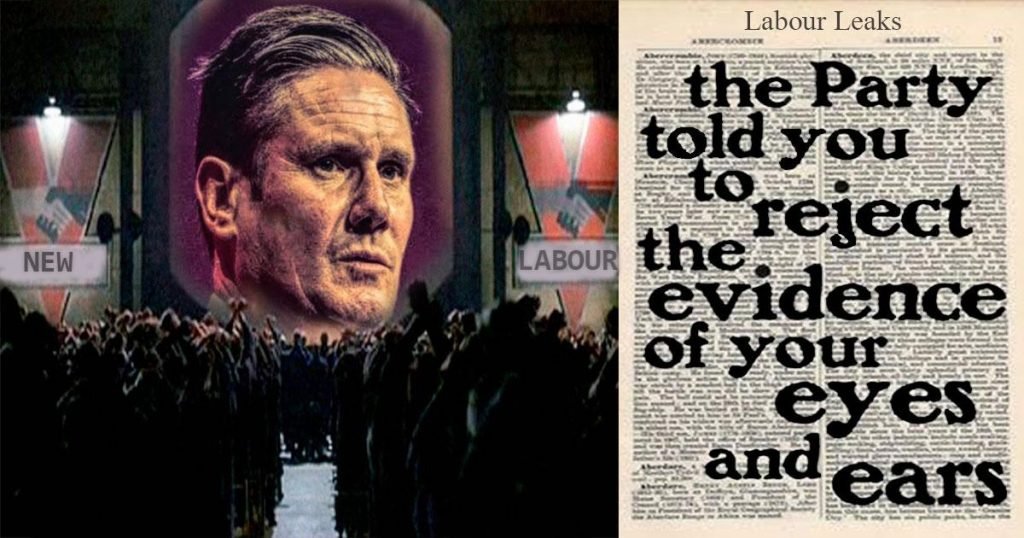
This is not a scandal about one politician’s poor judgment. This is a reckoning with fifty years of elite politics that subordinated democratic accountability to private power and institutional loyalty to moral clarity.
The pattern runs from the 1970s NCCL’s accommodation of PIE through New Labour’s embrace of oligarchic wealth to Peter Mandelson’s leaking of state secrets to a convicted paedophile during a national crisis. At every stage, senior Labour figures have chosen career advancement over confronting evil, elite relationships over institutional integrity, and managed reputation over democratic accountability.
Peter Mandelson did not leak government secrets to Jeffrey Epstein because he was uniquely corrupt. He did so because he inhabited a world where government service and private enrichment were treated as compatible rather than contradictory. Where relationships with financiers were cultivated as political assets. Where the boundary between public duty and personal advantage had been systematically eroded by an ideology that celebrated wealth as evidence of virtue.
That world was New Labour’s creation. Its architects built it deliberately, believing that Labour could only govern by accommodating capital rather than constraining it. They were catastrophically wrong. Not merely as policy assessment but as moral judgment.
The Mandelson scandal, following decades of institutional tolerance for organisations and relationships connected to child abuse, forces a choice that can no longer be deferred. Either Labour confronts what New Labour was and what it produced, or it embraces its role as managed decline: a brand that wins elections occasionally while changing nothing fundamental about who exercises power and in whose interests.
Glasman has offered the diagnosis. He has identified the disease. He has even prescribed the treatment: repent, reject, rebuild. He has called New Labour what it demonstrably is: an ideological project that led directly from the worship of wealth and power to “perversion and pedophilia.”
Morgan McSweeney’s resignation confirms the scale of the disaster while attempting to limit its consequences. His fall was meant to protect Starmer, to draw a line, to signal that accountability has been taken. But sacrificing the adviser cannot absolve the decision-maker. If the Mandelson appointment was wrong enough to require McSweeney’s resignation, it was wrong enough to require Starmer’s.
Whether Labour has the courage to demand that accountability remains to be seen. But the alternative is not survival. It is dissolution, as working-class voters abandon a party that has abandoned them in favour of managers, consultants, and lobbyists who view politics as career rather than calling.
The choice is not between idealism and pragmatism. It is between institutional integrity and accelerating rot. Between democratic accountability and elite impunity. Between a Labour Party that represents working people and a zombie that merely wears Labour’s skin while serving other interests entirely.
Maurice Glasman has delivered last rites. Morgan McSweeney has provided the first sacrifice. But the corpse that needs burying is not one chief of staff. It is fifty years of New Labour’s institutional culture, from NCCL’s accommodation of PIE through the Third Way’s embrace of oligarchic wealth to Peter Mandelson’s betrayal of state secrets to a convicted paedophile.
The question now is whether anyone in Labour’s leadership possesses the courage to complete the burial. Keir Starmer cannot answer that question. His impossible position, whether born of complicity or incompetence, disqualifies him from leading the necessary transformation. McSweeney’s resignation confirms this rather than resolving it: if the advice was catastrophically wrong, the judgment that accepted it was worse.
If Labour is to survive, it will require leadership that never mistook proximity to New Labour’s elite networks for political wisdom, that never required subordinates to fall on swords for decisions the leader made, that never confused scapegoating with accountability.
If the party cannot find such leadership, someone else will.
When your political tradition runs from defending paedophile groups in the 1970s to leaking state secrets to child sex offenders in the 2000s, and when your response to catastrophic failure is to sacrifice advisers while protecting principals, repentance is not optional. It is fifty years overdue. McSweeney’s resignation is not the accountability this crisis demands. It is evidence of how desperately Labour’s elite bubble will protect itself from genuine reckoning.
Enjoyed this read? I’m committed to keeping this space 100% ad-free so you can enjoy a clean, focused reading experience. Crafting these articles takes a significant amount of research and heart. If you found this helpful, please consider a “small donation” to help keep the lights on and the content flowing. Every bit of support makes a huge difference!

Support Independent Journalism Today
Our unwavering dedication is to provide you with unbiased news, diverse perspectives, and insightful opinions. We're on a mission to ensure that those in positions of power are held accountable for their actions, but we can't do it alone. Labour Heartlands is primarily funded by me, Paul Knaggs, and by the generous contributions of readers like you. Your donations keep us going and help us uphold the principles of independent journalism. Join us in our quest for truth, transparency, and accountability – donate today and be a part of our mission!
Like everyone else, we're facing challenges, and we need your help to stay online and continue providing crucial journalism. Every contribution, no matter how small, goes a long way in helping us thrive. By becoming one of our donors, you become a vital part of our mission to uncover the truth and uphold the values of democracy.
While we maintain our independence from political affiliations, we stand united against corruption, injustice, and the erosion of free speech, truth, and democracy. We believe in the power of accurate information in a democracy, and we consider facts non-negotiable.
Your support, no matter the amount, can make a significant impact. Together, we can make a difference and continue our journey toward a more informed and just society.
Thank you for supporting Labour Heartlands