The Arithmetic of Contempt: Why 3.6 Million Women Are Worth Less Than One Year’s War
When does betrayal become policy? When 270,000 women have already died waiting for justice. When £10.3 billion for British pensioners is “unaffordable” while £13 billion for Ukrainian weaponry flows without parliamentary debate. When Labour MPs who stood beside placards reading “Justice for Waspi Women” now occupy ministerial cars and vote to deny them compensation. Again.
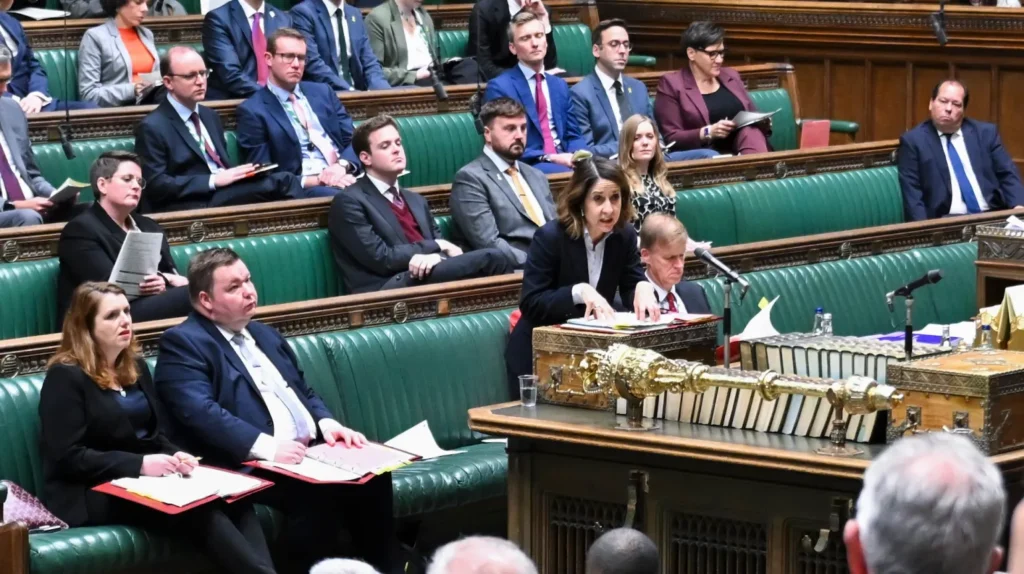
On Thursday, Work and Pensions Secretary Pat McFadden confirmed what Waspi campaigners had feared since November: the government’s “review” of compensation for 3.6 million women robbed of adequate pension notice was political theatre. After months of deliberation, ministers reached precisely the same conclusion they announced in December 2024. No compensation. Not £10.5 billion. Not £3.5 billion. Not one pound.
The decision exposes something more corrosive than routine political dishonesty. It reveals the material priorities of a political class that has abandoned any pretence of serving working people. The sums involved make the hierarchy explicit: Ukraine receives £3 billion annually “for as long as it takes.” Waspi women, who paid National Insurance contributions for decades, receive apologies and consultations with no conclusion but refusal.
The Personal Cost of Priorities
Linda McCarthy from Bolton, born in 1953. She worked as a care assistant for 38 years, contributing to National Insurance expecting retirement at 60. She received notification of her pension age rising to 65 when she was 58, leaving her insufficient time to adjust financially. She worked five additional years with chronic arthritis, paying tax and National Insurance she’d never planned to contribute. By the time she finally received her state pension, she’d lost £44,070 in pension payments and five years of retirement she’d earned.
Linda is not unique. She represents 3.6 million women whose “awareness” of pension changes the government now claims was “considerable.” Yet the Parliamentary and Health Service Ombudsman spent five years investigating precisely this question and reached the opposite conclusion: maladministration by the Department for Work and Pensions meant women were not adequately informed. The Ombudsman recommended compensation between £1,000 and £2,950 per woman.
Ministers rejected the recommendation twice. First in December 2024 under Liz Kendall. Then again in January 2026 under Pat McFadden, after a review that served no purpose except postponing the inevitable refusal.
The Historical Machinery of Dispossession
The 1995 Pensions Act, introduced by John Major’s Conservative government, established that women’s state pension age would gradually rise from 60 to 65 between 2010 and 2020. The stated purpose was “equalisation” with men, though notably equalisation always meant raising women’s retirement age rather than lowering men’s.
The 2011 Pensions Act, introduced by the Conservative-Liberal Democrat coalition, accelerated this timetable. Women born in the 1950s would now reach pension age by November 2018 instead of April 2020. Some women saw their expected retirement age increase by six years with as little as twelve months’ notice.
The Department for Work and Pensions possessed evidence of communication failure. A 2007 internal evaluation showed that automatic pension forecast letters were ineffective at informing women of changes. The department’s response was not to improve communication. It was to stop sending the letters entirely.
This document was buried. It resurfaced only during judicial review proceedings brought by Waspi in 2025, forcing McFadden to announce his November “review.” The government then spent two months examining evidence it had deliberately concealed for 18 years before reaching the same conclusion it announced before the review began.
Between 2015, when Waspi was founded, and January 2026, approximately 270,000 affected women died. The Parliamentary Ombudsman calculated that in 2023 alone, one Waspi woman died every 13 minutes. They died waiting for compensation the government always intended to refuse.
The Investigative Reality: Follow the Money

The £10.3 billion compensation figure represents approximately one year of UK military assistance to Ukraine. Since February 2022, the UK has pledged £13.06 billion in total support to Ukraine, including £10.8 billion in gifted military assistance. The Labour government, elected in July 2024, committed to £3 billion annually “for as long as it takes,” with Chancellor Rachel Reeves announcing this would continue indefinitely.
In October 2024, the government announced an additional £2.26 billion loan to Ukraine, funded through frozen Russian assets. In her autumn budget, Reeves increased Ministry of Defence spending by £2.9 billion for 2025/26. Defence spending now totals £62.2 billion annually, projected to reach £73.5 billion by 2028/29.
The government can identify £3 billion annually for Ukrainian military equipment. It located £2.26 billion for an additional loan within weeks. Yet £10.3 billion for 3.6 million British women who paid National Insurance for decades is, according to Reeves, “not the best use of taxpayers’ money.”
The National Audit Office confirms that UK military procurement for Ukraine benefits domestic arms manufacturers through “non-competitive procurements with reduced oversight requirements.” The Ministry of Defence spent £2.7 billion replacing equipment donated to Ukraine from UK stockpiles in the first two years of the war alone. Defence Secretary John Healey described Ukraine aid as “a platform for the UK defence industry.” Foreign Secretary David Lammy called the defence relationship “key to our growth and security by creating jobs.”
War spending subsidises British arms corporations. Pension compensation does not. The hierarchy could not be clearer.
Addressing the Government’s Defence

Ministers offer three justifications for refusing compensation. Each collapses under minimal scrutiny.
First, McFadden claims “the vast majority of 1950s-born women already knew the state pension age was increasing” through public information campaigns. Yet the Parliamentary Ombudsman investigated this precise claim over five years and found it false. The 2007 DWP evaluation, which the government buried, demonstrated that women were not sufficiently aware despite publicity campaigns. Three of six sample complainants examined by the Ombudsman did not recall receiving letters, despite DWP records showing correct addresses.
Second, ministers argue that targeting compensation only to women who genuinely suffered injustice “would not be practical” because it would require verifying individual circumstances for millions of women. This is administrative cowardice dressed as fiscal responsibility. The government administers tax credits, Universal Credit, and pension systems for millions of people based on verified individual circumstances. It has chosen not to establish such a scheme for Waspi women because it does not want to pay them.
Third, the government claims women “suffered no direct financial loss” from communication delays. This is semantic evasion. Women who planned retirement at 60 and learned at 58 their pension age was 65 lost years of retirement and worked additional years they’d never planned. Some lost homes. Some exhausted savings. Some worked through serious illness because they had no alternative income. The Ombudsman’s recommended “Level 4” compensation explicitly recognises “significant and lasting injustice that has affected someone’s ability to live a relatively normal life.”
The government’s position is that systematic maladministration occurred, causing lasting injustice, but compensation would be unfair because… most women already knew? The circular reasoning insults basic intelligence.
Labour’s Specific Culpability

This is not merely a Conservative legacy Labour inherited. Labour MPs, including current ministers, actively courted Waspi support before the 2024 election.
In 2019, Angela Rayner, now Deputy Prime Minister, stated Labour would “right the injustice” within five years of taking office. She described the women as having a “contract with the state that had been broken” and promised full support for compensation. Rachel Reeves, now Chancellor, served as Shadow Pensions Minister and campaigned alongside Waspi women. Keir Starmer appeared on platforms with Waspi campaigners, implicitly endorsing their cause.
The 2024 Labour manifesto deliberately avoided any compensation commitment. In June 2024, weeks before the election, Reeves told journalists that while she recognised the injustice, “the state of the public finances and the dire need in our public services means that we won’t be able to do everything that we might like to do.”
After Labour’s landside victory in July 2024, the new government had four months before rejecting compensation in December. Ministers knew before the election they would refuse. They courted Waspi support knowing they would betray it. They posed for photographs they knew would become evidence of bad faith.
On 29 January 2026, ten Labour MPs rebelled and voted with the SNP for compensation. The rebellion included Brian Leishman, who told journalists: “I campaigned with them and I shared a platform with them. I’m not going to swap my views from being in opposition to being in government.” His integrity highlights the dishonesty of colleagues who made identical campaign commitments but abandoned them upon taking office.
Former Shadow Chancellor John McDonnell warned: “The government shouldn’t underestimate the anger there will be amongst large numbers of women who will feel betrayed.” Labour MP Rebecca Long-Bailey, chair of the All-Party Parliamentary Group on State Pension Inequality for Women, stated: “It is frankly wrong that the Government has once again chosen to reject compensation.” Her colleague Andy McDonald called it “a very bitter pill to swallow.”
These statements come from Labour MPs describing their own government’s actions. The betrayal is internal, conscious, and documented.
The Broader Pattern: Elite Consensus on Austerity for Workers, Largesse for War
Waspi compensation refusal forms part of a consistent pattern of cuts and U-Turns. The Labour government has:
- Cut winter fuel payments for 10 million pensioners
- Maintained the two-child benefit cap, keeping 1.6 million children in poverty
- Refused to increase statutory sick pay
- Declined to abolish university tuition fees
- Committed to “iron fiscal discipline” on welfare spending
Simultaneously, it has:
- Guaranteed £3 billion annually for Ukrainian military assistance indefinitely
- Increased defence spending by £2.9 billion in one year
- Announced plans to reach 2.5% of GDP on defence spending (£87 billion by 2030)
- Signed a “100-year partnership” with Ukraine prioritising defence industry collaboration
- Committed to 3.5% of GDP on core defence requirements by 2035
The pattern is not contradiction. It is coherence. Austerity for workers, expansion for military contractors. Refusal of £10.3 billion once for pensioners, commitment of £3 billion annually forever for weapons. This is not competing priorities resolved in favour of defence. This is a political class that views working people’s welfare as expendable and war spending as essential.
The Parliamentary Ombudsman exists to provide redress when government bodies commit maladministration. Ministers have now twice ignored its recommendations. In doing so, they undermine the institution itself. If governments can reject ombudsman findings whenever politically convenient, the ombudsman becomes decorative rather than functional. Labour has established that official investigations, five-year studies, and documented maladministration carry no weight when elite priorities dictate otherwise.
Democratic Deficit and the Illusion of Accountability
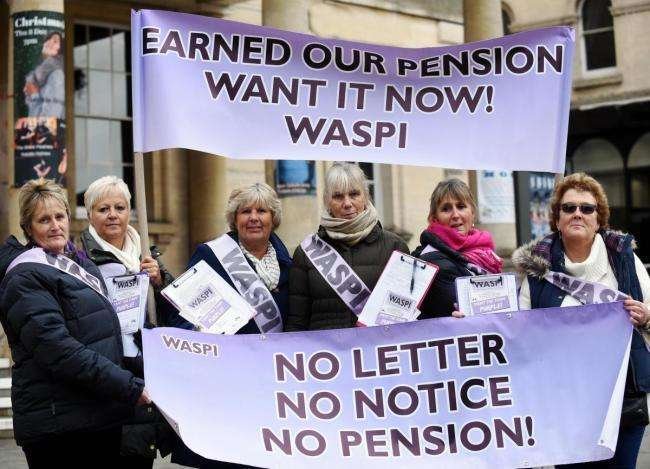
Waspi women did everything the system demands. They worked for decades. They paid National Insurance contributions. When wronged, they followed official complaints procedures through the Department for Work and Pensions. When those failed, they approached the Independent Case Examiner. When the ICE summarily closed complaints in 2018, they escalated to the Parliamentary Ombudsman. The Ombudsman investigated for five years, examined thousands of pages of evidence, interviewed complainants, and issued findings in 2023.
The government rejected the findings. Waspi pursued judicial review. During legal proceedings, buried evidence emerged forcing a ministerial “review.” After two months, ministers reached the same conclusion they’d announced before the review.
The system is designed to exhaust rather than deliver justice. Each stage provides the appearance of accountability while ensuring the same elite gatekeepers make final decisions. The Ombudsman investigates but cannot enforce. MPs vote but ministers ignore. Courts review but governments delay. The process is the punishment.
Approximately 100 Labour MPs are reportedly “deeply unhappy” with the compensation refusal. Ten voted against the government. Yet 401 Labour MPs hold parliamentary seats. The rebellion is token. The parliamentary majority ensures ministers face no meaningful accountability until the next election, by which time thousands more Waspi women will have died.
The Moral Reckoning
This is not complex policy requiring expert adjudication. Three questions suffice:
Did the Department for Work and Pensions commit maladministration in communicating pension age changes? The Parliamentary Ombudsman, after five years’ investigation, says yes. The government accepts this finding.
Did this maladministration cause injustice to millions of women? The Ombudsman says yes, recommending compensation. The government disputes the severity but acknowledges harm occurred.
Can the government afford £10.3 billion to compensate 3.6 million women? Yes. It commits £3 billion annually to Ukrainian military assistance indefinitely. It increased defence spending £2.9 billion in one year. It can afford compensation. It chooses not to pay it.
The choice reveals priorities. War spending serves elite interests through arms industry profits and geopolitical positioning. Pension compensation serves no elite constituency. Waspi women are working-class and lower-middle-class women in their 60s and 70s. They have limited economic leverage and declining lifespans. They represent no profitable market and threaten no boardroom. Their interests conflict with fiscal consolidation targets Labour shares with Conservatives.
They are, in the government’s calculation, expendable.
Where This Ends

Waspi campaigners have confirmed they are taking legal advice and “all options remain on the table.” Angela Madden, Waspi chair, stated: “We stand ready to pursue every avenue in Parliament and in the courts to secure the justice that has been so shamefully denied.” The judicial review will likely proceed. It may succeed. It may establish legal grounds compelling compensation.
But legal victories require years. Waspi women in 2026 are, on average, aged 70-75. Mortality tables are unforgiving. By the time courts rule, tens of thousands more will have died without receiving compensation they were owed. The government understands this. Delay is policy.
The broader lesson extends beyond pensions. When elite priorities conflict with working-class welfare, elite priorities prevail. When independent ombudsmen investigate government maladministration and recommend redress, governments ignore findings that cost money. When Labour MPs make pre-election promises to working-class constituencies, those promises evaporate upon contact with Treasury orthodoxy.
This is not aberration. This is system behaviour. The triumvirate operates: Conservative, Labour, Reform represent competing managements of the same class interests. The Waspi betrayal is one performance in an ongoing production. The script never changes. Only the actors rotate.
Waspi women were useful when Labour needed votes. Photographs with campaigners, speeches at rallies, commitments to justice. Once elected with a 174-seat majority, Labour MPs discovered that justice costs £10.3 billion the Treasury has allocated elsewhere. The women who trusted their promises became inconvenient. Maladministration became complexity. Injustice became impracticality. Compensation became unaffordable.
This is governance in late-stage managed democracy. Rights exist until they cost money. Justice is available until elite interests object. Promises bind until power is won.
Waspi women understand this now. The question is whether anyone else is paying attention.
Every cheque to Kyiv is a pay packet for an arms executive and a refusal to British pensioners. That’s not foreign policy. That’s class warfare.

Support Independent Journalism Today
Our unwavering dedication is to provide you with unbiased news, diverse perspectives, and insightful opinions. We're on a mission to ensure that those in positions of power are held accountable for their actions, but we can't do it alone. Labour Heartlands is primarily funded by me, Paul Knaggs, and by the generous contributions of readers like you. Your donations keep us going and help us uphold the principles of independent journalism. Join us in our quest for truth, transparency, and accountability – donate today and be a part of our mission!
Like everyone else, we're facing challenges, and we need your help to stay online and continue providing crucial journalism. Every contribution, no matter how small, goes a long way in helping us thrive. By becoming one of our donors, you become a vital part of our mission to uncover the truth and uphold the values of democracy.
While we maintain our independence from political affiliations, we stand united against corruption, injustice, and the erosion of free speech, truth, and democracy. We believe in the power of accurate information in a democracy, and we consider facts non-negotiable.
Your support, no matter the amount, can make a significant impact. Together, we can make a difference and continue our journey toward a more informed and just society.
Thank you for supporting Labour Heartlands