NHS Suspends Nurse for Misgendering: The Real Cost of Woke Ideology in Healthcare
When did it become an act of courage for a nurse to call a man a man? When did stating biological reality transform from common sense into career-ending heresy? And when, precisely, did the institutions claiming to protect working-class women decide their dignity was worth less than an ideological abstraction?
The Supreme Court answered these questions in April 2025. Five judges, unanimous, declared what everyone from your grandmother to the bloke down the pub already knew: in the Equality Act 2010, “woman” means biological woman. “Man” means biological man. The law, at least, still recognises material reality.
Jennifer Melle has just been reinstated. After nine months suspended on full pay. After being escorted from her workplace. After a disciplinary hearing that quietly concluded there was no evidence the patient had been identified. After a national campaign, political intervention, and tens of thousands of petition signatures. She won.
But she never should have had to fight.
Her case, alongside Sandie Peggie’s partial tribunal victory and the Darlington Eight’s landmark win, exposes something rotten at the heart of our public institutions. This is not about compassion, inclusion, or progressive values. This is about power: who wields it, who benefits from it, and who pays the price when working-class women dare to say “no” to those who demand their compliance.
A Victory That Should Never Have Been Necessary
The facts of Melle’s case are stark. In May 2024, she cared for a prisoner patient at St Helier Hospital: a 6ft male, a convicted paedophile, shackled to guards from a men’s prison, listed as male on medical records. While discussing a catheter with a consultant outside the patient’s room, Melle referred to the patient as “he” and “Mr.”
The patient responded by lunging at her, calling her the n-word three times. She was racially abused by a violent sex offender. The NHS gave her a written warning. When she spoke publicly about this treatment, the trust suspended her for an alleged data breach.
Nine months. That is how long this committed Christian nurse, a Black single mother with thirteen years of unblemished service, was kept from doing her job. Nine months while the trust investigated whether sharing details of a patient’s “appearance, diagnosis and treatment” constituted a breach of confidentiality, even though they ultimately admitted there was no evidence the patient had been identified.
The disciplinary hearing that cleared her happened quietly, without fanfare. The trust issued a brief statement saying they were “pleased” to reinstate her and were “sorry” she experienced racial abuse. As though “sorry” covers nine months of suspension. As though “pleased” adequately describes allowing a dedicated nurse back to work after putting her through hell for telling the truth.
Melle herself said she felt “deeply relieved and grateful” following an “incredibly long and painful journey.” But why was there a journey at all? Why did it take Shadow Equalities Minister Claire Coutinho’s intervention, a petition with nearly 10,000 signatures, support from J.K. Rowling and Kemi Badenoch, and months of public pressure for the NHS to do what the law and basic decency demanded from the start?
Her employment tribunal case against the trust still proceeds in April, claiming harassment and discrimination linked to her gender-critical and evangelical Christian beliefs. That case will now be fought from a position of strength rather than from suspension, but the very fact it exists is an indictment.
A Pattern of Institutional Betrayal
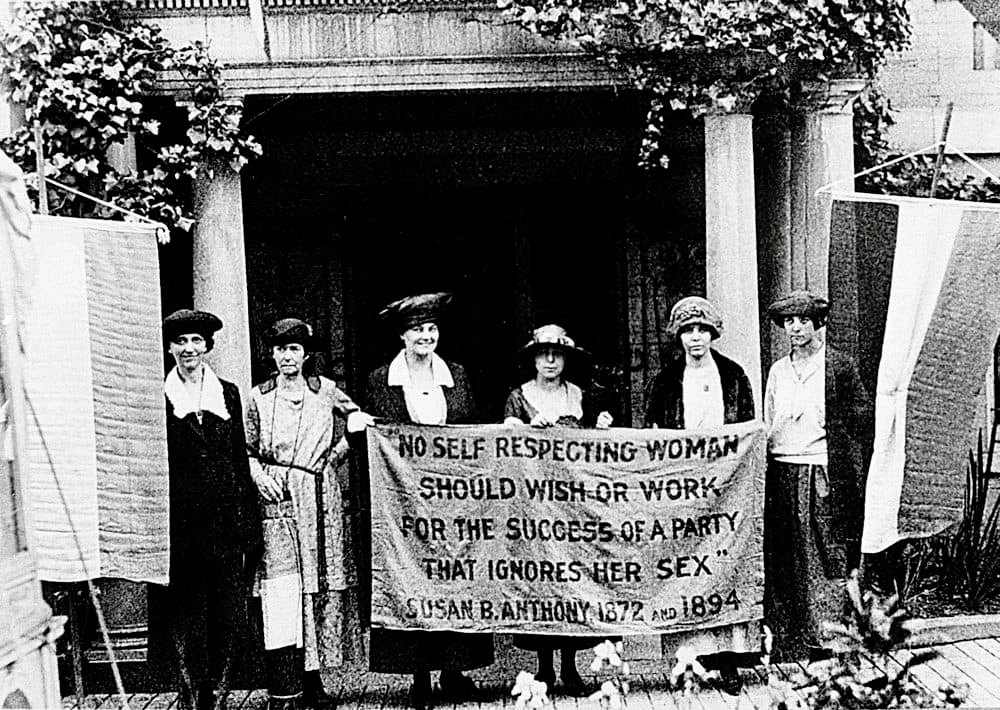
Melle’s reinstatement is the latest in a string of victories for nurses who refused to pretend biological sex does not exist. But each victory has come at devastating personal cost, and each has required women to fight through tribunals, public campaigns, and institutional hostility that never should have existed.
In December 2025, Sandie Peggie won a partial tribunal victory against NHS Fife. For two years, she endured investigation and suspension after complaining about having to share a changing room with a male colleague who identifies as a woman. The tribunal found NHS Fife had unlawfully harassed Peggie, not by allowing a man into the women’s changing room, but by taking an “unreasonable length of time” to investigate her complaints and telling her she needed “to be educated on trans rights.”
She was cleared of all misconduct allegations in July 2025, eighteen months after disciplinary proceedings began. Eighteen months. The evidence against her was found to be “inconclusive or insufficient.” Yet she spent nearly two years of her life fighting accusations that should never have been made, abandoned by the Royal College of Nursing, which refused to support her claim.
Then came the Darlington Eight. On 16 January 2026, an employment tribunal ruled that County Durham and Darlington NHS Foundation Trust had unlawfully discriminated against and harassed eight nurses by requiring them to share a female changing room with Rose Henderson, a male operating theatre practitioner. For months, these women raised concerns. Management’s response? The women were told to find somewhere else to change. Hospital bosses suggested Henderson was no different than a larger woman.
Employment Judge Seamus Sweeney found the trust’s “Transition in the Workplace” policy created a “hostile, intimidating, humiliating and degrading environment.” The nurses were forced to change in a temporary office that violated fire regulations. When they formed their own union after the RCN abandoned them, they were painted as troublemakers rather than workers defending basic dignity.
Three cases. Three victories. Three groups of women who should never have had to fight.
The Royal College of Nursing’s Shameful Absence

What unites these cases is not just institutional hostility but union betrayal. The Royal College of Nursing collects subscriptions from over half a million members. Under General Secretary Professor Nicola Ranger, it has devoted its energy to LGBTQ+ inclusion, hate-crime training, and Pride celebrations. When its members are racially abused and suspended for stating biological facts, it goes missing.
Melle secured a meeting with RCN leadership. Midway through, Ranger took a phone call and vanished, never to return. The RCN later sent Melle a letter acknowledging the “impact” but confirming it would take no action. Perhaps they could interest her in a mindfulness app?
The RCN told Melle it could not act until the Equality and Human Rights Commission produced its code of practice following the Supreme Court ruling. This was bureaucratic cowardice masquerading as prudence. The EHRC had already told service providers to implement the ruling. The law was clear. The RCN simply chose ideology over its members.
Sandie Peggie is now suing the RCN for failing to support her. The Darlington Eight left to form their own union. When nurses are resorting to DIY unionisation because the official body has been captured by ideologues, something has gone catastrophically wrong.
A union’s job is to defend workers against institutional power. Full stop. When a Black nurse is racially abused and suspended for refusing to validate her abuser’s pronouns, her union should be raising hell. When women are disciplined for objecting to male nudity in their changing rooms, their union should be filing grievances and threatening strikes. Instead, the RCN has prioritised the validation of gender identity claims over the material safety of working-class women. It is a disgrace.
Phillipson’s Deliberate Obstruction

The case of Jennifer Melle is not an anomaly. It is a symptom of an institutional sickness that has infected the NHS, the trade unions, and the Labour movement itself. We have allowed a luxury belief system born in the seminar rooms of elite universities to dismantle the safeguards of ordinary women.
Meanwhile, Bridget Phillipson, Labour’s Minister for Women and Equalities, continues to obstruct implementation of the Supreme Court ruling. The EHRC submitted updated guidance to her in September 2025. It has been four months. She has refused to publish it.
Phillipson has called the guidance “trans-exclusive” and claimed it would prevent mothers from taking young sons into changing rooms. Mr Justice Swift dismissed this as “inconsistent with the legislation” and an attempt to “rewrite” the Supreme Court’s ruling. She has demanded the EHRC calculate the cost to businesses of complying with the law before she will act.
Let that sink in. A Labour minister is calculating the financial cost of women’s dignity. She is delaying implementation of a Supreme Court ruling because it might be inconvenient for Capital.
Baroness Falkner, the former EHRC chair, has repeatedly stated that no one should wait for new guidance: they should comply with the law now. Any organisation clinging to old policies allowing men into women’s spaces cannot claim legal justification. Yet they do it anyway, because they know the government will not enforce the law.
While Phillipson plays politics with guidance that would protect women like Melle, Peggie, and the Darlington Eight, nurses across the country remain vulnerable to the same institutional harassment these women faced. How many more will be suspended before Phillipson does her job? How many more will face disciplinary hearings for stating biological reality? How many more will be abandoned by their unions and forced to fight alone?
Class, Dignity, and Material Reality

This is not a marginal issue affecting a handful of workers. This is about whether working-class women have any enforceable rights in their places of employment. Nurses do not work in spacious buildings with abundant facilities. They change in cramped rooms between exhausting shifts. They are disproportionately women, disproportionately working-class, disproportionately from minority backgrounds.
Jennifer Melle is a Black Christian single mother. The ideology that suspended her for nine months prioritised a paedophile’s subjective identity over her safety and her right to her own religious convictions. The same ideology has turned the concept of “inclusion” into a weapon against women who lack the social capital to fight back.
Because that is what this is: a hierarchy of victimhood that places the subjective identity claims of any man above the material reality of every woman. It is fine to tell nurses they should find alternative changing facilities when a man demands access to theirs. It is fine to suspend a woman who was racially abused. It is fine to spend eighteen months investigating a woman for the crime of objecting to male nudity in her workspace. But to ask a man to use male facilities? To expect a convicted paedophile to accept being called “Mr”? Unconscionable. Discriminatory. A data breach.
The left used to understand that class struggle meant defending workers against institutional power. It meant standing with a Black nurse being racially abused, not suspending her to protect her abuser’s feelings. It meant ensuring women could do their jobs without being forced to undress in front of men, not lecturing them about “trans rights” when they complained.
But too many institutions calling themselves progressive have been captured by a middle-class ideology that prioritises identity performance over material conditions. The result is not liberation but a new form of oppression: one where working-class women are punished for asserting the boundaries that protect them, while managers and union bosses perform allyship from the safety of their offices.
What Next
These victories should be celebrated, but they should never have been necessary. Every day these women spent suspended, investigated, or fighting tribunals represents a failure of institutions that claim to champion equality and workers’ rights.
Melle’s reinstatement does not undo nine months of suspension. Peggie’s partial victory does not erase two years of hell. The Darlington Eight’s tribunal win does not compensate for months of being forced to change in an office that violated fire regulations while being told they needed “educating.”
The NHS must issue a full apology to these women, not the perfunctory “sorry you had this experience” that treats racial abuse and institutional harassment as unfortunate accidents. Trusts must immediately review and withdraw all policies that allow men into women’s single-sex spaces, as the Supreme Court ruling demands. The RCN must be held accountable for abandoning its members when they needed support most, and nurses deserve better representation than an organisation that prioritises Pride celebrations over defending women from workplace harassment.
Bridget Phillipson must publish the EHRC guidance immediately. Every day she delays is another day NHS trusts can hide behind outdated, unlawful policies. Every day she calculates costs and demands impact assessments is another day working-class women are exposed to the institutional harassment these cases have documented.
And the left must decide what it stands for. Does it defend the material interests of working-class women, or does it genuflect to an ideology that requires them to accept male access to intimate spaces as the price of employment? Does it support workers who stand up to abusive patients and institutional indifference, or does it prioritise the validation of those patients’ self-concepts?
The Socialist Workers Party and similar groups have infiltrated newer left-wing movements with this ideological poison, and the result has been a catastrophic betrayal of the women who form the backbone of our public services. It is time to extract ourselves from this purity spiral and return to first principles: solidarity with workers, defence of sex-based rights, and refusal to accept that women’s dignity is negotiable.
Jennifer Melle has been reinstated. Sandie Peggie won her harassment claim. The Darlington Eight proved their trust’s policies were unlawful. These are victories, and they matter. But the fact these women had to fight at all is a scandal. The law is clear. The only question is whether our institutions will finally enforce it, or whether the next nurse who tells the truth will face the same nine-month nightmare that should never have happened in the first place.

Support Independent Journalism Today
Our unwavering dedication is to provide you with unbiased news, diverse perspectives, and insightful opinions. We're on a mission to ensure that those in positions of power are held accountable for their actions, but we can't do it alone. Labour Heartlands is primarily funded by me, Paul Knaggs, and by the generous contributions of readers like you. Your donations keep us going and help us uphold the principles of independent journalism. Join us in our quest for truth, transparency, and accountability – donate today and be a part of our mission!
Like everyone else, we're facing challenges, and we need your help to stay online and continue providing crucial journalism. Every contribution, no matter how small, goes a long way in helping us thrive. By becoming one of our donors, you become a vital part of our mission to uncover the truth and uphold the values of democracy.
While we maintain our independence from political affiliations, we stand united against corruption, injustice, and the erosion of free speech, truth, and democracy. We believe in the power of accurate information in a democracy, and we consider facts non-negotiable.
Your support, no matter the amount, can make a significant impact. Together, we can make a difference and continue our journey toward a more informed and just society.
Thank you for supporting Labour Heartlands