NHS Punishes Nurse for “Misgendering” a Racist Paedophile Patient.
The case of Jennifer Melle shows an NHS that will discipline women for stating biological reality while tiptoeing around convicted sex offenders. This is what institutional capture looks like.
There is a line every civilised society should be able to draw without hesitation…
On one side: a black nurse with twelve years’ unblemished service, racially abused by a convicted male paedophile, standing her ground on matters of biology and conscience.
On the other: the NHS Trust that gave her a final written warning, referred her to regulators as a “potential risk to the public”, suspended her from work, and left her fighting for her career.
If your instinct is to punish the nurse while protecting the feelings of a sex offender who screamed the N-word at her, something has gone catastrophically wrong in your institution.
Welcome to the case of Jennifer Melle. And yes, it lands hot on the heels of Sandie Peggie’s harassment victory against NHS Fife, and while eight nurses at Darlington Memorial Hospital fight their own tribunal over being forced to undress in front of a male colleague.
Three cases. Three different trusts. One unmistakable pattern: when sex-based reality collides with gender ideology in the NHS, it is women who are marched to the dock…
A Black Nurse, a Racist Tirade, and the Wrong Person Gets Punished
The facts are stark enough to make you question whether we are living in a functioning democracy or a therapeutic cult run by HR managers.
In May 2024, nurse Jennifer Melle was caring for Patient X at St Helier Hospital in Carshalton, Surrey. Patient X is a convicted paedophile from a high-security men’s prison. He is male. His medical records say male. He now identifies as a woman.
While discussing catheter removal with a doctor, Jennifer referred to him as “he” and “Mr X” in a clinical context. The patient overheard.
What followed was not a polite correction or a moment of patient care. Patient X exploded. He called her the N-word multiple times. He lunged at her with such force that prison guards had to restrain him. She stood shaking, visibly distressed, having been subjected to one of the most vicious racial slurs in the English language.
Jennifer did not abandon him. She explained she could not, in conscience, call a male “she” because of her Christian beliefs, but offered to use his chosen female name.
Notwithstanding the fact, the patient, a biological male housed in a male prison, was listed as “Mr” on his own medical records. The nurse was the victim of a racist attack in her workplace.
You would think any normal institution would recognise who the victim was in that exchange.
You would be wrong…
The Trust responded by issuing Jennifer with a final written warning for “misgendering”. It referred her to the Nursing and Midwifery Council as a “potential risk” to the public and the NHS’s reputation. It placed her under investigation. When she spoke publicly about what happened, it suspended her in April 2025 for an alleged “data breach”.
The racist abuse? The multiple uses of the N-word? The physical lunge at a member of staff?
Not a disciplinary priority…
Jennifer’s real offence, in the eyes of Epsom and St Helier University Hospitals NHS Trust, was failing to recite the catechism. She crossed the new blasphemy line: she said “he” where ideology demands “she”.
Claire Coutinho, shadow minister for equalities, wrote to the chairman of the Trust, urging it to halt disciplinary proceedings.
She said: “Taking disciplinary action against Jennifer Melle is a grave injustice. If sanctions are imposed, it will cause severe damage to the Trust’s reputation with the public, who can clearly see that Jennifer has done nothing wrong.
“Ultimately, this is about a nurse who has given over a decade of service to the NHS and who, through no fault of her own, was subjected to racial abuse at work by a transgender convicted paedophile.
“She was then abandoned by the institutions, including the NMC and the RCN – that were supposed to protect her, but which have instead surrendered to the influence of radical gender ideology.”
And that, apparently, weighs heavier than protecting a black nurse from violent, racist abuse by a convicted paedophile.
From Fife to Surrey: The Pattern Emerges

This is not an isolated incident. It is a pattern, and the pattern has a name: ideological capture.
In December 2025, an employment tribunal ruled that NHS Fife had harassed nurse Sandie Peggie over her complaints about a trans-identifying male doctor using the women’s changing room. The Trust took nine months to investigate Peggie, placed her on leave, made unsubstantiated allegations about her patient care, and left her twisting in the wind while protecting the male doctor’s feelings. The tribunal found NHS Fife had harassed her by failing to remove the doctor from the changing room after she complained, taking an unreasonable length of time to investigate allegations against her, and instructing her not to discuss the case.
Two nurses. Two different hospitals. Same story: when sex-based reality collides with gender ideology, women are the ones investigated, disciplined, and branded as problems.

Meanwhile, at Darlington Memorial Hospital, eight female nurses are suing County Durham and Darlington NHS Foundation Trust for sexual harassment and discrimination. Their crime? Objecting to sharing a changing room with a biological male colleague who, according to their testimony, walks around in tight boxer shorts with visible genitalia, staring at female colleagues and repeatedly asking them, “Are you not getting changed yet?”
When the nurses raised concerns, HR told them they needed to “broaden their mindset”, “be more inclusive”, and “get re-educated”. The male colleague even offered to help “educate” them.
One nurse, a survivor of childhood sexual abuse, suffered panic attacks after being approached alone in the changing room.
The Trust’s response? An “inclusive changing room” poster on the door and a threat of disciplinary action for speaking to the media.
Three cases. Three NHS trusts. One spine running through all of them: gender identity first, women’s reality last.
The Hierarchy of Diversity: Where Women Always Come Last
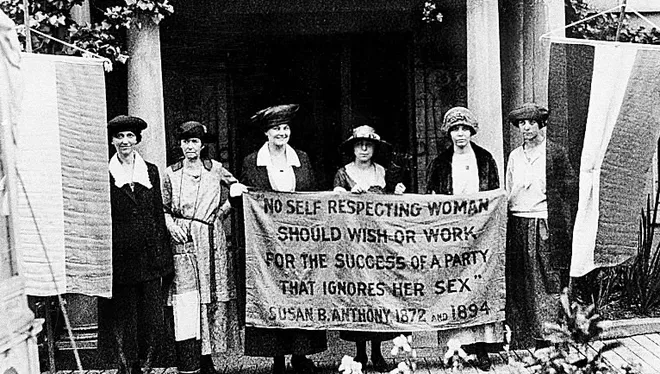
Let us be blunt about the new hierarchy that has been constructed in our public institutions over the last decade.
At the top sits the protected feelings of gender identity. Below that, somewhere down in the basement, bruised and ignored, are women, and the working class that actually keep the service running.
Jennifer Melle’s case lays this hierarchy bare:
- A black woman is subjected to repeated racial abuse with one of the most poisonous slurs in the language.
- She is physically threatened by a male sex offender.
- She offers to compromise by using the prisoner’s chosen name.
- Yet she is deemed the problem worthy of discipline, suspension, and potential career destruction.
Personnel Today reports that Health Secretary Wes Streeting managed to condemn the racist abuse, but notably failed to address the question of compelled pronouns. Courage, it seems, ends where gender ideology begins.
Meanwhile, the Royal College of Nursing and the Nursing and Midwifery Council stood back and watched one of their own be branded a “potential danger to the public” for refusing to lie about biological sex.
If you are a nurse reading this, ask yourself: if they can do this to her, what will they do to you?
The Supreme Court Said Sex Means Sex. The NHS Didn’t Get the Memo.
Here is where the institutional dysfunction becomes legally indefensible.
In April 2025, the UK Supreme Court ruled unanimously in For Women Scotland v Scottish Ministers that in the Equality Act 2010, the words “man”, “woman”, and “sex” mean biological sex. Not gender identity. Not feelings. Not self-declaration.
Biological sex.
A Gender Recognition Certificate does not turn a male into a female for the purposes of sex-based rights. Sex and gender reassignment are separate protected characteristics.
In other words, the highest court in the land said:
- Trans-identifying males are protected as trans people under the characteristic of gender reassignment.
- Women’s rights remain sex-based, not feelings-based.
- Single-sex spaces mean single-biological-sex spaces.
You would not know it from the behaviour of NHS trusts.
NHS Fife was found to have harassed Sandie Peggie after the Supreme Court ruling clarified the law.
Jennifer Melle’s disciplinary hearing was abruptly cancelled on 10 December 2025, just days after the Peggie judgment, officially due to “unforeseen circumstances” and panel unavailability. BBC News had contacted the Trust that afternoon planning to cover the hearing’s outcome.
Perhaps that is all it is: an unfortunate coincidence.
Or perhaps Epsom and St Helier suddenly realised it was standing on legal quicksand, trying to enforce a de facto gender identity blasphemy code in a legal system that still recognises biological sex.
Either way, Jennifer remains in limbo: a final written warning on her record, suspended from work, hauled before regulators, forced into a grinding Employment Tribunal process that will not be heard until April 2026.
This is punishment by process. It is how institutions break people who refuse to submit.
The Stonewall Capture: How We Got Here

None of this happened by accident. It happened because institutions like the NHS became captured by lobby groups that convinced them to replace the protected characteristic of sex with the ideology of gender identity.
Roughly 250 government departments, police forces, local councils, and NHS trusts signed up to Stonewall’s “Diversity Champions” scheme. Others were trained by Gendered Intelligence and Mermaids. These organisations pushed a broad definition of “transphobia” and demanded “zero tolerance” for dissent.
Public bodies demonstrated their allegiance by rebranding logos with rainbows, replacing “sex” with “gender” in equality policies, and adopting definitions of transphobia that made stating biological reality a disciplinary matter.
Policies flowed from the top down, often without consultation with staff or patients. Female nurses suddenly found themselves expected to share changing rooms with biological males. Female patients lost the guarantee of same-sex intimate care. Women’s wards became mixed-sex by another name.

The NHS Rainbow Badge scheme, similar to Stonewall’s Diversity Champions programme, encouraged staff to avoid words like “mother” and promoted “gender neutral” toilets. American IT systems from companies like EPIC, built around contested ideas of gender identity, were rolled out across NHS trusts, conflating biological sex with self-declared gender identity in medical records.
All of this happened without democratic consent. It happened through institutional capture: the quiet replacement of law, safeguarding, and material reality with ideology.
Compelled Speech as Workplace Policy
Strip away the euphemisms and this is what the NHS position amounts to:
You may be racially abused. You may be physically threatened. You may be a black woman facing a tirade from a male sex offender. But if you do not say the magic word “she”, you are the one who will be investigated, disciplined, and possibly struck off.
That is not equality. That is compelled speech, dressed in HR jargon.
The NMC code states that nurses must not express personal beliefs “in an inappropriate way”. What counts as “inappropriate” now appears to include using accurate sex-based language in a clinical context while talking privately to a doctor about a catheter.
If the code can be twisted to mean “you must say 2+2=5 if a policy document tells you to”, then the problem is not the nurse. The problem is the culture.
Who Keeps the NHS Running?

Let us be clear about who keeps the NHS alive.
It is not Stonewall. It is not HR consultants. It is not the gender lobby that embedded itself into policy documents.
It is the nurses on nights, the healthcare assistants breaking their backs on understaffed wards, the junior doctors, porters, cleaners, and admin staff who stare reality in the face every single shift.
Those people deserve institutions that will protect them when they are racially abused, not institutions that weaponise them as test cases for ideological compliance.
Jennifer Melle is not an abstract “case”. She is the face of a new reality for workers:
- Misspeak according to the ideology, and your entire career is at risk.
- Uphold biological reality, and you could be labelled a “danger to the public”.
- Object to males in female spaces, and you may be the one investigated for harassment.
The message is unmistakable: shut up, submit, repeat the right words, and hope they don’t turn on you next.
This is not progress. This is the worst kind of regression: an upside-down morality where offenders are sacralised and staff are sacrificed.
The Working-Class Angle They Don’t Want You to See
There is a class dimension to this that the liberal commentariat prefers to ignore.
The people being disciplined are working nurses. The people making the decisions are managers, HR departments, and executives who have drunk deeply from the well of corporate diversity training. The people suffering are disproportionately working-class women who cannot afford to lose their jobs and do not have the cultural capital to navigate ideological minefields.
When Bethany Hutchison and her colleagues at Darlington stood up for their right not to undress in front of a biological male, they were told to “broaden their mindset”. When Jennifer Melle stood up for her Christian beliefs and refused to lie about a patient’s sex, she was branded a risk.
These are not middle-class academics debating theory in seminar rooms. These are women on the front line of public service, being told that their material reality, their safety, their dignity, and in Jennifer’s case their experience of racist abuse, all matter less than ideological compliance.
This is what happens when institutions replace class politics with identity politics, and when the language of diversity becomes a tool for disciplining workers rather than protecting them.
Where This Ends If We Don’t Stop It

The NHS cannot run without women. It cannot run without people who believe that words must mean something and that safeguarding is not bigotry.
Yet case by case, Trust by Trust, we see the same doctrine enforced: gender identity first, women’s reality last.
Sandie Peggie was told to accept a male doctor in the changing room. Jennifer Melle was racially abused by a male prisoner and then punished for naming his sex. Eight nurses at Darlington were told to “get re-educated” for objecting to a male colleague walking around in boxer shorts.
Different cases. Same spine.
This is not a debate about being kind to trans people. Trans people are protected by law under the characteristic of gender reassignment. They have rights, and those rights should be respected.
This is about whether institutions can compel staff to lie. Whether women can be punished for stating biological reality. Whether racist abuse of a black nurse matters less than a male prisoner’s preferred pronouns. Whether the rule of law still applies, or whether we have entered an era where ideology trumps statute.
The Supreme Court has spoken. The law is clear. Biological sex is a protected characteristic. Women have sex-based rights. Single-sex spaces mean single-biological-sex spaces.
NHS trusts are operating in defiance of that law. They are enforcing policies that conflict with it. They are disciplining staff for upholding it.
This cannot stand.
What Now?

At the time of writing:
- Jennifer Melle’s disciplinary hearing has been abruptly cancelled. She remains suspended, with no clarity about what comes next.
- Her Employment Tribunal claim heads for an April 2026 hearing.
- The NMC still has her under investigation.
- Sandie Peggie has won her harassment claim against NHS Fife, but is appealing aspects of the judgment she believes fall short.
- Eight Darlington nurses await a tribunal decision expected after Christmas.
If the NHS has any instinct for self-preservation, it will drop these cases, apologise, and put its energy into protecting staff from violence and racist abuse rather than enforcing ideological speech codes.
But whether it does or not, something has already shifted.
The public can see what is happening. The legal ground has moved. The Supreme Court has clarified the law. Employment tribunals are starting to rule that NHS trusts have harassed women for raising sex-based concerns.
A society that sides with a racist, violent, male paedophile over a black nurse doing her job is not “progressive”. It is broken.
And if the political class thinks this will be quietly accepted, they are in for a shock.
Because ordinary people, especially working-class women, have had enough of being told that reality is hate, biology is bigotry, and that the price of a paycheque is to say, in public and in private, that 2+2 = 5.
In this house, and on these pages, it will always be 4.
And when institutions demand otherwise, it is not kindness they are practising. It is totalitarianism dressed in rainbow badges. It is the purity spiral eating itself. It is the moment when progressive language becomes the weapon of institutional oppression.
The NHS was built by the working class, for the working class, on the principle that healthcare is a right, not a privilege.
It was not built so that managers could enforce ideological compliance while black nurses absorb racist abuse from convicted paedophiles, or women are forced to undress in front of biological men who claim to be women.
The law says sex means sex. Biology says sex is immutable. Common sense says a man is not a woman, no matter how he identifies.
If your institution has a problem with any of those statements, the problem is not with reality.
The problem is that your institution has been captured by an ideology that values feelings over facts, compliance over courage, and the comfort of offenders over the safety of staff.
And that institution needs to be taken back.

Support Independent Journalism Today
Our unwavering dedication is to provide you with unbiased news, diverse perspectives, and insightful opinions. We're on a mission to ensure that those in positions of power are held accountable for their actions, but we can't do it alone. Labour Heartlands is primarily funded by me, Paul Knaggs, and by the generous contributions of readers like you. Your donations keep us going and help us uphold the principles of independent journalism. Join us in our quest for truth, transparency, and accountability – donate today and be a part of our mission!
Like everyone else, we're facing challenges, and we need your help to stay online and continue providing crucial journalism. Every contribution, no matter how small, goes a long way in helping us thrive. By becoming one of our donors, you become a vital part of our mission to uncover the truth and uphold the values of democracy.
While we maintain our independence from political affiliations, we stand united against corruption, injustice, and the erosion of free speech, truth, and democracy. We believe in the power of accurate information in a democracy, and we consider facts non-negotiable.
Your support, no matter the amount, can make a significant impact. Together, we can make a difference and continue our journey toward a more informed and just society.
Thank you for supporting Labour Heartlands