Exporting Violence, Importing Chaos: The West’s Iran War and Europe’s Coming Crisis
Every time the West and Israel light a fuse in the Middle East, Europe ends up breathing the smoke…
We are still living with the aftershocks of Iraq: a shattered state, millions displaced, and a long tail of instability that didn’t stay “over there”. It travelled, in people’s lives, in trauma, in organised crime, in radicalisation, and in a migration system that has never recovered its footing.
Now it’s Iran. A US-Israeli coalition has escalated into direct confrontation, Iran retaliates under the language of self-defence, and suddenly the drumbeat of “next steps” starts again. Escalation looks less like a risk and more like the plan.
This is a premeditated, preventive war, not a defensive action to address an imminent threat to the United States. That ought to be the headline. It will not be.
The fact is we are living, once again, through the consequences and grim theatre of empire, and the script has not changed one syllable since Baghdad burned in 2003. Then, as now, the architects of catastrophe wore the language of liberation like a borrowed suit, gesturing at weapons programmes and regional threats while the actual objective, the erasure of an inconvenient government, was always the destination. Then, as now, the costs will be borne not by the men in the situation room but by ordinary people: Iranian civilians, regional workers, Gulf residents, and eventually, inevitably, the peoples of Europe.

The parallel with the 2003 Iraq war is difficult to ignore. It was noted, with some embarrassment, by Chatham House analysts within hours of the first strikes. Trump himself had campaigned on the promise that those days were over. As recently as May 2025 he swore that regime change wars were finished. Then he launched one. The administration insisted on zero enrichment, without offering any sanctions relief, including from sanctions put on Iran specifically for its development of a nuclear programme. Negotiations ended with Trump launching attacks intended to eliminate not just Iran’s nuclear programme but its government.
The escalating conflict in the Middle East is already fuelling fears that Washington’s pursuit of regime change in Iran, and Tehran’s retaliation, could destabilise regions from the Gulf to Europe, leaving global leaders scrambling to assess the fallout. Iran has already struck back. Tehran has struck back with missiles and drones against Israel and Gulf countries that host US military bases, including the United Arab Emirates, Qatar, Kuwait and Saudi Arabia. Civilian infrastructure was also hit by Iran’s retaliatory strikes. Oil prices surged immediately. Flights were cancelled across the region. The Strait of Hormuz sits under the shadow of war.
This is the paradox nobody in polite company wants to name.
The same right-wing cheerleaders who clap for bombs and talk of “strength” are often the loudest voices weeks later, raging about refugees and border chaos. They celebrate the destruction, then act shocked when human beings run from the rubble.
And yes, many of those people will end up in Europe. Some will arrive legally. Plenty will not. Some will have papers and checks. Others will come through a Channel system so porous it might as well have a revolving door attached. We will not know who everyone is. That is not a “talking point”, it’s a security reality.
And so the conveyor belt starts moving again, the same one we never properly stopped after Iraq, after Libya, after Syria. War creates displacement. Displacement overwhelms borders already strained by decades of underfunding, cynicism, and deliberate political neglect. Overwhelmed borders produce anger, and that anger, carefully bottled and labelled by the right-wing press, becomes the fuel for the next wave of hard nationalism, which cheers the next war, which creates the next wave of displacement. It is a loop so predictable, so historically consistent, that calling it unintended begins to feel generous.
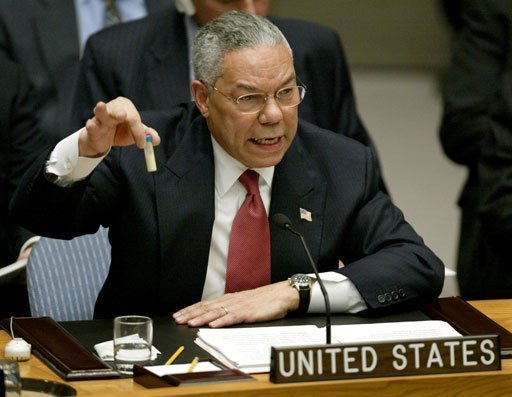
The hawks will say, of course, that Iran was a destabilising force. From London, Berlin and Paris to Canberra, political leaders are calling Iran a “destabilising force, while Canada’s Mark Carney backed the US action in language so identical it appeared pre-coordinated. And yes, the Iranian regime was brutal. Iran massacred thousands of civilians during the largest protests since the Islamic Revolution, with the most deadly incidents in early January 2026, protesters driven into the streets by economic crisis, the collapse of the rial, and rising prices. These are facts. A theocracy that fires live ammunition into crowds of its own citizens has forfeited the right to our sympathy.
But here is the truth that power does not want spoken: “the brutality of a regime does not automatically confer wisdom, legality, or moral clarity upon those who bomb it”. No matter how precise or devastating, air strikes alone cannot topple a government, and Iran in 2026 is likely to emerge battered but not broken, a costly example of American hubris and the limits of airpower. History does not offer a single successful case of regime change by aerial bombardment producing the stable, democratic outcome promised in the brochure. Iraq. Libya, Afghanistan. Not one.

What it does produce, with horrifying reliability, is a broken state, a traumatised population, a power vacuum filled by the most ruthless actors available, and a generation of displaced people who will, in time, knock on the door of Europe. Some will come with documents. Some without. Some through legal channels. Some through the Channel, through the Mediterranean, through every route that desperation opens up when law offers none. We will not know everyone. We will not be able to. That is not a tabloid talking point; it is the elementary consequence of turning a nation of ninety million people into a theatre of war.
Ironically, Sir Keir Starmer, for his part, confirmed that British planes were “in the sky” while insisting they “played no role” in the strikes. A distinction fine enough to be invisible from the ground in Tehran. Britain’s hands may be officially clean. They will not feel that way to the people looking up, particularly when, less than 24 hours later, he gave the green light for US war planes to use RAF stations to take off and drop those bombs.
The question is not whether we sympathise with the Iranian regime. We do not. The question is whether we are willing to learn, at last, the one lesson that every intervention since the Cold War has inscribed in blood across the map: that you cannot engineer democracy from thirty thousand feet, that broken states do not stay tidily broken within their own borders, and that the costs of reckless militarism are paid, eventually, by people who had no vote in the decision.
It’s a conveyor belt of consequences, and the public is expected to argue about the final stage while politely ignoring who pressed “start” in the first place.
If you want fewer small boats, stop applauding the policies that fill them. If you want security at home, stop treating war abroad as a spectator sport. Because this is not strategy. It is the outsourcing of violence, the importing of chaos, and the shameless amnesia of those who press the button and look away.
Because this isn’t “taking a stand”. It’s exporting violence, importing chaos, and calling it strategy.
Enjoyed this read? I’m committed to keeping this space 100% ad-free so you can enjoy a clean, focused reading experience. Crafting these articles takes a significant amount of research and heart. If you found this helpful, please consider a “small donation” to help keep the lights on and the content flowing. Every bit of support makes a huge difference!

Support Independent Journalism Today
Our unwavering dedication is to provide you with unbiased news, diverse perspectives, and insightful opinions. We're on a mission to ensure that those in positions of power are held accountable for their actions, but we can't do it alone. Labour Heartlands is primarily funded by me, Paul Knaggs, and by the generous contributions of readers like you. Your donations keep us going and help us uphold the principles of independent journalism. Join us in our quest for truth, transparency, and accountability – donate today and be a part of our mission!
Like everyone else, we're facing challenges, and we need your help to stay online and continue providing crucial journalism. Every contribution, no matter how small, goes a long way in helping us thrive. By becoming one of our donors, you become a vital part of our mission to uncover the truth and uphold the values of democracy.
While we maintain our independence from political affiliations, we stand united against corruption, injustice, and the erosion of free speech, truth, and democracy. We believe in the power of accurate information in a democracy, and we consider facts non-negotiable.
Your support, no matter the amount, can make a significant impact. Together, we can make a difference and continue our journey toward a more informed and just society.
Thank you for supporting Labour Heartlands