Same Battle, Different Grift
Why Women Still Fight for Rights Already Confirmed by Courts
The Supreme Court has confirmed women’s rights. Then the High Court confirmed them again. So why are working women still waiting, trade unions still silent, and a litigation company earning thousands still raising money after the judge told them to sit down?
Tony Benn said it plainly, as he always did: there is no final victory, as there is no final defeat. There is just the same battle, to be fought over and over again. So toughen up, bloody toughen up.
He meant it as a call to arms for working people. A reminder that the gains of one generation are never banked for the next; that the powerful do not concede ground permanently; that vigilance is not optional. Women in this country have lived that truth with a particular and exhausting intimacy. The suffragettes were told the vote would settle things. It did not settle things. Equal pay law was passed in 1970. It did not settle things. The Equality Act was consolidated in 2010. It did not settle things either.
And so, when a litigation company describes the process of fighting settled law over and over again as principled resistance, it is worth pausing to apply Benn’s wisdom a little differently.
There is an alternative formulation for those who are not fighting the same battle out of conviction, but raising money from it out of habit. The definition of insanity, as the saying goes, is doing the same thing repeatedly and expecting a different result. But then again, if you keep getting paid for it, win or lose, why would you stop?
The only group fighting the same battle over and over again are women, from suffrage to recognition. That distinction matters.
Benn’s words were a call to arms for working people. They were not a business plan for a litigation company.
Supreme Court Said It. High Court Said It. So Why Are Working Women Still Waiting?
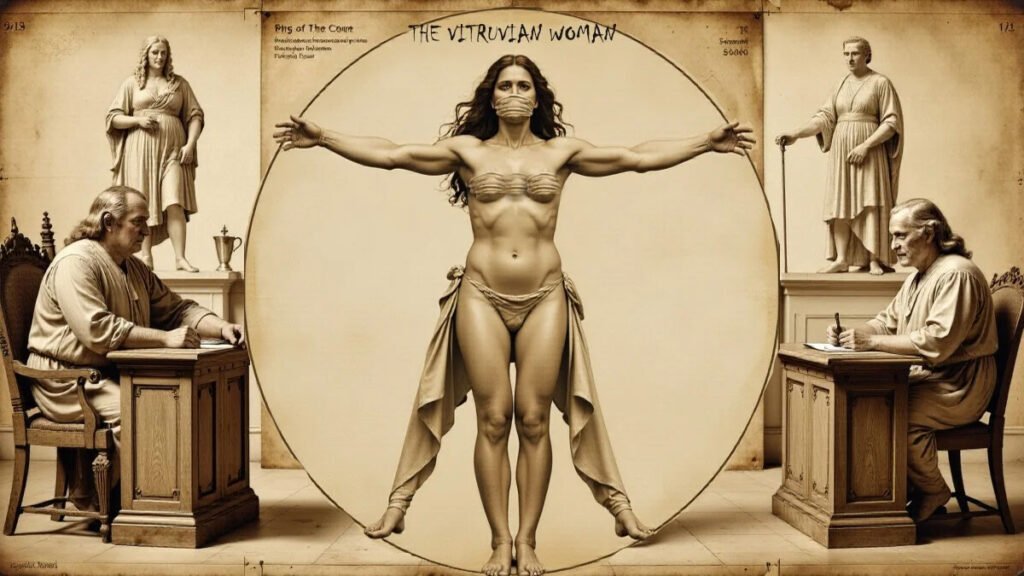
Same Fight Different Grift…
In April 2025, the Supreme Court ruled unanimously in For Women Scotland v Scottish Ministers. The word ‘woman’ in the Equality Act means a biological woman. The ruling was unambiguous, unanimous, and final at the highest court in the land.
That should have been the end of the legal argument. It was not.
The Equality and Human Rights Commission did what it was supposed to do: it issued interim guidance explaining the immediate practical implications for employers and service providers. Single-sex facilities should be allocated by biological sex. The statutory framework had always required this. The Supreme Court had now confirmed it. The EHRC put it in writing.
Within days, the Good Law Project had launched a legal challenge against the guidance itself. On 13 February 2026, Mr Justice Swift handed down judgment in Rex (Good Law Project Ltd and others) v Commission for Equality and Human Rights. He dismissed every ground of the challenge.
The EHRC’s guidance was an accurate statement of the law. The legislation did not breach the European Convention on Human Rights. And the Good Law Project, in Swift J’s assessment, lacked the legal standing to bring the claim at all. The court found it to be, in the established legal terminology, a ‘busybody’: an organisation with no direct stake in the outcome, seeking to use the courts as a venue for ideological argument rather than legal redress.
This was not the first time. In 2022, a different High Court judge told the GLP it could not assume ‘carte blanche to bring any claim for judicial review no matter what the issues and no matter what the circumstances.’ The pattern is not new. The GLP, whose broadly drawn objects clause covers almost any conceivable public law point, returns to court. The court tells it to sit down. It raises more money and returns again.
So the Supreme Court confirmed women’s rights in April 2025. Then the High Court was asked to confirm them again in February 2026. Both did so, without hesitation. At what point does the repetition stop being legal argument and start being something else entirely?
The Good Law Project Told to Sit Down. It Raised More Money Instead.

Good Law Project Loses Again: £300k Costs, £4.5m Reserves and the Fundraiser That Keeps Going…
Within hours of the February 2026 judgment, the Good Law Project was back in front of its donors. Its message was carefully worded. ‘Overall,’ it said, ‘the judge has decided we’ve lost. But we have lodged an appeal.’ It went on: ‘Litigation is not cheap. The EHRC is claiming costs of almost £300,000, and we have to pay our lawyers too. They think a big bill is going to stop us, because we’re not backed by billionaires or the government. But they’re wrong.’
Let us take that sentence apart, because it repays examination.
The GLP has instructed Leigh Day solicitors and a team of five barristers for the appeal, led by Daniel Stilitz KC. King’s Counsel does not come cheap. The ten percent of every donation that goes directly to GLP’s running costs before reaching the courtroom does not come cheap either. For the year ended January 2025, the GLP’s total wage bill was £1,709,135. Its net assets stand at over £4.5 million.
An £850,000 allocation sits in reserve specifically to cover adverse costs orders. This is the ‘not backed by billionaires’ organisation asking its supporters, many of whom will be people of ordinary means, to cover a £300,000 costs bill on top of their own lawyers’ fees.
But the more significant deception in that appeal is the claim that the so-called trans rights cause faces its opponents without billionaire backing. This would be remarkable if it were true. It is not true.

The global infrastructure of trans rights advocacy has been built, over the past two decades, on the financial foundations laid by some of the wealthiest individuals on the planet. The Arcus Foundation, created in 2000 by Jon Stryker, heir to the Stryker medical corporation fortune, has poured hundreds of millions of dollars into LGBT organisations worldwide. Jennifer Pritzker, of the Hyatt Hotels dynasty and the first openly transgender billionaire, has used the Tawani Foundation to fund trans advocacy, medical institutions, and legal organisations across the United States and beyond. George Soros and the Open Society Foundations have contributed millions to trans rights causes globally.
This is not a grassroots movement squeezed between a big state and a hostile establishment. It is one of the most heavily funded ideological projects in the history of philanthropic activism.
The institutions the GLP is opposing, meanwhile, are the Equality and Human Rights Commission, a statutory public body funded by the taxpayer, and the legal framework established by Parliament. When the GLP tells its donors they are fighting billionaires and the government, it has inverted reality. The billionaires are behind the movement the GLP represents. The women defending their spaces are defending a law passed by an elected parliament and twice confirmed by the highest courts in the land. That inversion is not a mistake. It is a fundraising strategy.
The billionaires are on one side of this argument. The GLP has chosen not to tell its donors which side that is.
GOVERNMENT: THE UNFINISHED WORK
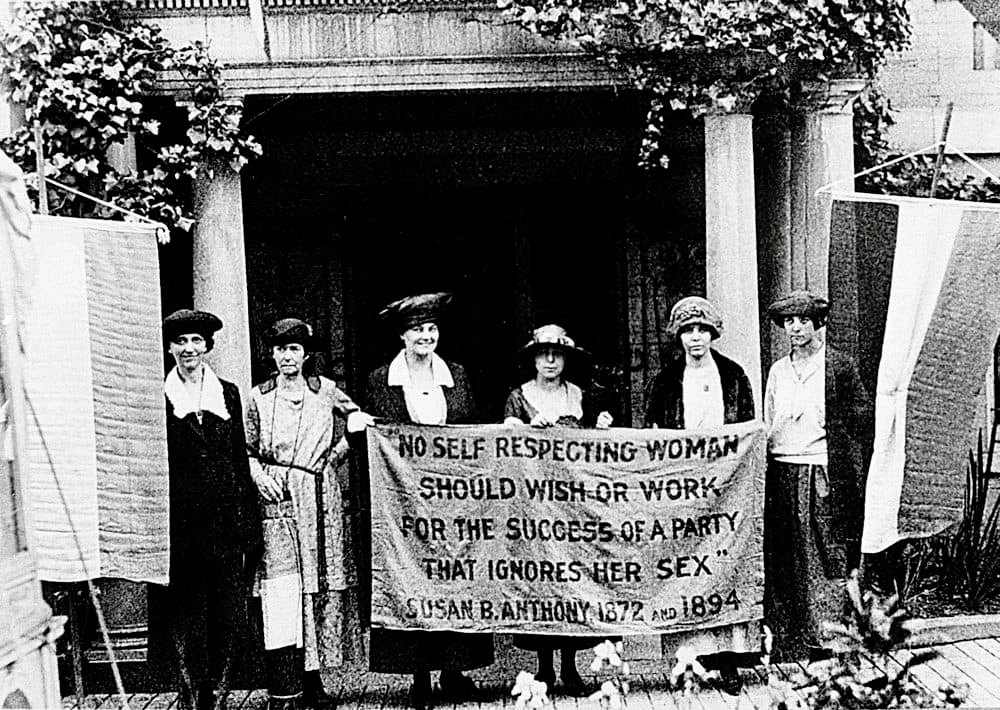
The courts have done their part, twice over. The executive has not done its part at all.
The EHRC submitted its full draft Code of Practice to the government in September 2025. As of the High Court’s judgment in February 2026, that code had still not been approved or published. Ministers have had the law confirmed by the Supreme Court. They have had interim guidance upheld by the High Court. They have had the statutory framework explained to them in terms that a competent civil servant could apply before lunch. And still the Code of Practice sits on a desk somewhere in Whitehall, waiting for political courage that has not arrived.
The failure is not administrative. It is political. The current government has calculated that the path of least resistance is to delay, to await ‘further clarity,’ to commission another review, to speak warmly of everyone’s rights while declining to enforce any particular person’s rights in any particular place. This is cowardice dressed as balance, and it costs real women real privacy every working day.
What is required is not complexity. The Workplace (Health, Safety and Welfare) Regulations 1992 require separate sanitary facilities for men and women. The Equality Act, as interpreted by the Supreme Court, defines men and women by biological sex. The EHRC’s guidance, as upheld by the High Court, translates those two facts into practical instruction. The government needs to approve the Code of Practice, direct the Health and Safety Executive to enforce the 1992 Regulations, and remove any ambiguity in public sector guidance that continues to use ‘gender’ where the law says ‘sex.’ None of this is complicated. All of it is overdue.
UNIONS: THE DEAFENING SILENCE

There is an absence in this story that deserves to be named directly. The trade union movement in Britain exists, in large part, to protect workers’ rights in the workplace. The right to separate sanitary facilities is a statutory right. It is a right that has been confirmed by the Supreme Court and upheld by the High Court. It is a right that is being denied to women in workplaces across the country, where employers have either failed to implement the law or have actively replaced women-only facilities with mixed-sex provision under pressure from HR policies that prioritised ideology over statute.
Where are the unions?
Some have been conspicuously absent. Others have actively taken positions that place them on the wrong side of their own female membership. The TUC and several affiliated unions adopted guidance and policy positions during the years of regulatory drift that were, at best, silent on women’s single-sex rights and, at worst, openly hostile to those who raised them. Female union members who raised concerns about changing room provision, about privacy at work, about the removal of women-only spaces in their workplaces, were in some cases told by their own representatives that their concerns were transphobic.
That era is now over, legally. The Supreme Court spoke in April 2025. The High Court spoke in February 2026. The law is settled. The question for the trade union movement is no longer whether biological sex is the correct legal basis for single-sex facilities. It is. The question now is whether unions will start doing their job: filing grievances, supporting female members who have been denied their statutory rights, holding employers to the law that Parliament passed and the courts have confirmed.
The labour movement was built on the refusal to accept that workers’ rights were someone else’s problem. It was built by people who understood, as Benn understood, that the same battles must be fought again and again, and that toughening up means showing up. The women waiting for their unions to show up on this question have been waiting long enough.
The law is settled. The question now is whether unions will do their job, or keep pretending this is still a matter for debate.
THE MACHINE AND THE MISSION

Jolyon Maugham’s ‘The Good Law Project’ will appeal. It has said so. It has five barristers and a solicitors’ firm already instructed. It has a pot of reserves and a donor list primed by years of emotive fundraising. It will go to the Court of Appeal and argue, again, that the EHRC’s guidance should be overturned and that the Supreme Court’s interpretation of the Equality Act was wrong, or at least that the Human Rights Act requires a different outcome.
It will lose again. The legal architecture against its position is now four storeys high: the Supreme Court’s unanimous ruling, the High Court’s dismissal of every ground of challenge, the court’s refusal to grant the GLP standing, and the statutory framework that underpins both. The GLP knows the legal landscape as well as anyone. Its lawyers are not incompetent. They can read case law. They know what the Court of Appeal is likely to say.
And yet the crowdfunder is live. The appeal is filed. The ten percent levy on every donation is already being deducted. The five barristers are already on the clock.
Benn was right that there is no final victory. But he was describing the duty of those who have been wronged, not the revenue model of those who have found a way to monetise the absence of resolution. Women in this country have fought for their rights with no institutional backing, no billionaire foundations, and no litigation war chest. They have done it in employment tribunals, at union meetings where they were shouted down, in public debates where they were mischaracterised, and in courts where they won. They won at the Supreme Court. They won at the High Court. They will win again.
The question is simply how many more times they should have to, while a company that was told it lacked standing to be in the room prepares its next invoice.
The courts have spoken. Parliament has legislated. The law is clear. What remains is the will to enforce it: from government, from employers, and from a trade union movement that has been conspicuously absent from the most basic fight for women’s rights in the workplace. Toughen up, bloody toughen up. That goes for all of us, not just the women who have been fighting this alone.
Enjoyed this read? I’m committed to keeping this space 100% ad-free so you can enjoy a clean, focused reading experience. Crafting these articles takes a significant amount of research and heart. If you found this helpful, please consider a “small donation” to help keep the lights on and the content flowing. Every bit of support makes a huge difference.

labourheartlands.com
Independent. Left. Unapologetic.
Support Independent Journalism Today
Our unwavering dedication is to provide you with unbiased news, diverse perspectives, and insightful opinions. We're on a mission to ensure that those in positions of power are held accountable for their actions, but we can't do it alone. Labour Heartlands is primarily funded by me, Paul Knaggs, and by the generous contributions of readers like you. Your donations keep us going and help us uphold the principles of independent journalism. Join us in our quest for truth, transparency, and accountability – donate today and be a part of our mission!
Like everyone else, we're facing challenges, and we need your help to stay online and continue providing crucial journalism. Every contribution, no matter how small, goes a long way in helping us thrive. By becoming one of our donors, you become a vital part of our mission to uncover the truth and uphold the values of democracy.
While we maintain our independence from political affiliations, we stand united against corruption, injustice, and the erosion of free speech, truth, and democracy. We believe in the power of accurate information in a democracy, and we consider facts non-negotiable.
Your support, no matter the amount, can make a significant impact. Together, we can make a difference and continue our journey toward a more informed and just society.
Thank you for supporting Labour Heartlands