The Architecture of Influence: Epstein, the Trilateral Commission, Network for a New World Order
The Vision
In 1949, George Orwell imagined a world divided into three perpetually warring superstates: Oceania, Eurasia, and Eastasia. Each bloc controlled its population through surveillance, managed information, and the systematic erosion of independent thought. The Party’s slogan was clear: “War is Peace. Freedom is Slavery. Ignorance is Strength.”
In 1973, David Rockefeller founded an organisation that divided the world into three regions: North America, Europe, and Asia-Pacific. Its membership would be drawn from those who control finance, media, academia, and (notably) “a few trade union chiefs.” Its operating philosophy, published two years later, argued that Western societies suffered from “an excess of democracy” and that the solution required “some measure of apathy and non-involvement on the part of some individuals and groups.”
The Trilateral Commission does not call itself an oligarchy. It describes itself as a forum for cooperation, “committed to the pursuit of the European unification process” and “democratic principles.” But its structure tells a different story. Membership is strictly invitation-only. Representatives are allocated by “economic weight and political influence.” Meetings operate under the Chatham House Rule, permitting participants to use information but prohibiting attribution, “thereby enabling candid exchanges among elites without fear of public misquotation or reprisal.”
This is not democracy. This is its replacement.
The vision is elegant in its simplicity: a world organised into three trading blocs, coordinated by those who own capital rather than those who work for wages, governed through institutions sufficiently removed from popular accountability that policy can be made without the inconvenience of consent. Workers are not represented in this system; they are managed. Trade unions are not partners; selected leaders are recruited to ensure compliance. Elections continue, but the range of acceptable outcomes narrows until voting becomes a ritual that changes nothing fundamental.
The European Union, in this framework, is not a deviation from the plan. It is the plan’s most successful implementation: a supranational structure where economic policy is set by unelected commissioners and central bankers, where treaty obligations override parliamentary sovereignty, where the bureaucratic complexity of governance ensures that only those with resources and access can effectively participate.
This vision operates in shadow not because its architects are ashamed of it, but because it cannot survive public scrutiny. The Commission’s own founding document admits as much. When Samuel Huntington diagnosed “an excess of democracy,” he was acknowledging that popular participation tends to produce demands incompatible with elite preferences: higher wages, stronger protections, constraints on capital mobility, accountability for those who wield power. The solution was not to win the argument but to remove the argument from democratic contest.
Jeffrey Epstein was a member of this organisation. So is Keir Starmer. So is Peter Mandelson.
To understand why this matters, we must first understand what the Trilateral Commission is, what it wants, and how it recruits those who serve its purposes.

An investigation into how a convicted child sex trafficker became embedded in the same elite policy networks that now shape British political leadership
On 30 January 2026, the United States Department of Justice released 3.5 million pages of documents relating to Jeffrey Epstein, the convicted sex offender who died in custody in 2019. Buried within this avalanche of material was a quiet confirmation of what investigators had long suspected: multiple pages explicitly reference “Epstein’s ties to the Trilateral Commission.”
For those unfamiliar with this organisation, what follows is essential context. For those who recognise the name, the implications are immediately apparent.

I. The Document That Explains Everything
Before examining the network, we must understand its operating philosophy. The Trilateral Commission’s 1975 report remains the clearest statement of elite hostility to popular democracy ever committed to paper by mainstream political figures.
Huntington looked back with nostalgia to a time when “Truman had been able to govern the country with the cooperation of a relatively small number of Wall Street lawyers and bankers.” The problem, as he saw it, was that during the 1960s “special interests” began “trying to get into the act,” causing “too much pressure” on government. His solution was “more moderation in democracy,” which is to say, less democracy.
Noam Chomsky has described this report as “one of the most interesting books showing the modern democratic system is not democracy at all, but controlled by elites.” In Chomsky’s analysis, the Commission’s report divides intellectuals into two categories: “technocratic and policy-oriented” intellectuals who serve power obediently, and “value-oriented” intellectuals who are dangerous because they “unmask institutions” and challenge established authority. Of course, Chomsky has also been implicated in the Epstein files, both as a visitor to Epstein’s island and a correspondent.
The report’s authors were not marginal figures. Michel Crozier was a leading French sociologist with regular access to government. Joji Watanuki advised Japanese policymakers. Huntington went on to advise multiple American administrations and wrote the influential (and controversial) “Clash of Civilizations” thesis.
When the Jimmy Carter administration took office in 1977, it was staffed with Trilateral Commission members to a degree that should have raised constitutional questions. Vice President Walter Mondale, Secretary of State Cyrus Vance, National Security Advisor Zbigniew Brzezinski, Défense Secretary Harold Brown, Federal Reserve Chairman Paul Volcker, and economic advisor Alan Greenspan were all Commission members.
The report’s recommendations were not academic theory. They were an operational manual.
II. The Credentials of a Predator
How did Jeffrey Epstein, a college dropout from Brooklyn with no formal financial qualifications, become a member of one of the world’s most exclusive policy forums?
The conventional explanation is that he donated his way in. This is too convenient, and it does not survive scrutiny.
The Trilateral Commission is strictly invitation-only. According to its own documentation, membership is determined by “economic weight and political influence.” The US group receives only five to ten openings per year, selected from “a list of candidates many times larger than the number of openings.” Members include former prime ministers, central bank chiefs, Fortune 500 executives, and senior diplomats. Britannica describes them as “influential politicians; banking and business executives; media, civic, and intellectual leaders.”
Jeffrey Epstein was none of these things. He was a college dropout whose only documented billionaire client was Leslie Wexner. He had no verifiable business model justifying his wealth. The suggestion that he simply wrote a cheque and received membership insults the intelligence of anyone familiar with how elite institutions actually function.
Fortunately, we do not need to speculate. Epstein explained it himself.
In His Own Words
In an interview with Steve Bannon, Epstein described precisely how he gained entry to the network. The account is worth quoting at length because it reveals not merely how one man was admitted, but how the entire recruitment system operates.
Epstein recounted being invited onto the board of Rockefeller University in the late 1980s: “There was a money manager who said Rockefeller needs someone with financial expertise because the university is growing… I met with Nancy Kissinger and a bunch of other people, and David Rockefeller and I got along very well.”
Bannon pressed him: “How did a schmuck like you get on the board of Rockefeller? What year was that?… That’s one of the most prestigious research places in the world. How did a guy like you get on the board, a blueblood, internationally known… Nobel Prize winners all over the place? How do they pick a guy like you, a trader from, or basically some guy from Bear Stearns?”
Epstein’s answer was revealing. He explained that “up until the mid 80s or sort of early mid 70s, the most important thing was your name. If you were a Rockefeller, you were already considered to be brilliant. If you were a head of General Motors, it was your reputation. It was who you knew, who your family was.” But then came calculators, and then computers, and suddenly “the most important parts of business were really now going to calculations.”
Institutions like Rockefeller “needed someone to say, look, we are entering a different world with numbers.”
In other words: Epstein was recruited because he was useful.
The Trilateral Invitation
What happened next is even more significant. In Epstein’s telling, David Rockefeller began to explain “world politics” to him. And then came the invitation.
“He formed something called the Trilateral Commission,” Epstein told Bannon. “The Trilateral Commission is some spooky stuff. People said it was something the people that the Illuminati and there’s some mystery about it, people that ran the world…”
Epstein then recounted Rockefeller’s explanation of the Commission’s purpose: “David said most countries, the politicians get elected for four years or eight years, separate from the royal families in England or in the Middle East. Someone’s there for four years and then they’re not there anymore. The most important people to have stability and consistency would be businessmen. So he formed this trilateral commission of businessmen and politicians from three major continents.”
Here, in Epstein’s own words, is the Commission’s operating philosophy: elected politicians are temporary; businessmen provide continuity; therefore businessmen should coordinate policy across national boundaries.
Rockefeller then asked the young Epstein: “Would you like to be on the Trilateral Commission?”
Epstein was, by his own account, thirty to thirty-two years old. “I looked at the list of people and that was Bill Clinton, former president of the United States. Paul Volcker, every great leader in America, the Asians, the Japanese, and with a very long description of the history.”
When asked to provide a biography for the Commission’s records, Epstein wrote: “Jeffrey Epstein, comma, just a good kid.”
“Which I thought was funny,” he told Bannon. “Nobody else did.”
The Recruitment Operation
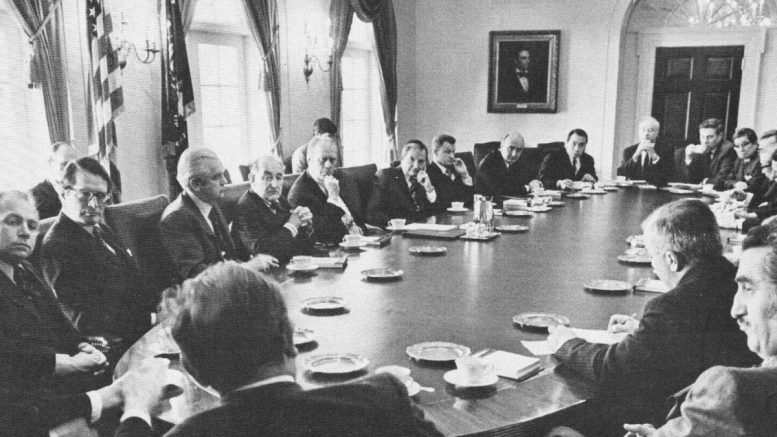
This account demolishes the “donation” narrative. Epstein did not buy his way in. He was personally recruited by David Rockefeller because he possessed skills the network required.
But Epstein was not unique. The Trilateral Commission’s membership, according to its own documentation, is drawn from “business, media, academia, public service, labor unions, and other nongovernmental organisations.” This is not a random collection of wealthy individuals. It is a systematic recruitment operation spanning every sector that shapes public opinion and policy.
The Commission’s European Group is explicit about its purpose. According to the Trilateral Commission’s own website, European members “are also committed to the pursuit of the European unification process which remains the driving force under a strong European Group leadership faithful to Europe’s Founding Fathers such as Max Kohnstamm (1973-1976) and Georges Berthoin (1976-1992) who were both close collaborators of Jean Monnet.”
Jean Monnet, the architect of European integration, is described in academic literature hosted by the European Commission’s own library as having established the European project “with a particular character (marked by technocracy and elitism).”
The Trilateral Commission’s website celebrates this legacy: “The progress of the European Community over the past decades, to fold into a broader and deeper European Union since, has validated the vision of the Commission’s founders.”
This is not a conspiracy theory. This is the Commission describing itself. The European Union, in this telling, represents the successful implementation of Trilateral principles: supranational coordination of policy by unelected elites, insulated from the inconvenience of democratic accountability.
What Epstein Provided
Epstein explained to Bannon why his particular skills were valuable: “Most political leaders don’t come out of a background of finance. Most political leaders come out of a background of being popular… Their expertise, if they have any financial knowledge, is of their own checking account or bank account and filling in their own taxes. So many world leaders who don’t really have a financial underpinning make fundamental errors when it comes to money on a country or institutional level.”
Epstein positioned himself as the man who could translate between the world of finance and the world of politics. But the documentary evidence suggests his services extended considerably further.
Trump’s Commerce Secretary Howard Lutnick, who lived next door to Epstein on Manhattan’s Upper East Side, offered a blunter assessment in October 2025. Lutnick described Epstein as “the greatest blackmailer ever.” He alleged that Epstein’s “massage room” was almost certainly on video, that “there were people on those videos,” and that this explained both Epstein’s inexplicable wealth and his lenient 2008 plea deal.
This was not speculation from a conspiracy theorist. This was a sitting Cabinet secretary describing his former neighbour.
The documentary evidence supports this characterisation. According to the Department of Justice, Epstein kept compact discs locked in his safe with handwritten labels including descriptions like “young [name] + [name].” Victims and staff confirmed that hidden cameras operated throughout his properties. Maria Farmer, an early victim, testified that Epstein’s New York mansion was “staffed with young female masseuses” in a room with “massage table, lubricants and, no doubt, cameras.” Virginia Giuffre described the operation as “a kompromat factory.”
Epstein told a New York Times reporter in 2018, off the record, that he “had dirt on powerful people, including information about their sexual proclivities and recreational drug use.”
The Prince Andrew Pattern

The case of Prince Andrew illustrates how this service functioned in practice.
Andrew served as Britain’s Special Representative for International Trade and Investment from 2001 to 2011, undertaking 757 public engagements in 2009 alone, 550 in his trade envoy capacity. His role was explicitly described by Buckingham Palace: “Middle East potentates like meeting princes. He comes in as the son of the Queen and that opens doors. He can raise problems with a crown prince and four or five weeks later, we discover that the difficulties have been overcome and the contract can be signed.”
Andrew’s friendship with Epstein was, by his own account, useful to this role. He maintained the relationship was “important to his networking.” The overlap between Andrew’s trade delegations and his Epstein friendship is striking: Kazakhstan, where oligarch Timur Kulibayev purchased Andrew’s home for £3 million over asking price. Libya, where “a very good friend” of Andrew’s was Saif Gaddafi. Tunisia, Azerbaijan, Bahrain. Arms deals with despotic regimes. Twelve documented meetings with the president of Azerbaijan alone.
The Campaign Against the Arms Trade described Andrew as “the cheerleader in chief for the arms industry” and “the front man” for promoting weapons sales to “corrupt and repressive regimes.” His expenses in 2010 alone totalled £620,000.
When the Central Park photograph emerged in 2011, showing Andrew walking with Epstein after his conviction, his role as trade envoy was terminated. But for a decade, the connection had served purposes that extended well beyond social friendship.
The Intelligence Dimension
The question of whether Epstein operated as an intelligence asset remains contested. Vicky Ward reported in 2019 that Alexander Acosta, the prosecutor who approved Epstein’s lenient 2008 plea deal, told Trump transition officials he had been told Epstein “belonged to intelligence” and to back off. Acosta has since denied this under oath.
What is documented is the pattern. Thirty-six meetings with former Israeli Prime Minister Ehud Barak between 2013 and 2017. Three meetings with William Burns in 2014, when Burns was Deputy Secretary of State (Burns now serves as CIA Director). An Israeli military intelligence agent named Arik Koren reportedly living at Epstein’s residence for weeks at a time. Robert Maxwell, Ghislaine’s father, confirmed as a Mossad asset and buried in Israel with a state funeral attended by Israeli prime ministers and intelligence officials.
The Nation’s Jeet Heer offered perhaps the most accurate characterisation: “Asset doesn’t quite describe how Epstein operated, which was not as an agent carrying out orders but as a shaper of policy. Epstein was a power player in global politics, a kind of diplomat without portfolio with better access to the wealthy and politically powerful than most real ambassadors.”
Whether formally employed by intelligence services or operating as what Heer calls “a peer rather than an employee,” the evidence suggests Epstein provided services that transcended mere social networking. He brokered introductions, facilitated deals, arranged meetings between parties who preferred to avoid official channels, and accumulated material that could compromise powerful figures.
The Architecture of Recruitment
When financier Leon Black testified about why he had paid Epstein between $158 million and $170 million for “tax advice,” he explained that Epstein presented himself as “a Rockefeller University appointee, member of the Council on Foreign Relations and the Trilateral Commission.”
These credentials were not incidental decorations. They were operational necessities. The institutional memberships provided Epstein with access to his targets. A 2003 profile in the Harvard Crimson noted that Epstein and Harvard President Lawrence Summers “serve together on the Trilateral Commission and the Council on Foreign Relations.” This shared membership placed Epstein in rooms with the people he needed to reach.
The pattern extends beyond Epstein. The Obama administration appointed eleven Trilateral Commission members to senior positions. The Biden administration included at least six former members: Secretary of State Antony Blinken, Federal Reserve Board Member Lael Brainard, Ambassador to Poland Mark Brzezinski, Ambassador to China Nicholas Burns, Deputy Secretary of State Wendy Sherman, and National Security Advisor Jake Sullivan. The current British government is led by a Trilateral Commission member who appointed another Commission member as Ambassador to Washington.
The question is not how Epstein bought his way into these institutions. The question is what the Trilateral Commission requires from those it recruits, and what services Epstein provided that made his admission worthwhile.
David Rockefeller, in Epstein’s telling, explained the Commission’s purpose clearly: elected politicians are temporary; businessmen provide stability. The subsequent fifty years have seen this philosophy implemented through globalisation, European integration, and the systematic transfer of decision-making to institutions insulated from popular accountability.
Epstein was one recruit among many. His particular skills proved useful until they became inconvenient. The network that welcomed him continues to operate.
III. The British Connection

Let us now examine the British dimension of this network, which brings us to the current political leadership.
Peter Mandelson appears on Trilateral Commission membership lists for the European Group. He also appears in Epstein’s black book no fewer than ten times, with entries for his “direct line,” “home,” and “country home.” The DOJ files released on 30 January 2026 reveal that Epstein wired £10,000 to Mandelson’s husband, Reinaldo Avila da Silva, in September 2009, several months after Epstein’s release from his first prison term.
Virginia Giuffre, one of Epstein’s primary accusers, testified in 2011 that she was “introduced to Mr Mandelson at a dinner party” at Epstein’s New York residence. BBC reporting confirmed that Mandelson lobbied Tony Blair for a meeting with Epstein at Downing Street in May 2002. A civil servant’s memo from that period described Epstein as “a friend of Bill Clinton and Peter Mandelson.”
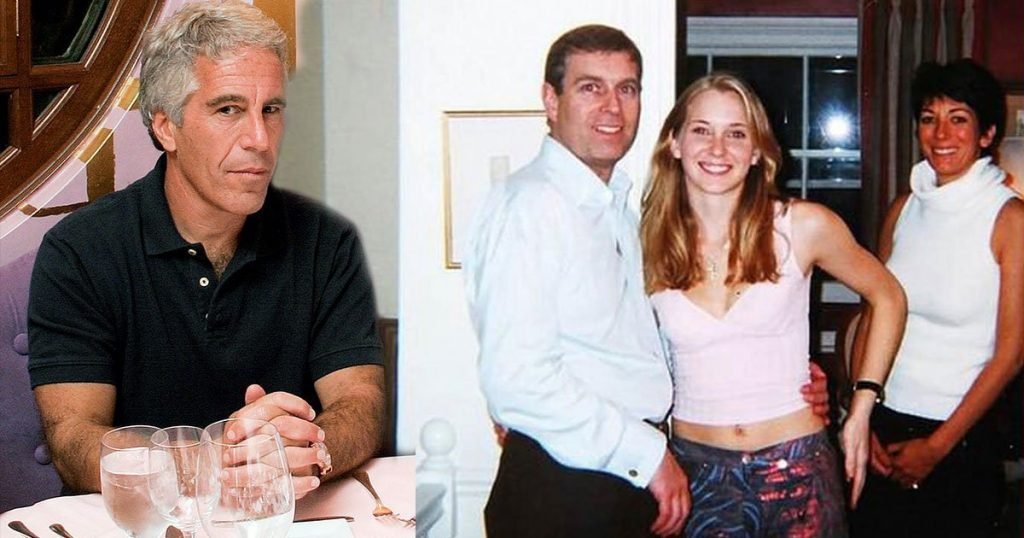
The relationship between Epstein and Mandelson appears to have been close. According to documentary evidence, Epstein used the nickname “Petie” for the former Cabinet minister. When Epstein was in prison in 2008, a friend told documentary makers: “I was astonished that a British Cabinet minister at that time, probably the most powerful man other than the Prime Minister, was calling Jeffrey in jail.”
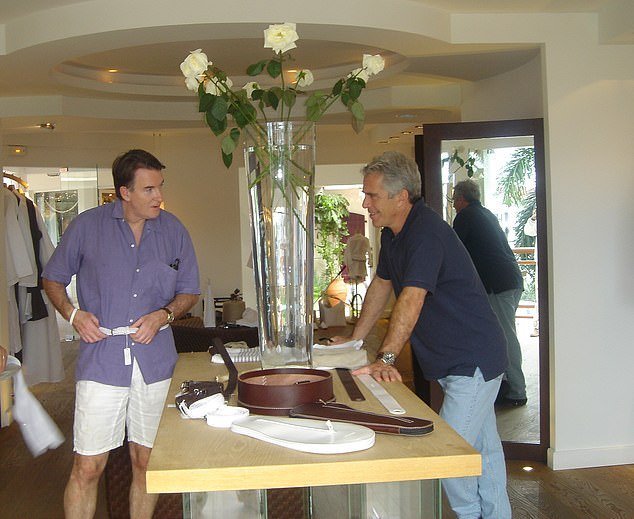
Keir Starmer is also a Trilateral Commission member (European Group). Despite knowing these documented connections, he appointed Mandelson as British Ambassador to Washington.
There may be perfectly innocent explanations for every one of these associations. Mandelson has maintained that his relationship with Epstein was purely social. What cannot be disputed is the institutional overlap: both men were members of the Trilateral Commission; both moved in the same circles of global governance; and one is now the second most influential figure in the British Labour government while the other proved to be one of the most prolific child sex traffickers in modern American history.
IV. The European Network
The pattern extends beyond Britain.

Terje Rød-Larsen, the Norwegian diplomat celebrated for brokering the Oslo Accords between Israel and the Palestinians, resigned as president of the International Peace Institute in 2020 after revelations about his relationship with Epstein became undeniable.
According to the Norwegian business newspaper Dagens Næringsliv, Rød-Larsen visited Epstein’s Manhattan mansion at least twenty times. In 2013, he signed a promissory note for a $130,000 personal loan from Epstein.
The relationship was so close that, according to the Wall Street Journal, Epstein’s staff kept cucumbers ready for his gin drinks whenever he visited.
In 2014, Rød-Larsen authorised a $100,000 payment from the International Peace Institute to Epstein. This payment related to work involving the Mongolia Advisory Board, a project that also involved Lawrence Summers and former Norwegian Prime Minister Kjell Magne Bondevik.
The newly released Epstein files revealed a dinner appointment in Paris in June 2019 involving Rød-Larsen and Thorbjørn Jagland, another former Norwegian Prime Minister who served as Secretary General of the Council of Europe from 2009 to 2019. Jagland insists their relationship was “normal diplomatic activity.”

Norway’s Crown Princess Mette-Marit also met with Epstein multiple times at his New York residence and in Oslo, several years after his 2008 conviction. She later apologised for “failing to investigate his background.”
Jeffrey Epstein’s pimp Jean-Luc Brunel…
Jean-Luc Brunel, the French modelling agent who allegedly recruited girls for Epstein through his agencies, was found hanged in his Paris jail cell in February 2022 while awaiting trial for rape of minors and sex trafficking. He had visited Epstein at least 70 times during his 2008 imprisonment and was listed as a passenger on Epstein’s private plane on 25 separate trips.
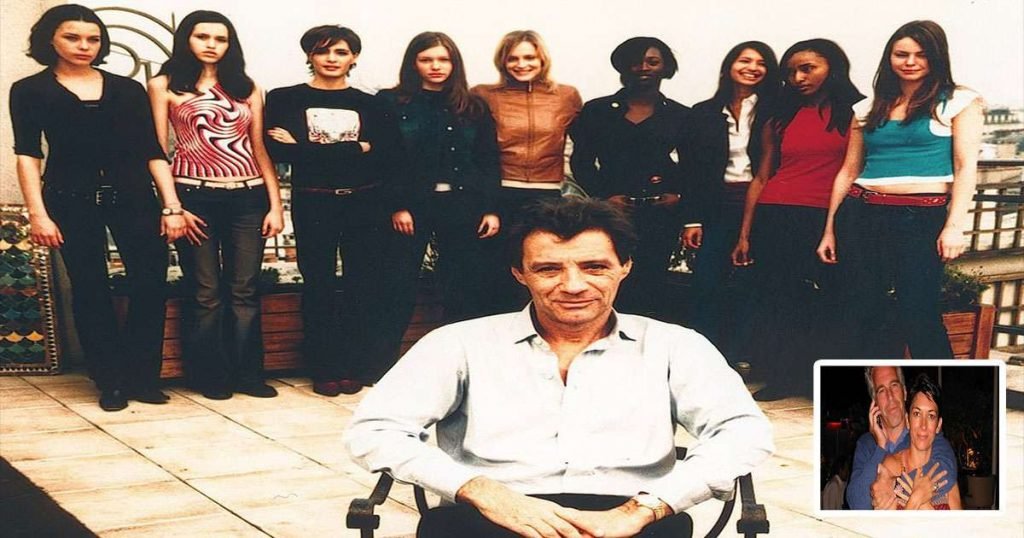
Virginia Giuffre alleged that Brunel “would bring girls as young as twelve to the United States for sexual purposes and farm them out to his friends, including Epstein.” She claimed Epstein boasted to her that he had “slept with over 1,000 of Brunel’s girls.”
V. The Intelligence Dimension
The released DOJ files confirm something investigators have long suspected: Epstein operated at the intersection of finance, elite networking, and intelligence activities.
William Burns, currently serving as CIA Director, had at least three scheduled meetings with Epstein in 2014, documented in Epstein’s calendars released by the House Oversight Committee. At the time, Burns was Deputy Secretary of State. A CIA spokesperson explained that Burns had sought “career transition advice” and had “no relationship” with Epstein. The explanation raises more questions than it answers: why would a senior State Department official seek career advice from a registered sex offender?
The evidence regarding Ehud Barak, former Israeli Prime Minister, is more extensive. Wall Street Journal investigations documented 36 or more meetings between Barak and Epstein between 2013 and 2017. Leaked emails released by the Handala hacker group in October 2024 (partially corroborated by The Sunday Times) revealed over 100,000 emails between the two men during this period.
According to Drop Site News investigations, Epstein brokered an attempted backchannel between Israel and Russia during the Syrian civil war, including arranging meetings with figures connected to Vladimir Putin’s circle. He helped coordinate Barak’s involvement in internal security projects in the Ivory Coast and facilitated a 2014 defence agreement between Israel and that country.
The Israeli military strategist, often described as “emotionally handicapped,” relied on Epstein to help him craft his messaging when dealing with other political officials and business elites. Epstein, for instance, asked Barak to wait until they could speak privately before Barak notified intelligence leaders of a deal with Vekselberg: “do not go to number 1 too quickly, I understnad more now so we should speak.” The euphemism “number 1” is a moniker used to refer to the head of the Mossad, dating back to Barak’s days as director of Israeli military intelligence, when the Mossad director’s identity was kept secret.
As the Renova contract was being finalised—a $1 million advance and a $1 million quarterly retainer—Barak planned a trip to Moscow on May 12 to meet with Vekselberg.
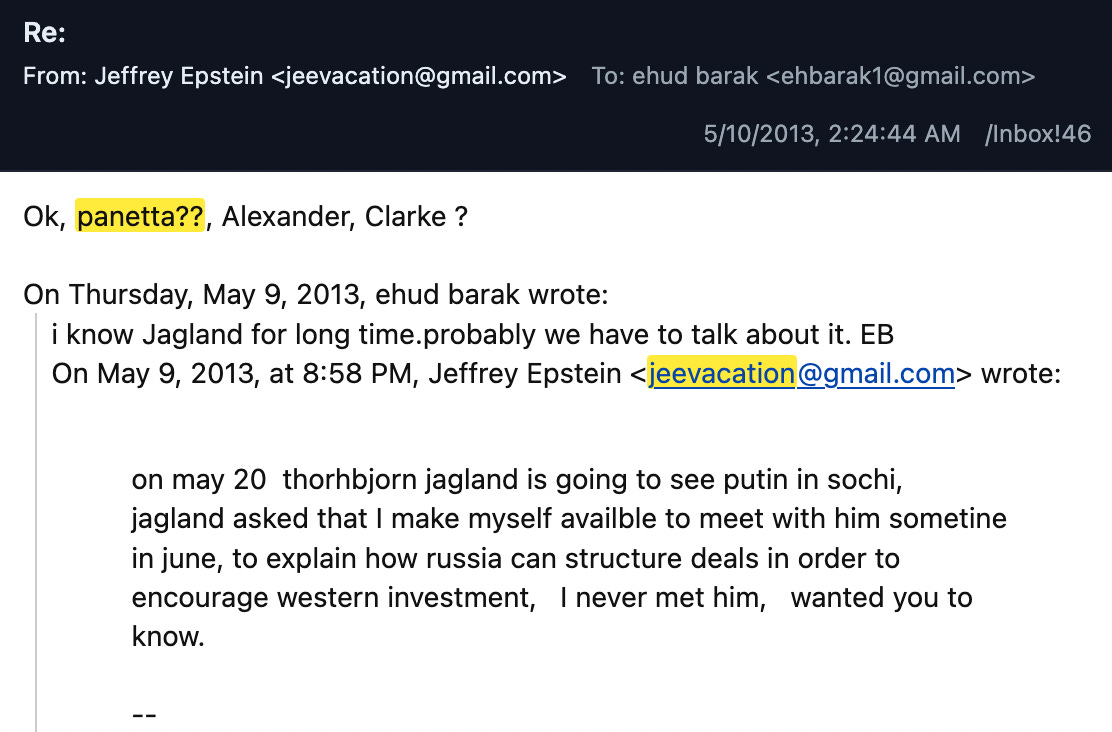
A few hours after Barak informed Epstein of his Moscow plans, Epstein shared some intelligence about one of Putin’s interlocutors, the head of the Council of Europe: “on may 20 [thorbjorn] jagland is going to see putin in sochi, jagland asked that I make myself availble to meet with him sometine in june, to explain how russia can structure deals in order to encourage western investment, I never met him, wanted you to know.” Barak, who was working closely with Epstein to cut deals in the Eurasian energy sector, wrote back: “i know Jagland for long time. probably we have to talk about it.”
Epstein responded with a short list of past and present American national security leaders who, his response implied, could also be useful in Russia talks. He wrote, “Ok, panetta??, Alexander, Clarke?”—likely referring to Secretary of Defense Leon Panetta, NSA Director Keith Alexander, and Cybersecurity Czar Richard Clarke.
Upon his return from Moscow, Barak contacted George Tenet, former director of the CIA, to pitch a talk he (Barak) could give at Allen & Company’s Sun Valley event in July—a “summer camp” for billionaires and elite politicians to convene and negotiate deals. The topic? “Think of Syria, CW. (+background of Iran’s elections & nuke program, Global Terror, North Korea etc). Probably briefing for selected group.” Barak was not recorded on the guest list.
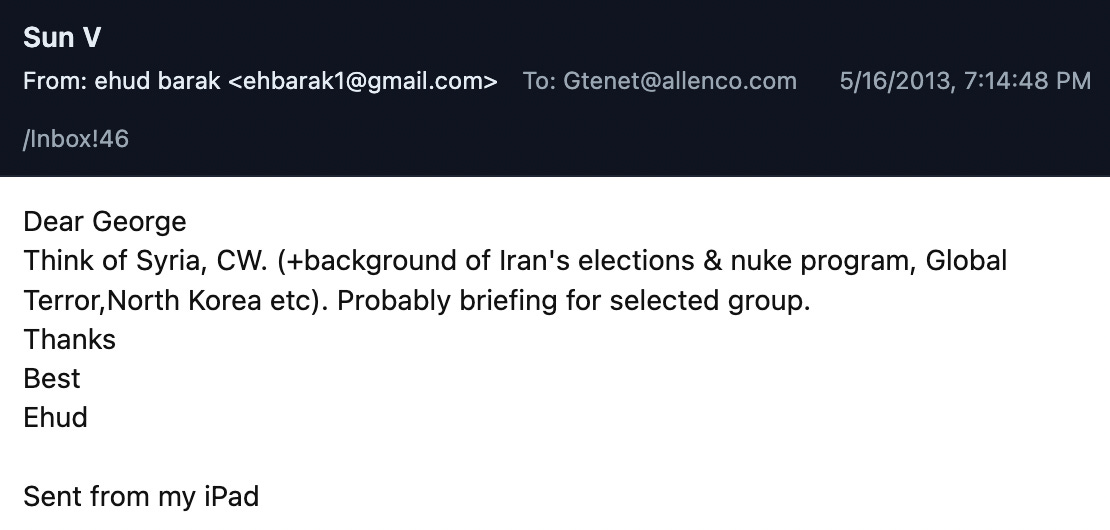
In the meantime, Epstein and Barak crafted an op-ed for Barak to publish that could shape the narrative for a Russian-led transition in Syria that secured Israel’s interests.
An Israeli military intelligence agent named Arik Koren reportedly lived at Epstein’s residence for weeks at a time between 2013 and 2015. Barak invested in Carbyne, a company developing emergency communication technologies that had significant participation from former Israeli intelligence personnel, including a former commander of IDF cyber unit 8200.
This pattern suggests that Epstein’s network functioned not merely as a social club for the wealthy, but as an informal channel for diplomatic and intelligence activities operating outside normal governmental structures.
VI. The Architecture of Unaccountability
What does this network reveal about the nature of power in contemporary Western democracies?
Return to the Trilateral Commission’s foundational document. The “Crisis of Democracy” report argued that the problem with 1970s societies was excessive democratic participation. Too many people were demanding too much from their governments. The solution, according to the report’s authors, was to reduce expectations, limit participation, and restore authority to traditional elites.
This was not presented as an authoritarian programme. It was presented as the pragmatic management of ungovernable societies. The authors believed they were saving democracy from itself.
The subsequent fifty years can be read as the implementation of this programme. The rise of technocratic governance, the transfer of decision-making to supranational institutions, the systematic weakening of trade unions and working-class political organisations, the financialisation of economies, the capture of nominally left-wing parties by professional political classes with no connection to labour movements: all of these developments align with the Commission’s prescriptions.
The network that connected Jeffrey Epstein to figures like Lawrence Summers, Peter Mandelson, and Terje Rød-Larsen was not a conspiracy in the conventional sense. It was something arguably more significant: a social ecosystem in which certain assumptions about governance were shared, certain doors were opened to those who belonged, and certain questions were never asked about those who had gained admission.
Epstein’s institutional memberships provided him with credibility. His wealth and connections provided him with access. His criminal activities, whatever their full extent, apparently raised no alarms among associates who pride themselves on their sophisticated understanding of the world.
VII. The Present Danger

Friedrich Merz was sworn in as Chancellor of Germany in May 2025. Between 2016 and 2020, he served as chairman of the supervisory board of BlackRock Germany, the German subsidiary of the world’s largest asset manager. His close personal ties to BlackRock CEO Larry Fink have been documented in multiple biographies.
Merz chaired the Atlantik-Brücke, a German organisation devoted to strengthening German-American relations, for ten years. The organisation maintains close ties to the same transatlantic elite networks in which the Trilateral Commission operates.
In November 2024, Keir Starmer posted on social media that achieving Britain’s economic ambitions “can only be achieved by working in partnership with leading businesses, like BlackRock.”
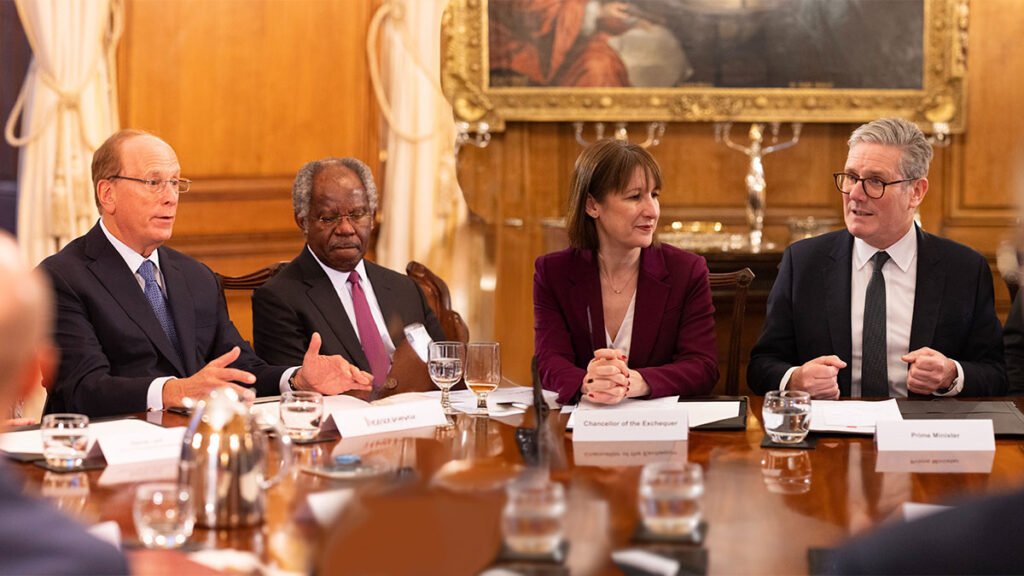
The current British government is led by a Trilateral Commission member who appointed another Trilateral Commission member with documented Epstein connections as Ambassador to the most important bilateral relationship Britain maintains. The current German government is led by a former BlackRock executive closely connected to transatlantic elite networks.
The “Crisis of Democracy” report argued that effective governance required limiting democratic participation. The subsequent half-century has seen the systematic implementation of that programme through globalisation, European integration, and the transfer of economic decision-making to institutions insulated from popular accountability.
Whether this represents enlightened technocracy or elite capture depends on your perspective. What cannot be disputed is that the individuals implementing these arrangements continue to circulate within the same networks that welcomed Jeffrey Epstein as a valued member.
VIII. What Remains Hidden
The DOJ released 3.5 million pages on 30 January 2026. It identified over 6 million potentially responsive pages. That leaves approximately 2.5 million pages unreleased.
Representative Ro Khanna, who co-sponsored the Epstein Files Transparency Act, has questioned why the remainder is being withheld. “This raises questions as to why the rest are being withheld,” he stated. “Failing to release these files only shields the powerful individuals who were involved and hurts the public’s trust in our institutions.”
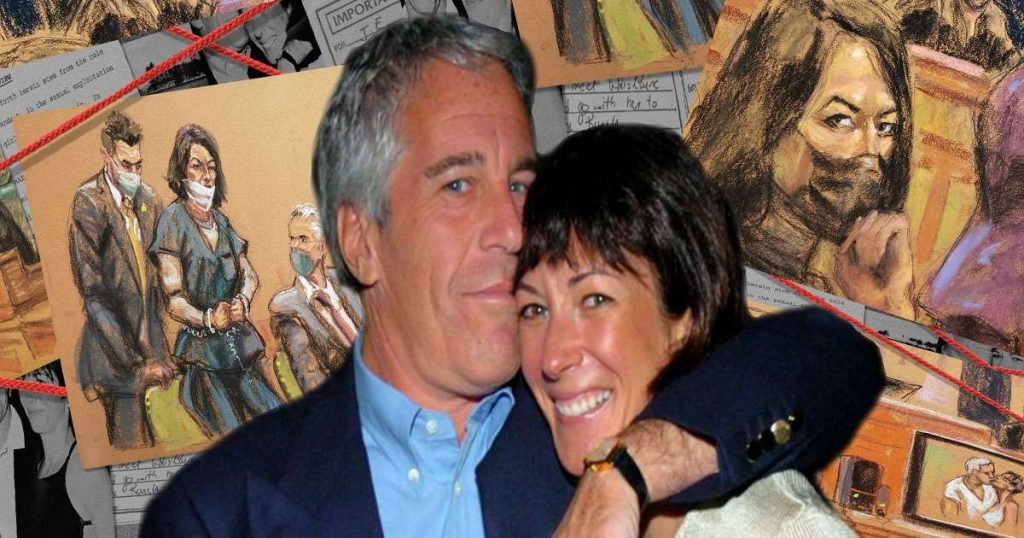
FBI documents from August 2019, five days after Epstein’s death, listed nine persons as family and associates, including eight labelled as “co-conspirators,” most with their names and faces redacted. Ghislaine Maxwell is the only associate to have been charged. The identity of the other seven co-conspirators has never been publicly confirmed.
The files released so far document extensive contacts between Epstein and figures including Elon Musk, Bill Gates, Steve Bannon, and numerous others who have not been accused of any wrongdoing related to Epstein’s crimes. The full scope of his network, and the full extent of his activities, remains unknown.
IX. The Question That Matters
The question is not whether Peter Mandelson or Keir Starmer participated in Jeffrey Epstein’s crimes. There is no evidence that they did, and it would be irresponsible to suggest otherwise.
The question is whether the institutional networks that credentialed Epstein, that welcomed him into elite policy forums, that continued associating with him after his first conviction, and that now shape the governance of major Western democracies can be trusted to prioritise public interest over elite solidarity.
The Trilateral Commission’s founding document argued that democracy’s problems stem from too much popular participation. The subsequent fifty years have seen systematic efforts to insulate economic and political decision-making from democratic accountability.
Jeffrey Epstein was a member of this network. His crimes were enabled, in part, by the credibility these memberships provided. His associates included individuals who now hold significant power in multiple Western governments.
The elite consensus that problems of governance stem from “an excess of democracy” has been implemented through institutions, policies, and networks that remain largely invisible to the public whose lives they shape. The Epstein files provide a rare window into how these networks actually function.
The question of whether democracy can survive rule by those who consider it excessive has not been answered. The answer depends on whether citizens choose to ask it.
Democracy is not threatened by the enemies who oppose it openly. It is hollowed out by the friends who find it inconvenient.
Enjoyed this read? I’m committed to keeping this space 100% ad-free so you can enjoy a clean, focused reading experience. Crafting these articles takes a significant amount of research and heart. If you found this helpful, please consider “a small donation” to help keep the lights on and the content flowing. Every bit of support makes a huge difference!

For previous Labour Heartlands coverage of the Trilateral Commission and its relationship to British political leadership, see: Sir Keir Starmer: The Trilateral Commission And Jeffrey Epstein
The Crisis of Democracy: Sir Keir Starmer and the Trilateral Commission
Sir Keir Starmer: The Trilateral Commission and Jeffrey Epstein
Who is ‘Mandelson’ and how are they all connected
Sources and Documentation
Primary Sources:
- US Department of Justice, Epstein Files Transparency Act releases (December 2025, January 2026)
- House Oversight Committee releases, September-December 2025
- Helsinki Times, “US Justice Department releases thousands of heavily redacted Epstein files,” 20 December 2025
- Trilateral Commission, “The Crisis of Democracy: Report on the Governability of Democracies,” 1975
Jeffrey Epstein’s Institutional Memberships:
- Council on Foreign Relations (1995-2009)
- Trilateral Commission (membership documented)
- Rockefeller University Board (from 1995)
- Wikipedia, “Jeffrey Epstein,” citing Vanity Fair and Harvard Crimson profiles
Lawrence Summers Connection:
- Harvard Crimson, 2003: “Epstein and Summers serve together on the Trilateral Commission and the Council on Foreign Relations”
- House Oversight Committee email releases, November 2025
- Multiple media outlets documenting continued relationship through 2019
Peter Mandelson Documentation:
- Epstein’s black book (10 entries with multiple phone numbers)
- DOJ files: £10,000 wire transfer to husband, September 2009
- Virginia Giuffre 2011 testimony regarding dinner party introduction
- BBC reporting on Downing Street meeting arrangement, May 2002
Terje Rød-Larsen Documentation:
- Dagens Næringsliv investigative series, 2020
- Wall Street Journal reporting on relationship
- Times of Israel, “Oslo peace accords architect resigns as think tank CEO over Epstein link,” November 2020
- PassBlue, “Terje Rod-Larsen, a Norwegian Diplomat, Quits a New York Think Tank Amid Links to Jeffrey Epstein,” October 2020
Ehud Barak Documentation:
- Wall Street Journal calendar documents: 36+ meetings 2013-2017
- Drop Site News investigations, September-November 2025
- Handala hacker group email releases, October 2024
William Burns Documentation:
- Wall Street Journal calendar documents: 3 scheduled meetings, 2014
- CIA spokesperson response regarding “career transition advice”
Jean-Luc Brunel Documentation:
- Wikipedia, “Jean-Luc Brunel”
- NPR, “Jeffrey Epstein associate Jean-Luc Brunel is found dead in a French jail cell,” February 2022
- Flight logs documenting 25 trips on Epstein’s plane
Friedrich Merz/BlackRock:
- Wikipedia, “Friedrich Merz”
- Bloomberg, “Germany’s Christian Democrats Elect Ex-BlackRock Merz as Leader,” January 2022
- CNBC, “Who is Friedrich Merz, the favorite to become Germany’s new chancellor?” February 2025
Chomsky Analysis:
- Chomsky, Noam. “The Carter Administration: Myth and Reality,” excerpted from Radical Priorities
- Wikipedia, “The Crisis of Democracy,” citing Chomsky’s commentary
Labour Heartlands is committed to investigative journalism that challenges entrenched power structures. We distinguish carefully between documented facts, ongoing investigations, and speculation. All claims in this article are sourced from official documents, mainstream media investigations, or testimony in legal proceedings. Inclusion of an individual’s name does not imply wrongdoing unless explicitly stated.
Support Independent Journalism Today
Our unwavering dedication is to provide you with unbiased news, diverse perspectives, and insightful opinions. We're on a mission to ensure that those in positions of power are held accountable for their actions, but we can't do it alone. Labour Heartlands is primarily funded by me, Paul Knaggs, and by the generous contributions of readers like you. Your donations keep us going and help us uphold the principles of independent journalism. Join us in our quest for truth, transparency, and accountability – donate today and be a part of our mission!
Like everyone else, we're facing challenges, and we need your help to stay online and continue providing crucial journalism. Every contribution, no matter how small, goes a long way in helping us thrive. By becoming one of our donors, you become a vital part of our mission to uncover the truth and uphold the values of democracy.
While we maintain our independence from political affiliations, we stand united against corruption, injustice, and the erosion of free speech, truth, and democracy. We believe in the power of accurate information in a democracy, and we consider facts non-negotiable.
Your support, no matter the amount, can make a significant impact. Together, we can make a difference and continue our journey toward a more informed and just society.
Thank you for supporting Labour Heartlands