The Managed Emergency: How Britain Erased a Muslim Victim to Justify New Powers
On 29 April 2026, a mentally ill man attacked three people of different faiths and backgrounds. By the time Keir Starmer had finished speaking, only two of those victims officially existed, and the rights of hundreds of thousands of British citizens were already in the crosshairs.
Before the politicians arrived at the scene, before the cameras caught Starmer walking the streets of Golders Green to be met with heckles, before the terror threat level was raised to “severe” with an efficiency that suggested the paperwork had been prepared in advance, there was a man named Ishmail Hussein.
His name matters, because it is the name the state apparatus has done its level best to make you forget…
From Southport to Golders Green: How Labour Weaponises Every Crisis
Ishmail Hussein is a Muslim man. He lives in Southwark, south London. He had known Essa Suleiman, the man now charged with his attempted murder, for around twenty years. On the morning of 29 April 2026, before anyone in Golders Green had been stabbed, before the COBR meetings and the emergency parliamentary statements and the calls to ban pro-Palestine marches, Suleiman came to Hussein’s flat. He had tried to call his old friend several times that morning. Failing to reach him, he went in person. When Hussein buzzed him in, Suleiman produced a knife and tried to stab him. Hussein fended off the attack, sustaining minor injuries. Suleiman then left, took public transport to Brent Cross, and made his way north to Golders Green.
The Metropolitan Police declared the Golders Green incident a terrorist attack. The Southwark attack barely registered in the official narrative.
There are no prizes for guessing why.
The Inconvenient Timeline
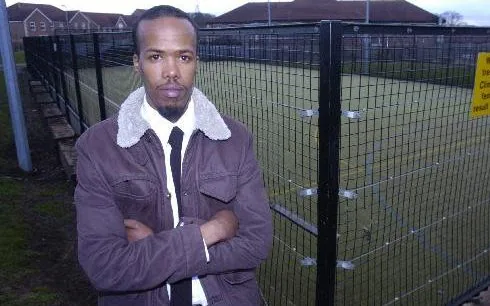
The facts of 29 April 2026 are, in their full sequence, considerably more complicated than the narrative since constructed around them. Essa Suleiman, 45, is a British national born in Somalia who came to this country as a child in the early 1990s. He was a patient at the South London and Maudsley NHS Foundation Trust. He was living in supported accommodation designed specifically for people leaving secure hospital. He had been referred to the government’s Prevent counter-terrorism programme in 2020; that referral was closed the same year, because no terrorist ideology was identified. He had a history of serious violence, dating back to 2008. According to Channel 4 News, he had left psychiatric care just days before the attack.
He tried to call his old friend on the morning of 29 April. He failed to reach him. He went to his flat and tried to stab him. He then took public transport across London and attacked two Jewish men in Golders Green. The Metropolitan Police announced that the suspect had gone out with the intention of stabbing people who appeared, in their phrasing, “visibly Jewish.” The Board of Deputies of British Jews and the Jewish Leadership Council used the same language in their joint statement, describing the attack as targeting “two visibly Jewish men.”
That phrase, repeated without examination across every official statement and news report that followed, deserves a moment’s scrutiny, because embedded within it is one of the oldest and most corrosive assumptions that antisemitism has always required.
Ironically, Green Party leader Zack Polanski has accused The Times of publishing “a pretty vile antisemitic caricature” of him, after the newspaper featured a cartoon of Polanski with a hooked nose kicking a police officer.
Green Party leader Zack Polanski condemns ‘vile antisemitic caricature’ in The Times.

The Green Party said it has submitted a complaint to The Times editor Tony Gallagher over the caricature, which it said displays “tropes so clearly associated with antisemitic depictions of Jewish people”.
It said in a statement that it was “astonishing” given the “rising climate of antisemitism in the UK” that a “national newspaper has chosen to publish a cartoon of the only Jewish political leader in the country using tropes so clearly associated with antisemitic depictions of Jewish people”.
Speaking in an interview with the BBC’s Laura Kuenssberg on Sunday, Polanski said the newspaper has yet “to apologise or withdraw” the cartoon.
The cartoon shows Polanski with a hooked nose, kicking police officers who are arresting Essa Suleiman, a 45-year-old Somali-born British national accused of stabbing two Jewish men in Golders Green, a neighbourhood of northwest London with a large Jewish population.
Spokesperson for party accuses ‘media and politicians’ of mounting ‘further attacks towards Zack in the wake of a violent attack on his community’
Judaism is not a race. It is not a nationality. It is a religion with a remarkable and genuinely diverse humanity behind it: the Beta Israel of Ethiopia, the Kaifeng Jews of China, the Mizrahi communities of the Arab world, the Sephardic and Ashkenazi traditions of Europe and the Americas. To speak of someone appearing “visibly Jewish” is to accept, on behalf of a perpetrator motivated by hatred, the racial essentialism that lies at the very root of antisemitism itself.
Jews are not a Race

Jews have been persecuted for centuries precisely because their persecutors insisted on identifying them by appearance, by name, by neighbourhood, by supposed physiognomy. That the police and the community’s own representative bodies reached instinctively for the same formulation is not a criticism of their intentions, which are not in question. It is an observation about how deeply the logic of antisemitism has penetrated even the language used to oppose it. Antisemitism is not served, it is unwittingly reproduced, when the official record does the persecutor’s categorising work for him.
It is being used right now to move the story away from the narrative of men randomly attacked by someone suffering from serious mental illness. This is the complete picture. Not a clean ideological terrorist, radicalised and dispatched by a foreign power, but a severely mentally ill man, recently discharged from psychiatric care, who attacked first someone he had known for decades, and then random strangers he passed on the street.
The Iran-linked group Harakat Ashab al-Yamin al-Islamia claimed responsibility. Such groups routinely claim attacks by disturbed individuals whose actions serve their propaganda purposes. Starmer, standing outside Downing Street, declared that Iran wanted to harm British Jews. Legislation to prosecute those acting as proxies for state-sponsored groups was already being fast-tracked.
None of this is to diminish what happened in Golders Green. Two men were stabbed. One was 76 years old. That is a serious, frightening, inexcusable act of violence. The Jewish community in Britain has suffered a sustained and genuinely terrifying sequence of attacks: the Heaton Park synagogue killings in October 2025, the Hatzola ambulance arsons in March 2026, the accumulation of incidents in a community already carrying the weight of millennia of persecution. The horror is real, the fear is real, and the grief is real.
But the state has a professional obligation to tell the truth. And the truth is that it has failed to do so.
Ishmail Hussein was attacked. He is a victim, he is a Muslim. The fact that his existence complicates the official narrative does not license his erasure from it. When the Metropolitan Police formally declared the Golders Green incident a terrorist incident without meaningful reference to the earlier attack on Hussein, it was making a political editorial decision as much as a legal one.
Suleiman attacked three people. One of them is a Muslim man. That inconvenient fact raises a question the government has no interest in answering: if this was purely an antisemitic terrorist incident driven by ideology, why was his first victim someone of his own faith?
The Familiar Failure
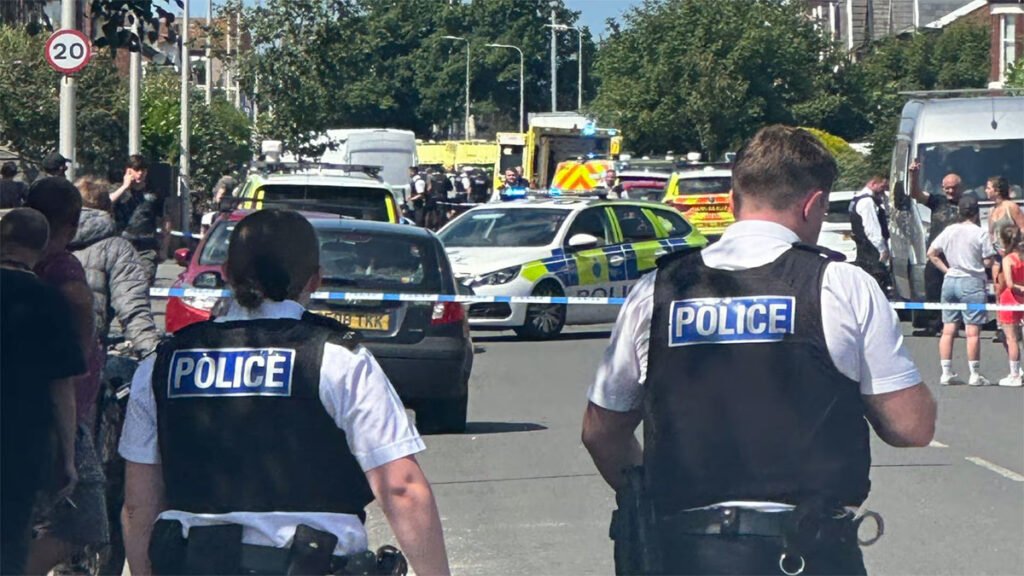
Rudakubana, like Suleiman, had a history of deeply concerning behaviour. Like Suleiman, he had been referred to Prevent, in his case three times between 2019 and 2021. In his case, as in Suleiman’s, the referrals were closed because no terrorist ideology was identified. The system failed in both cases for the same structural reason: it was designed to catch ideological terrorists, not severely disturbed individuals who might become dangerously violent without ideological framing.
The government, in its response to Southport, acknowledged this gap. Starmer promised to overhaul terrorism laws to capture non-ideological violence. He convened COBR. He promised that criminals would feel the full force of the law. What followed were riots, and what followed the riots were over 1,280 arrests and sentences that averaged around two years, with some reaching as high as nine years.
The liberal left, broadly, approved. The rioters were racists, and the logic Starmer and the Labour government pushed was a straightforward one: that what Britain had witnessed was a racist mob responding to the murders of three innocent children by a mentally ill man who happened to be Black, who happened to be the son of an immigrant. The narrative was not wrong, exactly. But it was incomplete. And the liberal left was so relieved to see the state’s boot coming down on the right people that it asked no questions about the boot itself. Those who did ask questions risked finding out what the law now permitted. Which is to say: prison.
But there is a thing nobody on the left wished to hear in the summer of 2024, and which is now impossible to ignore. The legal apparatus deployed after Southport was not built for racists alone. It was built for everyone. Laws that criminalise inflammatory speech, that empower rapid prosecution, that create new categories of violent disorder, do not stop at the ideological boundary. They are tools of the state, and the state points them wherever it finds it politically convenient.
Which brings us to May 2026.
The Manufactured Emergency
Yet here we are…Within twenty-four hours of the attack in Golders Green, Keir Starmer had convened COBR, raised the national terror threat level from substantial to severe, promised new legislation to fast-track prosecution of those acting as proxies for foreign states, pledged to prosecute anyone using the phrase “globalise the intifada,” suggested that pro-Palestine marches could be banned outright, and described the Green Party leader Zack Polanski as “disgraceful” and “not fit to lead any political party” for sharing a social media post that questioned police conduct during Suleiman’s arrest.
This is government functioning at the speed of political opportunity.
The terror threat level, we were assured, was not raised solely because of Golders Green. The government said the threat had been “rising for some time.” If that is true, one is entitled to wonder why the announcement came within hours of an attack that Starmer was already linking to pro-Palestine demonstrations, and why the timing was so perfectly calibrated for political effect.
The call for calm that followed Southport was conspicuously absent this time. The measured appeals to wait for the inquiry, to let justice run its course, to resist the pull of the immediate response: none of that appeared. In its place came Starmer and the full apparatus of the state, from press offices to police commissioners, calling for new legislation within hours and the restriction of liberties within days.
The assertion that chanting “globalise the intifada” is equivalent to calling for terrorism against Jews is not a legal finding. It is a political claim. There has been no recorded incident in the United Kingdom of an antisemitic attack involving that phrase. The people charged in January 2026 for allegedly chanting “intifada” at a demonstration did not carry out the Golders Green attack. Essa Suleiman did not attend pro-Palestine marches. He was a mentally ill former psychiatric patient who attacked three people, the first of whom was a Muslim friend of two decades.
The logic, stated plainly, is this: a demonstrably unwell man, recently discharged from psychiatric care, who attacked three people of multiple faiths, is being used to justify restricting the civil liberties of hundreds of thousands of British citizens who wish to protest their government’s complicity in a war that has killed tens of thousands of children. The Metropolitan Police reviewed whether the Stop the War Coalition’s 16 May demonstration could be banned. The government drew comparisons with France, where protest restrictions have been deployed systematically against political opposition.
If you have to apply for permission to protest, it is no longer a protest. It is a parade.
The left that cheered the post-Southport sentences and the right that cheers the post-Golders Green protest bans are united in one thing: the confident belief that the boot will always come down on someone else’s neck. It never does.
Then there is the matter of Zack Polanski.

The Green Party leader, whatever you may think of his politics, did something that a functioning democracy should regard as entirely unremarkable. He shared a post on social media questioning whether officers had used excessive force during Suleiman’s arrest. The post alleged that police had repeatedly and violently kicked a man in the head after he had already been tasered and was on the ground. Polanski condemned the attack itself as “horrendous.” He did not defend Suleiman. He asked a question about what appeared to be gratuitous violence against a person already restrained. This is, or used to be, the kind of thing that elected representatives were expected to do.
Keir Starmer’s response was to declare him “disgraceful” and “not fit to lead any political party.” Polanski, apparently startled by the ferocity of the response, apologised for “sharing a tweet in haste.” One might wish he had not.
Because the question Polanski raised was a legitimate one. British police officers are trained in a range of restraint techniques. They are trained in how to disarm an armed and dangerous individual. Whatever the specific training portfolio has shifted to in recent years, the foundational principles, including elements drawn from Aikido and other control disciplines, remain centred on restraint, control, and minimum necessary force. None of those principles, to the best of any former serviceperson’s knowledge, include repeatedly kicking a suspect in the head once he is already incapacitated on the ground. That is not a controversial observation. It is a description of what the rules exist to prevent.
Starmer reached for an authority he has no business invoking. On Radio 4, he said: “But this is the thing about policing, and I learned it first-hand in Northern Ireland when I was working with the police over there. I sat in the control rooms when they were making decisions about operational matters. You have to make a decision in a split second according to the situation, as you understand it to be. And for politicians to wade in, as Zack Polanski did, is disgraceful.”
Let us sit with that for a moment.
Keir Starmer sat in a control room in Northern Ireland. He watched police make split-second decisions. He therefore understands the impossible pressures of operational policing and anyone who questions what happens on the ground is disgraceful. This is his argument.
It is an argument that would carry considerably more weight if Starmer were not simultaneously presiding over a government that has opened the door to the prosecution of veterans who served in Northern Ireland under conditions of genuine, lethal, daily threat. Men who made split-second decisions under fire, who operated under the rules of the yellow card, with its precisely calibrated and legally binding framework for the use of force, men who were told they would not face prosecution and have since found that promise worth nothing.
On Armistice Day 2025, eight former four-star generals and an Air Chief Marshal published an open letter to Starmer in The Times, accusing his government of allowing the European Convention of Human Rights to undermine the effectiveness of Britain’s Armed Forces and of blurring the lines between “legitimate authority and illegitimate violence.” The SAS Regimental Association, the Special Boat Service Association, and the Special Reconnaissance Regiment Association warned in a joint letter to MPs that veterans were being “relentlessly persecuted” and branded the legislation a “national disgrace.”
The yellow card, for those who were never required to carry one, was not a suggestion. It was a legally binding framework governing precisely when a soldier or officer could open fire. It was specific, restrictive, and serious. It left no room for the casual application of force against a restrained individual. No control room in Northern Ireland, at any point during Operation Banner, would have authorised what that social media post described. No soldier operating under the yellow card’s rules of engagement would have survived a court martial if he had done it.
Starmer knows what those control rooms looked like. He apparently does not know what those rules required. Or he knows, and has decided that invoking Northern Ireland is politically useful when silencing a Green Party leader, and strategically inconvenient when the men who actually served there ask him for the protection he promised them.
That is not authority speaking. That is a politician reaching for the nearest available weapon and discovering, too late, that it has an edge on both sides.
The Liberty Ratchet

This is not a new phenomenon. It is the oldest trick in the authoritarian playbook, refined to a science under successive British governments of both parties.
The mechanism is always the same. A shock event occurs, real and terrible. The state moves quickly, projecting strength, because speed of response is how governments signal control. New powers are demanded. New legislation is rushed. New categories of criminality are invented. The public, understandably frightened, accepts restrictions it would ordinarily reject. The restrictions, once in place, are never fully rescinded. The emergency becomes permanent.
Under Margaret Thatcher, the miners’ strike produced expanded police powers that were then turned against every subsequent protest movement. Under Tony Blair, the war on terror generated legislation criminalising the glorification of terrorism, subsequently used against journalists and protesters who had nothing to do with terrorism. Under the Conservatives, the Public Order Act 2023 introduced “serious disruption to the life of the community” as a condition for banning protests, granting the state near-unlimited authority to declare any sufficiently inconvenient demonstration illegal.
Labour came to power in July 2024 promising change. Under Starmer, according to the civil liberties organisation Statewatch, the government has “continued, and at times intensified, a crackdown on civil liberties begun by his Conservative predecessors.” Palestine Action was proscribed in July 2025. Since then, at least 2,300 people have been arrested for showing support. Just Stop Oil activists received prison sentences of between two and five years merely for attending a planning meeting on Zoom. The journalist Richard Medhurst was arrested at Heathrow under anti-terrorism legislation for expressing an opinion about a proscribed organisation; his journalistic equipment was seized and access to a lawyer was initially denied.
And now, in the Courts and Tribunals Bill working its way through Parliament, the government proposes to strip the right to jury trial from defendants facing sentences of up to three years, covering charges including fraud, robbery and drug offences. More than 3,200 lawyers, retired judges, senior barristers, and former senior prosecutors signed a letter urging Starmer to reconsider. The Institute for Government found that the reform would reduce Crown Court time by less than two percent. It would not clear the backlog. What it would do is remove ordinary people from the process of determining whether their fellow citizens are guilty.
A faster conviction is not a fairer one. The jury is the one thing standing between the individual and the overwhelming power of the state. Starmer understood this in 1992, when he opposed judge-only Diplock courts on exactly those grounds. He appears to have forgotten what he knew.
Both Sides of the Ratchet
There is a bitterly ironic symmetry to where we now find ourselves, and it demands honest acknowledgement.
After Southport, many on the left were largely untroubled by the scale and speed of the crackdown. The rioters were racists. The sentences were harsh, but the crimes were real. The machinery of state control was pointing in the right direction, at the right people. So it seemed.
They were wrong: not about the nature of the rioters, but about the nature of the machinery. The legal apparatus does not come with a political conscience. It does not distinguish between a man throwing a brick through a mosque window and a woman holding a placard outside an arms factory. It does not know, and does not care, whether you are right-wing or left-wing, racist or anti-racist. It knows only that you have disrupted the comfort of power, and that there are instruments available to punish you for it.
Now, after Golders Green, many on the right are untroubled by the prospect of pro-Palestine marches being banned. The demonstrators are extremists, or marching alongside them. The restrictions are harsh, but the provocations are real. The machinery of state control is pointing in the right direction. So it seems.
History does not support this confidence. The question that neither the post-Southport left nor the post-Golders Green right has been willing to sit with is this: who decides when the emergency is real enough, the provocation sufficient, the restriction proportionate? The answer is always the state. And the state has consistently, across parties and decades, answered that question in favour of its own expansion and against the liberties of its citizens.
From the Chaos the government has presented the solution

None of this is an argument for complacency about antisemitism, about terrorism, or about the real and documented suffering of the Jewish community in Britain. These are genuine emergencies deserving genuine responses.
The government will say that the right to protest is not absolute, that the Jewish community has a right to feel safe, and that the cumulative effect of repeated marches is real. It will point to the Manchester attack last year, where two Jewish people were killed outside a synagogue. It will argue that the threat level has been rising for some time, and that the Golders Green attack was merely the trigger.
These points are not without weight. The Jewish community in Britain has faced a sustained and sickening rise in antisemitic incidents. That is undeniable. The government has a duty to protect its citizens.
But the question is not whether the government should act. The question is what action it takes. The suspect in the Golders Green attack was not radicalised by a protest. He was a violent, mentally unwell individual who was failed by healthcare, policing, and counter-terrorism systems that have been starved of resources for years. Banning a march in London will not fix a broken mental health system. It will not restore Prevent’s credibility. It will not address the underlying causes of violence.
It will, however, give the government a new power. And that, it seems, is the entire point.
This government inherited a broken state. It chose not to fix it. It chose instead to weaponise every crisis, every stabbing, every tragedy, to expand its own power. The Southport inquiry will continue to pile evidence of systemic failure. The Golders Green suspect’s mental health history will be examined in court. But the government will not wait for the verdict. It will act now. It will ban now. It will legislate now. Because the public’s attention is short, and the window for authoritarianism is narrow.
The most shocking thing about this government is not its incompetence. It is the speed with which it learned the old Conservative trick: never let a good crisis go to waste.
A man named Ishmail Hussein was stabbed in his own home on 29 April 2026. He survived, fended off his attacker, and watched as the state he lives in decided his suffering did not fit the story it needed to tell.
That is the Britain Keir Starmer is building: one in which the government decides which victims count, which crises justify which powers, and which rights are dispensable. History has a word for a country where all of that is true. It is not a comfortable word. We are walking toward it with our eyes open, each political wing cheering the dismantling of the other’s liberties, neither willing to admit that the door swings both ways until it is too late to reach the handle…
Enjoyed this read? I’m committed to keeping this space 100% ad-free so you can enjoy a clean, focused reading experience. Crafting these articles takes a significant amount of research and heart. If you found this helpful, please consider a “small donation” to help keep the lights on and the content flowing. Every bit of support makes a huge difference.

Support Independent Journalism Today
Our unwavering dedication is to provide you with unbiased news, diverse perspectives, and insightful opinions. We're on a mission to ensure that those in positions of power are held accountable for their actions, but we can't do it alone. The Heartlands Tribune is primarily funded by me, Paul Knaggs, and by the generous contributions of readers like you. Your donations keep us going and help us uphold the principles of independent journalism. Join us in our quest for truth, transparency, and accountability – donate today and be a part of our mission!
Like everyone else, we're facing challenges, and we need your help to stay online and continue providing crucial journalism. Every contribution, no matter how small, goes a long way in helping us thrive. By becoming one of our donors, you become a vital part of our mission to uncover the truth and uphold the values of democracy.
While we maintain our independence from political affiliations, we stand united against corruption, injustice, and the erosion of free speech, truth, and democracy. We believe in the power of accurate information in a democracy, and we consider facts non-negotiable.
Your support, no matter the amount, can make a significant impact. Together, we can make a difference and continue our journey toward a more informed and just society.
Thank you for supporting Labour Heartlands