The Architect and the Apprentice: How the Starmer-Mandelson Bond Collapsed Under Epstein’s Shadow
Is there a point where proximity to power becomes an indictment of character? We are often told that in the high-stakes world of international diplomacy and statecraft, one must inevitably rub shoulders with the unsavoury. But as the January 2026 unsealing of the Epstein archives continues to haemorrhage secrets, the “unfortunate association” defence is no longer tenable. The Epstein Files reveal connections that challenge the integrity of political figures.
The resignation of Peter Mandelson from the Labour Party this week, facing both a police inquiry into market-sensitive leaks and fresh allegations of financial ties to Jeffrey Epstein, is not merely the fall of a single man. It is the collapse of a specific era of British politics. More pressingly, it leaves the Prime Minister, Keir Starmer, standing in a very cold, very lonely spotlight.
The Architect and the Apprentice

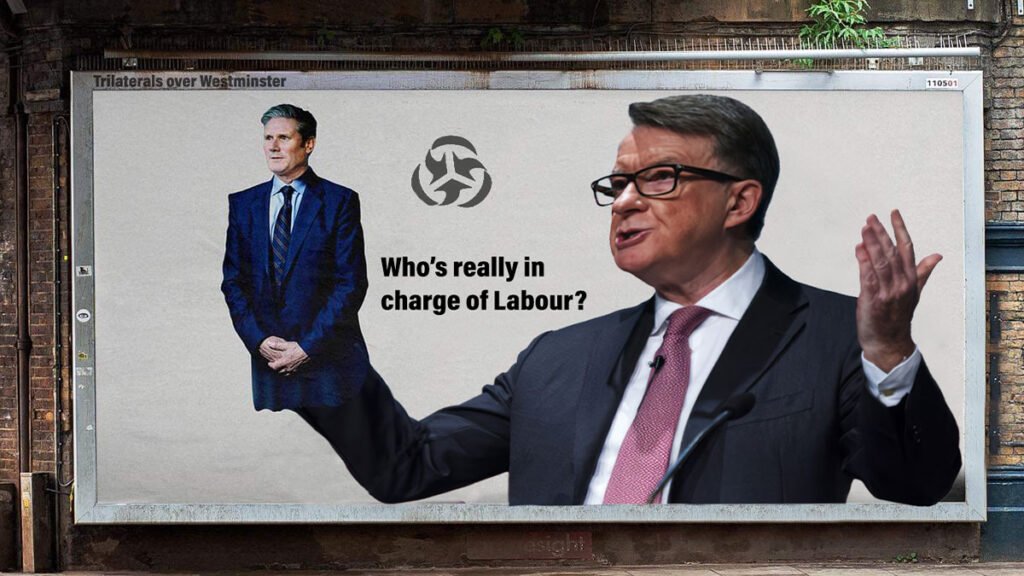
The relationship between Mandelson and Starmer was never merely professional; it was foundational. Mandelson, the “Prince of Darkness,” was the architect of the project that Starmer eventually inherited. They were fellow travellers in the Trilateral Commission, that elite forum of global managers where national interests are often subsumed by the needs of international capital.
These revelations in the Epstein Files have implications that stretch beyond individual accountability; they reflect on the entire political landscape.
When Starmer appointed Mandelson as Ambassador to the United States in early 2025, he did so despite clear warnings. Even this outlet, without pretending to be an insightful oracle, saw the writing on the wall. As far back as 2024, Labour Heartlands warned that Mandelson’s history rendered him unfit to represent the United Kingdom, with our article “Trilaterals over Washington”. We noted then that his appointment would signal a return to a “Trilateralism” that prioritises elite networks over public accountability. Yet, when Starmer appointed Mandelson as Ambassador to the United States in early 2025, he did so despite these public warnings and, as we now know from leaked briefings, internal alarms regarding “reputational risks.” He chose to proceed regardless. We now know, through leaked Cabinet Office briefings, that Starmer was informed of the “reputational risks” regarding Mandelson’s links to Epstein. He chose to proceed regardless.
This brings us to the testimony of Sarah Ransome. While the establishment has spent years attempting to dismantle Ransome’s credibility, citing her retractions and the “baseless” nature of her claims, the newly unsealed documents provide a different context.

Ransome’s emails from early 2025 are not the ramblings of a peripheral figure; they are a direct challenge to the Prime Minister’s “procedural” morality. In April 2025, she wrote: “KEIR. DON’T YOU THINK ITS TIME THE BRITISH PUBLIC DESERVE TO KNOW THE TRUTH??” Ransome’s allegations of institutional “aiding and abetting” by the British government may lack the forensic proof required for a courtroom, but they possess a devastating narrative truth. They describe a system that protects its own by default.
That spotlight that asks “how many warnings does a Prime Minister need” before proximity to a convicted sex offender becomes a problem?
In April 2025, Sarah Ransome, a survivor of Jeffrey Epstein’s abuse, sent Keir Starmer a direct message. The subject line read: “[EXTERNAL EMAIL] – KEIR STARMER – HUMAN RIGHTS AND BRITISH DEMOCRACY”. The body was equally direct: “KEIR, DON’T YOU THINK ITS TIME THE BRITISH PUBLIC DESERVE TO KNOW THE TRUTH??”

Starmer ignored it.
For five months, the Prime Minister continued defending his appointment of Peter Mandelson as UK Ambassador to the United States. He defended him in Parliament. He defended him in interviews. Then, when Bloomberg published emails revealing the depth of Mandelson’s friendship with Epstein, Starmer fired him within 24 hours.
Now, with last week’s Department of Justice release of 3+ million pages from the Epstein files, we know the full timeline. We know what Starmer knew. We know when he knew it. And we know he chose inaction until political survival demanded otherwise.
The Warning
A Victim’s Warning to Keir Starmer: The Email That Exposed a Prime Minister’s Judgment…
The email from Sarah Ransome sits in the Department of Justice archive as document EFTA00144082, dated April 3, 2025. It is one voice among thousands in the Epstein files, but it addresses the Prime Minister of the United Kingdom directly.
By April 2025, Peter Mandelson’s relationship with Epstein was not secret. Ransome was not making new allegations. She was asking why the British government continued protecting a man whose connections to a convicted paedophile were documented and public.
Starmer’s response? Silence.
Between April and September 2025, the Prime Minister maintained his position. Mandelson remained Britain’s representative in Washington. Security services had already raised concerns before the December 2024 appointment, the Foreign Office admitted the vetting process was incomplete when the appointment was announced. Yet Starmer proceeded, defended the decision repeatedly, and only reversed course when maintaining the position became politically impossible.
On September 10, 2025, Starmer told Parliament he had “confidence” in Mandelson. Less than 24 hours later, after Bloomberg published emails showing Mandelson had called Epstein his “best pal” and consoled him after his 2008 conviction, Starmer fired him.
The Documents
The January 30, 2026 DOJ release confirms what Ransome warned about. Between 2003 and 2004, Epstein made payments totalling $75,000 to Mandelson and his partner. But the financial connections pale against the documented leaks of classified government information during Britain’s worst economic crisis in generations.
In June 2009, while serving as Business Secretary during the financial crisis, Mandelson appears to have leaked a document outlining £20 billion in government asset sales to Epstein. In March 2010, he sent confidential minutes from a private meeting between Alistair Darling and US Treasury Secretary Larry Summers. In May 2010, he provided advance notice of a €500 billion EU bailout package.
Then there is the email from May 6, 2010: “finally got him to go today.” Gordon Brown resigned the following day.
These are not social indiscretions. If authentic, they represent a serving Cabinet minister treating classified government information as social currency for a convicted sex offender with known financial interests in exactly the kind of market-sensitive data being leaked.
The Metropolitan Police are now investigating Mandelson for misconduct in public office. Starmer, who appointed him despite security warnings and a victim’s direct plea, now calls for Mandelson to lose his House of Lords peerage.
The Pattern

This is not simply about one bad appointment. Starmer’s first seven months as Prime Minister have seen ministers resign over undeclared hospitality, business interests, and bullying allegations. Each time, the pattern repeats: defence, delay, dismissal when politically necessary, followed by claims of being “let down” by people he personally appointed.
The Mandelson case is different only in scale. This was not a ministerial appointment that went wrong. This was a conscious decision to place someone with documented connections to Jeffrey Epstein in Britain’s most sensitive diplomatic post, over the objections of security services and despite warnings from Epstein’s victims.
Sarah Ransome’s September 2025 statement to The Telegraph captured the institutional failure: “Something is really, really wrong here. Peter Mandelson should not be ambassador. He needs to be fired… Keir Starmer must have known all this. Everybody knew about Peter Mandelson’s close friendship with Epstein.”
She was right. Everybody did know. The relationship was documented in court filings, mentioned in media coverage, and detailed in multiple books about Epstein. Ransome’s April email simply made explicit what the Prime Minister was choosing to ignore.
The Counterargument
Defenders will say Starmer acted decisively when the full extent of the relationship became clear. They will point to Mandelson’s firing in September as evidence of appropriate action when presented with new information.
But this defence requires believing that between December 2024 and September 2025, despite security service warnings, incomplete vetting, and a direct warning from an Epstein victim, Starmer genuinely had no idea that Mandelson’s relationship with Epstein went beyond “unfortunate association.”
The timeline makes that impossible. The appointment came after security warnings. The maintenance of the appointment came after Ransome’s direct intervention. The public defence in Parliament came five months after being asked why the British public deserved to continue seeing Mandelson protected.
The only new information in September 2025 was that Bloomberg had published the emails. What changed was not Starmer’s knowledge, but public knowledge. The firing was not a response to revelation but to exposure.
The Elite Consensus
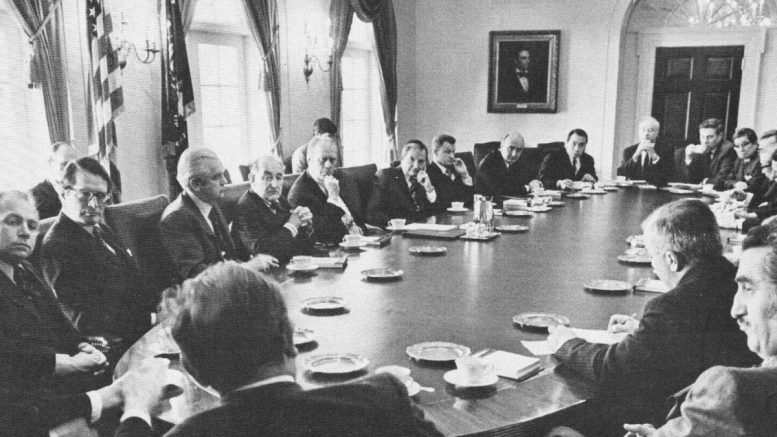
Peter Mandelson and Keir Starmer share membership in the Trilateral Commission, that elite forum where national interests are subordinated to the needs of international capital. They represent continuity, not merely of party but of a specific approach to governance that treats democratic accountability as negotiable and elite networks as permanent.
This explains the appointment. Mandelson was never chosen for competence in diplomacy. He was chosen because he represents the “serious” establishment, the restoration of adults in the room, the promise that Britain would return to the pre-2016 consensus.
That consensus operates through managed exposure. Scandals are addressed not when they occur but when they become impossible to ignore. Officials are defended until defence becomes politically costly, then dismissed with expressions of disappointment.
What makes the Epstein connection uniquely damaging is that it reveals how this system operates at its worst. When elite solidarity conflicts with basic moral judgment, when maintaining the network means ignoring victims, when “continuity” requires appointing someone whose relationship with a convicted paedophile was public knowledge, the system chooses continuity.
Accountability

On February 1, 2026, Peter Mandelson resigned from the Labour Party. He was not expelled. He resigned. Despite documented evidence of potentially criminal leaks of classified information to a convicted sex offender, despite being under police investigation, Mandelson was allowed to leave on his own terms.
Starmer now calls for Mandelson to lose his House of Lords peerage. But he made the appointment knowing the risks. He maintained it after security warnings. He defended it after a victim’s direct plea. He only reversed course when politically forced to do so.
The question is not whether Starmer knew the specific details of every leaked document. The question is why he appointed someone whose Epstein connections were documented and public, why he ignored security service concerns, why he dismissed a victim’s direct warning, and why he only acted when exposure made inaction impossible.
Democratic accountability requires more than belated expressions of disappointment. It requires explaining why elite solidarity trumped moral judgment, why warnings were ignored until politically impossible to maintain, and why victims had to watch their abuser’s friends protected at the highest levels of government.
Ransome’s April 2025 email asked when the British public would deserve to know the truth. The January 2026 DOJ release provided the answer: when the system could no longer prevent them from knowing.
The End of the Gentleman’s Agreement

We are witnessing the end of the “gentleman’s agreement.” The belief that the so-called British elite can manage their own scandals through quiet resignations and House of Lords retirements is dead.
Sir Keir Starmer must now decide: is he the leader of a sovereign nation, or is he merely the final steward of a decaying patronage network? Democratic accountability requires more than “anger” in a television interview; it requires a total cleansing of the institutional rot that allowed men like Mandelson to treat the state as a private ledger. The proverb says that when the student is ready, the teacher appears. But a wise student knows that not every teacher deserves a following, especially those who carry the distinct, lingering scent of the shadows they inhabit. More so, he must decide if his loyalty is to that nation or to his globalist masters.
When the teacher appears from the shadows, a wise student checks the light before following.
Enjoyed this read? I’m committed to keeping this space 100% ad-free so you can enjoy a clean, focused reading experience. Crafting these articles takes a significant amount of research and heart. If you found this helpful, please consider “a small donation” to help keep the lights on and the content flowing. Every bit of support makes a huge difference!

Sidebar: The Trilateral Matrix – Governance Beyond the Ballot Box
To understand the Starmer-Mandelson, Epstein nexus, one must look beyond Westminster to the Trilateral Commission. Founded in 1973 by David Rockefeller and Zbigniew Brzezinski, the Commission was conceived not as a debating society, but as a “cooperative” engine for the world’s financial and political elite.
- The “Crisis of Democracy”: In its foundational 1975 report, the Commission famously diagnosed a “crisis of democracy”, not because there was too little, but because there was “too much.” It advocated for a shift from popular participation to “expert systems,” effectively insulating economic policy from the whims of the voting public.
- The Membership: Membership is by invitation only. It functions as a “marriage of the intellectual and the influential,” where heads of the CIA, GCHQ, and global investment banks rub shoulders with “rising star” politicians.
- Starmer’s Secret Tenure: Keir Starmer joined the Commission between 2017 and 2018 while serving as Shadow Brexit Secretary under Jeremy Corbyn. Crucially, he did not disclose this membership to Corbyn or the public at the time. He served alongside former CIA directors John Deutch and David Petraeus, participating in off-the-record briefings that critics argue are fundamentally incompatible with Labour’s stated mission of redistributing power.
- A Shared Membership: The Commission is not merely for politicians; it is a bridge between the state and private interests. Jeffrey Epstein was a member of the Trilateral Commission, described in 2002 as an “enthusiastic” participant. This places Epstein, Mandelson, and Starmer within the same high-level circuit of “global managers.”
- Mandelson’s Enduring Role: Peter Mandelson has long been a fixture of these circles, using the Commission to bridge the gap between New Labour and the global financial corridors of New York and Brussels.
In this context, the Starmer-Mandelson-Epstein relationship is the domestic expression of a global strategy: the “depoliticisation” of the state, where the “rule of law” is managed by a self-selecting cadre of globalist technocrats.
Support Independent Journalism Today
Our unwavering dedication is to provide you with unbiased news, diverse perspectives, and insightful opinions. We're on a mission to ensure that those in positions of power are held accountable for their actions, but we can't do it alone. Labour Heartlands is primarily funded by me, Paul Knaggs, and by the generous contributions of readers like you. Your donations keep us going and help us uphold the principles of independent journalism. Join us in our quest for truth, transparency, and accountability – donate today and be a part of our mission!
Like everyone else, we're facing challenges, and we need your help to stay online and continue providing crucial journalism. Every contribution, no matter how small, goes a long way in helping us thrive. By becoming one of our donors, you become a vital part of our mission to uncover the truth and uphold the values of democracy.
While we maintain our independence from political affiliations, we stand united against corruption, injustice, and the erosion of free speech, truth, and democracy. We believe in the power of accurate information in a democracy, and we consider facts non-negotiable.
Your support, no matter the amount, can make a significant impact. Together, we can make a difference and continue our journey toward a more informed and just society.
Thank you for supporting Labour Heartlands