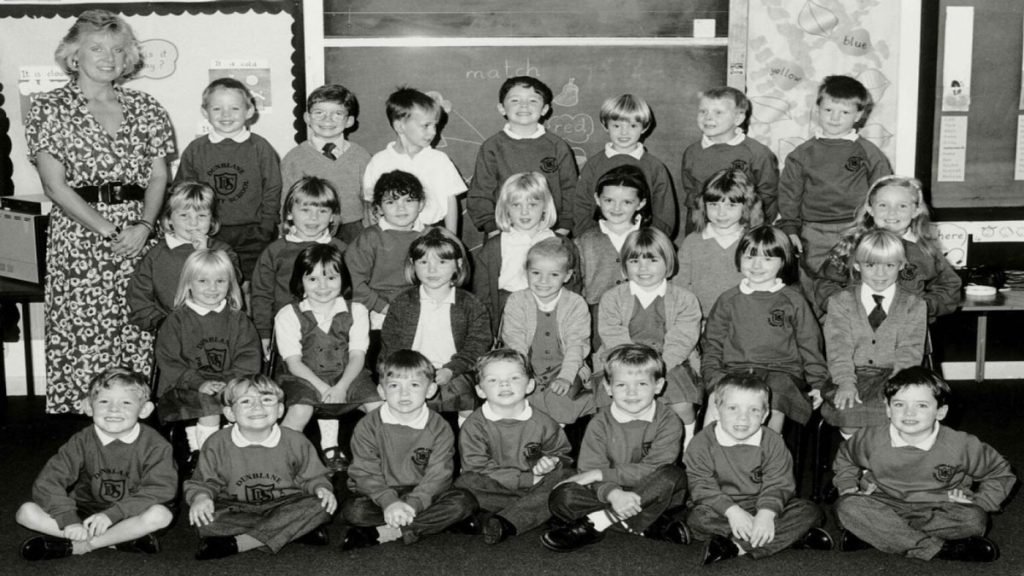
Today, the Scottish town of Dunblane marks thirty years since the worst mass shooting in British history. On the morning of 13 March 1996, Thomas Hamilton walked into the gymnasium of Dunblane Primary School armed with four legally held handguns and hundreds of rounds of ammunition. In less than four minutes, sixteen children, all of them five or six years old, were dead.
Their teacher, Gwen Mayor, who placed herself between the gunman and her pupils, died alongside them. Hamilton then turned one of the guns on himself. Fifteen others, twelve children and three adults, were wounded.
Thirty years. And the names still stop the breath: Abigail McLennan. Brett McKinnon. Charlotte Dunn. David Kerr. Emily Morton. Emma Crozier. Hannah Scott. Joanna Ross. John Petrie. Kevin Hasell. Megan Turner. Melissa Currie. Mhairi MacBeath. Ross Irvine. Sophie North. Victoria Clydesdale. And their teacher, Gwen Mayor.
Parliament marked the occasion this week with an Early Day Motion that read those names into the record, and recognised the courage and determination of the families who turned their grief into legislation. It is a rare instance of the political class rising to the level of events.
Mick North, father of Sophie North, spoke for this anniversary with a quiet, unwavering clarity. There is probably never a day that goes by, he said, without a brief thought about Sophie, and that means a brief thought about what happened in 1996. He added that he has never reached a point where he thinks the issue can be let go. ITV News
That is not the statement of a man consumed by bitterness. It is the statement of a man who understands something the political class perpetually forgets: that the work of preventing the next atrocity is not finished when the legislation is passed. It requires the same vigilance, year after year, that the original campaigners showed in 1996 and 1997.
FROM GRIEF TO LAW

Eight days after the shooting, Britain’s parliament convened a tribunal headed by Lord W. Douglas Cullen, a senior Scottish judge at the time, to conduct a public inquiry into the shooting. It opened on May 29 in the Scottish town of Stirling, and sat for 26 days. The entire proceeding was open to the public.
The speed with which Britain acted after Dunblane is, by any historical measure, remarkable. Within months of the shooting, the Snowdrop Petition had gathered more than 700,000 signatures from bereaved families and members of the public, demanding a ban on private handgun ownership. John Major’s Conservative government introduced the Firearms (Amendment) Act 1997, banning handguns over .22 calibre. Tony Blair’s incoming Labour government extended that ban to cover all cartridge ammunition handguns. The government compensated licensed owners through an amnesty scheme.
The Gun Control Network, founded in the aftermath of Dunblane and working alongside the Snowdrop campaign, did not have an easy passage. GCN chairwoman Gill Marshall-Andrews recalled the opposition her group faced as “very strong and very violent.” The group received death threats and bomb scares from the pro-gun lobby, who recognised, she said, that they could not credibly attack the Dunblane families directly and so directed their hostility elsewhere. The legislation passed anyway. Britain had decided.
Peter Squires, professor of criminology and public policy at the University of Brighton and a founding member of the Gun Control Network, described the aftermath of Dunblane as a turning point in thinking about how to make society safe from gun violence. The resulting framework, he said, has since been held up as a model around the world. Official statistics bear this out: guns are used in just 0.2% of all police-recorded offences in England and Wales, with 33 deaths attributed to firearm offences in the most recent figures. The equivalent numbers for Scotland are lower still.
The only comparable atrocity in the thirty years since Dunblane was the 2010 Cumbria shootings, in which twelve people were killed by a licensed firearm holder. That Britain can mark the interval between its two worst mass shootings in years rather than months speaks to the real effect of what the Dunblane families achieved.
‘THE WOUND IS THERE FOREVER’
Rachael Irvine, whose brother Ross was among those killed, described her grief as a wound that is there forever. She and her family will mark the 30th anniversary by travelling to Ayr to visit Ross’s grave, as they do most years around this date. Her family had moved to Dunblane only six months before the shooting, and she knows that her mother carries a particular weight from that fact, the irrational conviction of a parent that she brought him there. No grief is rational. The task of those around grief is simply to ensure it is not compounded by preventable failure.
Rachael Irvine joined the Gun Control Network two years ago, motivated by her frustration at seeing gun violence escalate in other countries and what she described as the backsliding on gun laws in places where they had previously been considered strong. She hopes that younger voices in the network can carry the argument to a generation that was not born when Dunblane happened and may not fully understand what was at stake, and what it cost to change things.
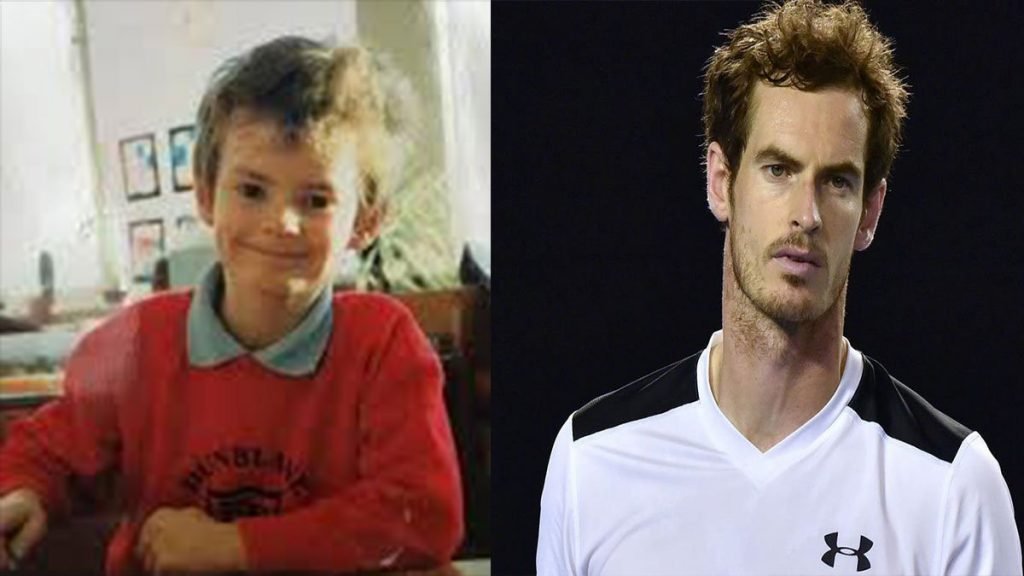
Andy Murray, the world’s former number one tennis player, was an eight-year-old pupil at Dunblane Primary School on the morning Hamilton arrived. He has spoken of knowing Hamilton personally, of having been driven to his boys’ club, of the way that proximity made the event sit differently in his memory than it might for those who knew it only through the news. He told filmmaker Olivia Cappuccini of the anxiety it produced in him, of using tennis as an escape for things he had bottled up, of breathing problems during competition that he traced back to those years. “At the time,” he told the BBC, “you have no idea how tough something like that is. As you start to get older, you realise.”
That is the quiet cost of Dunblane that never makes the headlines: not just the seventeen who died, but the generations of children who survived and have lived with it since.
THE LESSONS AMERICA REFUSES TO LEARN
Thirty years on, the contrast between Britain’s response to Dunblane and America’s response to its own school massacres is not merely instructive. It is a moral indictment of a political system so thoroughly captured by the gun lobby that it cannot act even when the dead are children.
Since Dunblane, the United States has endured Columbine, Sandy Hook, Uvalde, and hundreds of other mass shootings. After each one, the pattern repeats: grief, vigils, political tributes, a brief argument, then paralysis and normalisation. The children of Sandy Hook were the same age as the children of Dunblane. The political response was not.
Britain’s path was not without its opponents. The gun lobby here fought hard. They called the confiscations pointless, they issued threats, they mobilised. But they lost, because the public and ultimately the parliament refused to accept that the cost of recreational shooting was measured in primary school children. That is the question America cannot yet bring itself to answer honestly. And while it refuses to answer it, the massacres continue.
THE THREAT FROM WITHIN
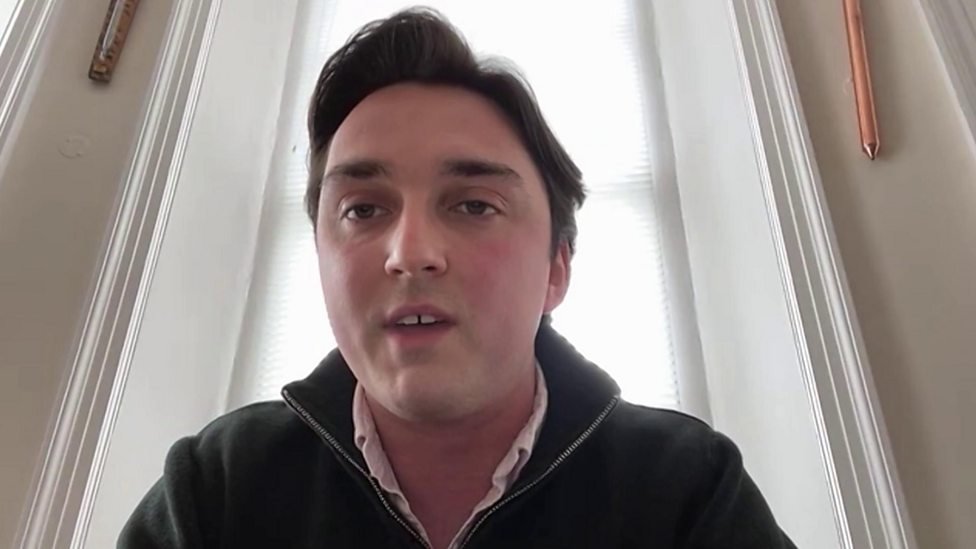
Ellie Crozier, whose sister Emma was among those killed and whose parents were central to the Snowdrop campaign, has warned that Britain’s gun laws are “at risk” thirty years on. The warning deserves to be taken seriously. Prime Minister Keir Starmer has indicated he supports a review of firearms legislation to close existing loopholes. That review, handled properly, is overdue and welcome. Handled carelessly, under pressure from lobbying interests dressed up as sporting or rural concerns, it could chip away at precisely the framework the Dunblane families built at such personal cost.
The BBC this week broadcast a one-hour documentary, “Dunblane: How Britain Banned Handguns,” to mark the thirtieth anniversary, Wikipedia a reminder that the story of what happened here is not only one of tragedy but of democratic action. Citizens, mostly bereaved mothers and fathers, forced a reluctant political establishment to act. They did not do it by accepting the terms the gun lobby set. They did it by refusing those terms entirely and insisting that children’s lives were non-negotiable.
Some of the Dunblane families are working to trace items sent to the town in 1996, letters, gifts, Mother’s Day cards, a miner’s lamp sent by the community of Aberfan in solidarity, items stored in boxes now unsealed for the first time in decades. They want to create a permanent display so that future generations understand not only the horror of what happened but the love that came in response to it.
That, too, is an act of resistance. Memory as politics. Grief made into something that holds the line.
Sixteen children went to school on a March morning in 1996 and did not come home. Britain changed forever…
Enjoyed this read? I’m committed to keeping this space 100% ad-free so you can enjoy a clean, focused reading experience. Crafting these articles takes a significant amount of research and heart. If you found this helpful, please consider a “small donation” to help keep the lights on and the content flowing. Every bit of support makes a huge difference!

Support Independent Journalism Today
Our unwavering dedication is to provide you with unbiased news, diverse perspectives, and insightful opinions. We're on a mission to ensure that those in positions of power are held accountable for their actions, but we can't do it alone. Labour Heartlands is primarily funded by me, Paul Knaggs, and by the generous contributions of readers like you. Your donations keep us going and help us uphold the principles of independent journalism. Join us in our quest for truth, transparency, and accountability – donate today and be a part of our mission!
Like everyone else, we're facing challenges, and we need your help to stay online and continue providing crucial journalism. Every contribution, no matter how small, goes a long way in helping us thrive. By becoming one of our donors, you become a vital part of our mission to uncover the truth and uphold the values of democracy.
While we maintain our independence from political affiliations, we stand united against corruption, injustice, and the erosion of free speech, truth, and democracy. We believe in the power of accurate information in a democracy, and we consider facts non-negotiable.
Your support, no matter the amount, can make a significant impact. Together, we can make a difference and continue our journey toward a more informed and just society.
Thank you for supporting Labour Heartlands