Funding Forever Wars: Britain’s £21.8 Billion Blank Cheque for Ukraine
George Orwell, writing through the voice of Emmanuel Goldstein in Nineteen Eighty-Four, understood the true purpose of modern conflict with a clarity that ought to haunt us: “The war is not meant to be won, it is meant to be continuous.” He went further, explaining that perpetual warfare serves a precise economic function: “War is a way of shattering to pieces, or pouring into the stratosphere, or sinking in the depths of the sea, materials which might otherwise be used to make the masses too comfortable, and hence, in the long run, too intelligent.”
You have to wonder what Orwell would make of today’s announcement. While NHS waiting lists stretch beyond 7.5 million, while councils from Hull to Sunderland sell off leisure centres and youth clubs to balance books that will never balance, while a third of British children lack access to a nearby playground, Defence Secretary John Healey has unveiled another £500 million air defence package for Ukraine. This latest tranche, announced not in Parliament but at NATO headquarters in Brussels, brings the United Kingdom’s total commitment to a staggering £21.8 billion since February 2022.
Let that figure settle for a moment. Twenty-one point eight billion pounds. Committed without a single vote on the principle of open-ended military financing. Sustained by a frontbench consensus so complete that it functions, in practice, as a cartel against dissent.
The Conflict They Would Rather You Forget Started in 2014
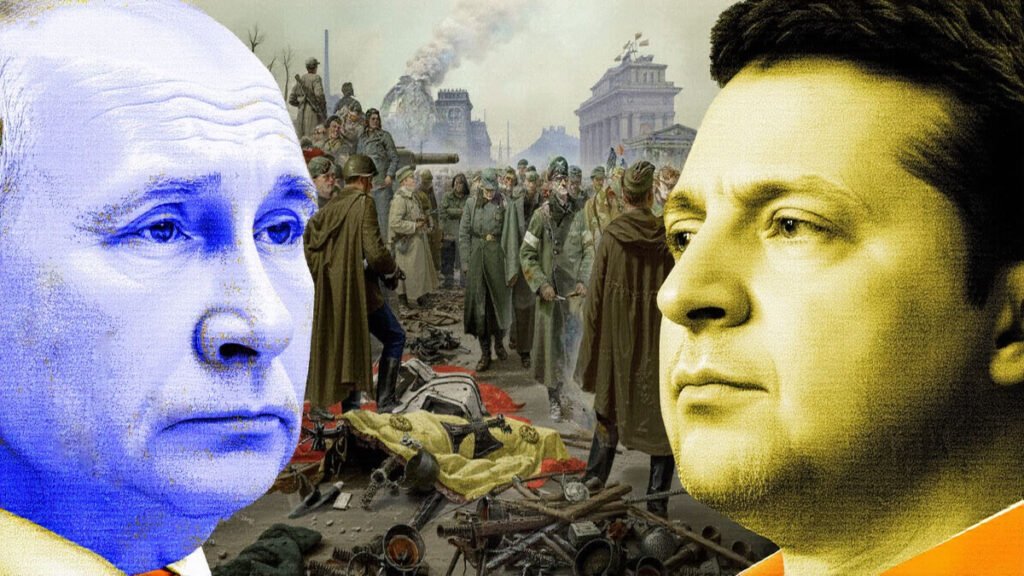
The official story begins on 24 February 2022, the day Russia crossed the border. This is convenient, but it is not true. The real story begins eight years earlier, with the Western-backed overthrow of Ukraine’s elected government and the civil war that followed in the Donbas. Over those eight years, an estimated 14,000 people died in a conflict between Kyiv and the Russian-speaking populations of the eastern regions, a conflict the West chose alternately to ignore, minimise, or actively fuel through military training programmes and arms supplies.
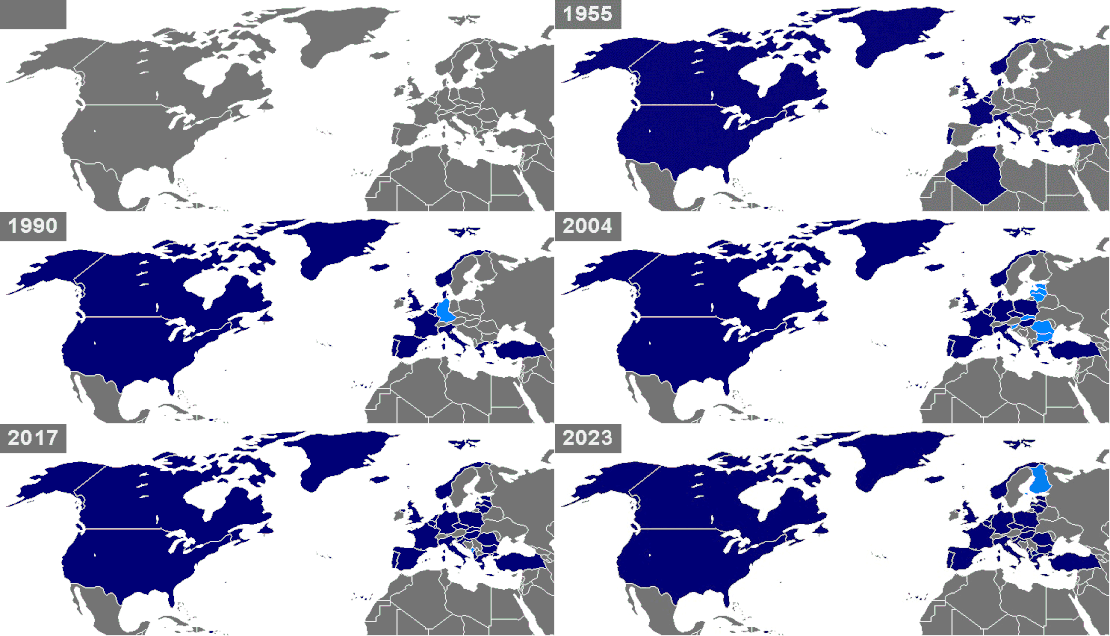
Russia’s military intervention, whatever one’s view of its legality, did not emerge from a vacuum. It emerged from eight years of broken ceasefire agreements, the failure of the Minsk accords (which former German Chancellor Angela Merkel later admitted were designed to buy time for Ukraine to arm, not to secure peace), and the steady expansion of NATO’s military infrastructure toward Russia’s borders.
None of this excuses the human cost of war. But it does demolish the fairy tale that this conflict is a simple story of unprovoked aggression, a tale told to justify unlimited expenditure without awkward questions.
The Logical Collapse
Apply the simplest test of consistency to the official narrative and it falls apart. We are told that Russia poses an existential threat to the whole of Europe, that without billions in military aid, Russian tanks could reach the English Channel. We are told simultaneously that Russia cannot defeat Ukraine, a country with a fraction of NATO’s combined military and economic power.
Both claims cannot be true. If Russia, possessing the largest conventional military force in Europe, cannot subdue a single neighbouring country after four years, then the idea that it could roll through Poland, Germany, and France is not a serious strategic assessment. It is a fairy story designed to keep the funding taps open.
Russia’s own military conduct confirms this. It has not cut Western supply lines into Ukraine, though it possesses the capability. It has not extended operations along Ukraine’s full border. It has not unleashed the kind of strategic air campaign that would characterise a genuine war of total conquest. What we are observing is a military operation with defined territorial objectives, focused overwhelmingly on the Donbas regions whose populations have spent a decade in open conflict with Kyiv.
If Russia cannot take Ukraine, it certainly cannot take Europe. And if it cannot take Europe, the entire edifice of justification for this £21.8 billion (and counting) collapses into what it always was: a subsidy for the defence industry dressed in the language of existential threat.
The Great Substitution
The timing of Britain’s escalation is revealing. Yesterday, the Kiel Institute for the World Economy published data confirming that American military aid to Ukraine collapsed by 99 per cent in 2025 under the Trump administration. Not a gradual reduction, not a phased withdrawal: a near-total cessation. Europe has increased its military contributions by 67 per cent to compensate, with Britain at the vanguard of this substitution.
The United States, whose political class did more than any other to engineer the strategic conditions for this conflict, has quietly walked away from the bill. Britain, a medium-sized island economy with crumbling public services and stagnant wages, has rushed to fill the vacuum. We are now, alongside Germany, responsible for two-thirds of Western Europe’s total military aid to Ukraine. The American taxpayer has been relieved of his burden. The British public has inherited it.
And here is the detail that ought to trouble every parliamentarian: the military aid is drawn from the Treasury Reserve, not the Ministry of Defence’s departmental budget. It does not appear in real-time defence spending figures. It materialises only in supplementary estimates at the end of the financial year. The largest single foreign expenditure commitment in a generation is, by design, almost invisible to routine democratic scrutiny.
Follow the Money
Of the £21.8 billion committed, £13 billion is dedicated to military support. This is a direct transfer of public wealth to the defence industry. Today’s £500 million package includes £150 million funnelled through NATO’s Prioritised Ukraine Requirements List, a mechanism through which European taxpayers purchase American weapons systems, and a £390 million contract for missiles manufactured in Belfast. The £2.26 billion G7 Extraordinary Revenue Acceleration loan is designed to be repaid from the profits of frozen Russian sovereign assets, a novel instrument of international law whose long-term implications nobody has honestly examined.
The government has committed to sustaining £3 billion a year in military aid until at least 2030-31, budgeted and planned years into the future, without a peace strategy worthy of the name. This is not crisis response. This is the architecture of permanent conflict.
The Arithmetic of Priorities

While the British public underwrites this forever war to the tune of £21.8 billion, Ukrainian private capital is finding its own uses. In the Carpathian Mountains of western Ukraine, construction is well underway on the GORO Mountain Resort, a $1.5 billion luxury ski destination featuring 25 hotels, 5,500 rooms, and 41 ski slopes serviced by gondola lifts. The project is backed by OKKO Group, Ukraine’s largest petrol station chain, with institutional investment sought from Goldman Sachs, BlackRock, and Vanguard. The first phase is due to open for the 2026-27 season.
Call it investment in the future. Call it post-war planning. Call it whatever makes the medicine go down. The arithmetic remains the same: British public money pays for the war so that Ukrainian private money can pay for ski resorts. The people of Hartlepool subsidise the defence budget so that the oligarchs of Lviv can court international leisure capital. However you frame it, the British people get poorer and Ukraine gets a billion-dollar alpine playground.
The defenders of this arrangement will say these are separate pots of money, that private investment should not be confused with public expenditure. Technically, they are correct. But the working-class grandmother in Sunderland choosing between heating and eating does not live in a world of technical distinctions. She lives in a world where her government can always find billions for foreign wars but never for the community she raised her children in.
In Hull, one of England’s most deprived cities, the council struggles to maintain basic leisure provision. Across the former industrial heartlands, young people tell researchers, in words recorded by Parliament itself, “there is nothing here for us to do.” Since 2010, 42 per cent of councillors report cuts to library services. Leisure centres have been shuttered. Parks have been sold. Play facilities have been stripped to nothing. Communities that once built ships and forged steel cannot maintain a skateboard park, never mind an ice rink. Yet somewhere in the Carpathians, the concrete is being poured for gondola stations and five-star hotel complexes, safe in the knowledge that British people will keep the missiles flying.
While the Treasury empties the coffers for a conflict with no defined exit strategy, the stark reality of our domestic neglect is laid bare. Investors in Western Ukraine are currently pressing ahead with the GORO Mountain Resort, a $1.5 billion luxury ski development featuring twenty-five hotels and an infinity pool.
Meanwhile, back in the UK, the residents of Bolsover have just seen their long-promised sixth form provision stalled in a “review” of the school building programme. It is a bitter irony: our government can find billions to subsidise a war zone where luxury resorts are being built, yet it cannot provide a basic A-level education for children in a Derbyshire former mining town.
This is the true obscenity of the forever war: not merely that it costs too much, but that it inverts every reasonable priority. Public squalor at home, private luxury abroad. The cost of war socialised among the poorest; the dividends of peace privatised among the richest.
A Principled Critique
The standard counterargument is one of moral duty. We are told that to question the funding is to invite catastrophe. This is the logic of the protection racket, not of democratic debate. A principled anti-war position does not require sympathy for Putin’s authoritarianism or approval of Russia’s methods. It requires only the honest acknowledgement that the current policy does not bring peace closer; it makes peace impossible.
After nearly four years, hundreds of thousands dead, millions displaced, and over $88 billion in international support mobilised through the World Bank alone, the working people of the Donbas are no closer to a settlement than the working people of Hartlepool are to a functioning high street. Both populations are paying, in different currencies, for a conflict whose primary beneficiaries wear suits, not uniforms.
Orwell saw this too, writing from his experience in the Spanish Civil War: “All the war-propaganda, all the screaming and lies and hatred, comes invariably from people who are not fighting.”
The politicians who announce these packages with solemn faces will never hear a missile. The defence executives who profit from them will never miss a meal. The cost, as always, is externalised downward: to the Ukrainian conscript press-ganged from the streets of Odessa, to the British people whose community disintegrates around them, to the Ukrainian or Russian soldier sent to die for objectives their own government will not honestly name.
The £21.8 billion committed to date is not an act of solidarity. It is a down payment on a permanent state of conflict, announced in Brussels rather than debated in Westminster, drawn from hidden Treasury reserves rather than subjected to the scrutiny of the public purse, and planned through to 2031 without a credible pathway to peace.
Structural reform must begin with the restoration of genuine parliamentary authority over foreign military expenditure. Every pound committed should require a vote. Every contract should be published. Every year, the government should be required to demonstrate before the House that its policy serves the interests of working people in Britain and in the Donbas alike, not the balance sheets of the defence industry or the geopolitical vanity of a political class that values the approval of NATO headquarters above the welfare of its own constituents.
Until then, Orwell’s warning remains the epitaph for our age: the war is not meant to be won. It is meant to be continuous. And when the drums beat, it is always the poor who march to the rhythm while the profiteers compose the tune.
There is also a question of receipts…

Support Independent Journalism Today
Our unwavering dedication is to provide you with unbiased news, diverse perspectives, and insightful opinions. We're on a mission to ensure that those in positions of power are held accountable for their actions, but we can't do it alone. Labour Heartlands is primarily funded by me, Paul Knaggs, and by the generous contributions of readers like you. Your donations keep us going and help us uphold the principles of independent journalism. Join us in our quest for truth, transparency, and accountability – donate today and be a part of our mission!
Like everyone else, we're facing challenges, and we need your help to stay online and continue providing crucial journalism. Every contribution, no matter how small, goes a long way in helping us thrive. By becoming one of our donors, you become a vital part of our mission to uncover the truth and uphold the values of democracy.
While we maintain our independence from political affiliations, we stand united against corruption, injustice, and the erosion of free speech, truth, and democracy. We believe in the power of accurate information in a democracy, and we consider facts non-negotiable.
Your support, no matter the amount, can make a significant impact. Together, we can make a difference and continue our journey toward a more informed and just society.
Thank you for supporting Labour Heartlands