America Got Its Independence, Britain Forgot to Keep Its Own
On the night of 24 August 1814, British forces under Major-General Robert Ross marched into Washington and set fire to the Presidential Mansion, the Capitol, and most of the federal buildings in between. The flames were visible for miles. It was, in part, retaliation for American forces burning York the previous year. Whatever you think of the act itself, one thing is beyond dispute: Britain was then a sovereign power, capable of independent decision and independent action.
Two hundred and twelve years later, that same nation cannot tell an American president that he may not use its airfields to bomb a country the British public never voted to attack.
Something has been lost. Something profound, and, if we do not name it clearly, something that will not be recovered.
James Schneider put it with a directness that the political class would rather not hear: “We are stuck in an abusive relationship. We are a vassal state. We don’t control our own security. We can’t control our own economy. We’re forced to do things that the British public don’t want to do.” Dismiss that as fringe rhetoric if you wish.
The polling, the parliamentary committee, the former National Security Adviser, and the Iranian ambassador have all, in their different ways, said something remarkably similar.
THE WAR THE PUBLIC NEVER WANTED

When Donald Trump launched his illegal military campaign against Iran, the British people were not consulted. They gave their answer anyway, in polling that any democratic government would have found impossible to ignore.
Six in ten Britons opposed the military action. Seventy per cent opposed the UK joining the US offensive, with only 17 per cent in support. Fifty-seven per cent believed Trump was wrong to launch the strikes at all. These are not narrow majorities. These are decisive, cross-party expressions of public will.
Keir Starmer stood at the despatch box and said: “This is not our war.” He was right. It was not. And it need not have been.
But then he allowed US forces to operate from RAF Fairford in Gloucestershire, from bases in Cyprus and the Chagos Islands. American B-2 and B-1 bombers took off from British soil to strike Iranian targets.
In every meaningful military and legal sense, Britain became a co-belligerent in a war its prime minister had just declared was not ours to fight. The gap between what was said and what was done is not a minor inconsistency. It is the operating definition of a vassal state.
THE PRICE OF THIS SUBMISSION
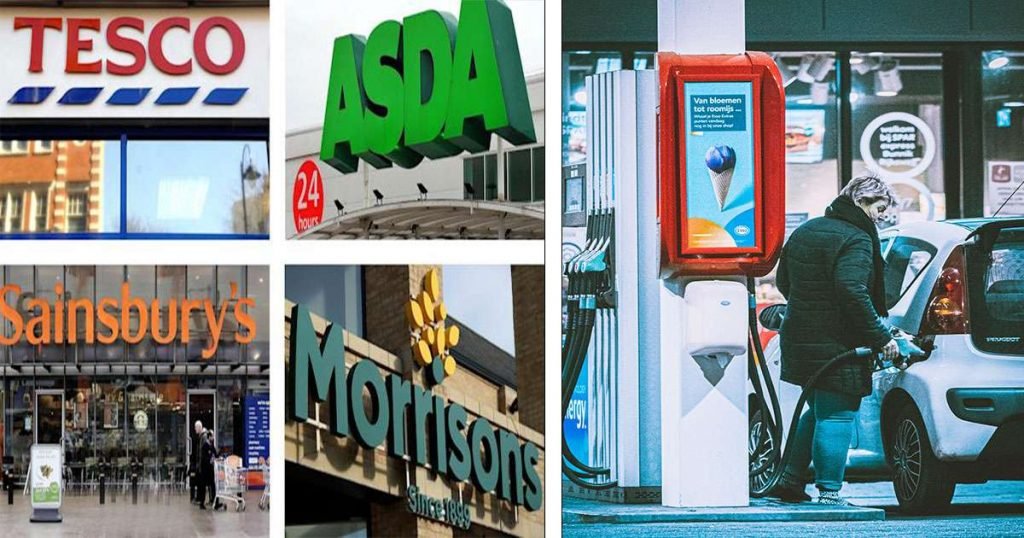
The costs are not abstract. They are landing now, on working people who had nothing to do with the decisions that produced them.
Iran’s blockade of the Strait of Hormuz, through which roughly 20 per cent of the world’s daily oil supply passes, has driven Brent crude from approximately $70 a barrel before the war to $105. Fertiliser prices are up 50 per cent. Up to 40 per cent of global nitrogen fertiliser exports pass through that same strait. The households that will feel these price rises sharpest are not those in Westminster or Washington. They are the ones already choosing between heating and eating.
Iran’s ambassador to London, Seyed Ali Mousavi, has warned that RAF Fairford is now a legitimate target for Iranian self-defence. Allegedly Tehran has already fired two ballistic missiles toward the joint US-UK base at Diego Garcia. The conflict has, in a very real sense, been brought to British territory, as a direct consequence of decisions the British public explicitly rejected.
And what did Britain’s great ally offer in return? Trump called Starmer “not Winston Churchill”, dismissed British aircraft carriers as “toys”, and told Britain to “go get your own oil” from the Strait. His defence secretary, Pete Hegseth, mocked the “big, bad Royal Navy.” This is not how an ally treats an ally. This is how a landlord talks to a tenant who is late with the rent.
Starmer may lack the Churchillian spark. Britain must, however, recognise that the Eisenhower era of American leadership is not sleeping. It is dead and buried, and what has replaced it does not pretend to be anything other than what it is.
THE LANGUAGE THAT HAS BROKEN COVER

What is remarkable about this moment is not the substance of the critique but how widely it has spread.
In January, more than 2,000 people gathered outside Downing Street for a peace demonstration. RMT general secretary Ed Dempsey told the crowd that Britain was “acting like a vassal state, too frightened to speak up in the face of gross violations of international norms.” Parliament’s Joint Committee on the National Security Strategy, publishing its report in March, warned that Britain must plan to “move away” from its reliance on the United States for defence and security, toward a more European-led Nato and away from a bilateral relationship so dependent on Washington’s goodwill.
Former National Security Adviser Peter Ricketts went further still, telling Times Radio that the Iran war “should really put to bed finally, once and for all, the idea of a special relationship.” His precise words deserve to stand without softening: “Honestly, we’ve never had a special relationship with Americans. We’ve had a transactional relationship with them.”
That sentence has the force of a long overdue reckoning.
THE COUNTERARGUMENT, AND WHY IT FAILS

The defenders of the status quo will always reach for the same argument. Britain is too small to stand alone. We need the American umbrella. Without Washington, we are exposed.
This is the logic of the hostage, not the statesman. It takes a posture of structural weakness and mistakes it for wisdom.
The parliamentary committee’s report points toward a more credible alternative: stronger relations with middle powers including Australia, India and Canada, and a more European-focused security architecture. Starmer himself has begun, tentatively, to pivot, saying in early April that global instability means Britain should “strengthen defence ties with Europe.” If that instinct is sincere rather than rhetorical, it is overdue.
But the structures of dependency run far deeper than any prime ministerial speech can reach. Britain’s Trident nuclear missiles are maintained by the United States. Its F-35 fighter jets are American-built. Its intelligence is integrated with US agencies at a level that makes genuine independence, in the short term, more aspiration than reality. Breaking free will require a generational project of industrial, military and diplomatic reorientation. Nobody should pretend otherwise.
What we can do now, however, is stop pretending that the relationship is something it is not. We can stop calling it special. We can stop allowing its logic to override democratic consent. We can insist that British bases, British territory and British lives are not assets to be drawn upon by a foreign power without scrutiny, debate or public mandate.
THE FIRE WE NEED TO SET

In 1814, Britain burned the White House because it could. Because it was, for that moment in history, a sovereign actor deciding its own course. The building was rebuilt. The republic survived. History moved on.
What Britain burned in the years since is harder to rebuild: the principle that this country acts in its own interests, on behalf of its own people, answerable to its own parliament and its own public.
The working people of Britain did not vote for the war in Iran. They did not vote to make their energy bills a casualty of Washington’s geopolitical calculations. They did not vote to allow RAF Fairford to be used to bomb Irian.
They were not asked.
That is the indictment. Not of Trump, whose contempt for allies is at least consistent and honest. Of a British political class so habituated to deference that it has forgotten what independence looks like, and so afraid of the American relationship that it cannot even protect its own people from its consequences.
Britain will not recover its sovereignty in a single vote or a single speech. But it can begin, right now, by calling the relationship what it is: not special, not a partnership of equals, but a dependency that costs the many while it flatters the few.
The first act of genuine independence is to stop pretending otherwise.
The special relationship was never a partnership. It was a protection racket with better manners.
Enjoyed this read? I’m committed to keeping this space 100% ad-free so you can enjoy a clean, focused reading experience. Crafting these articles takes a significant amount of research and heart. If you found this helpful, please consider a “small donation” to help keep the lights on and the content flowing. Every bit of support makes a huge difference.

Support Independent Journalism Today
Our unwavering dedication is to provide you with unbiased news, diverse perspectives, and insightful opinions. We're on a mission to ensure that those in positions of power are held accountable for their actions, but we can't do it alone. Labour Heartlands is primarily funded by me, Paul Knaggs, and by the generous contributions of readers like you. Your donations keep us going and help us uphold the principles of independent journalism. Join us in our quest for truth, transparency, and accountability – donate today and be a part of our mission!
Like everyone else, we're facing challenges, and we need your help to stay online and continue providing crucial journalism. Every contribution, no matter how small, goes a long way in helping us thrive. By becoming one of our donors, you become a vital part of our mission to uncover the truth and uphold the values of democracy.
While we maintain our independence from political affiliations, we stand united against corruption, injustice, and the erosion of free speech, truth, and democracy. We believe in the power of accurate information in a democracy, and we consider facts non-negotiable.
Your support, no matter the amount, can make a significant impact. Together, we can make a difference and continue our journey toward a more informed and just society.
Thank you for supporting Labour Heartlands